
Key Takeaways
How does dry ice blasting clean automotive mold tooling without disassembly?
Dry ice blasting is a non-abrasive surface-cleaning method that uses 3 mm pellets of solid CO₂ propelled at 80-250 psi (5.5-17 bar) to clean injection-mold tooling in-press without disassembly. On contact with the warm mold surface, each pellet sublimates — phasing directly from solid to gas at -78.5°C (-109°F) — creating thermal shock that lifts grease, release agents, and carbon buildup. Because the media disappears as gas, only the lifted contaminant remains: zero secondary waste, no abrasive wear, no cooldown, and no disassembly. A typical in-press cleaning cycle uses 10-20 lb (4.5-9 kg) of pellets over 30-45 minutes, replacing the 4-6 hour cycle required by sandblasting or solvent washing. Cold Jet pioneered single-hose dry-ice blasting in 1986 (US Patent 4,617,064) and the technology now serves automotive injection-mold and weld-line cleaning across major OEMs and Tier-1 suppliers worldwide.
80%
Downtime reduction
Cleaning cycle time vs sandblasting (4-6 hr → 30-45 min)
80
psi
Standard blast pressure (lower for delicate molds)
5.5 bar
10-20
LB / Cycle
Dry ice consumed per in-press cleaning cycle
4.5-9 kg / cycle
$15-$60
per cycle
Media cost per in-press cleaning (3 mm pellets)
Why Traditional Cleaning Methods Fall Short
Traditional mold cleaning methods like sandblasting and chemical solvents require removing the mold from the press, adding hours of downtime to every cleaning cycle.
Sandblasting is abrasive and wears down precision mold surfaces over time. Chemical cleaning generates hazardous waste that must be disposed of according to EPA regulations, adding compliance costs.
Dry ice blasting eliminates both problems. The dry ice sublimation process leaves zero secondary waste and is completely non-abrasive.
How Dry Ice Blasting Works
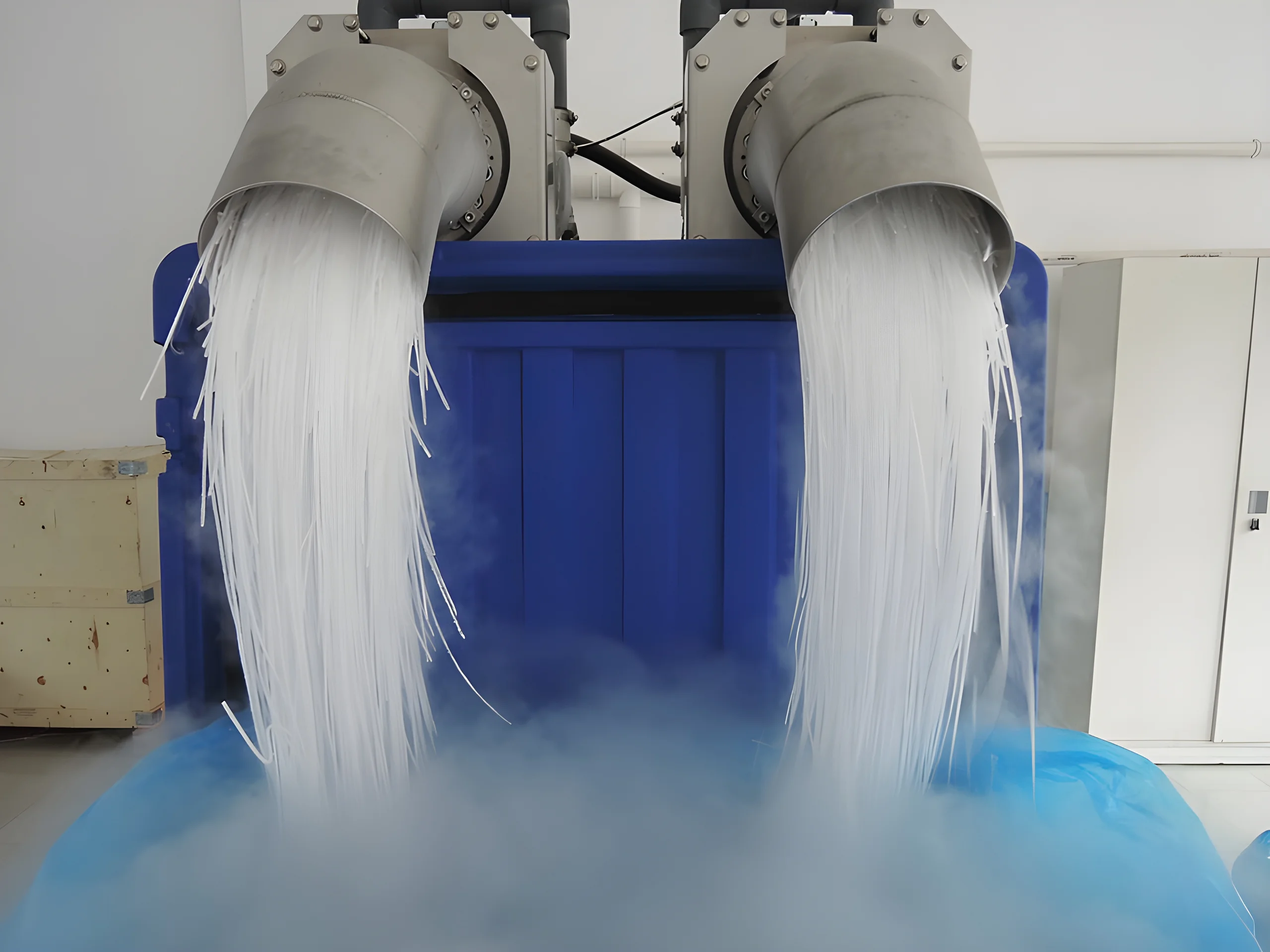
Dry ice blasting uses compressed air to accelerate solid CO2 pellets at the surface. On impact, the pellets sublimate — converting directly from solid to gas — creating micro-thermal shock that lifts contaminants without damaging the substrate.
The process produces no secondary waste. Only the removed contaminant remains, which can be swept or vacuumed. No water, no chemicals, no abrasive media to clean up.
“We went from 4 hours of downtime per mold change to under 45 minutes. The ROI was immediate.
”
Choosing the Right Equipment
For in-press mold cleaning, the Cold Jet i3 MicroClean is the recommended system. Its compact footprint and precision nozzles make it ideal for tight factory floor spaces.
For larger molds or heavy buildup, the Cold Jet Aero2 Ultra offers higher blast pressure and pellet throughput.
Dry Ice Blasting vs Sandblasting vs Chemical Cleaning
Compare the efficiency, safety, and cost of traditional cleaning methods against dry ice blasting.
- Downtime
- 30-45 min(in-press)
- Surface Damage
- None
- Waste
- Zero secondary waste
- Cost/Cycle
- $15-$60
- Downtime
- 4-6 hrs(requires removal)
- Surface Damage
- Abrasive wear over time
- Waste
- Spent media + contaminants
- Cost/Cycle
- $50-$150
- Downtime
- 2-4 hrs(requires removal)
- Surface Damage
- Possible chemical etching
- Waste
- Hazardous liquid waste
- Cost/Cycle
- $80-$200
How to Clean Automotive Mold Tooling with Dry Ice
Step-by-step guide to setting up and operating the Cold Jet i3 MicroClean for in-press mold cleaning in automotive manufacturing.
Prepare the work area
Ensure adequate ventilation in the workspace. CO2 is heavier than air and will accumulate in enclosed spaces. Set up exhaust fans or open bay doors to maintain safe oxygen levels.
Load dry ice pellets
Fill the i3 MicroClean hopper with 3mm dry ice pellets. Use pellets manufactured within the last 24 hours for optimal density and cleaning performance. Wear insulated gloves when handling dry ice.
Configure blast parameters
Set the air pressure to 80 PSI (5.5 bar) and the feed rate to the medium setting for standard mold cleaning. For delicate molds or thin-walled tooling, reduce pressure to 40-60 PSI (2.8-4.1 bar) and use a lower feed rate.
Clean the mold surface
Hold the nozzle 6-12 inches (15-30 cm) from the mold surface at a 45-degree angle. Use steady, overlapping passes across the contaminated area. The dry ice will sublimate on contact, lifting grease, release agents, and carbon buildup.
Inspect and resume production
Inspect the cleaned mold surface for any remaining residue. No drying time is required since dry ice leaves zero moisture. The mold is ready for immediate use — resume production without cooldown or reassembly.
Estimated Time
30 minutes
Required Tools
- Cold Jet i3 MicroClean system
- Appropriate blast nozzle for mold geometry
- Personal protective equipment (PPE)
Materials & Supplies
- 3mm dry ice pellets (10-20 lbs / 4.5-9 kg)
- Compressed air supply (80-100 PSI / 5.5-6.9 bar)
Sources & References
- The Definitive Guide to Dry Ice Blasting — https://info.coldjet.com/the-definitive-guide-to-dry-ice-blasting
- EPA Industrial Waste Management — 40 CFR Part 261 — https://www.epa.gov/hw/industrial-waste-management
- OSHA 29 CFR 1910.146 — Permit-Required Confined Spaces — https://www.osha.gov/laws-regs/regulations/standardnumber/1910/1910.146
- NIOSH Pocket Guide to Chemical Hazards: Carbon Dioxide — https://www.cdc.gov/niosh/npg/npgd0103.html
- US Patent 4,617,064 — Method for cleaning surfaces with sublimable solids (Moore, 1986) — https://patents.google.com/patent/US4617064A