Overview
Which industries use carbon capture?
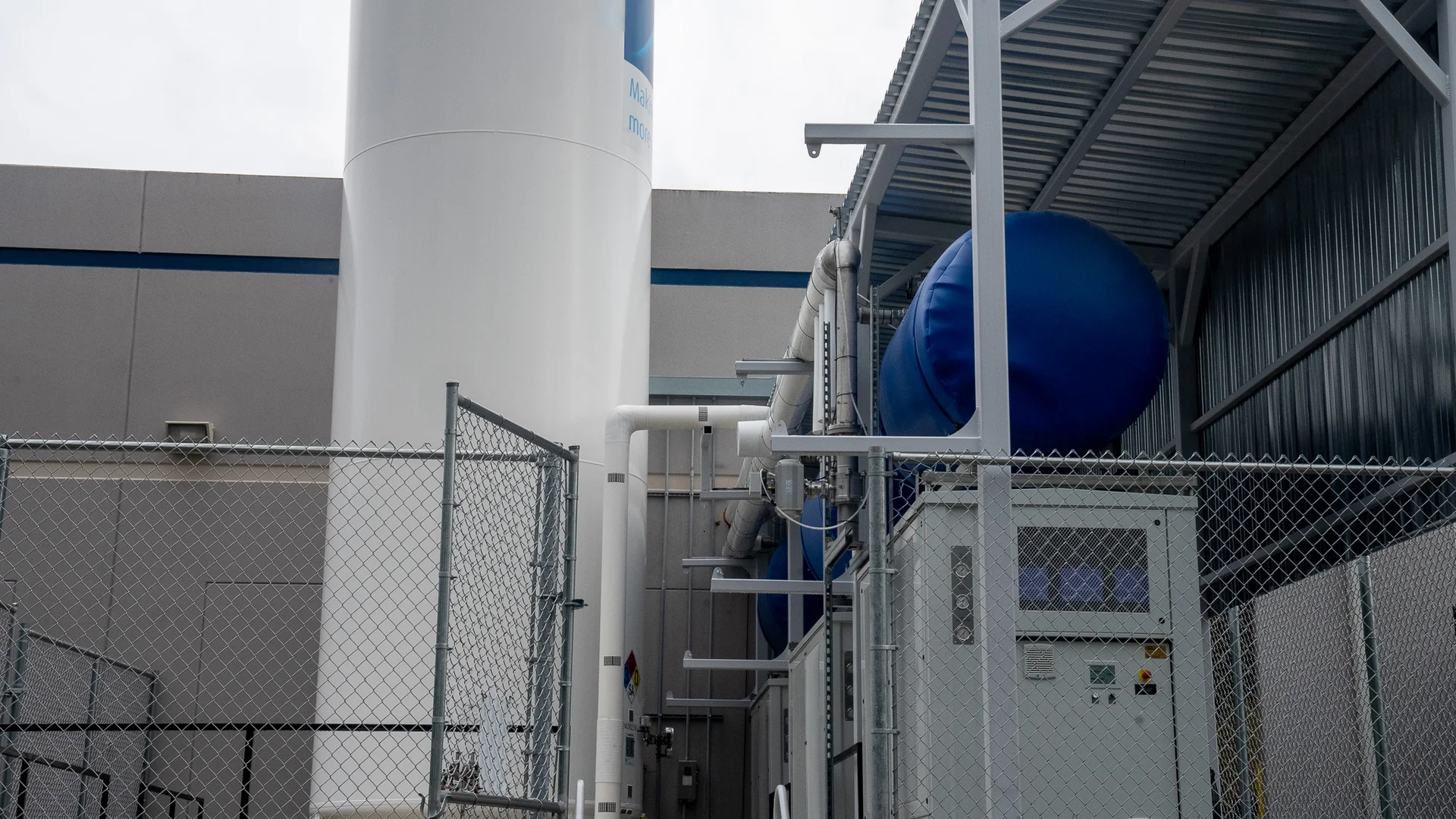
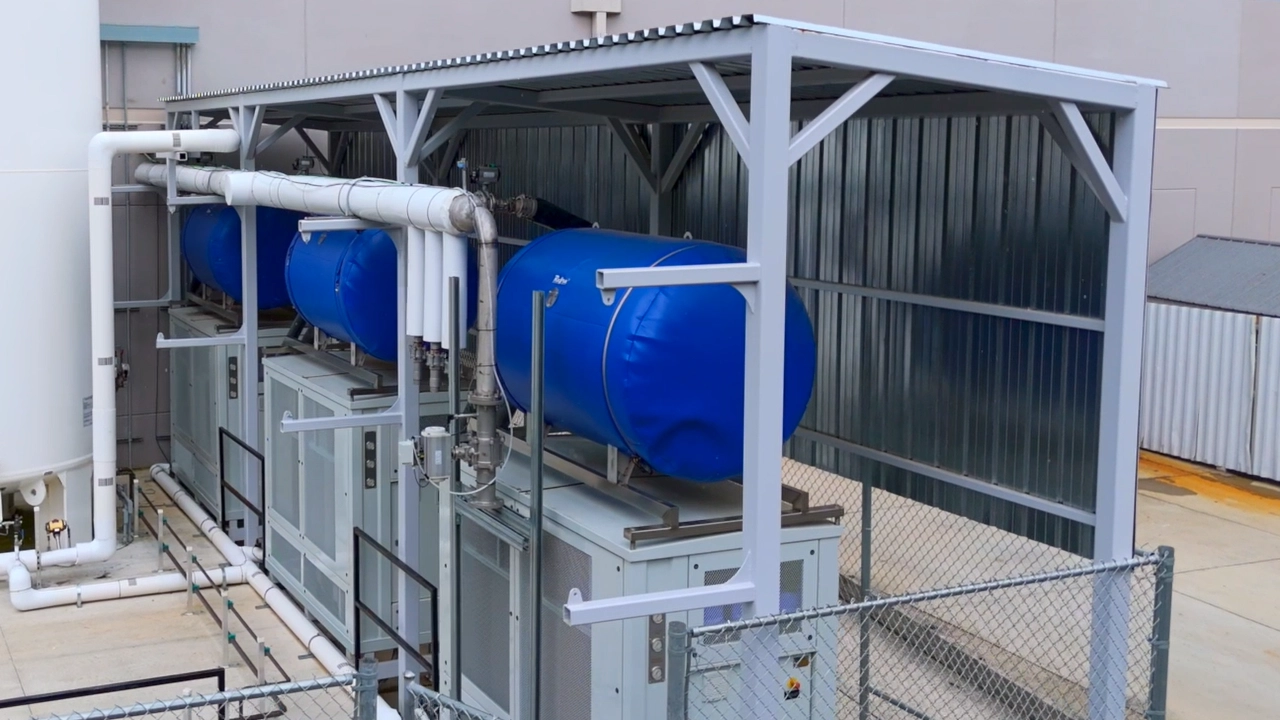
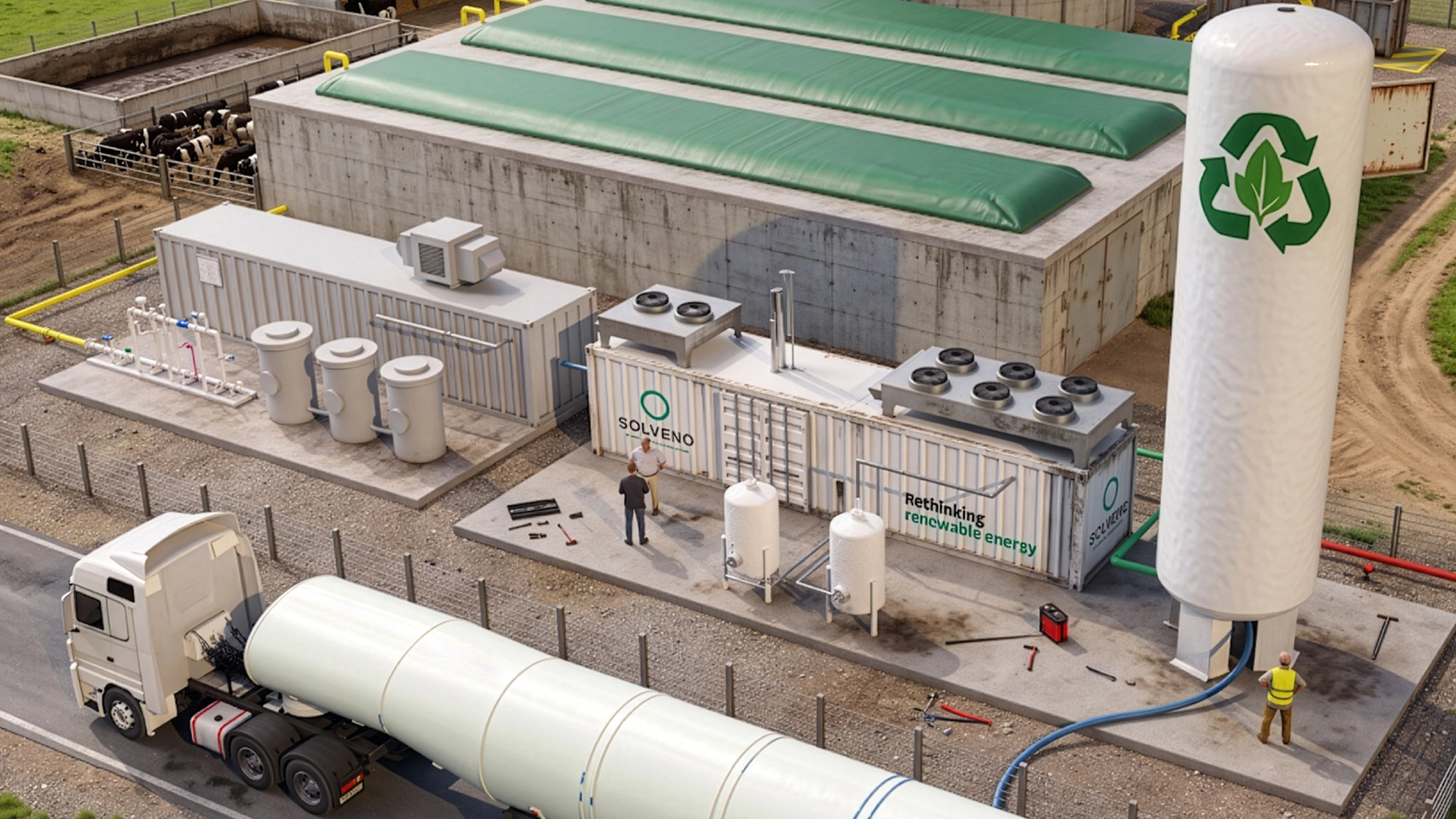
Industrial carbon capture is the interception of CO₂ at the point it would be vented, followed by compression, purification and liquefaction into reusable liquid CO₂. It is not ambient air capture: the gas is taken from a known stream at a known concentration, which is what makes the economics work at a single facility. Cold Jet's systems serve 2 sectors, each with its own vented stream. Dry ice manufacturers vent flash gas — the portion of every batch of liquid CO₂ that does not become dry ice — and a recovery unit returns it to the bulk tank, improving the conversion ratio without buying more CO₂. RNG biogas sites upgrading raw biogas to biomethane separate out a biogenic CO₂ stream that is normally released; captured and liquefied, it becomes a saleable food-grade product or feedstock for on-site dry ice production. Both turn a disposal cost into a saving or a revenue line.
Comparison
Two vented streams, two ways to recover them
Where the CO₂ comes from, and what the recovered liquid is worth once it is captured.
| Sector | The CO₂ that is being vented today | Where the system sits | What the recovered liquid becomes |
|---|---|---|---|
| Dry ice manufacturers | Flash gas — the share of every batch of liquid CO₂ that never becomes dry ice, already bought and paid for | Alongside the pelletizer and reformer inside an existing dry ice plant | Purified and reliquefied back into the bulk tank, so the same LCO₂ purchase yields more dry ice |
| RNG biogas sites | The biogenic CO₂ stream separated out when raw biogas is upgraded to biomethane, normally released to atmosphere | Integrated into the upgrading skid at an anaerobic digestion or landfill gas site | Food-grade liquid CO₂ that can be sold into local markets or turned into dry ice on site — with leftover biomethane returned to the RNG grid |
By Industry
The 2 sectors we serve
Each tile names the sector's vented CO₂ stream and the system that recovers it.
FAQ