
We saw an immediate effect on our CO₂ ratio from 2.4:1 now to 1.35:1. Profit, production capability, and overall company performance is greatly improved.
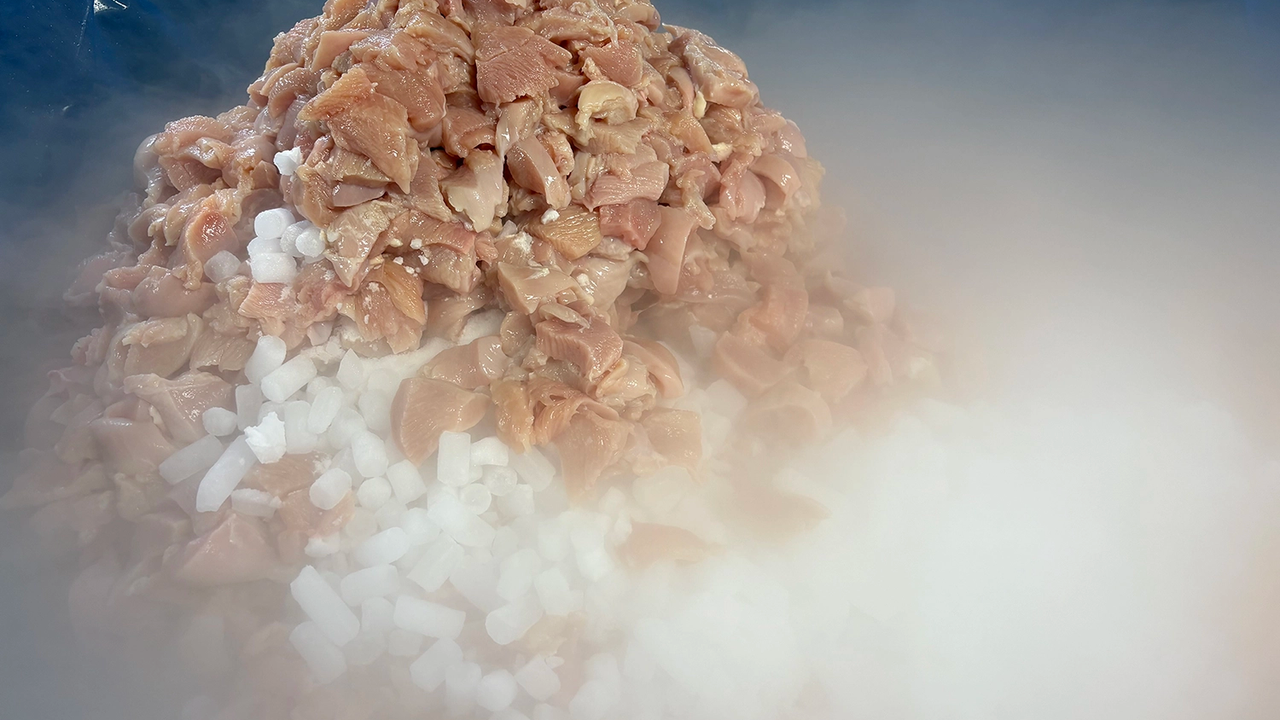
Chill and freeze protein on the line, protect payloads across the cold chain, and regulate fermentation — with food-safe dry ice at -109°F (-78.5°C) produced on-site, on demand. Endorsed as safe around food by the EPA, FDA, and USDA.
-109°F
Constant Cooling Temperature (-78.5°C)
3x
The Refrigeration Power of Water Ice
1,000+
Dry Ice Systems Installed Globally
Summary
Dry ice is a food-safe cooling medium endorsed by the EPA, FDA, and USDA that holds a constant -109°F (-78.5°C) — three times the refrigeration power of water ice. Because it sublimates directly from solid to gas, it inhibits microbial growth without adding moisture, residue, or lasting weight at any point from the trim line to final delivery.
Dry ice cooling for food processing uses solid CO₂ pellets, nuggets, or slices — made from recycled, food-grade CO₂ — to rapidly chill or freeze product during processing, packaging, and transit. Dosed directly into grinders, mixers, totes, and shipping boxes, dry ice holds product below the 39.2°F (4°C) HACCP threshold and then sublimates completely, leaving no water, residue, or contaminants behind.
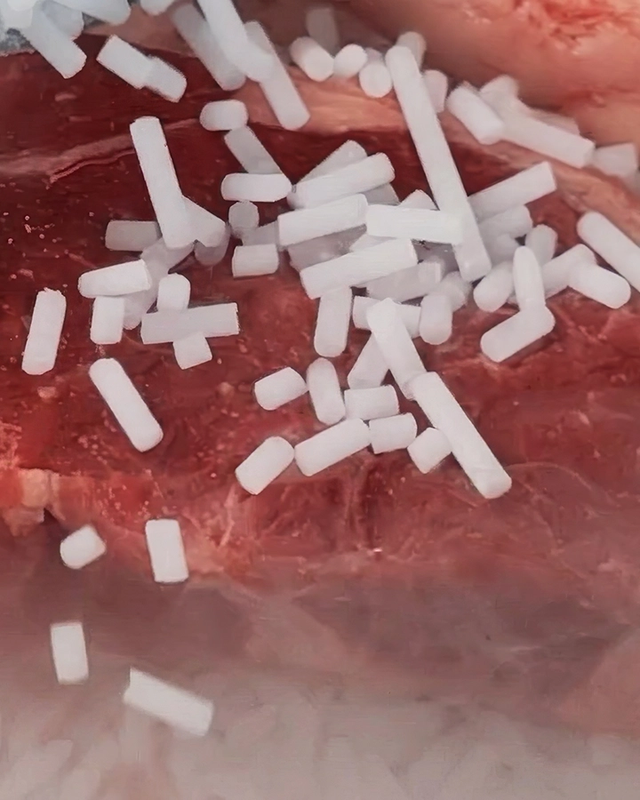
The number one concern in food processing is keeping product cold through every critical control point. Water ice melts into a leachate that feeds pathogens like Listeria, adds shipping weight, and corrodes equipment — while CO₂ snow horns consume roughly 70% more liquid CO₂ than a pelletizer to produce the same amount of cooling.
-109°F
Constant Cooling Temperature (-78.5°C)
3x
Refrigeration Power
The Refrigeration Power of Water Ice
Zero
Moisture Added
EPA, FDA & USDA
Safe Around Food
Dry ice delivers three times the refrigeration power of water ice — with zero moisture, zero residue, and weight that disappears in transit.
Traditional cooling media create as many problems as they solve. Water ice melts into a bacteria-friendly slurry that adds weight and degrades product. Gel packs and PCMs can require two to three times the coolant weight to protect the same payload.
CO₂ snow horns consume roughly 70% more liquid CO₂ than a pelletizer. And mechanical refrigeration cannot absorb peak-season demand without major capital investment. Dry ice solves all four problems with one food-safe medium.
 Food Safety
At a constant -109°F (-78.5°C), dry ice holds product safely out of the 40°F–140°F danger zone where pathogens like E. coli, Listeria, and Salmonella can double their populations in as little as 20 minutes. Unlike water ice, dry ice sublimates instead of melting — so there is no leachate, no cross-contamination from sloshing meltwater, and no moisture for bacteria to thrive in.
 Efficiency
With three times the refrigeration power of water ice, dry ice pulls temperature out of product fast. Dosed directly into grinders, mixers, and blenders, it offsets friction heat and eliminates hot spots without altering product ratios. As a passive medium, it also absorbs seasonal surges and peak demands without investing in additional chiller or freezer capacity.
 Quality
Dry ice is non-toxic, tasteless, and odorless, and it leaves no residue — so it has no effect on the state of the product it cools. There is no water absorption to dilute water-soluble proteins, no drip loss, and no soggy packaging, which means fewer product rejects and consistent quality from batch to batch.
 Logistics
Dry ice protects frozen and refrigerated payloads with less coolant weight than water ice, gel packs, or PCMs — and because it sublimates, containers get lighter in transit, improving fuel efficiency and freight costs. It requires no mechanical refrigeration infrastructure during shipping and produces no melted water at the destination.
 Environmental
Dry ice is the product of carbon capture and utilization — CO₂ captured at industrial, biogas, or ambient-air facilities and given a second life as a cooling medium. Per the California Air Resources Board, recycled CO₂ is accounted for at the producer level and is not counted a second time at the point of use, so dry ice will not contribute to your greenhouse gas score.
From the trim line to the customer’s doorstep, dry ice maintains critical temperatures across four high-value applications: production of meat, fish export, the food cold chain, and temperature controlled fermentation.
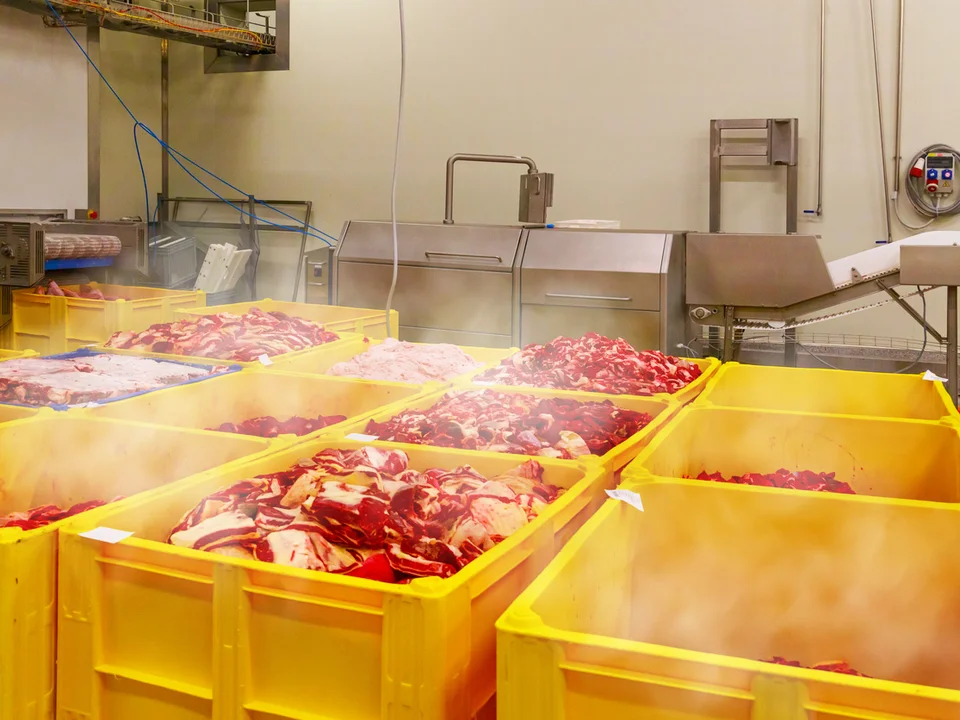
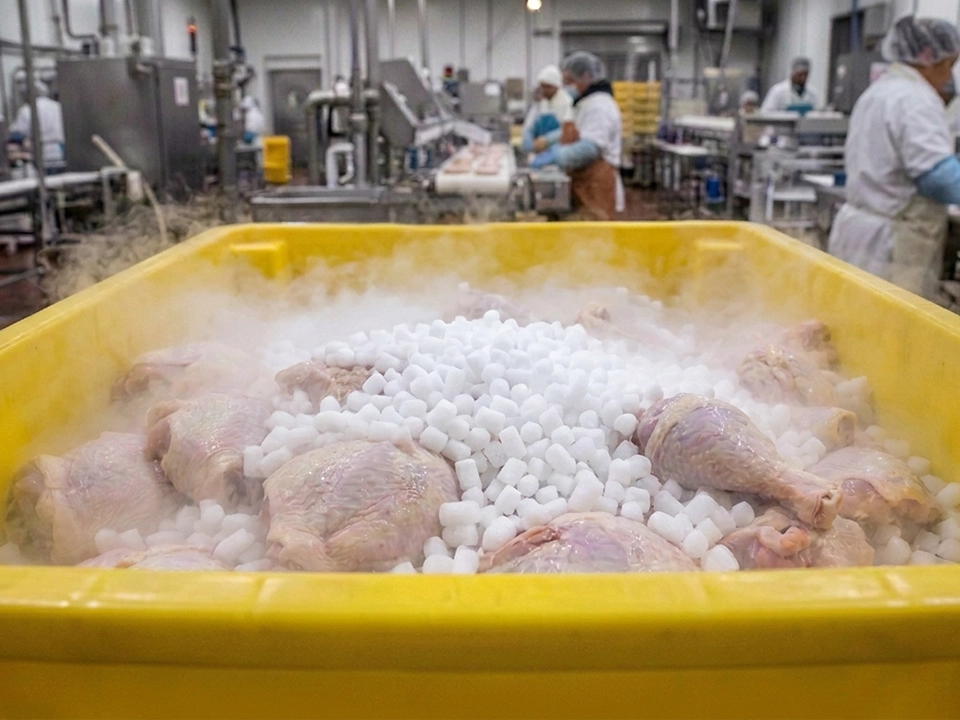
From offal lines to added value shipping, workers layer dry ice pellets and nuggets directly among high volumes of product to rapidly drop its temperature before it moves to the next processing stage.
Dry ice chills offal boxes to maintain organ freshness and prevent bacterial growth, and keeps meat cold and fresh at trim lines where product is handled multiple times — typically at 5–10 lbs of dry ice per box. Because it sublimates, product never sits in meltwater.
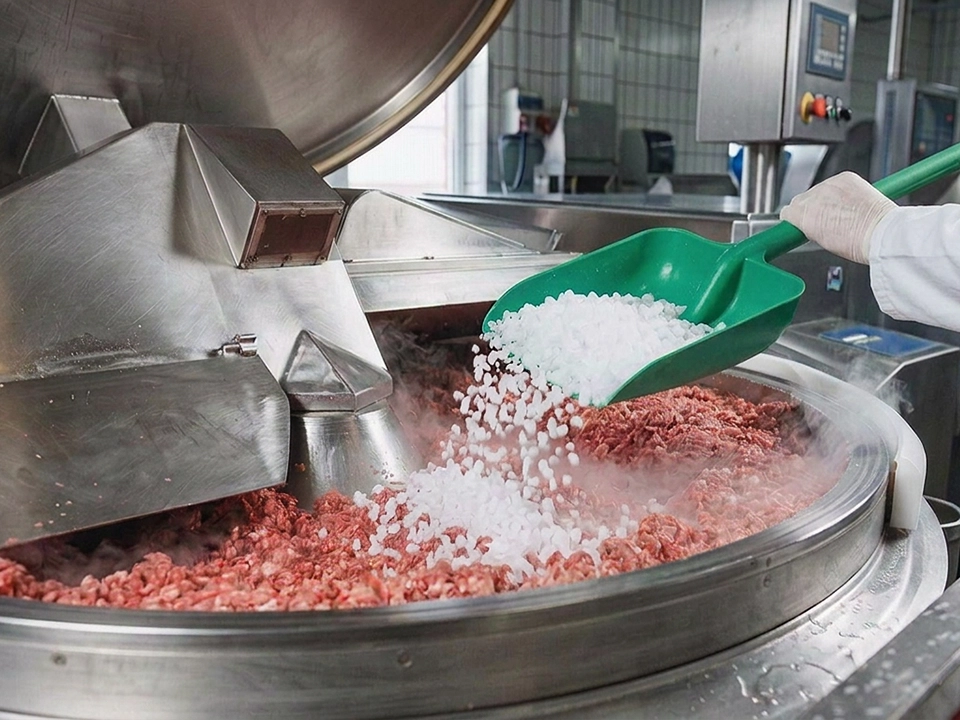
Mechanical friction during grinding and mixing creates heat pockets that are ideal breeding environments for harmful microorganisms. Dry ice mixed directly into the equipment offsets that friction heat and eliminates hot spots — without adding moisture or altering the ratios of the meat product.
When active cooling systems are overwhelmed during production surges or hot seasons, dry ice adds cooling capacity on demand — reducing loading on freezers and chillers, eliminating drip loss and double handling, and preventing investment in additional chiller infrastructure.
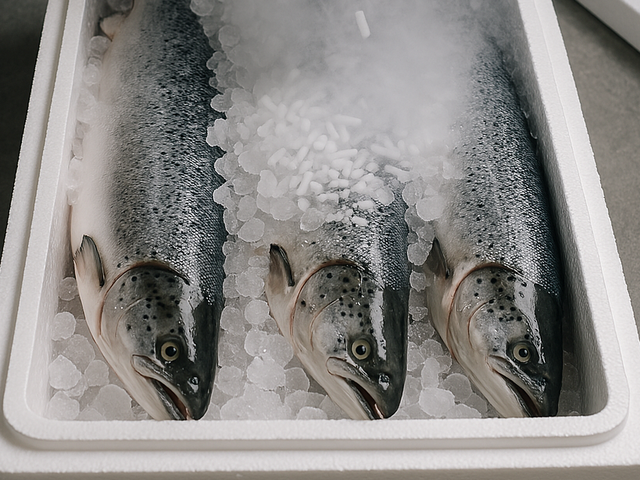
Myths persist that dry ice damages fish skin, clouds eyes, or discolors gills. The reality: when used correctly alongside flake ice, dry ice is safe and effective — and it reduces costs, weight, and carbon footprint in seafood export.
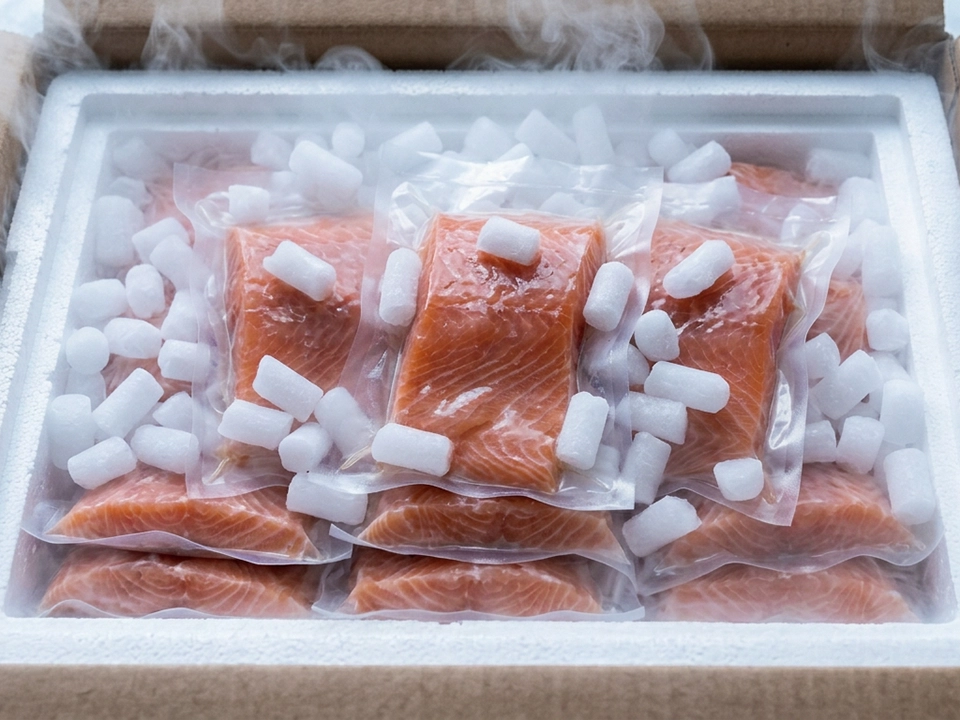
Adding dry ice reduces the weight of an exported box of fresh fillet by an average of 4 kg by displacing large quantities of flake ice — cutting transport costs by approximately €5 per box. At industry scale, that change can eliminate over 1,168,000 kg of CO₂ emissions while improving quality.
Dry ice holds stable temperatures for up to 144 hours, minimizing microbial growth, preventing wrinkling, and maintaining optimal freshness for whole fish, fish sides, steaks, and fillets — loose or packed — across road, sea, and air freight.
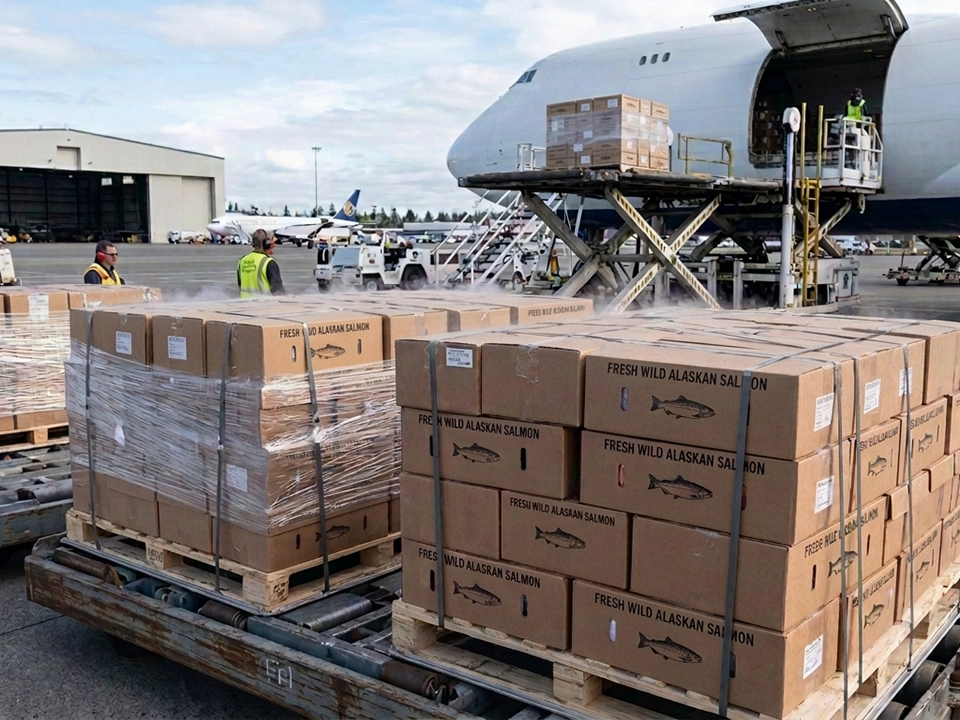
Because dry ice sublimates, pallet weight drops in transit and is not factored into airport scale measurements. It performs well in both expanded polystyrene and cardboard boxes — folded cardboard saves significant storage space — and produces no melted water or ice slurry spillage on the road.
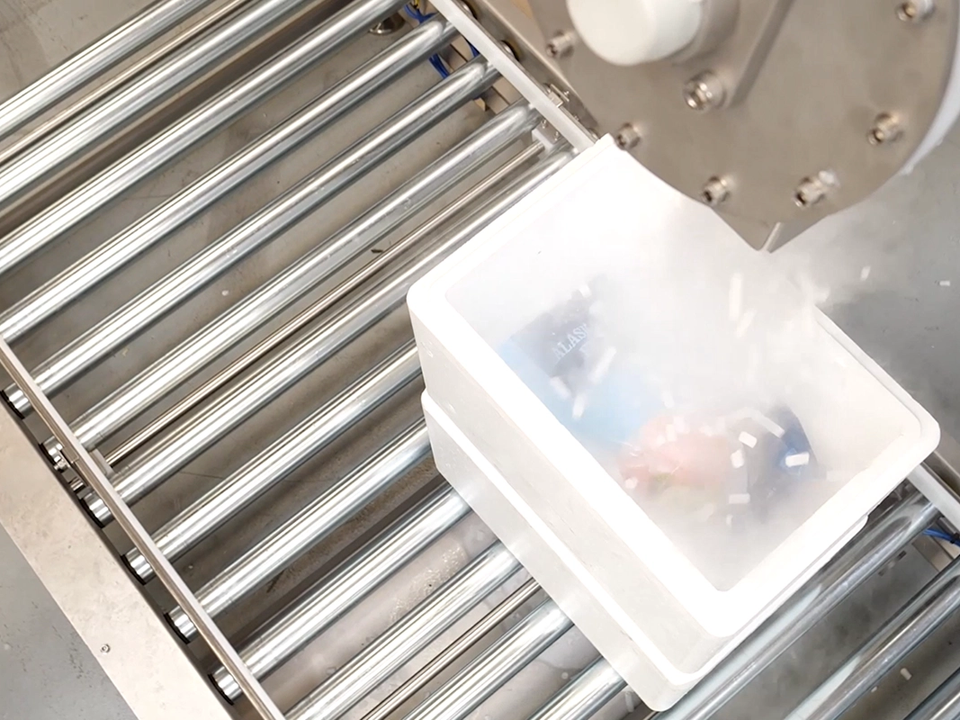
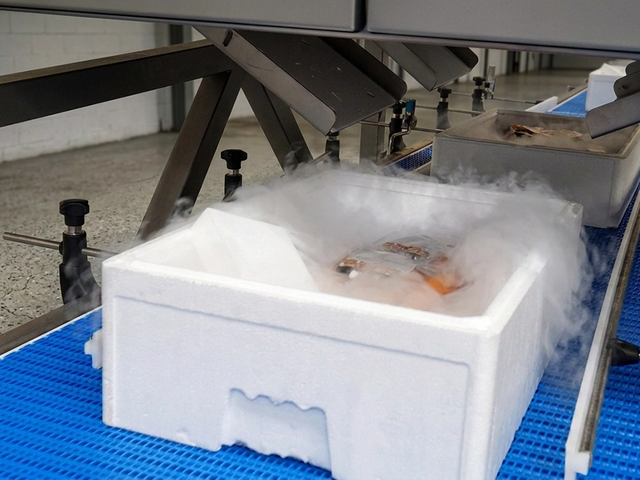
Cold Jet DS500E and DS1000E systems produce and dispense 1,103–2,205 lbs (500–1,000 kg) of premium dry ice slices per hour directly into seafood packaging, interfacing seamlessly with conveyor belts for fully automated packing lines. Cold Jet is also seeking application development partnerships with crustacean and mollusca exporters for cost-benefit analysis and product quality testing.
Independent SmartCAE thermal modeling shows that dry ice requires the least coolant weight of any passive cooling medium to achieve a 100% pass rate year-round — across box types, lane lengths, and seasons.
In SmartCAE simulations, dry ice protected the same payload with roughly half the coolant weight of PCMs — and in refrigerated 24-hour lanes, as little as a third. Every pound of coolant saved is a pound of sellable product or freight cost recovered.
Dry ice held a 38 lb (17.5 kg) frozen payload at -4°F (-20°C) across 72-hour US lanes and 48-hour UK lanes, and a 25 lb (11.5 kg) refrigerated payload at 39.2°F (4°C) across 24-hour lanes — in both cardboard and EPS boxes.
The same modeling found that switching to dry ice can significantly minimize total cost of ownership compared to alternative coolants, with considerable reductions in total carbon footprint per shipment. As a passive medium, dry ice requires no mechanical refrigeration infrastructure in transit.
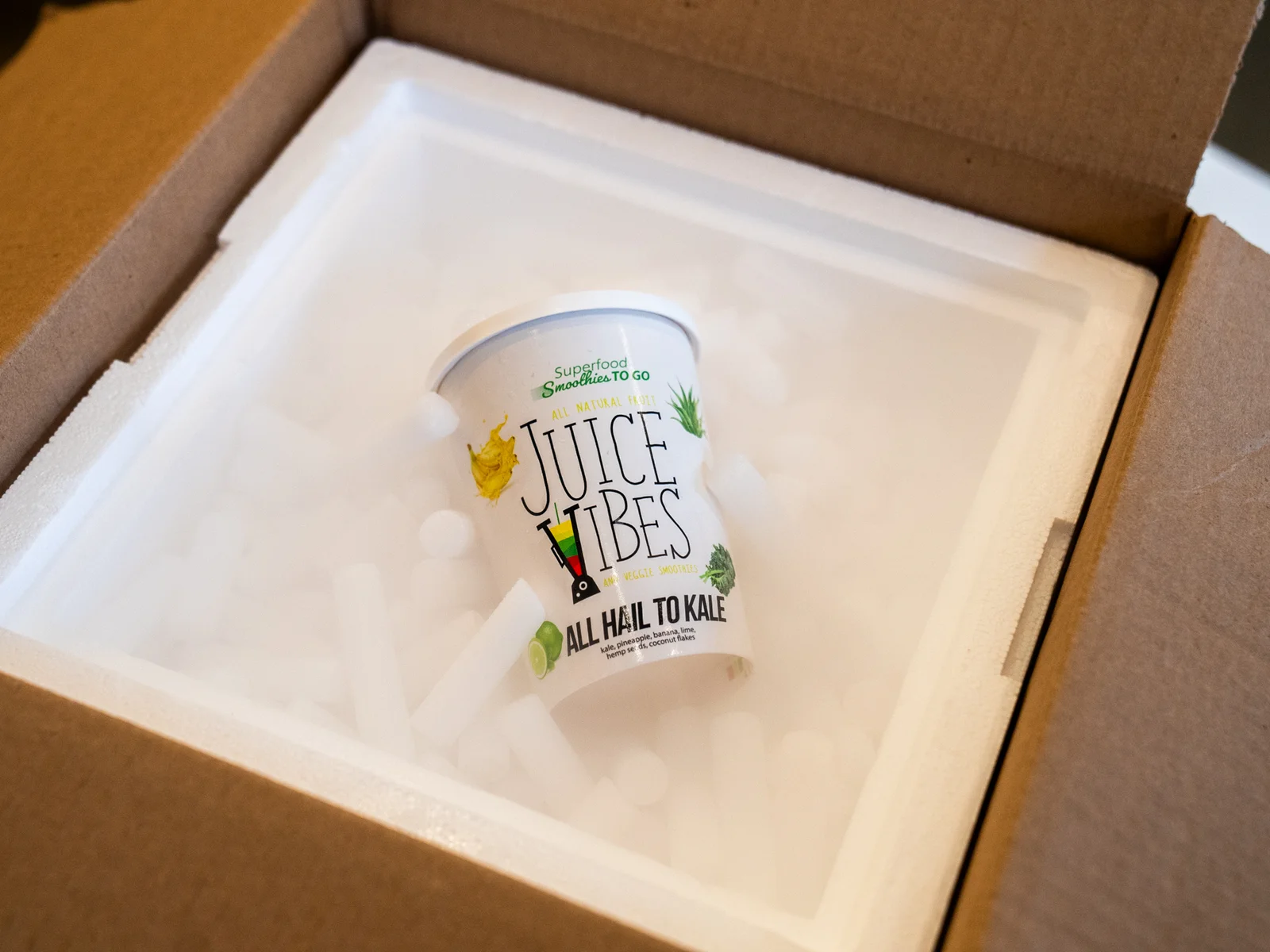
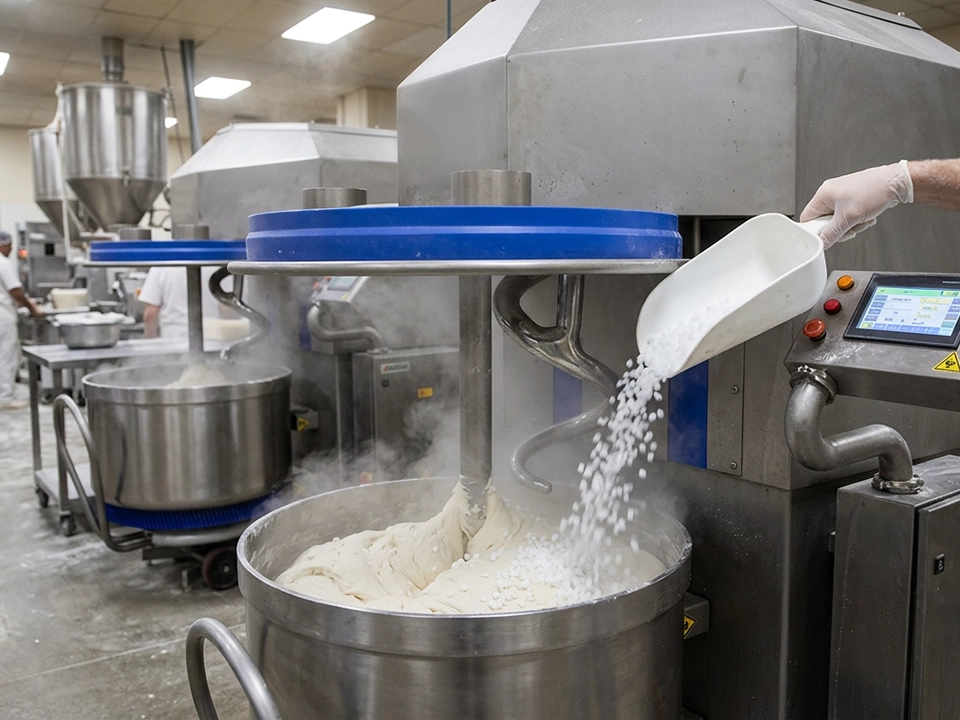
Temperature is the lever that controls fermentation — and dry ice pellets give industrial bakeries and wineries precise, chemical-free control over it, batch after batch.
Added directly to dough mixers and blenders, dry ice pellets rapidly cool the yeast to prevent premature fermentation — a challenge that intensifies in hot weather. The result is consistent proofing behavior and batch-to-batch consistency, without adding water to the dough.
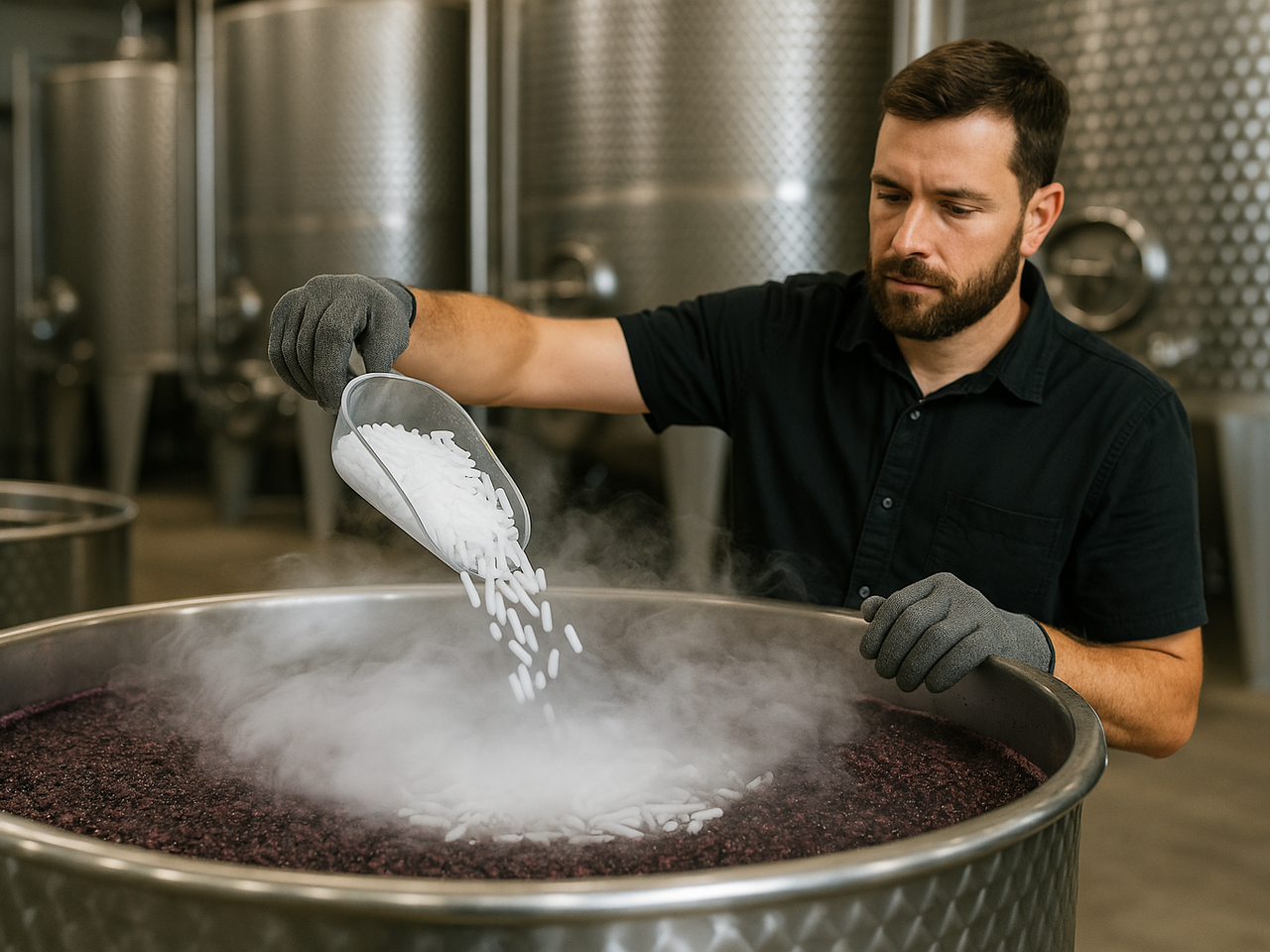
In winemaking, dry ice pellets are added to the top of fermentation tanks — for red, white, or rosé — where the sublimating CO₂ forms a protective layer that keeps the must from contacting oxygen while supporting temperature control. 3 mm pellets are ideal for this application.
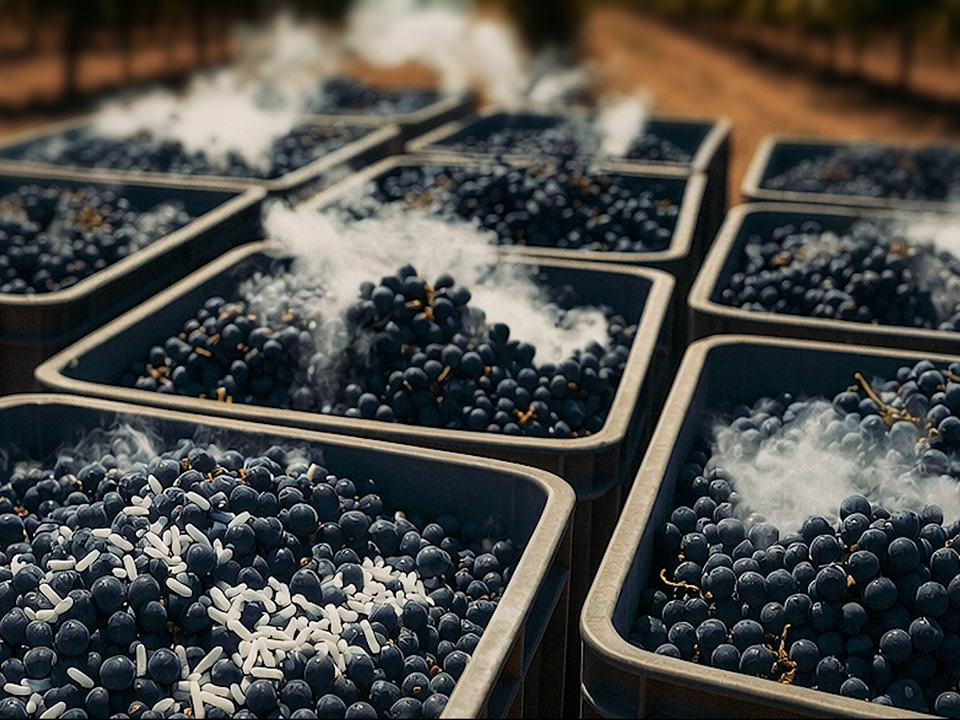
Dry ice supports chilled handling from vine to press, protecting grapes from heat and preventing premature fermentation and oxidation before the must ever reaches the tank — preserving the primary fruit character the winemaker is working to capture.
On-site dry ice production requires less infrastructure than most processors expect. With a Cold Jet pelletizer, a bulk liquid CO₂ tank, three-phase power, and connecting piping, you can produce fresh, high-density dry ice on demand:
Step 01
CoreProduction System
Dry Ice Pelletizer
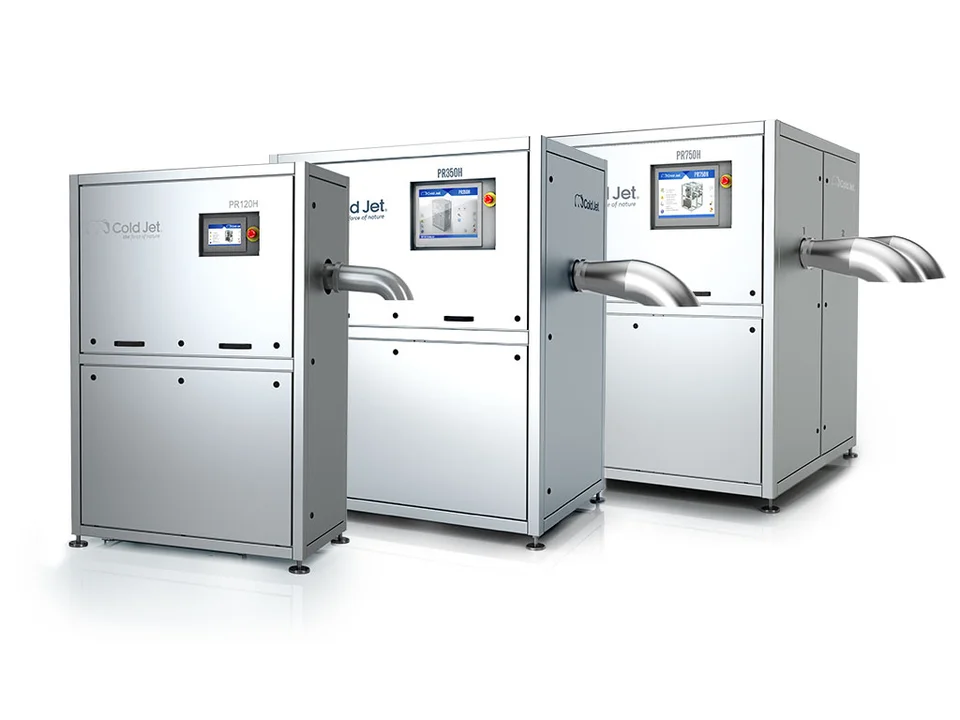
The heart of any on-site dry ice operation is a reliable pelletizer that transforms liquid CO₂ into high-density dry ice pellets from 3 mm to 16 mm. Cold Jet’s range spans the PE 80 (up to 176 lb/hr) to the PR1500H (up to 3,306 lb/hr), so you can match the machine to your daily demand rather than over-buying. One-button operation gets you producing in under five minutes.
See how dry ice stacks up against water ice, gel packs and PCMs, CO₂ snow horns, and mechanical refrigeration across the criteria that matter most in food processing.
| Criteria | Dry Ice Best | Water Ice | Gel Packs & PCMs | CO₂ Snow Horns | Mechanical Refrigeration |
|---|---|---|---|---|---|
| Temperature | -109°F (-78.5°C) — constant until fully sublimated | 32°F (0°C) — rises as it melts | Limited range — warms steadily in transit | -109°F (-78.5°C) — with high vapor loss | Setpoint-limited — struggles with peak loads |
| Moisture & Residue | None — sublimates directly to gas | Melts into bacteria-friendly leachate | Leak and condensation risk near product | None | Condensation and defrost water |
| Weight in Transit | Lightest — and gets lighter as it sublimates | Heavy — and stays heavy | Up to 2–3x more coolant weight for the same payload | N/A — in-plant use only | N/A — requires refrigerated equipment |
| Media Efficiency & Cost | 12–14% better LCO₂ conversion than other systems | Cheap media — costly consequences | High recurring pack costs | Uses ~70% to 2× more LCO₂ than a pelletizer for the same solid CO₂ | High energy consumption |
| Food Safety | Inhibits microbial growth; EPA, FDA & USDA endorsed | Meltwater is a known Listeria vector | Safe if intact — puncture risk near product | Food-grade, but difficult to dose precisely | Safe, but cannot reach in-process hot spots |
| Infrastructure Required | Pelletizer + LCO₂ tank; fully passive in transit | Ice machines requiring constant sanitation | Freezer capacity to recharge packs | Snow horn + LCO₂(plug-and-play pelletizer upgrade path) | Major capex to add peak capacity |
Cold Jet systems produce high-density dry ice pellets and slices onsite, from a plug-and-play containerized unit to fully automated slice dosing on your production line. Match the machine to your daily demand and dry ice format rather than over-buying. The three systems below cover most food processing operations.
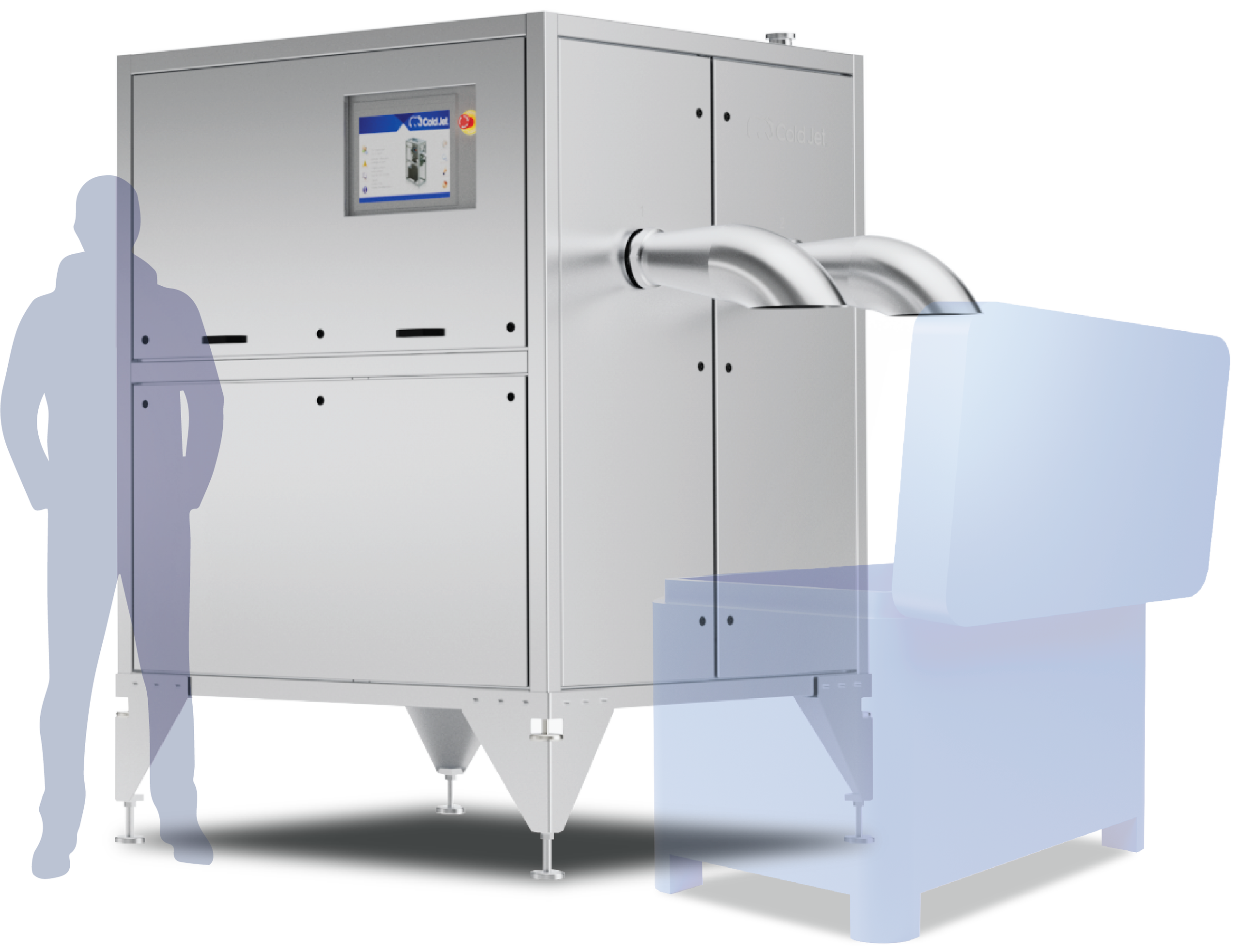
PR750H Dry Ice Pelletizer
The PR750H delivers up to 1,653 lbs (750 kg) of high-density dry ice pellets per hour. Automatic quick die change switches pellet sizes in seconds, and the complete version produces two pellet sizes at once, making it the workhorse for high-volume, multi-line food processing operations.
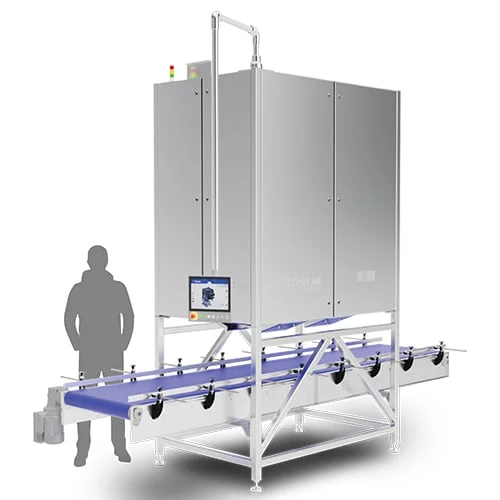
DS1000E
The DS1000E turns liquid CO₂ into dry ice slices and doses them directly onto your line or into parcels, with no separate pelletizer or reformer needed. Operators program slice weight and dosing frequency at the touchscreen, removing the need and the danger of manually sawing dry ice blocks.
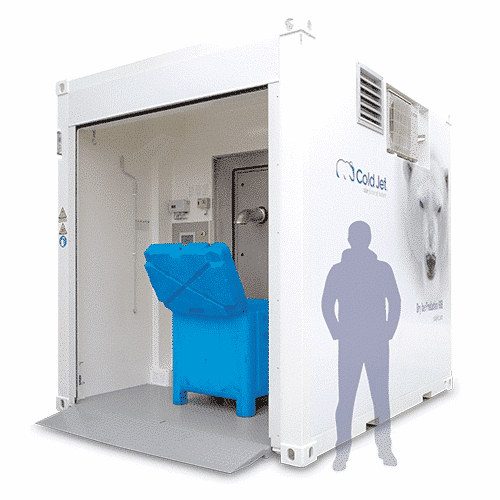
Dry Ice Production Hub
The Dry Ice Production Hub houses a PR120H or PR350H pelletizer in a ready-to-run 10 ft container, so you can produce dry ice onsite without building a dedicated production room. Connect power, liquid CO₂, and instrument air, and it’s ready to run, ideal for facilities with limited floor space.
Side-by-side specs for the Cold Jet systems best suited to food processing, so you can match production capacity, dry ice format, and installation to your daily dry ice demand.

High-volume industrial pellets
Slice production and in-line dosing
Containerized plug-and-play production
| Specification | PR750H | DS1000E | Dry Ice Production Hub |
|---|---|---|---|
| Production | |||
| Best For | High-volume, multi-line processing plants | Processors dosing slices onto product or into parcels | Facilities with limited floor space or no production room |
| System Type | Standalone pelletizer | All-in-one slice production and dosing | PR120H or PR350H pelletizer in a 10 ft container |
| Rated Output | Up to 1,653 lb/hr(750 kg/hr) | Up to 2,204 lb/hr (1,000 kg/hr) of slices | Up to 265 lb/hr (PR120H) or 772 lb/hr(PR350H) |
| Dry Ice Format | 3, 6, 10, or 16 mm pellets | 5 x 5 in slices, 0.5–2.2 lb; 0.5–2.3 in thick | Pellets; sizes depend on pelletizer |
| LCO₂ Conversion (Sub-Cooling) | 12–14% better than market standard | Not published | 12–14% better than market standard |
| Start-Up Time | Less than 3 minutes | Not published | Less than 3 min (PR350H) or 5 min(PR120H) |
| Operation & Installation | |||
| Format Change | Automatic quick die change, in seconds | Slice weight set at touchscreen; recipe programs | Automatic quick die change(PR350H configuration) |
| HMI Display | 15 in color touchscreen | 15.6 in color touchscreen | 15 in (PR350H) or 7 in (PR120H) touchscreen |
| Line Integration | BUS/Ethernet connection to plant controls | Direct integration into production lines; BUS/Ethernet | Self-contained; connect power, LCO₂, and instrument air |
| Dimensions (L x W x H) | 59 x 59 x 71 in | 74.5 x 52.5 x 95 in | 10 ft high-cube ISO container |
| Machine Weight | 4,017 lb(1,822 kg) | 3,968 lb(1,800 kg) | Not published |
| Power Supply | Three-phase | 3 x 400 V/50 Hz or 3 x 480 V/60 Hz | Three-phase |
| Remote Monitoring | Cold Jet CONNECT® | Remote display via LAN or internet | Cold Jet CONNECT® |
| Noise Level | Below 75 dB(A) | Below 75 dB(A) | Not published |
All three pelletizers require 189–261 psi (13–18 bar) inlet liquid CO₂, 116–145 psi (8–10 bar) compressed air, and a three-phase power supply, and operate below 75 dB(A). Contact a Cold Jet specialist to size the right system for your demand.
If your operation uses dry ice regularly — or struggles with cooling deficits during peak season — producing dry ice on-site typically pays for itself quickly. Purchased dry ice costs $0.30–$0.80 per pound, and 15–30% of it sublimates in transit and storage before it is ever used.
When evaluating this capital investment, consider the complete picture: elimination of delivery dependencies and price volatility, fresher and denser pellets that sublimate more slowly, and just-in-time production that ends idle sublimation loss.
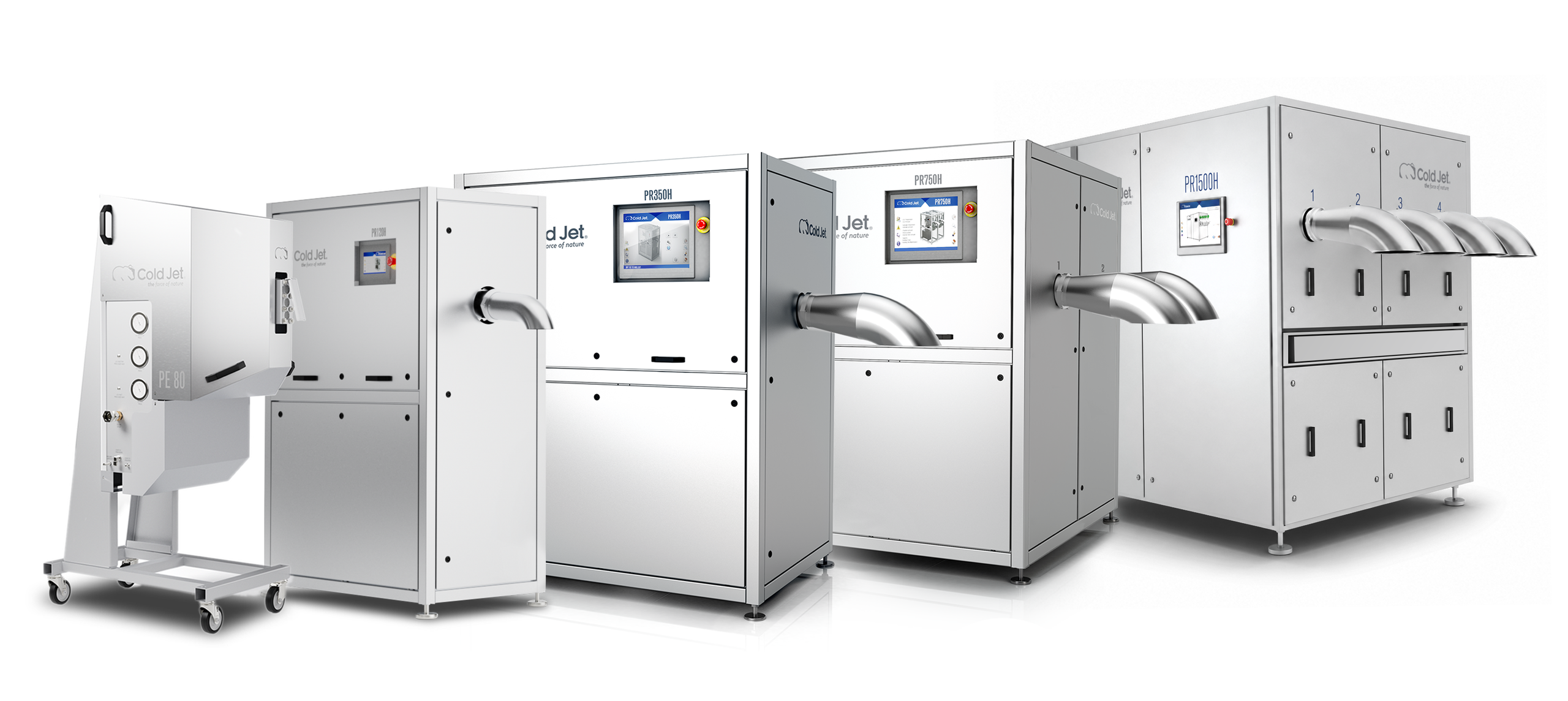
The Global Leader in Dry Ice Production
With 1,000+ dry ice production systems installed globally, 40%+ global market share, and dedicated applications engineering experts, Cold Jet has unmatched experience putting dry ice to work in food operations.
More Efficient Pelletizers
Cold Jet sub-cooling technology delivers 12–14% better LCO₂-to-dry ice conversion efficiency than the market standard, so more of every ton of liquid CO₂ becomes sellable dry ice, at a lower cost per ton produced.
Trusted by Global Food Leaders
Cold Jet equipment powers the dry ice operations of global food industry leaders including JBS, Cargill, Conagra Brands, Greater Omaha, SalMar, Sekkingstad, Lerøy, Danish Crown, HKScan, and Master Good.
Lower Operating Costs
On-site production eliminates the 15–30% sublimation loss and price volatility of purchased dry ice — and adding CO₂ recovery cuts production costs by up to another 40% by recycling exhaust gas back into the pelletizer.
Unrivaled Uptime and Global Support
A dedicated global service organization of 70+ experts delivers installation, operator training, preventative maintenance, and remote troubleshooting — with Industry 4.0-enabled remote monitoring and diagnostics keeping production lines running.
Engineered Dosing & Automation
From integrated dosing systems that dispense pellets into totes at ±7.5% accuracy to DS-series systems that produce and dose dry ice slices directly into packaging on conveyor lines, Cold Jet builds custom-engineered systems that dose dry ice according to your needs.
From regional processors to global protein leaders like JBS, Cargill, Conagra Brands, and Danish Crown — Cold Jet dry ice production systems support food operations in more than 70 countries.





See What Dry Ice Producers and Food Processors Are Saying
We saw an immediate effect on our CO₂ ratio from 2.4:1 now to 1.35:1. Profit, production capability, and overall company performance is greatly improved.
Dry ice is endorsed as safe around food by the EPA, FDA, and USDA — and helps processors satisfy HACCP critical control points without introducing moisture.
Hazard Analysis and Critical Control Points: Processing Temperature Thresholds
HACCP is the food safety management system required by the FDA and USDA for meat, poultry, seafood, and juice processors. It defines critical control points (CCPs) — including temperature thresholds — that must be met during processing, packaging, and transport.
At a constant -109°F (-78.5°C), dry ice rapidly pulls product below the 39.2°F (4°C) CCP threshold and holds it there — in grinders, totes, and shipping boxes — without introducing the moisture that creates new hazards. Consistent dosing makes temperature control repeatable and documentable.
U.S. Food and Drug Administration
FDA food safety regulations, including FSMA preventive controls, require processors to manage temperature and contamination risks throughout production and distribution.
The FDA has endorsed the safety of using dry ice in food processing. Dry ice is non-toxic, tasteless, and odorless, sublimates completely, and supports temperature preventive controls without adding water, chemicals, or residue to product or equipment.
Food Safety and Inspection Service
USDA FSIS regulations govern meat and poultry processing, requiring processors to keep product out of the 40°F–140°F danger zone where pathogens like E. coli, Listeria, and Salmonella multiply rapidly.
Dry ice is endorsed as safe around food by the USDA. Dosed directly into offal boxes, trim totes, and mixers, it eliminates friction hot spots and keeps beef, poultry, and pork safely below danger-zone temperatures through every processing stage.
Good Manufacturing Practice: Contamination-Free Cooling
GMP guidelines require sanitary conditions and controlled, consistent processes that prevent contamination and protect product quality and consistency.
Dry ice adds cooling without adding anything else — no water absorption that dilutes water-soluble proteins, no chemical residue, and no ice-machine sanitation burden. Dosing is repeatable and consistent from batch to batch, supporting quality and consistency requirements.
Recycled CO₂ — Carbon Capture & Utilization
Dry ice is made from recycled CO₂ captured at industrial, biogas, or ambient-air facilities and converted into a value-added cooling medium — giving the CO₂ a second life.
Per the California Air Resources Board, recycled CO₂ used as dry ice is accounted for at the producer level and is not counted a second time at the point of use — so it will not contribute to your greenhouse gas score. Independent modeling also shows considerable total carbon footprint reductions per shipment when dry ice replaces alternative coolants.
Contact us today to size the right dry ice production system for your processing, shipping, or fermentation application.