The Science
How Does Carbon Capture Work?
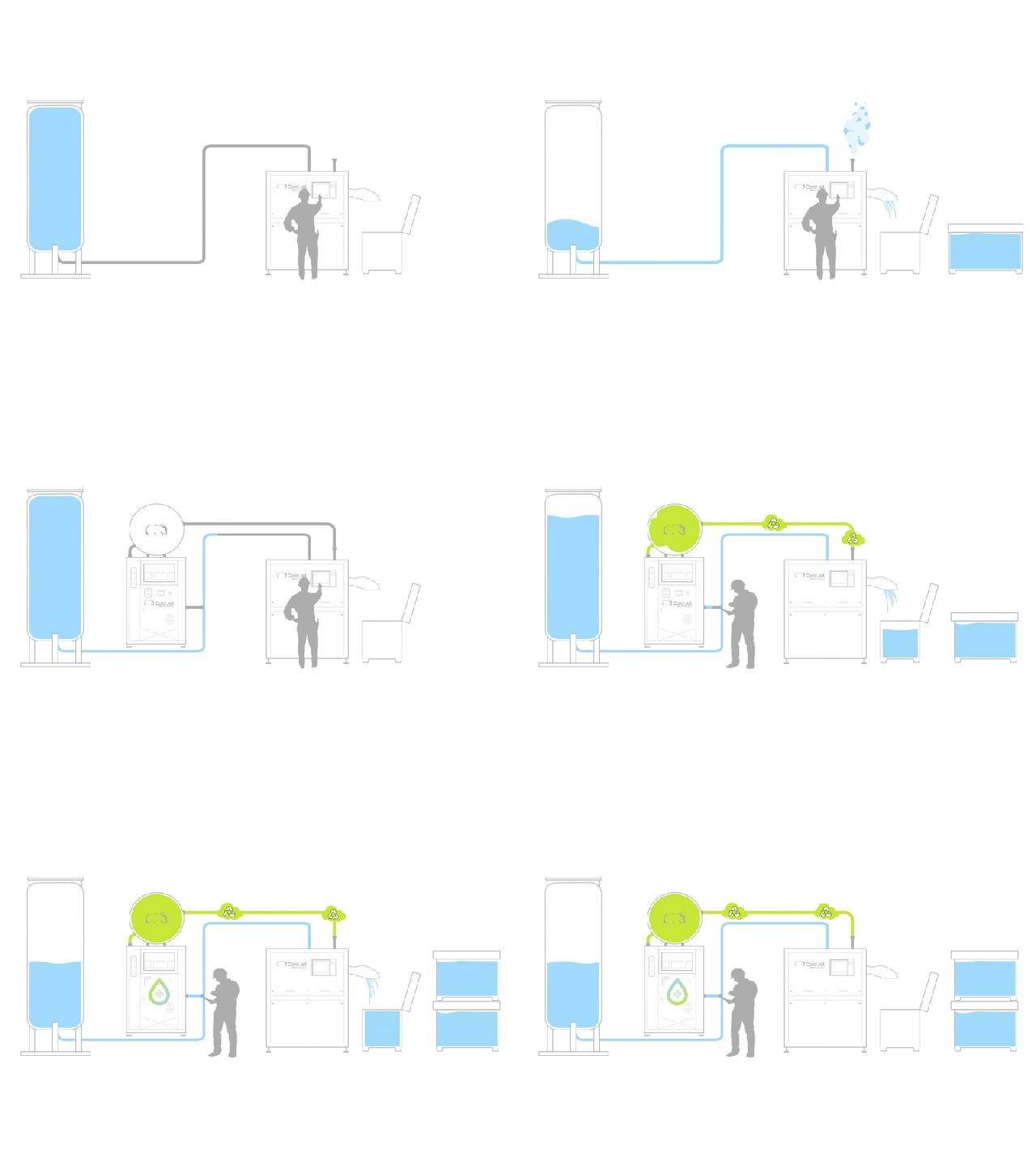
Three continuous phases — waste gas interception, multi-stage compression and cooling, and liquefaction and storage — work together to capture vented emissions and transform them back into high-purity liquid CO₂ for immediate reuse or profitable resale.
Step 01
Up to 99%Recovery efficiency
CO₂ Waste Capture
Vented CO₂ gas — normally lost to the atmosphere from dry ice production or biogas upgrading — is safely intercepted and routed directly into the recovery system.
- 01. CO₂ Waste Capture — Vented CO₂ gas — normally lost to the atmosphere from dry ice production or biogas upgrading — is safely intercepted and routed directly into the recovery system.
- 02. Compress & Purify — The captured gas undergoes a rigorous, multi-stage process of compression, cooling, and distillation. This effectively strips away impurities and moisture, converting the raw gas back into high-quality liquid CO₂.
- 03. Store & Reuse — The purified liquid CO₂ is safely stored in a pressurized bulk tank for new revenue opportunities or piped directly back into your pelletizer to seamlessly produce more dry ice.
Why Carbon Capture?
Are You Wasting Valuable CO₂?
Stop venting profits. Our capture systems recover CO₂ from dry ice production and biogas upgrading — drastically cutting your liquid CO₂ costs, lowering emissions, and unlocking lucrative new revenue streams.
 Financial
Cut Liquid CO₂ Costs
Halve your liquid CO₂ consumption to immediately free up a significant portion of your operating budget.
 Reliability
Eliminate Supply Chain Disruptions
Reduce your reliance on external liquid CO₂ deliveries to ensure continuous and predictable dry ice production.
 Productivity
Maximize Dry Ice Yield
Generate significantly more dry ice without increasing your current liquid CO₂ input volume.
 Sustainability
Reduce Your Carbon Footprint
Enhance your ESG profile by utilizing natural R744 refrigerant and capturing waste CO₂ rather than venting it.
 Efficiency
Minimize Energy Consumption
Lower your operational overhead with a highly optimized system designed to draw minimal power during continuous use.
 Operations
Fully Autonomous Operation
Run your carbon capture and recovery systems continuously without requiring manual oversight or additional operator headcount.
 Infrastructure
Containerized Plug-and-Play Design
Deploy the system immediately without the cost, delay, or footprint of constructing new building infrastructure.
 Compliance
Improve Plant CI Score
Recover previously vented methane from your CO₂ stream to drastically improve plant efficiency and environmental metrics.
 Revenue
Unlock Food-Grade CO₂ Sales
Capture, purify, and liquefy your CO₂ stream to sell as a premium, food-grade product to new markets.
Who Uses It
Who Uses Carbon Capture?
Carbon capture systems are utilized by dry ice production managers, biogas facility operators, plant engineers, and corporate sustainability directors across specialized gas and energy sectors — from large-scale dry ice manufacturing and biomethane upgrading to food-grade liquid CO₂ distribution. These leaders choose Cold Jet's carbon capture technology because it creates a closed-loop system, intercepts vented gas, drastically lowers operational overhead, and generates highly lucrative new revenue streams — transforming environmental liabilities into valuable assets. In real deployments, customers report up to a 40% reduction in liquid CO₂ purchasing, drastically improved Carbon Intensity (CI) scores, and the consistent generation of high-purity, food-grade liquid CO₂. Operations frequently achieve a complete return on investment in 12 months or less. Cold Jet manufactures the full equipment lineup, from low-footprint, energy-efficient CO₂ recovery units for dry ice plants to high-volume, containerized capture systems for continuous biogas upgrading.
Common roles & teams
Plant Managers
Cut liquid CO₂ procurement costs and optimize production yield.
Biogas Operators
Intercept vented exhaust and sell high-purity liquid CO₂.
Sustainability Leads
Improve CI scores by transforming greenhouse emissions into closed-loop assets.
Process Engineers
Integrate autonomous, energy-efficient liquefaction systems into existing operations.
Financial Controllers
Achieve rapid ROI by drastically reducing overhead and creating revenue.
Compliance Officers
Meet stringent environmental regulations by accurately measuring intercepted emissions.
Whether your operation needs a compact recovery unit for a small dry ice plant or a high-volume containerized system for biogas upgrading, there is a Cold Jet solution engineered for the job.
- Plant Managers
- Biogas Operators
- Sustainability Leads
- Process Engineers
- Financial Controllers
- Compliance Officers
Validated Use Cases
Where Is Carbon Capture Used?
Deployed wherever CO₂ is vented as a byproduct — dry ice manufacturing plants recovering their own flash gas, and RNG biogas facilities turning the CO₂ stream from biomethane upgrading into a saleable, food-grade product.
By Industry
Industries we serve
Tailored for dry ice manufacturers and RNG biogas facilities. Select an industry to see how Cold Jet turns your waste CO₂ into profit.
by Applications
Carbon Capture Applications
From upgraded RNG biogas to recovering dry ice production exhaust — pick an application to see how our technology transforms your waste stream.
Cold Jet Equipment
Browse the Cold Jet Equipment Lineup
From low-footprint, energy-efficient CO₂ recovery units for dry ice plants to high-volume, containerized capture systems for continuous biogas upgrading. Pick the system that fits your operation.
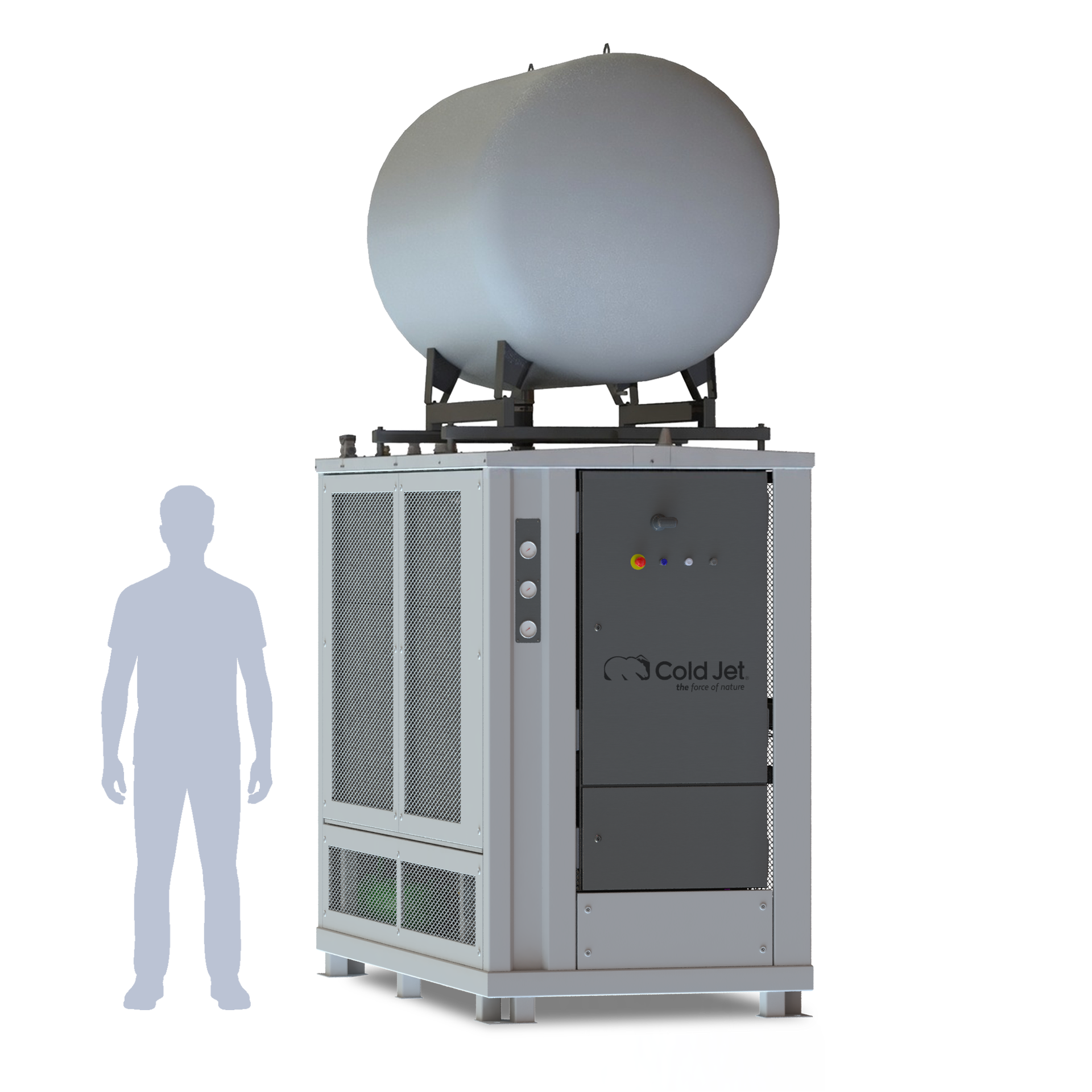
FeaturedCO₂ Recovery
RE-CO2 320V2
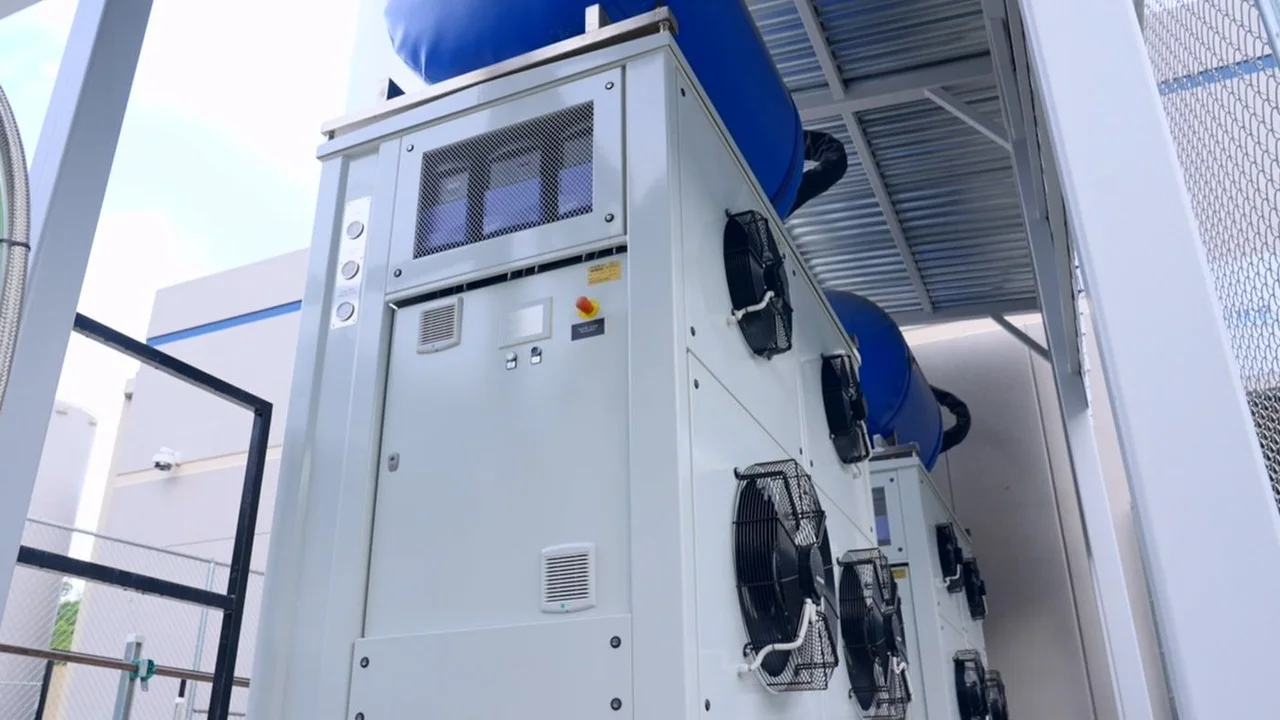
A compact unit that fits seamlessly into any dry ice production facility. It captures CO₂ gas emitted during standard dry ice production, converts it back into liquid form, and recycles it to create more dry ice.
Explore
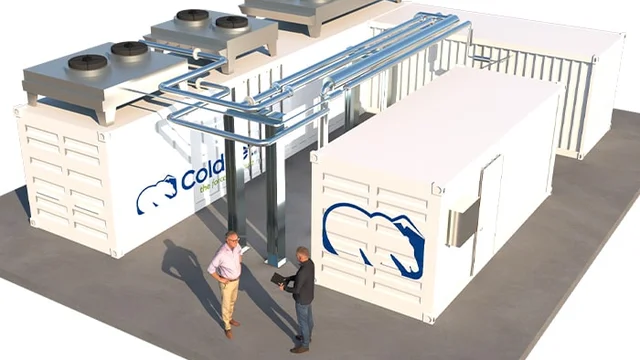
CO₂ Recovery
RE-CO2 3500
High-volume, containerized recovery with a capacity of up to 7,716 lbs/hr (3,500 kg/hr). The modular unit installs with minimal infrastructure change and can stabilize pressure in liquid CO₂ feed tanks.
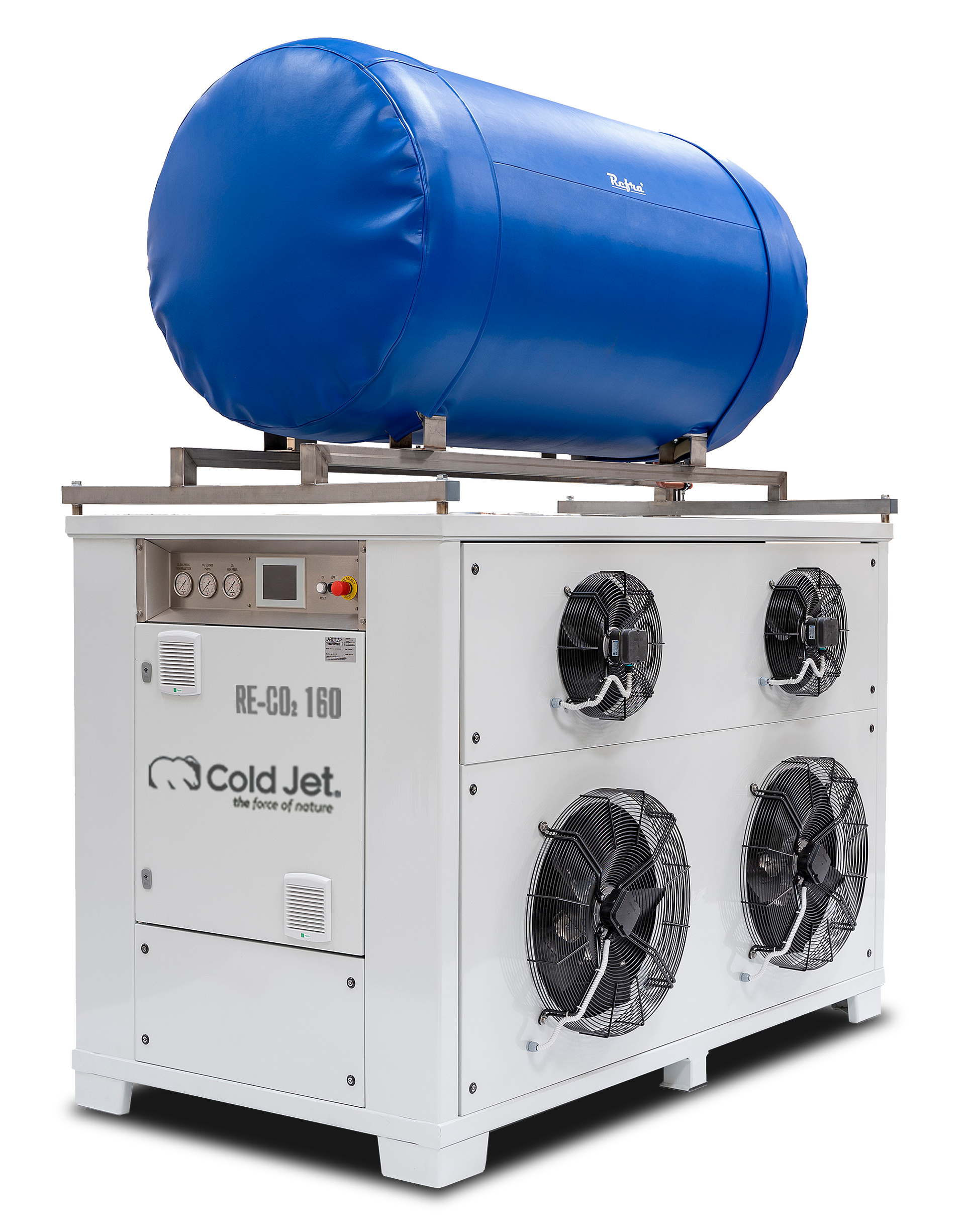
CO₂ Recovery
RE-CO2 160
The Cold Jet RE-CO2 160 captures the CO₂ gas your pelletizer vents, turns it back into liquid, and feeds it straight back to make more dry ice. It recovers up to 353 lb (160 kg) per hour, cutting liquid CO₂ costs by up to 40% — with electricity as the only utility.
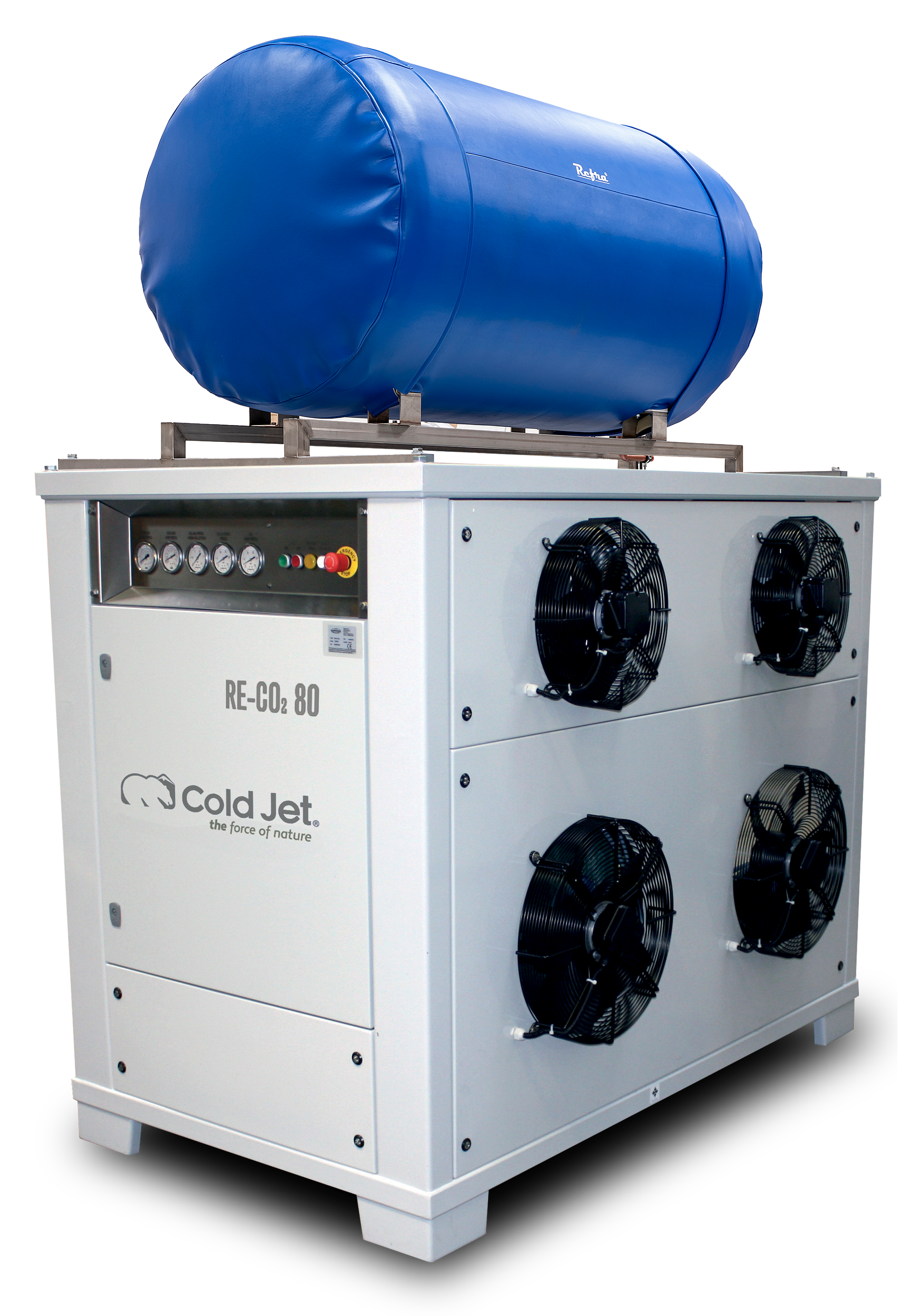
CO₂ Recovery
RE-CO2 80
The Cold Jet RE-CO2 80 captures the CO₂ gas your pelletizer vents, turns it back into liquid, and feeds it straight back to make more dry ice. It recovers up to 176 lb (80 kg) per hour, cutting liquid CO₂ costs by up to 40% — with electricity as the only utility.
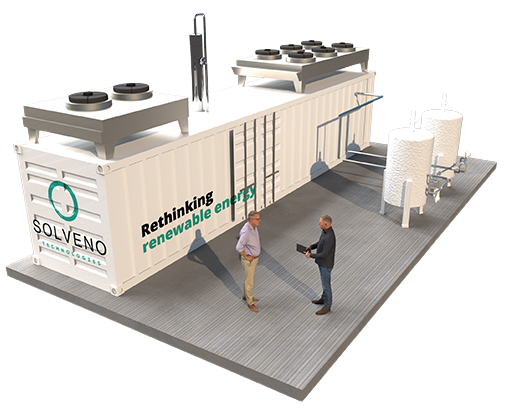
Carbon Capture & Storage
CB 12
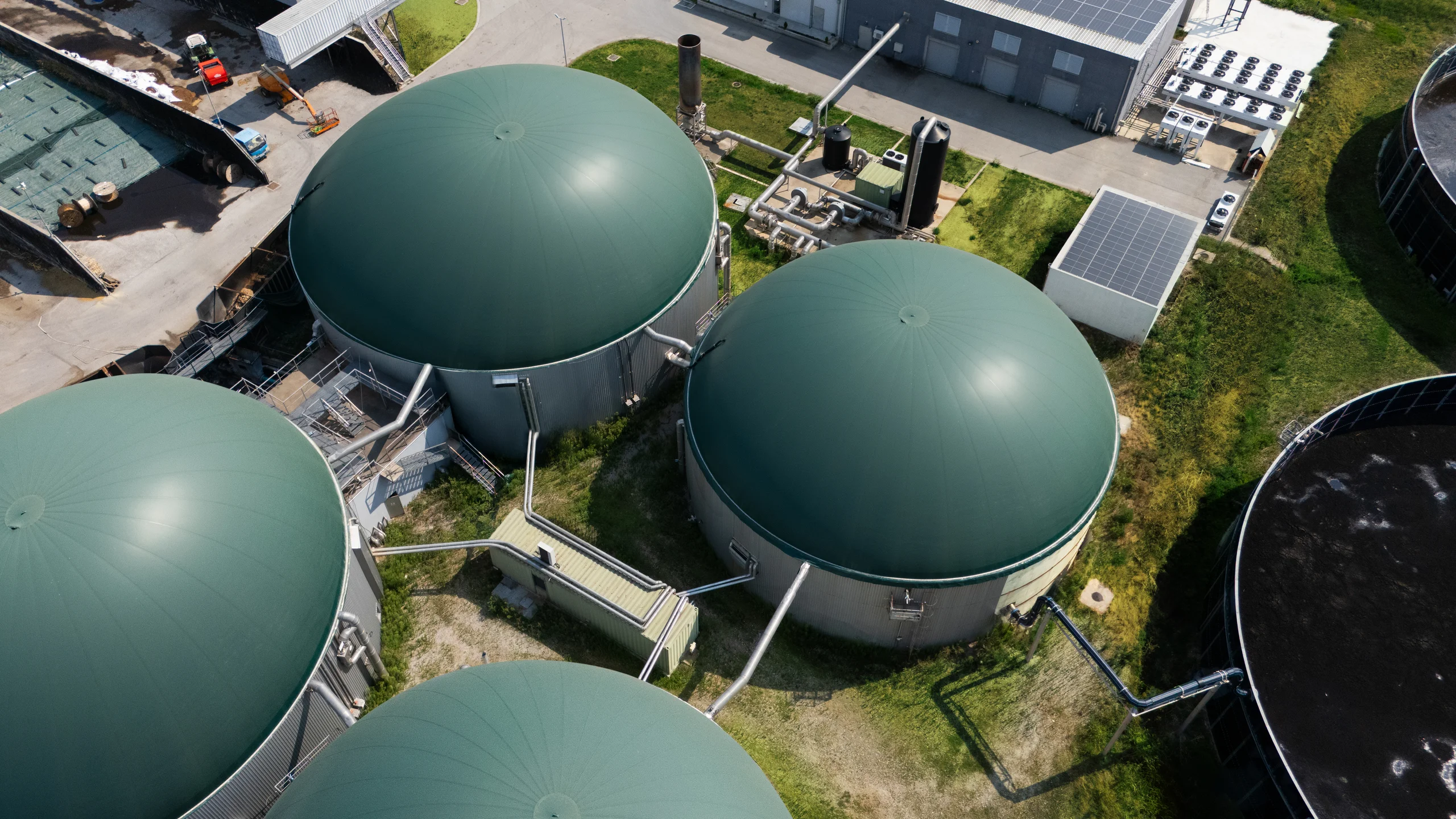
Biogas CO₂ recovery and liquefaction. Purifies, compresses, and liquefies captured CO₂ emissions into a high-purity liquid ready for sale into commercial greenhouses or dry ice manufacturing.
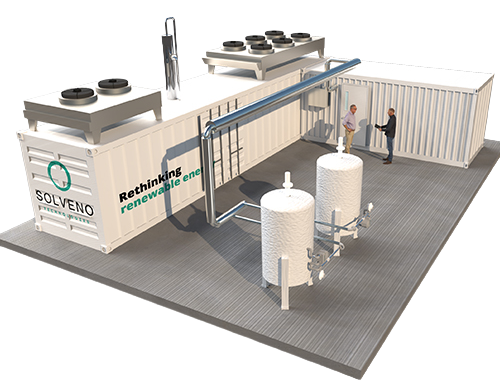
Carbon Capture & Storage
CB 17
Advanced carbon capture for biogas upgrading. Captured emissions are purified, compressed, and liquefied on site, cutting methane emissions while opening new revenue streams.
Before You Start Capturing
What Do You Need to Run a Carbon Capture System?
You need straightforward infrastructure to seamlessly integrate carbon capture: a concrete foundation, weather protection for outdoor units, extended exhaust gas piping, insulated liquid transfer lines, and pressurized bulk storage for biogas applications.
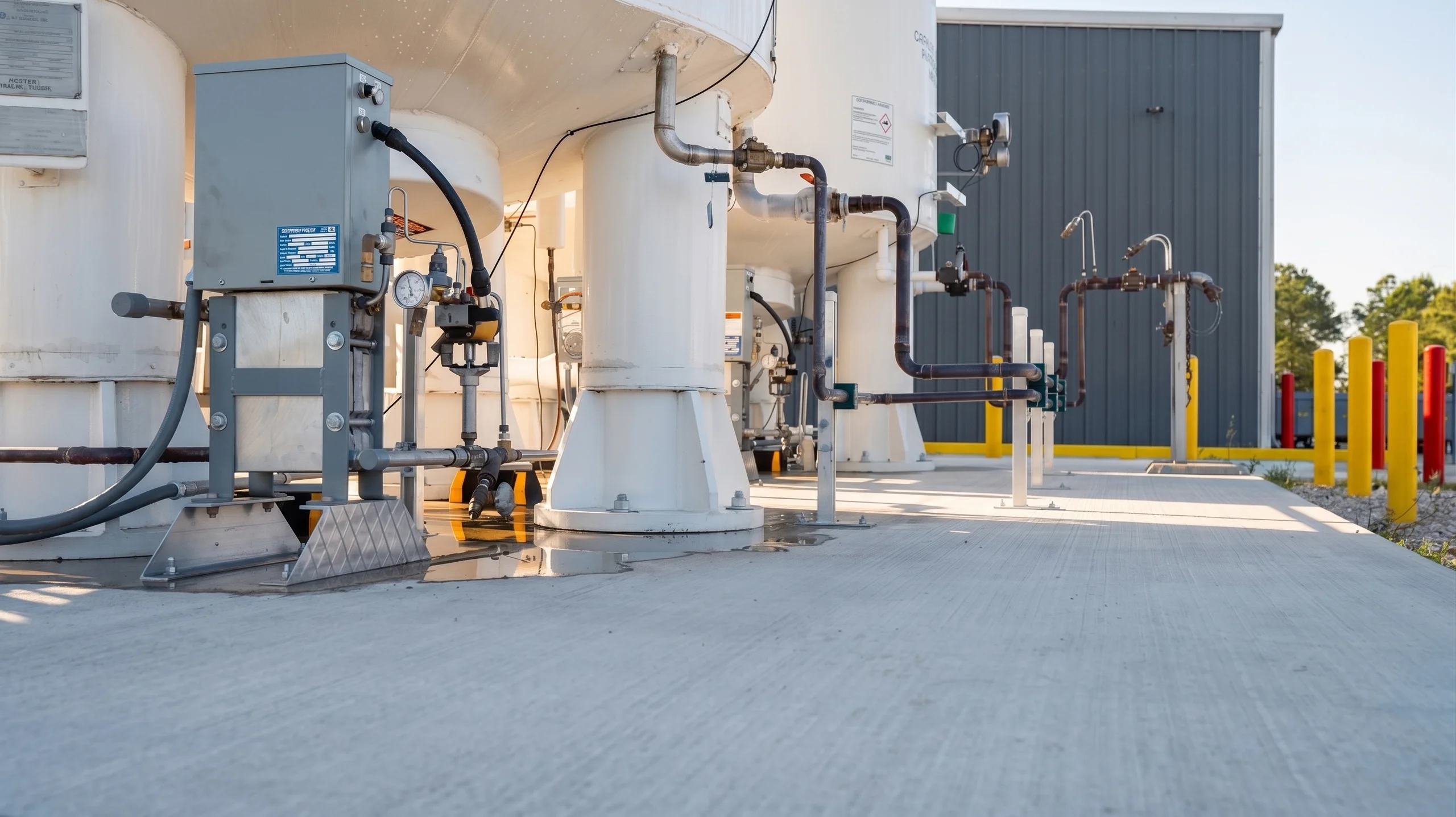 01
Concrete Foundation Pad
Structural base to support the CO₂ recovery unit.
- Must hold the operational weight of the recovery unit
- Level surface to ensure proper compressor and pump functioning
- Can be shared with existing bulk liquid CO₂ storage
Often, the existing reinforced concrete pad utilized for your main liquid CO₂ tank can also safely support the recovery system.
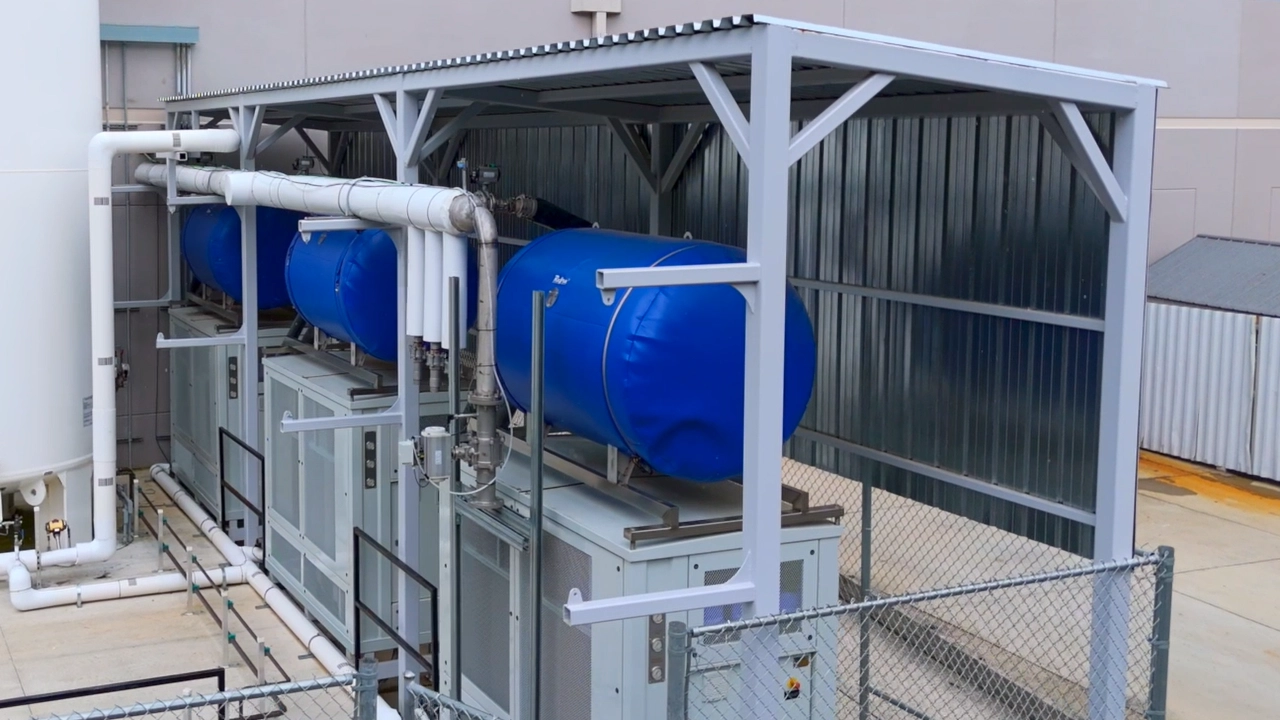 02
Protective Weather Roofing
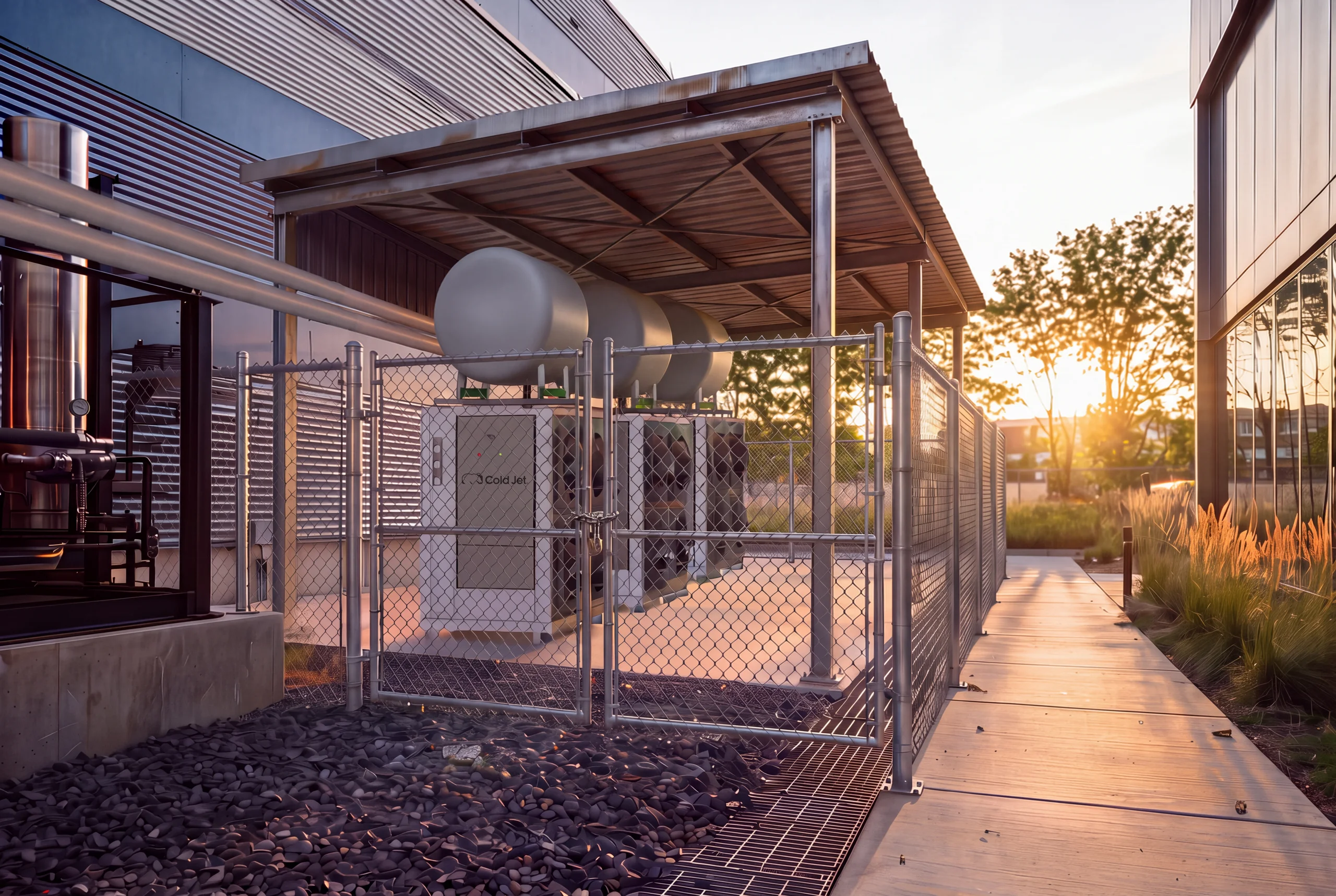
Protects non-containerized units from environmental elements.
- Shields equipment from direct rain, snow, and severe weather
- Ensures consistent performance by preventing temperature extremes
- Required only for exposed, non-containerized RE-CO2 models
Containerized units like the RE-CO2 3500 have built-in enclosures and do not require additional external weather protection.
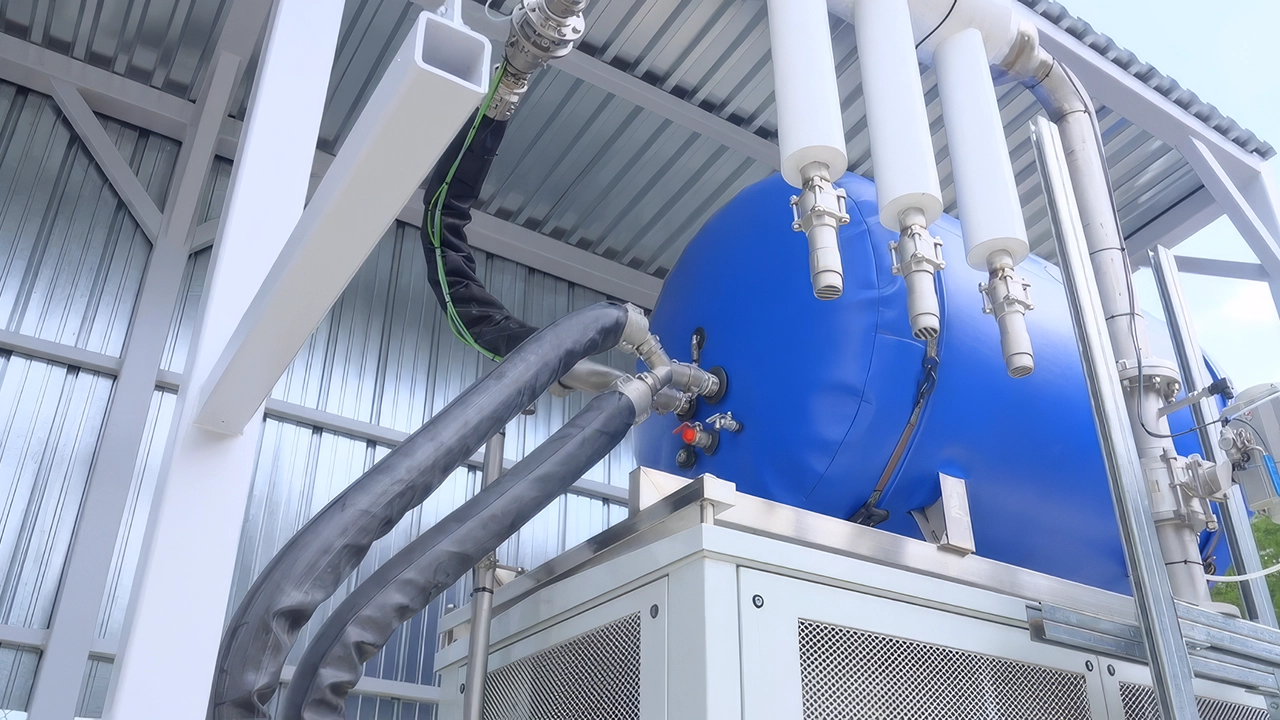 03
Exhaust CO₂ Piping
Routes vented CO₂ gas directly into the recovery system.
- Safely redirects waste CO₂ from pelletizer exhaust
- Properly sized to handle your specific peak gas volume
- Minimizes pressure drops between production and recovery units
The existing exhaust piping from your dry ice pelletizer must be extended to properly route waste gas into the capture unit.
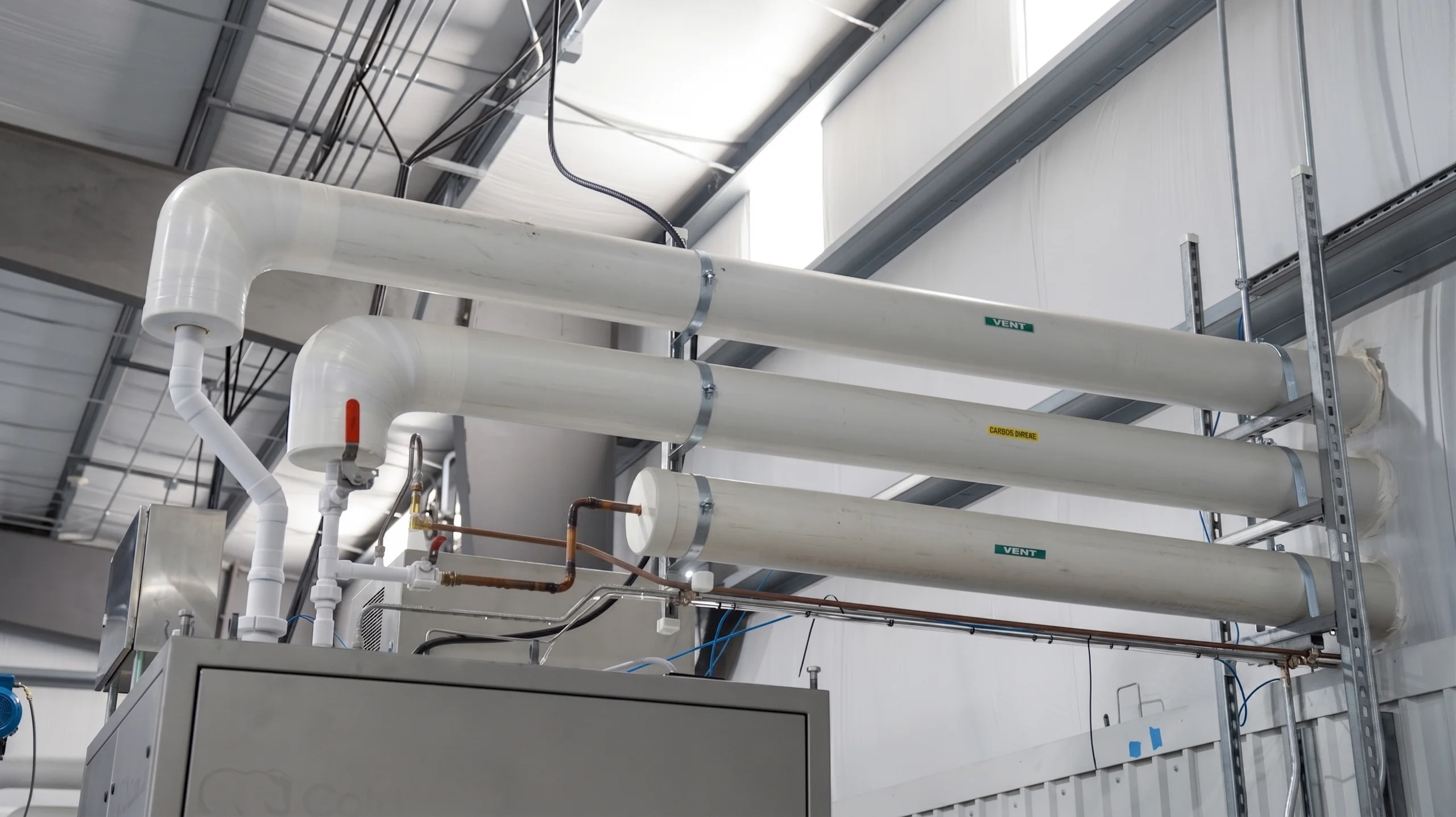 04
Vacuum Jacketed Piping
Transports reliquefied CO₂ back to production or storage.
- Highly insulated to maintain extreme cryogenic temperatures
- Connects recovery unit directly back to pelletizer valves
- Connects biogas capture units to bulk storage tanks
Crucial for preventing premature vaporization of newly liquefied CO₂ as it travels to the pelletizer or storage tank.
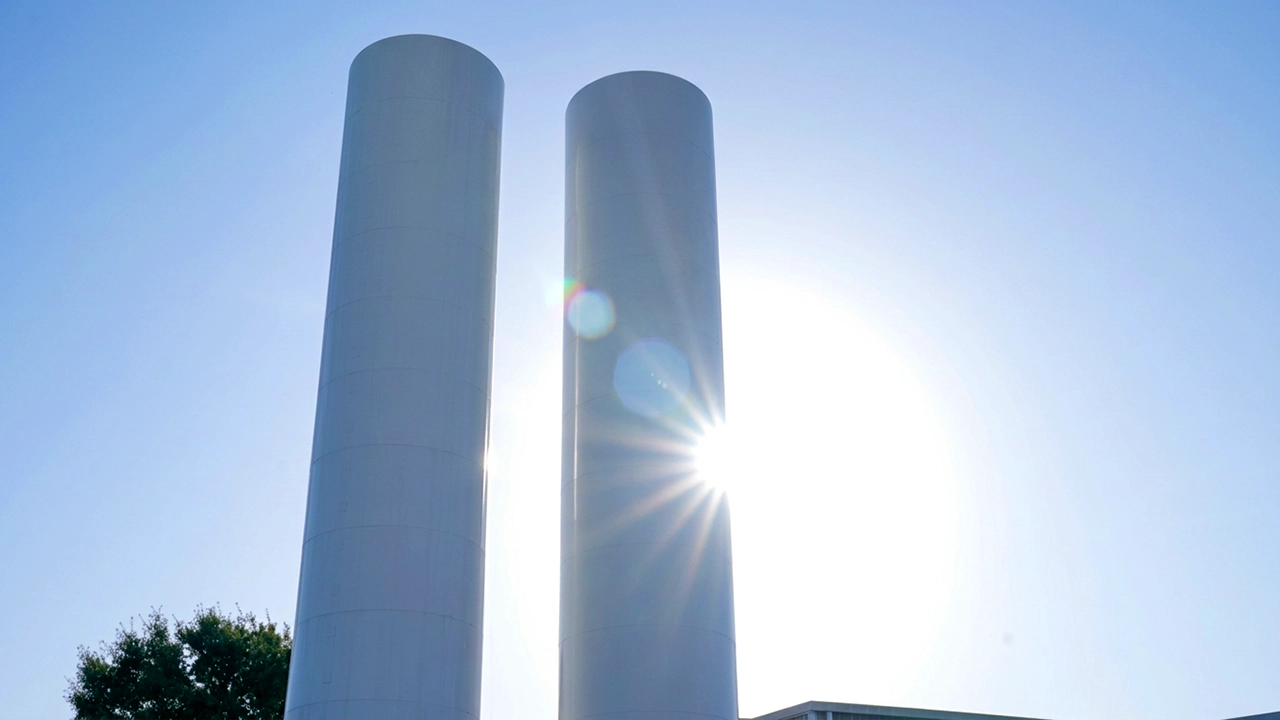 05
Liquid CO₂ Tank
Pressurized storage for the captured and reliquefied CO₂.
- Safely stores high-purity, food-grade liquid CO₂
- Maintains optimal pressure to prevent gas boil-off
- Equipped with proper load-out connections for transport
For dry ice recovery, CO₂ feeds directly to the pelletizer. Biogas operations require this tank for storage and sales.
Requirement 1 of 5
Reference
Key Terms
Quick definitions of the carbon capture terminology used on this page — surfaced both for readers and for AI crawlers parsing the page's `DefinedTerm` graph.
Process
Up to 99%
Recovery efficiency
Carbon CaptureWikipedia
The process of intercepting and trapping carbon dioxide emissions at their source before they are released into the atmosphere, transforming waste gas into a valuable asset.
Common Questions