Overview
Which CO₂ Streams Can Be Captured and Reused?
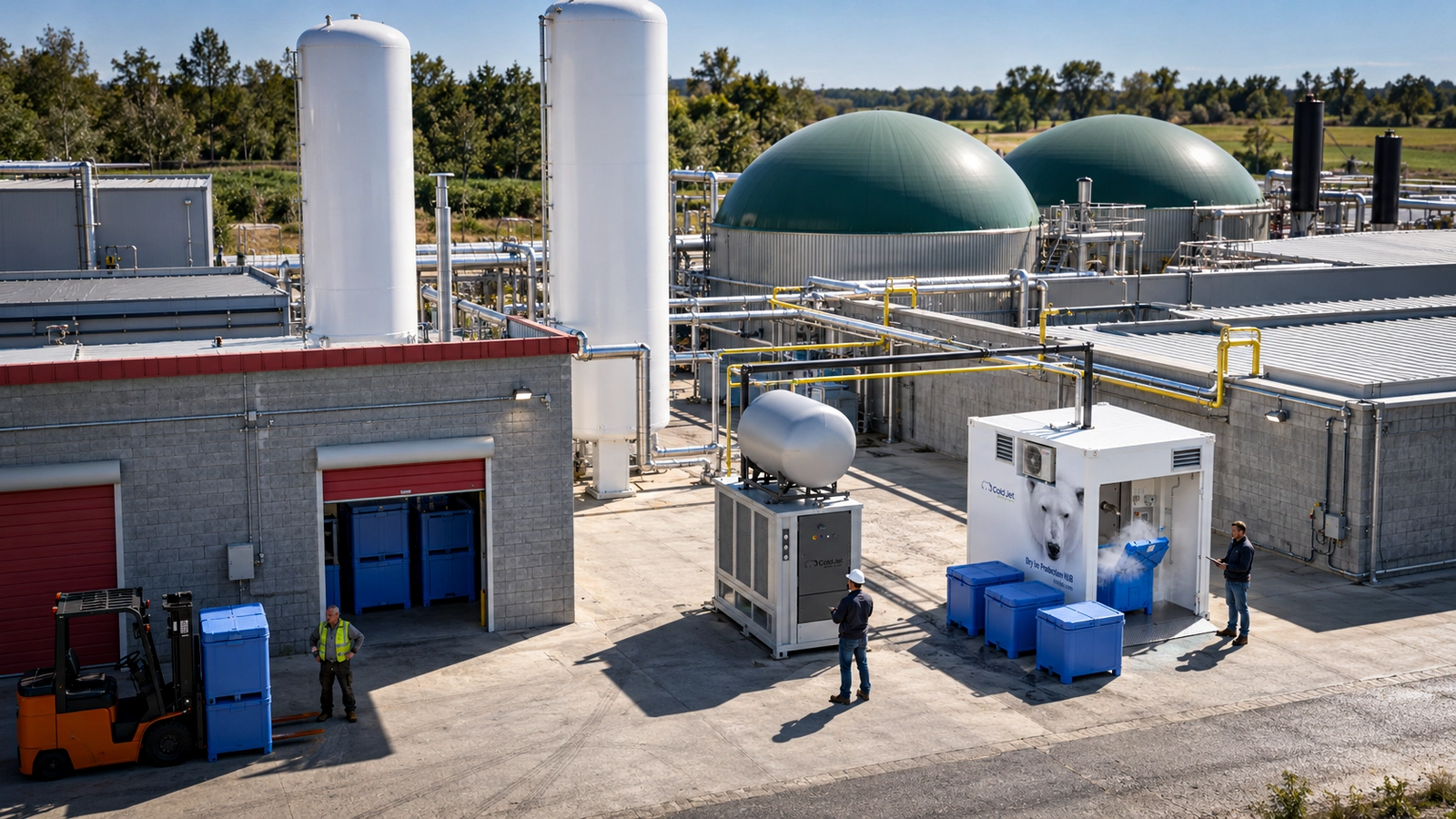
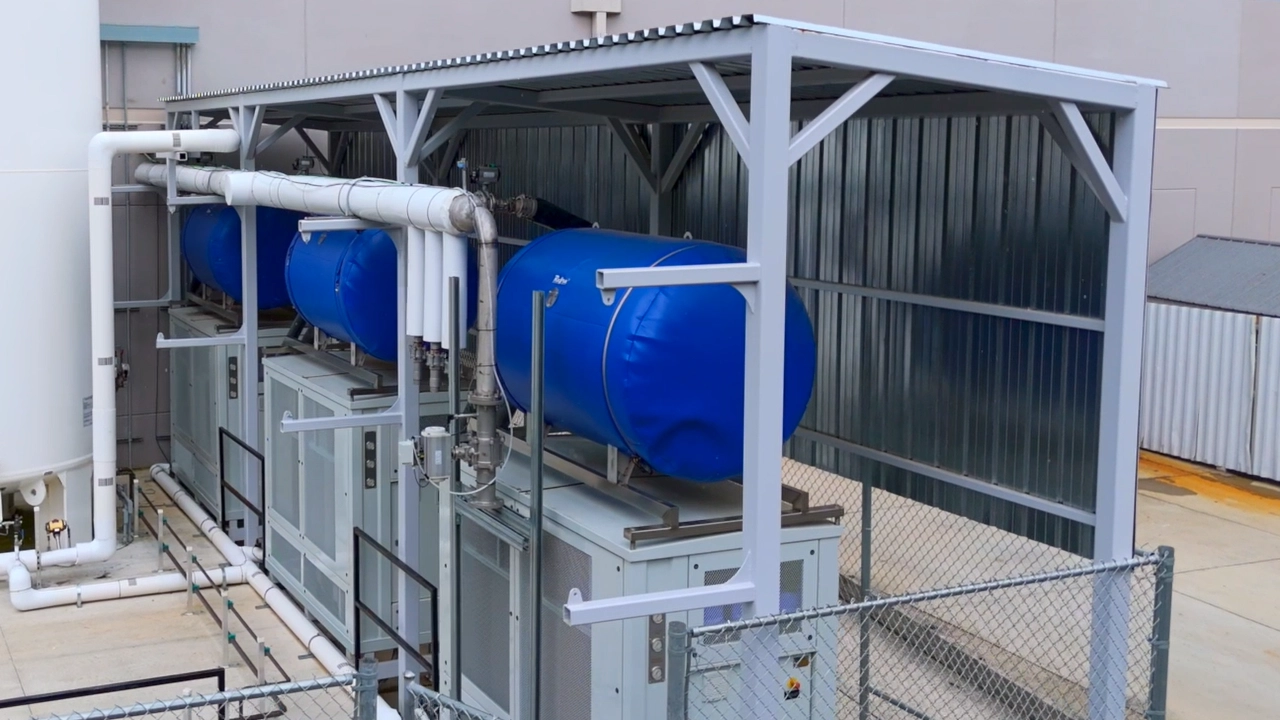
A capturable stream is one where CO₂ leaves a process at a known point and a known concentration, which is what separates industrial carbon capture from pulling CO₂ out of open air. Cold Jet systems capture 2 of them. Biogas carbon capture takes the CO₂-rich off-gas separated when raw biogas is upgraded to biomethane: the system returns residual methane to the biogas plant, eliminating methane slip and improving the site’s carbon intensity score, then compresses, cools, and liquefies what remains into food-grade liquid CO₂ that can be sold or made into dry ice. Dry ice CO₂ recovery takes revert gas — the roughly half of every batch of liquid CO₂ that becomes gas in the pelletizer — reliquefies it, and feeds it straight back to the pelletizer, never the bulk tank, so the same purchase yields more dry ice. Both turn a stream that was being vented into product.
Comparison
What is in each stream, and what it becomes
Both streams are vented today. What differs is what has to be taken out of them before the CO₂ is worth anything.
| Stream | Where it leaves the process | What has to come out of it | What the recovered liquid becomes |
|---|---|---|---|
| Biogas carbon capture | The CO₂-rich off-gas separated when raw biogas is upgraded to biomethane, normally vented to atmosphere | Residual methane and trace impurities, removed through compression, cooling, and distillation — the methane returns to the biogas plant instead of venting with the CO₂ | Food-grade liquid CO₂ for sale into local markets, or feedstock for dry ice made on site |
| Dry ice CO₂ recovery | Revert gas at the pelletizer — the roughly half of every batch of liquid CO₂ that becomes gas instead of dry ice | Nothing — the loop is closed and nothing foreign gets in, so the gas only has to be compressed, cooled, and reliquefied | Liquid CO₂ fed straight back to the pelletizer — never the bulk tank — at the same quality as the original supply, so the same purchase yields more dry ice |
By Application
The 2 streams we capture
Each tile names where the CO₂ leaves the process and what the recovered liquid is used for.
FAQ