Summary
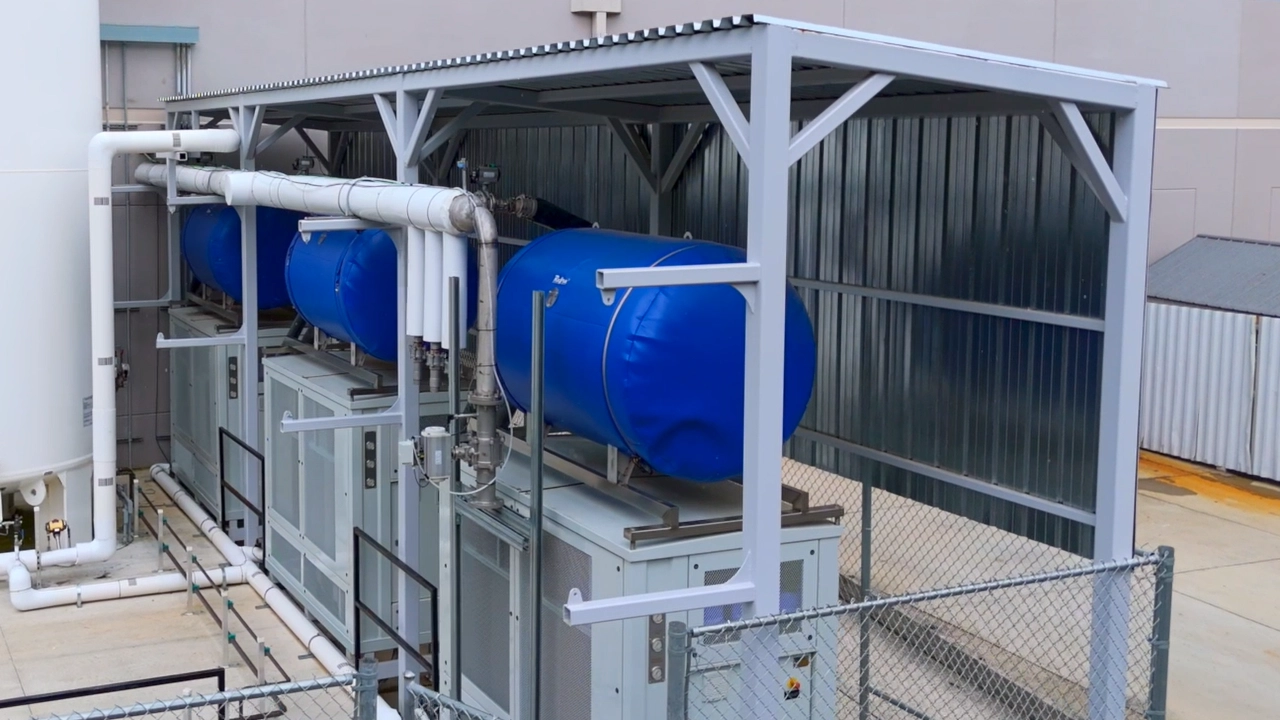
Cold Jet RE-CO2 recovery systems capture the CO₂ gas a dry ice pelletizer normally vents — about half of the liquid CO₂ it uses — reliquefy it, and return it to the pelletizer. Dry ice manufacturers cut liquid CO₂ consumption by nearly half, lower costs by up to 40%, and make up to 70% more dry ice, with payback in 12 months or less in many cases.
What is CO₂ recovery for dry ice manufacturing?
CO₂ recovery is carbon capture inside a dry ice plant. When liquid CO₂ expands in a pelletizer chamber, roughly half becomes CO₂ snow that is pressed into pellets and half becomes revert gas that is normally vented. A Cold Jet RE-CO2 system collects that gas from the pelletizer vent, compresses and cools it back into liquid CO₂, and valves it into the line feeding the pelletizer — never back into the supplier’s bulk tank. Because the loop is closed, dry ice quality is unchanged, and the CO₂ you used to vent becomes dry ice you can sell or use — up to 70% more from the same liquid CO₂.
Why dry ice manufacturers are adding CO₂ recovery
Liquid CO₂ is the single biggest variable cost in dry ice production, and prices and availability can swing quickly. Producers who sell dry ice see it in their margin per tonne; companies making dry ice for their own blasting see it in every cleaning job. Recovering vented CO₂ lowers that cost, reduces reliance on deliveries, and cuts emissions at the same time.
Up to 70%
More dry ice
From the Same LCO₂
Up to 40%
Lower LCO₂ costs
Nearly Half
Less liquid CO₂ used
In most installations
What Are the Benefits of CO₂ Recovery for Dry Ice Manufacturers?
CO₂ recovery turns vented pelletizer gas back into dry ice — lowering costs whether you sell dry ice or use it yourself
Dry ice producers that sell pellets and nuggets compete on cost per tonne and reliable supply. Companies that make dry ice for their own blasting — in-house maintenance teams and contract cleaners — want the lowest cost per blasting hour. Both lose about half of every liquid CO₂ delivery to vented revert gas. Cold Jet RE-CO2 systems recover that gas, liquefy it, and send it straight back to the pelletizer.
Cut Liquid CO₂ Costs by Up to 40%
Around half of the liquid CO₂ entering a pelletizer is normally vented. Recovering it reduces liquid CO₂ consumption by nearly half in most installations and annual CO₂ costs by up to 40% — whether you produce 80 kg or 3,500 kg of dry ice per hour.
More Saleable Dry Ice per Delivery
For producers who sell dry ice, recovered CO₂ becomes extra product. Customers have increased output by up to 70% from the same liquid CO₂, lowering cost per tonne and improving margin on every bag, tote, and slice you ship.
Lower Cost per Blasting Hour
For manufacturers and contract cleaners making dry ice for their own blasters, recovery cuts the CO₂ cost of every cleaning job — making in-house dry ice even more competitive than buying it, and freeing budget for more equipment or crews.
Fewer Deliveries, More Supply Security
Using less liquid CO₂ means fewer tanker fills and more headroom in every tank, so a late delivery or regional CO₂ shortage is less likely to stop production or delay a customer order.
Lower Vented CO₂ and a Stronger ESG Story
Recovery recycles an already recycled product and greatly reduces the CO₂ vented from dry ice production. Distributors can offer lower-carbon dry ice, and contract cleaners can market a greener cleaning service to their customers.
Works With the Pelletizers You Already Run
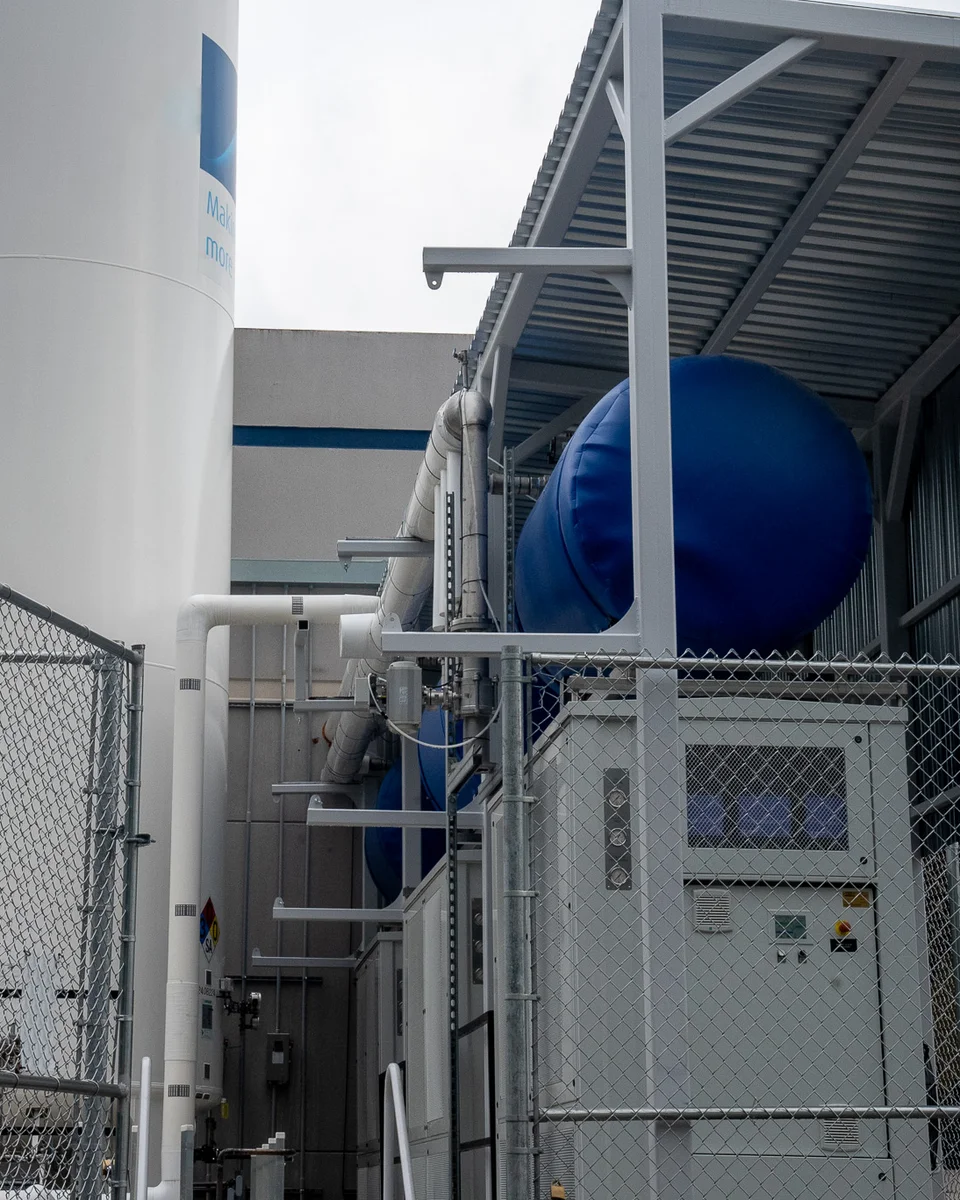
RE-CO2 systems integrate with all Cold Jet pelletizers and most other brands with minimal modification, and can be installed outside near the bulk tank when floor space is tight. Dry ice quality is unchanged thanks to the closed loop.
Who Benefits From CO₂ Recovery in Dry Ice Production?
From dry ice distributors selling bagged pellets to contract cleaners producing their own blasting media, recovery lowers the liquid CO₂ cost of every kilogram of dry ice.
- Closed-Loop Recovery
- Never Returned to the Bulk Tank
- Works With Most Pelletizer Brands
- 80–3,500 kg/hr Capacities
- Same Dry Ice Quality
Dry Ice Producers Who Sell Dry Ice: Make More Product From Every Liquid CO₂ Delivery
For distributors, gas companies, and dry ice plants, liquid CO₂ is the raw material of the business. Recovering vented revert gas raises output from the same supply and lowers the cost of every tonne you sell.
Lower cost per tonne
Recovery cuts liquid CO₂ consumption by nearly half in most installations. Carbon Capture Scotland improved its liquid CO₂ to dry ice ratio from 2.4:1 to 1.35:1 immediately after installing Cold Jet recovery — directly improving margin on every product sold.
Scale recovery with your plant
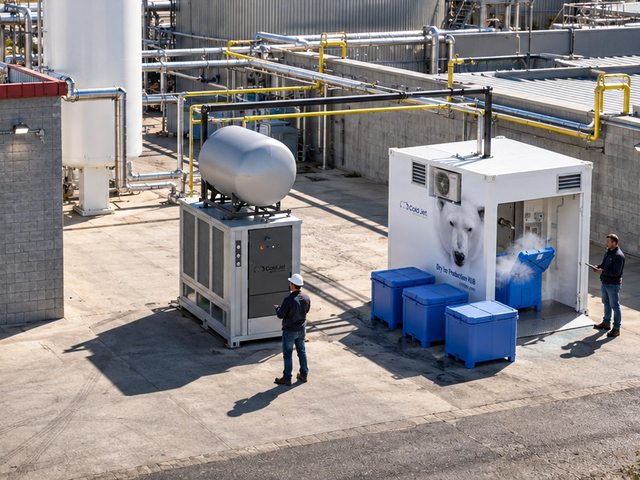
Start with an RE-CO2 160 or 320V2 on one pelletizer, add units per pelletizer chute as you grow, or move to a containerized RE-CO2 3500 that recovers up to 3,500 kg/hr across multiple PR750H pelletizers and can stabilize feed tank pressure.
Lower-carbon dry ice for your customers
Recovered dry ice is the same quality as dry ice made from fresh liquid CO₂, with far less CO₂ vented in production. The RE-CO2 3500's optional ESG reporting package measures CO₂ captured and saved, so you can back sustainability claims with data.
- Dry Ice Distributors
- Industrial Gas Companies
- Bagged Dry Ice Producers
- Slice & Block Producers
- Cold Chain Suppliers
- Multi-Pelletizer Plants
- Regional Dry Ice Plants
- Biogenic Dry Ice Producers
Companies Producing Dry Ice for Their Own Blasting: Cut the Cost of Every Cleaning Job
Manufacturers running in-house dry ice blasting and contract cleaners supplying their own crews already save by making dry ice on site. Recovery takes those savings further.
Lower cost per blasting hour
Every kilogram of recovered CO₂ becomes blasting media you no longer buy. Pair a PE 80 with an RE-CO2 80 or a PR120H with an RE-CO2 160 to cut the liquid CO₂ behind each job by up to 40%.
Fresh pellets with fewer deliveries
In-house production already delivers fresh 3 mm pellets on demand. Recovery stretches each liquid CO₂ fill further, so blasting schedules and customer jobs are less exposed to late deliveries or regional CO₂ shortages.
A greener service to sell
Dry ice blasting already produces no secondary waste. Recovering the CO₂ vented during pellet production lets contract cleaners and manufacturers show customers a lower-emission cleaning process from pellet to part.
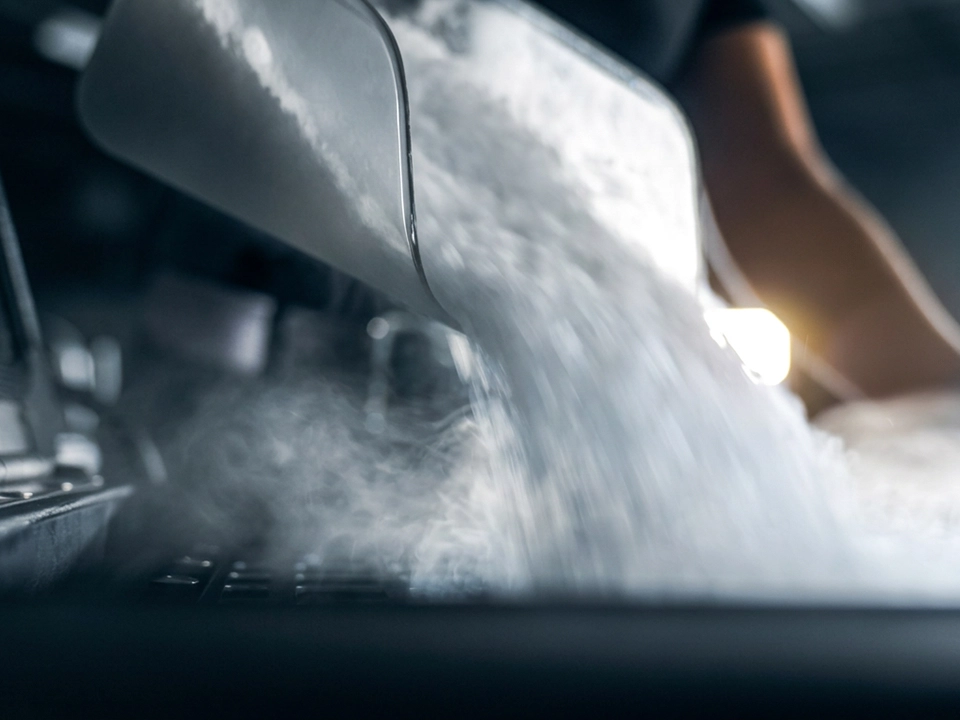
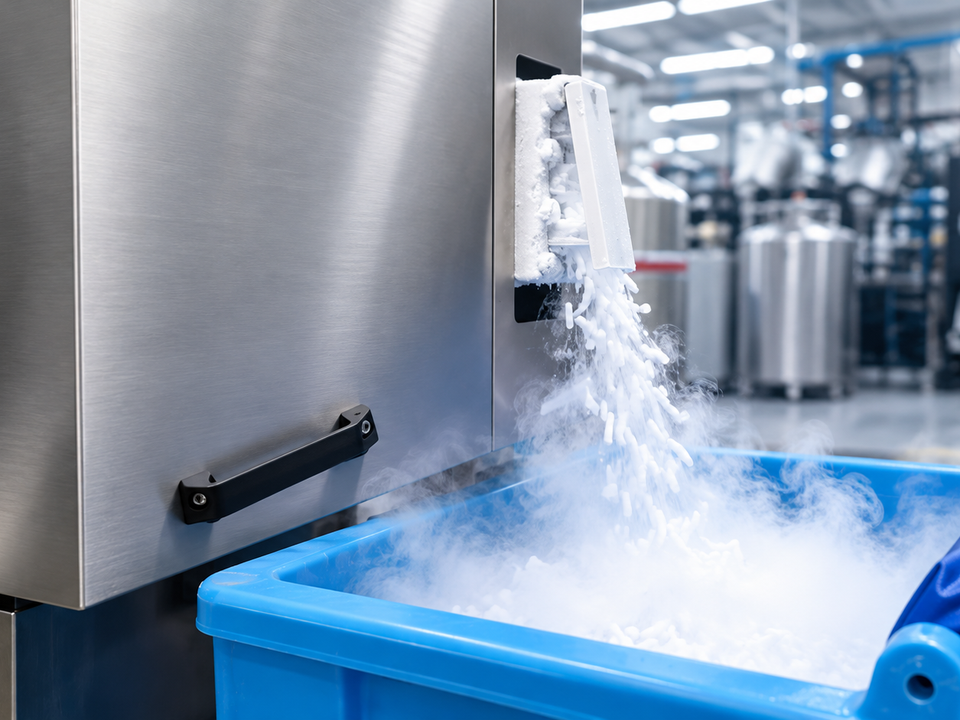
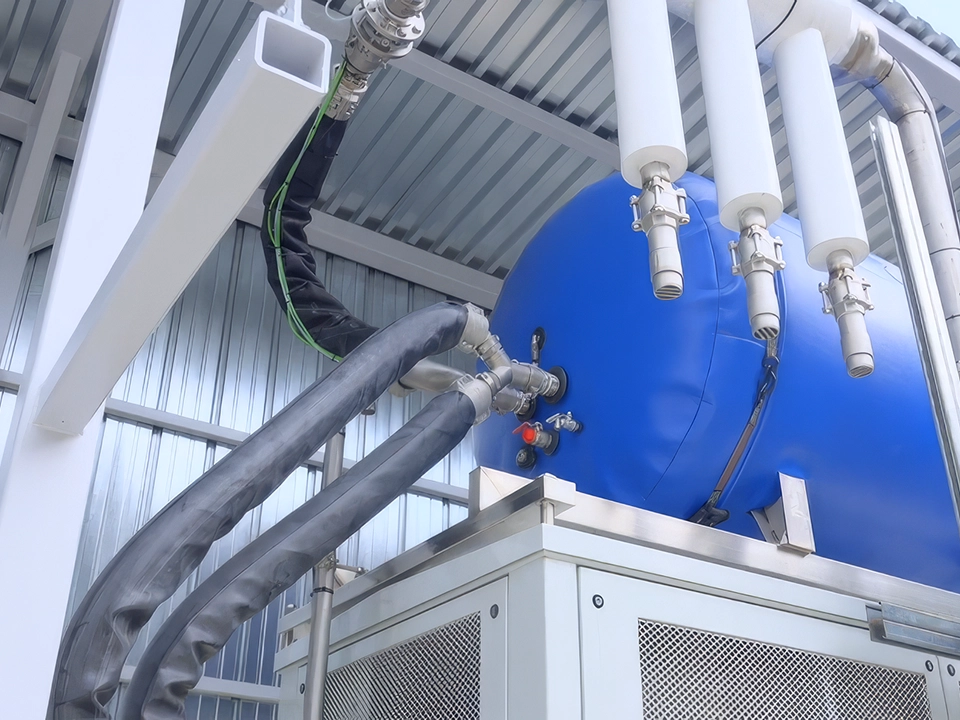
Cold Jet RE-CO2 systems pair with pelletizers of every size — the RE-CO2 80 with the PE 80, the RE-CO2 160 with the PR120H, one RE-CO2 320V2 with a PR350H or two with a PR750H, and the RE-CO2 3500 for plants running multiple PR750H pelletizers.
- Contract Cleaners
- In-House Maintenance Teams
- Automotive Plants
- Food & Beverage Plants
- Foundries & Mold Shops
- Integrated Blasting Lines
What Do Dry Ice Manufacturers Need to Add CO₂ Recovery?
A CO₂ recovery installation connects to your existing dry ice production line. When adding recovery to your plant, the following components work together:
Step 01
Most BrandsPelletizers Supported
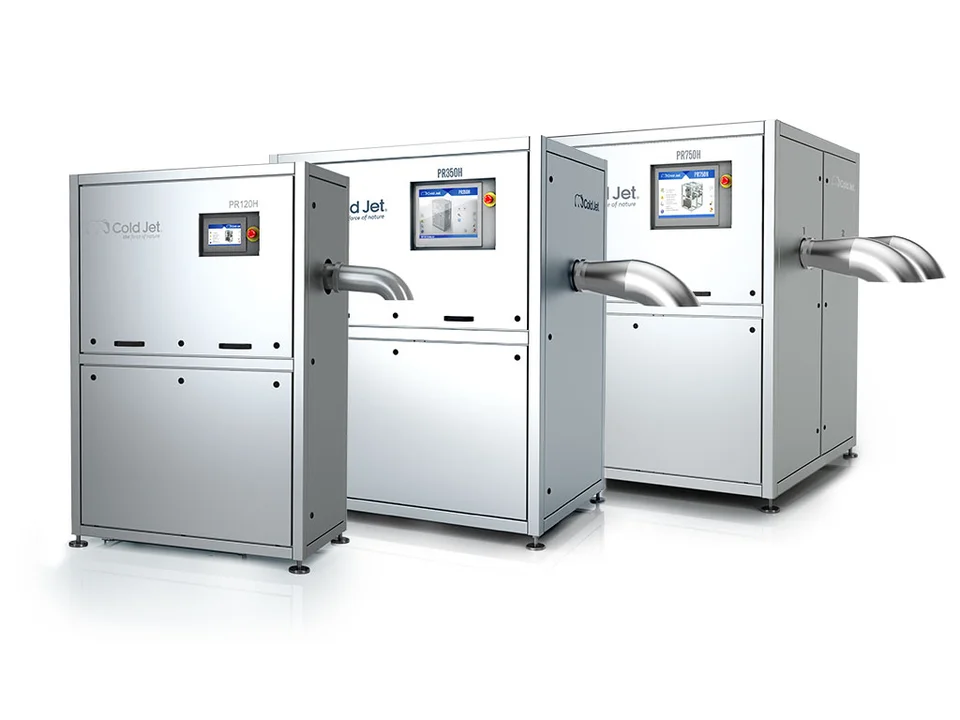
Your Dry Ice Pelletizer
Recovery starts with the pelletizer you already run. RE-CO2 systems integrate with all Cold Jet pelletizers — including Integrated Blasting Systems — and almost every other brand, with minimal modification.
- 01. Your Dry Ice Pelletizer — Recovery starts with the pelletizer you already run. RE-CO2 systems integrate with all Cold Jet pelletizers — including Integrated Blasting Systems — and almost every other brand, with minimal modification.
- 02. Revert Gas Line & Relief Valve — Hoses or piping carry exhaust CO₂ from the pelletizer vent to the recovery unit. A correctly sized pressure relief valve keeps pelletizer back pressure in range, and the pelletizer stops injecting if gas outlet pressure climbs too high.
- 03. RE-CO2 Recovery Unit — The recovery unit compresses and cools revert gas back into liquid CO₂. It is sized one unit per pelletizer chute — from the RE-CO2 80 for a PE 80 to two RE-CO2 320V2 units for a PR750H, or a containerized RE-CO2 3500 for multi-pelletizer plants.
- 04. Liquid CO₂ Return to the Pelletizer — Recovered liquid CO₂ is valved into the line feeding the pelletizer — never back into the supplier's bulk tank, which gas companies prohibit. The closed loop keeps dry ice quality identical.
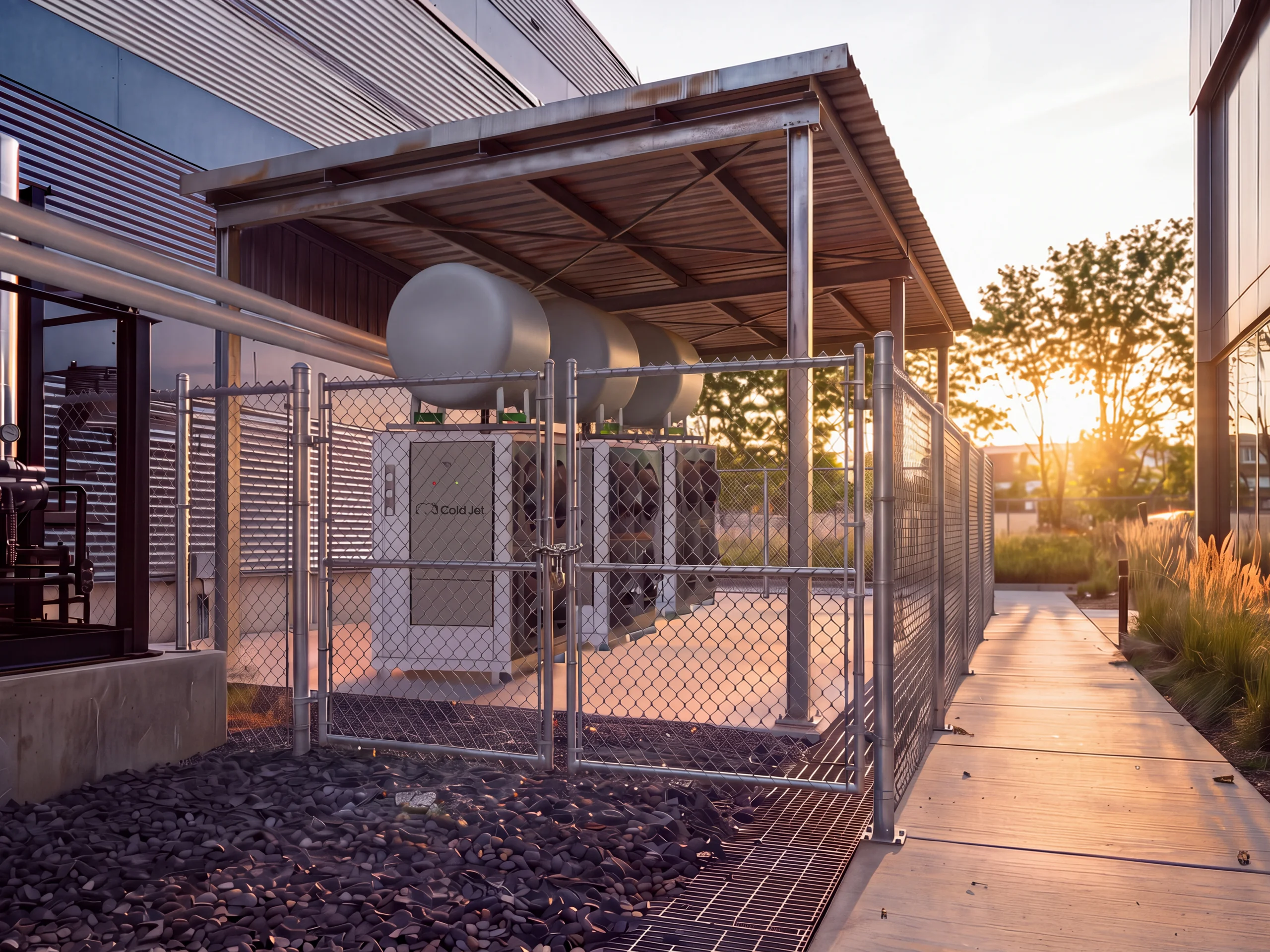
- 05. Power & Site Placement — RE-CO2 80, 160, and 320V2 units need only three-phase power — no water or instrument air. Place them indoors or outside near the bulk tank, sheltered from weather, with clear airflow. The RE-CO2 3500 arrives in containers.
- 06. Commissioning, Training & Support — A Cold Jet technician commissions the system, starts it up, and trains your team. The RE-CO2 320V2 runs directly from your Cold Jet pelletizer's HMI, and 16 service centers in 11 countries keep recovery running.
How CO₂ Recovery
Compares to Alternatives
See how recovering pelletizer revert gas stacks up against venting, buying dry ice, and simply buying more liquid CO₂.
| Criteria | Pelletizer + RE-CO2 Recovery | Pelletizer Without Recovery | Purchased Dry Ice | Buying More Liquid CO₂ |
|---|---|---|---|---|
| Liquid CO₂ Used | Nearly half less | About 2.2–2.5:1 | Supplier's margin built in | Same 2.2–2.5:1 — more bought |
| Vented CO₂ | Greatly reduced — recovered | About half of LCO₂ input | Vented at the supplier's plant | About half of LCO₂ input |
| Liquid CO₂ Cost | Up to 40% lower | Baseline | Highest cost per kg delivered | Volume discounts at best |
| Deliveries | Fewer LCO₂ deliveries | Baseline | Frequent dry ice deliveries | Larger or more frequent LCO₂ fills |
| Dry Ice Quality | Unchanged — closed loop | Fresh, on demand | Sublimates in transit and storage | Fresh, on demand |
| Sustainability | Lower emissions per kg — reportable | Highest vented CO₂ on site | Footprint outsourced, plus transport | No improvement |
What Is the Best CO₂ Recovery System
for Dry Ice Manufacturing?
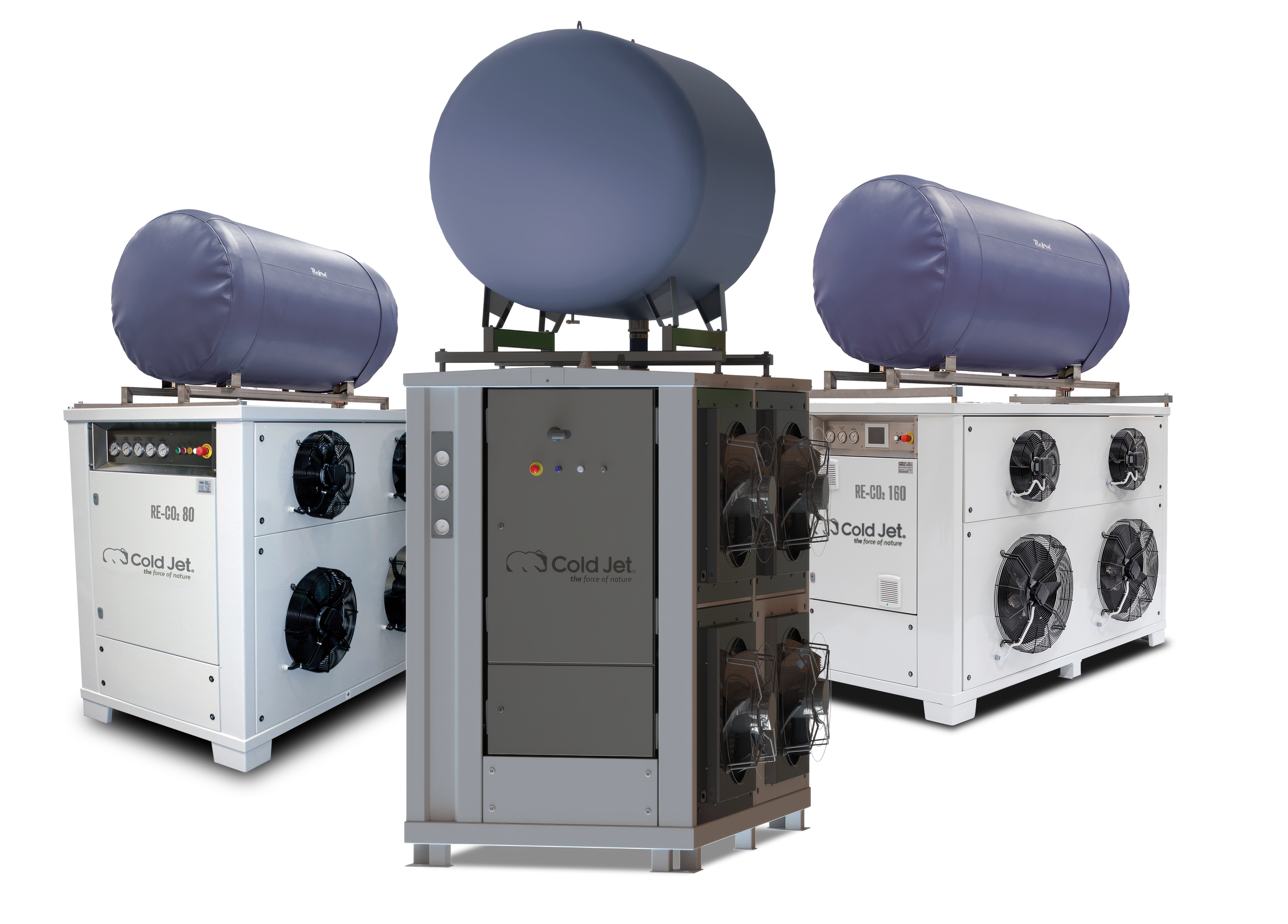
Cold Jet RE-CO2 systems recover the CO₂ your pelletizers vent and send it straight back as liquid CO₂. They range from 80 kg/hr for a single small pelletizer up to 3,500 kg/hr for multi-pelletizer plants, and work with Cold Jet and most other pelletizer brands.

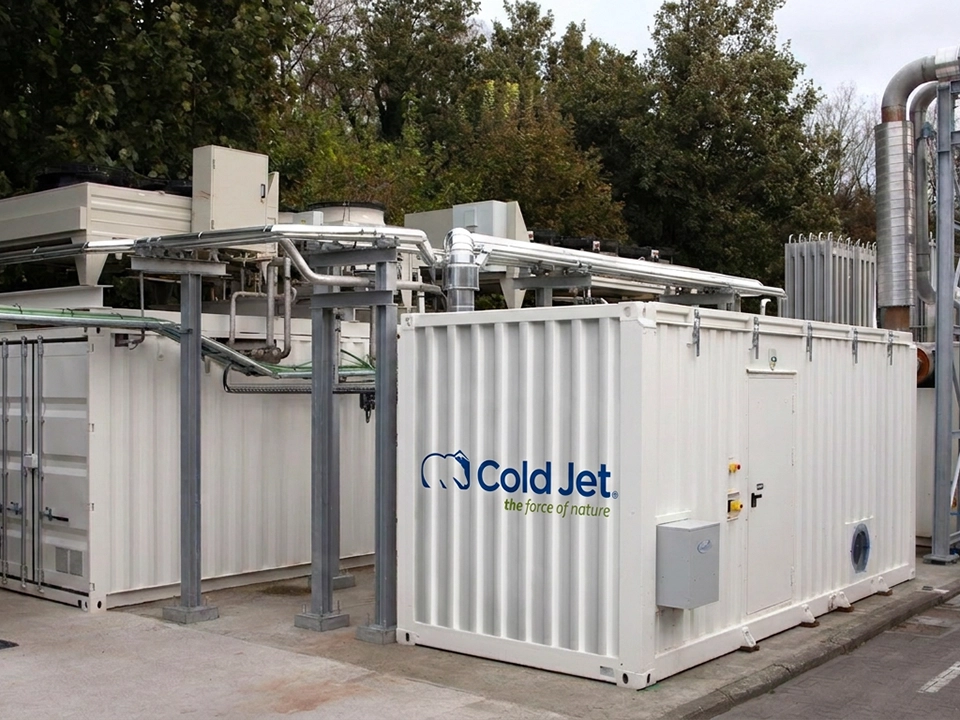
RE-CO2 320V2 CO₂ Recovery System
The RE-CO2 320V2 recovers up to 705 lb (320 kg) of CO₂ per hour and runs from your Cold Jet pelletizer’s HMI. Use one unit for a PR350H or two for a PR750H, and smart flow balances gas across them.
- Up to 705 lb (320 kg) per hour
- 164 kWh per ton recovered
- Controlled from the pelletizer HMI
- One unit per pelletizer chute
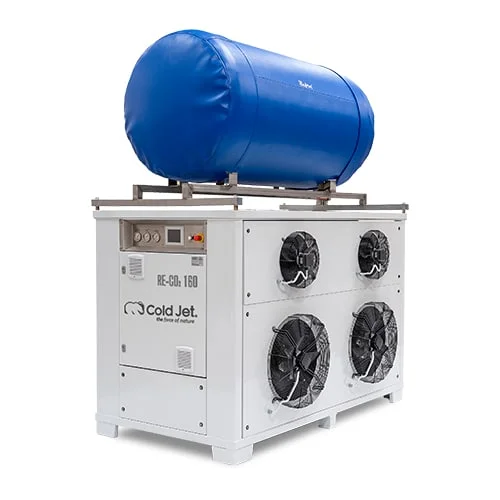
RE-CO2 160 CO₂ Recovery System
The RE-CO2 160 recovers up to 353 lb (160 kg) of CO₂ per hour, sized for the PR120H. It’s a simple way for mid-size producers to cut liquid CO₂ costs, with electricity as the only utility.
- Up to 353 lb (160 kg) per hour
- 216 kWh per ton recovered
- Ideal for the PR120H
- Electricity is the only utility

RE-CO2 3500 CO₂ Recovery System
The containerized RE-CO2 3500 recovers up to 7,716 lb (3,500 kg) of CO₂ per hour across multiple PR750H pelletizers. It runs fully autonomously on natural R744 refrigerant, with no new buildings required.
- Up to 7,716 lb (3,500 kg) per hour
- 135 kWh per ton recovered
- Fully autonomous, 25–100% turndown
- Containerized — no new buildings
How Do These Three Recovery Systems Compare?
Side-by-side specs for Cold Jet recovery systems — from a single small pelletizer to a multi-pelletizer dry ice plant.
Smart, scalable mid-volume recovery
Compact recovery for small producers
Containerized plant-scale recovery
| Specification | RE-CO2 320V2 | RE-CO2 160 | RE-CO2 3500 |
|---|---|---|---|
| Recovery | |||
| Role in the Operation | Recovers revert gas from one pelletizer | Recovers revert gas, one unit per chute | Recovers gas across multiple pelletizers |
| Maximum Recovery | 353 lbs/hr(160 kg/hr) | 705 lbs/hr(320 kg/hr) | 7,716 lbs/hr(3,500 kg/hr) |
| Energy per Ton Recovered | 216 kWh | 164 kWh | 135 kWh |
| Refrigerant | R452A | R452A | R744(natural CO₂) |
| Returns CO₂ to Pelletizer (Not Bulk Tank) | Yes | Yes | Yes |
| Fit | |||
| Best Paired With | PR120H | 1 × PR350H or 2 × PR750H | Multiple PR750H pelletizers |
| Ideal Operation Size | Mid-size producers | Mid- to high-volume plants | Large dry ice plants |
| Installation | |||
| Utilities | Electricity only | Electricity only | Power + instrument air |
| Installation | Indoors or sheltered outdoors | Indoors or sheltered outdoors | Containerized(1 × 40 ft + 2 × 20 ft) |
| Machine Controls | |||
| Control | Automatic start on gas flow | Run from pelletizer HMI | Fully autonomous |
Capacities and energy figures from Cold Jet spec sheets and the CO₂ Recovery Systems brochure. Contact a Cold Jet specialist to size recovery for your pelletizers.
Why Invest in Cold Jet CO₂ Recovery
for Dry Ice Manufacturing
If liquid CO₂ is your largest variable cost, a Cold Jet RE-CO2 system can pay for itself quickly — in many cases within 12 months.
When evaluating this investment, look at your current liquid CO₂ to dry ice ratio, weekly production volume, and liquid CO₂ price. Cold Jet will run the numbers with you and size the right recovery system for your pelletizers.
Proven in Dry Ice Plants Worldwide
Dry ice producers including Carbon Capture Scotland, Soderal, Scientific Calibration, Sutton-Garten, and Emory Dry Ice use Cold Jet recovery to raise profit, performance, and production output.
The Full CO₂ Value Chain
Cold Jet covers capture and liquefaction, CO₂ recovery, dry ice production, and dry ice blasting — so recovery is designed around how dry ice is actually made and used.
Energy-Efficient Recovery
From 298 kWh per ton recovered on the RE-CO2 80 to 135 kWh per ton on the RE-CO2 3500, the energy cost of recovery stays small compared with the liquid CO₂ you save.
Start Small, Scale Up
Four standard capacities and a modular design let you start with one unit and add more as savings grow, with custom platforms from 1,200 to 5,000 kg/hr.
Industry Leading Support and Training
On-site commissioning and training, 24/7 support from 16 service centers in 11 countries, and a free ROI analysis to show your payback before you buy.
Works With Nearly Any Pelletizer
RE-CO2 systems integrate with all Cold Jet pelletizers and almost every other brand, so you keep the production equipment you already rely on.
Dry ice manufacturers around the world rely on Cold Jet CO₂ recovery
Dry ice producers large and small use Cold Jet RE-CO2 systems to raise profit, production capability, and overall company performance.





Safety and Supplier Standards
We Help You Meet
CO₂ recovery has to respect gas supplier rules, dry ice quality, and workplace CO₂ safety. Cold Jet systems are designed to keep you compliant on all three.
No Recovered CO₂ in Bulk Tanks
Gas companies strictly prohibit introducing external substances or recovered CO₂ back into their bulk liquid CO₂ tanks.
RE-CO2 systems valve recovered liquid CO₂ directly into the pelletizer feed line — it never enters the supplier's bulk tank, keeping your supply agreement intact.
Closed-Loop, Contamination-Free Recovery
Dry ice sold for food, pharma, and cold chain use — or used for blasting — must meet the same quality standard after recovery is added.
The closed-loop system eliminates the chance of contamination, and CO₂ compressors use food-grade oil, so recovered CO₂ matches the quality of your liquid CO₂ supply.
Pressure Equipment & Machinery Safety
Recovery systems handle pressurized CO₂ gas and liquid, so pressure vessels and safety valves must meet recognized standards.
RE-CO2 buffer tanks are CE-approved under the Pressure Equipment Directive (PED 2014/68/EU, Category III), with safety valves protecting both the recovery unit and the pelletizer.
Ventilation & CO₂ Monitoring
CO₂ is heavier than air and displaces oxygen. OSHA sets an exposure limit of 0.5% averaged over an 8-hour workday, so production areas need ventilation and monitoring.
Cold Jet recommends sheltered outdoor installation where possible, specifies safe exhaust venting, and covers CO₂ awareness and safe operation in on-site training.
Measurable Emissions Reduction
Customers and regulators increasingly expect dry ice suppliers and service providers to show how they reduce emissions.
Recovery greatly reduces CO₂ vented in production, and the RE-CO2 3500's optional CO₂ Emissions Reporting Package measures input and output flows for precise, reportable data.