The Cold Jet dry ice production equipment produces the purest dry ice available.
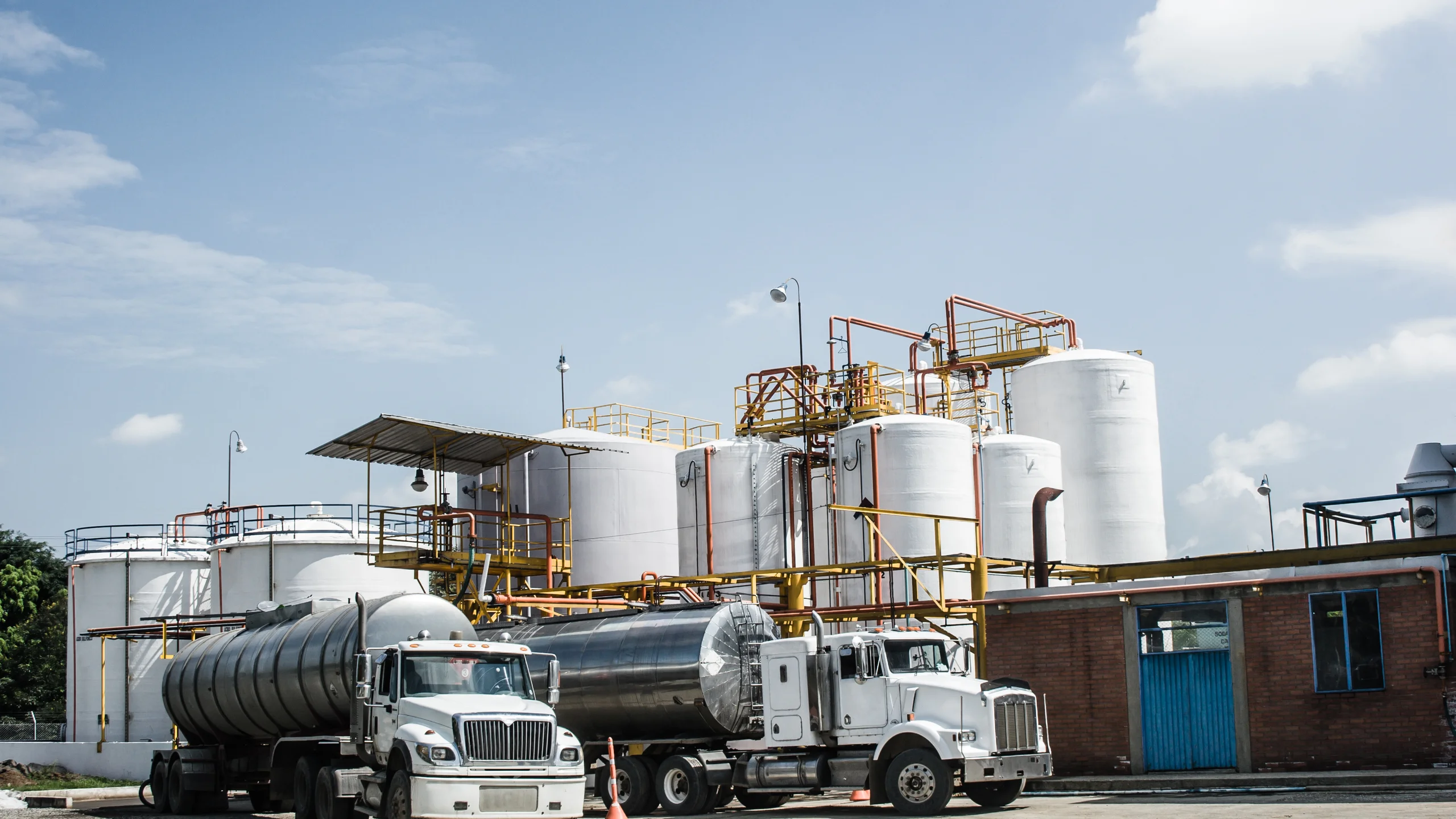
Convert your liquid CO₂ into a high-margin dry ice business. Cold Jet production systems turn more of your LCO₂ into sellable dry ice than the market standard, with full automation and every format your customers need, from 3 mm pellets to high-density slices.
12–14%
Better LCO₂ Conversion vs. Market Standard
3,306 lb/hr
Max Production
8.5 Tons
LCO₂ Reclaimed Per Day
Summary
Dry ice production is a natural downstream extension for industrial gas companies. Cold Jet pelletizers convert your liquid CO₂ into dry ice with 12–14% better conversion efficiency than the market standard, so more of every ton becomes sellable product. Choose from 1,653 to 3,306 lbs/hr of pellet output, switch automatically between 3 mm and 16 mm pellets, and add high-density slices with the R2000H reformer.
Industrial gas companies are uniquely positioned to succeed in dry ice production because they already control the most difficult part of the business: reliable access to liquid CO₂. With bulk LCO₂ supply, tanker fleets, route distribution, and established customer relationships across food processing, life sciences, manufacturing, and beverage markets, adding a Cold Jet dry ice production system converts a commodity gas product into a value-added, revenue-generating product line. Dry ice demand is broad and durable — meat, poultry, and pork processors use dry ice pellets to chill protein during processing; food shippers depend on dry ice for everything from salmon exports to last-mile delivery of frozen goods and airline catering; the biopharmaceutical cold chain uses dry ice to virtually eliminate temperature excursions for vaccines, tissues, and cell and gene therapies; and dry ice blasting operations require consistent daily supply of 3mm pellets. Cold Jet production systems serve all of it: pelletizers produce bulk pellets and nuggets from 3mm to 16mm with automatic die change, reformers press high density slices in formats from 1 to 16 lbs, and the RE-CO₂ 320 recovery system captures exhaust CO₂ so you use your liquid CO₂ twice — reclaiming up to 8.5 tons of LCO₂ per day and lowering your cost per pound even further.

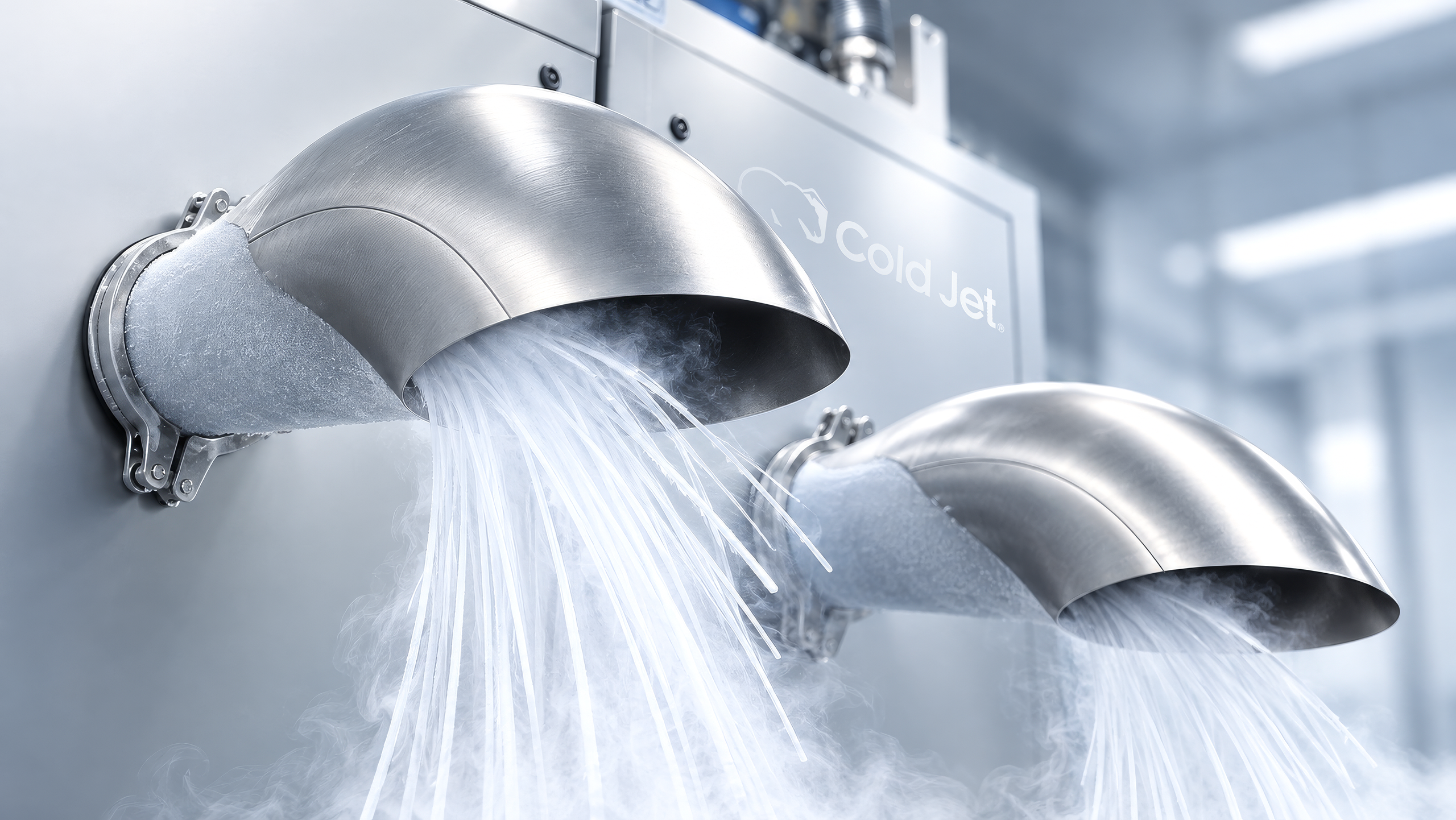
Reselling third-party dry ice leaves margin on the table, adds freight and sublimation losses, and puts supply reliability in someone else's hands during peak demand. Producing on-site with Cold Jet captures the full value of your LCO₂, guarantees fresh, high-quality dry ice for your customers, and lets you respond to demand in every format — pellets, nuggets, slices, and blocks — on your own schedule.
12-14%
Higher LCO₂ Conversion Efficiency
LCO₂-to-Dry-Ice Conversion
3,306 lb/hr
Max Production
1500 kg
8.5 Tons
LCO₂ Reclaimed Per Day
with CO₂ Recovery
3mm–16mm + Slices
Dry Ice Formats
Dry ice production converts commodity liquid CO₂ into a high-margin product line served through your existing distribution network
Demand for dry ice spans food processing, food shipping and home delivery, the bio-pharma cold chain, and dry ice blasting — markets your gas business already touches every day. Buying and reselling third-party dry ice leaves margin on the table and puts your supply reliability in someone else's hands.
Producing dry ice on-site with Cold Jet systems captures the full value of your liquid CO₂. Our production systems deliver the lowest LCO₂-to-dry-ice conversion ratio in the industry, the lowest cost and energy consumption per kilogram produced, and the flexibility to make every format your customers need — from 3mm blasting pellets to 16mm cooling nuggets to high density slices in branded packaging.
 Economics
Cold Jet’s sub-cooling technology minimizes CO₂ waste during production, delivering 12–14% better LCO₂-to-dry ice conversion efficiency than the market standard. That means more sellable dry ice from every tanker of LCO₂ and a structurally lower cost of goods for your dry ice business.
 Growth
Start at the capacity that matches today's demand and scale as your dry ice business grows. Cold Jet pelletizers range from the PE 80 at up to 176 lbs/hr to the PR1500H at up to 3,306 lbs/hr, and reforming systems press high density slices at up to 5,511 lbs/hr. Systems run in parallel, so adding capacity is as simple as adding machines.
 Flexibility
Produce 3mm pellets for blasting, 10mm and 16mm nuggets for cooling, and high density slices from 1 to 16 lbs for cold chain shipping. Automatic die change enables quick production changes between formats, and an optional flow packer delivers automated, branded packaging for your dry ice slices — so your product carries your name into the market.
 Reliability
Cold Jet production systems are fully automated and easy to use, with one-button operation, quick start-up, and consistent output across shifts. Cold Jet CONNECT® enables remote monitoring, diagnosis, and corrective action, and a global customer service organization of more than 70 people keeps your production running when your customers are counting on supply.
 Sustainability
Dry ice is a carbon capture and utilization product — made from recycled CO₂ that would otherwise be vented. Cold Jet systems carry the lowest carbon footprint and energy consumption per kilogram produced, and the RE-CO₂ 320 recovery system captures exhaust CO₂ from production so you use your liquid CO₂ twice, reclaiming up to 8.5 tons of LCO₂ per day.
The market is waiting for you. Dry ice demand spans virtually every industry your gas business already serves — and Cold Jet systems produce the right format for each one.
Dry ice demand is waiting to be fulfilled in your area — and it maps directly onto the customer base industrial gas companies already serve. One production operation supplies them all.
Meat processing plants — beef, poultry, and pork — use dry ice pellets to chill protein during processing. Food shippers rely heavily on dry ice to maintain freshness, from exporting fresh salmon to last-mile delivery of frozen goods and cooling airline catering. High density slices and nuggets from your production line serve this entire cold chain.
The biopharmaceutical cold chain uses dry ice to virtually eliminate temperature excursions for vaccines, tissues, and cell and gene therapies. Fresh, locally produced dry ice with reliable daily availability is exactly what life science shippers demand from their gas supplier.
Dry ice blasters need consistent daily supply of 3mm pellets to deliver sustainable, non-abrasive cleaning across virtually every industry imaginable. Contract cleaners and in-house blasting operations become recurring, route-based dry ice customers for your business.
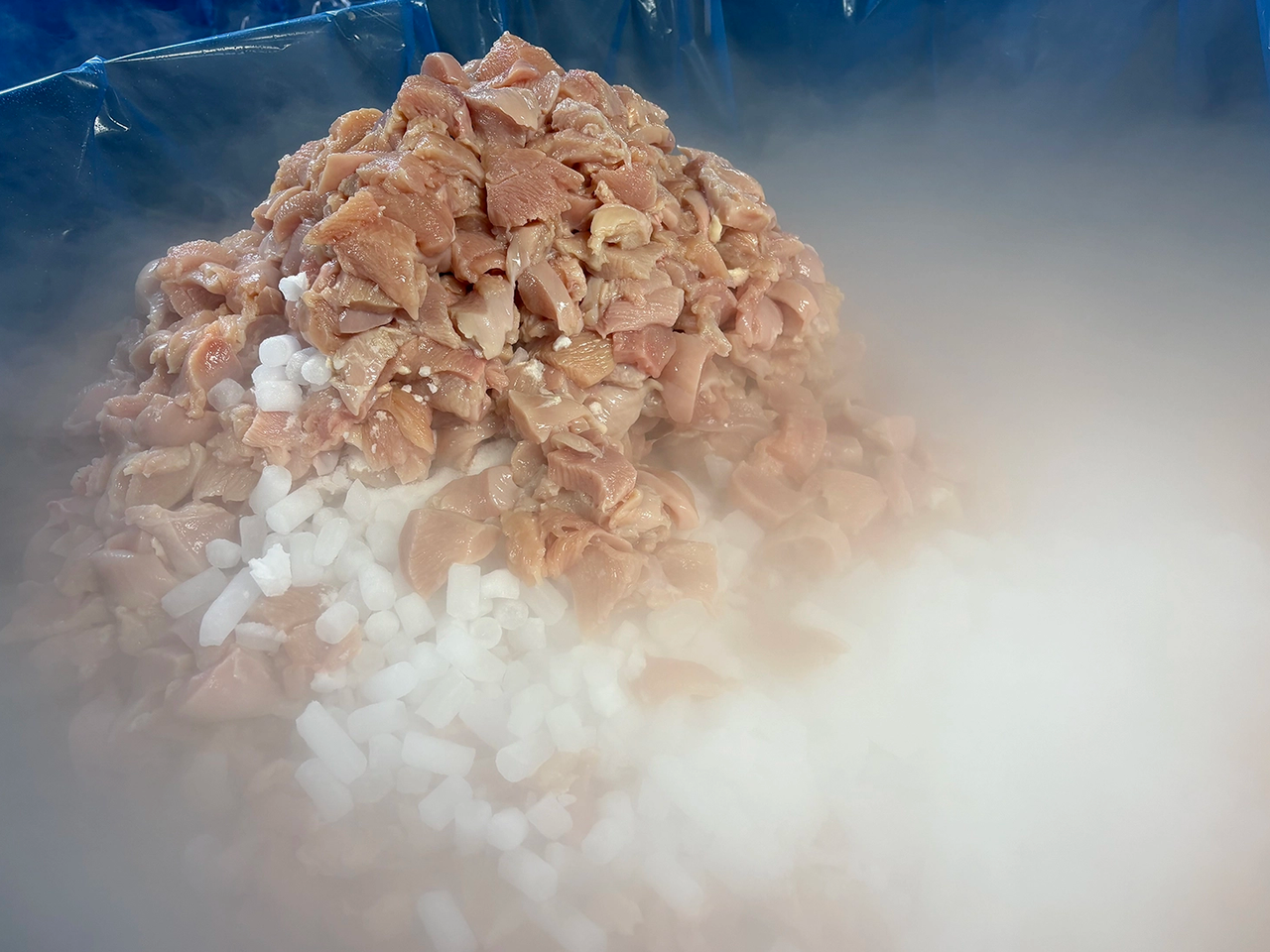

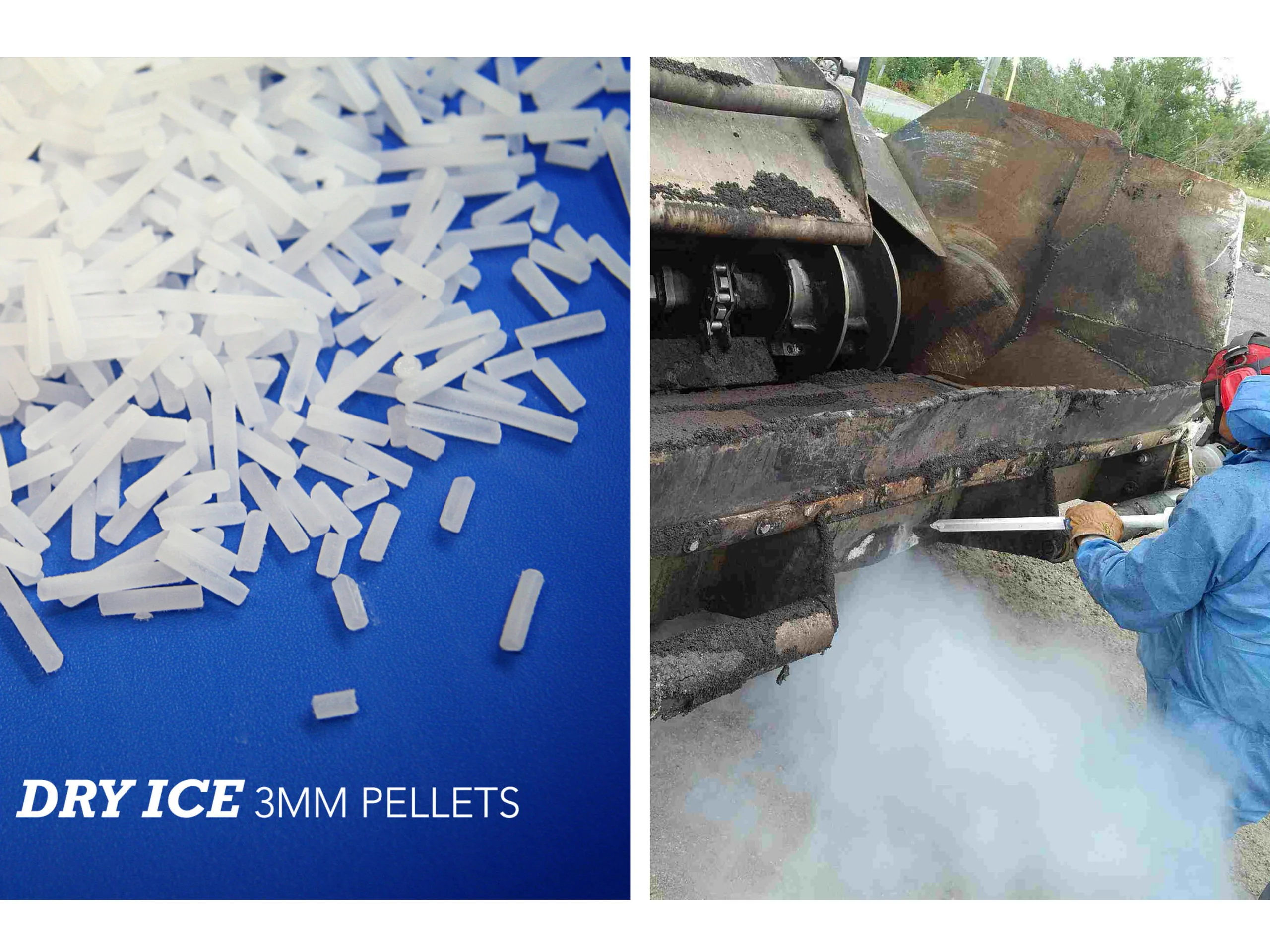
For a gas company, dry ice margin comes down to one number: how much sellable dry ice you get from every pound of LCO₂. Cold Jet systems are engineered to win on that number.
Cold Jet’s sub-cooling technology minimizes CO₂ waste during extrusion, delivering 12–14% better LCO₂-to-dry ice conversion efficiency than the market standard. Over thousands of tons per year, that difference goes straight to your margin.
Add a RE-CO₂ 320V2 recovery system to capture exhaust CO₂ from your pelletizer and turn it back into liquid, reclaiming up to 8.5 tons of LCO₂ per day. It runs from your pelletizer’s HMI screen and can cut annual liquid CO₂ costs by up to 40%.
Most Cold Jet systems come standard with automatic die change, a closed chamber system, sub-cooling technology, an industrial PC, and a stainless steel enclosure. From automated metering and dosing to bagging pellets, nuggets, or slices, Cold Jet engineers complete systems tailored to your facility from the outset.
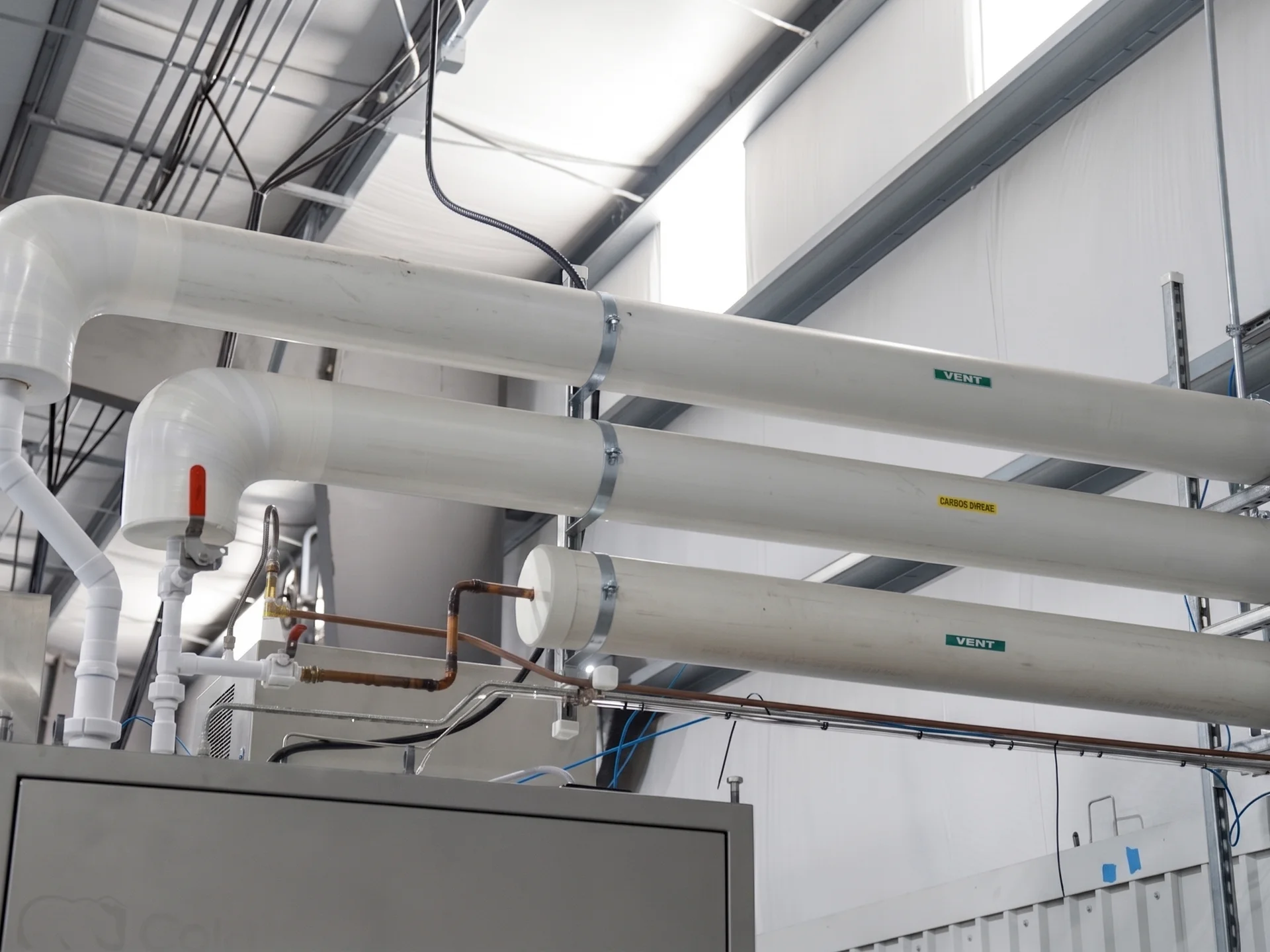
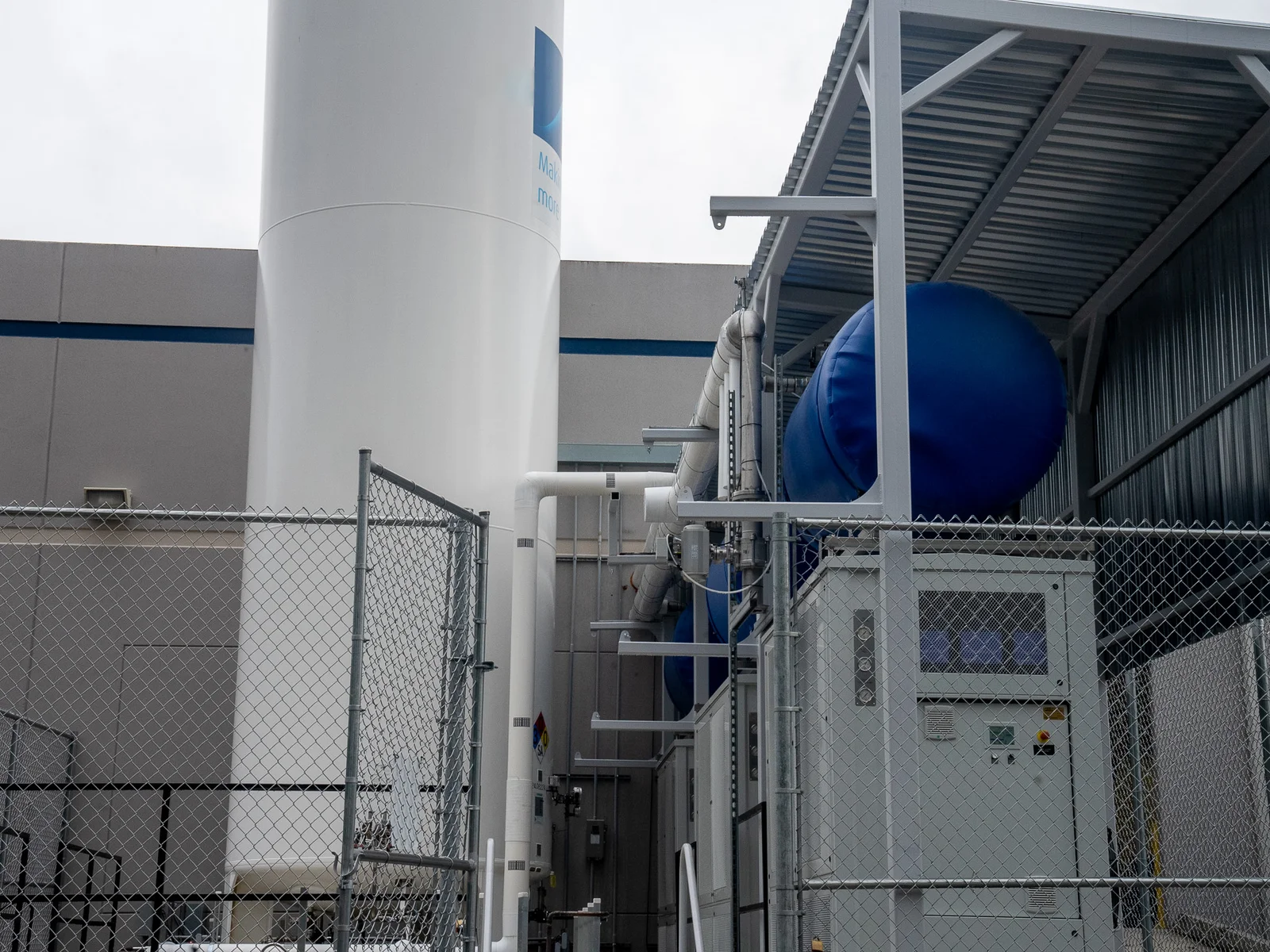
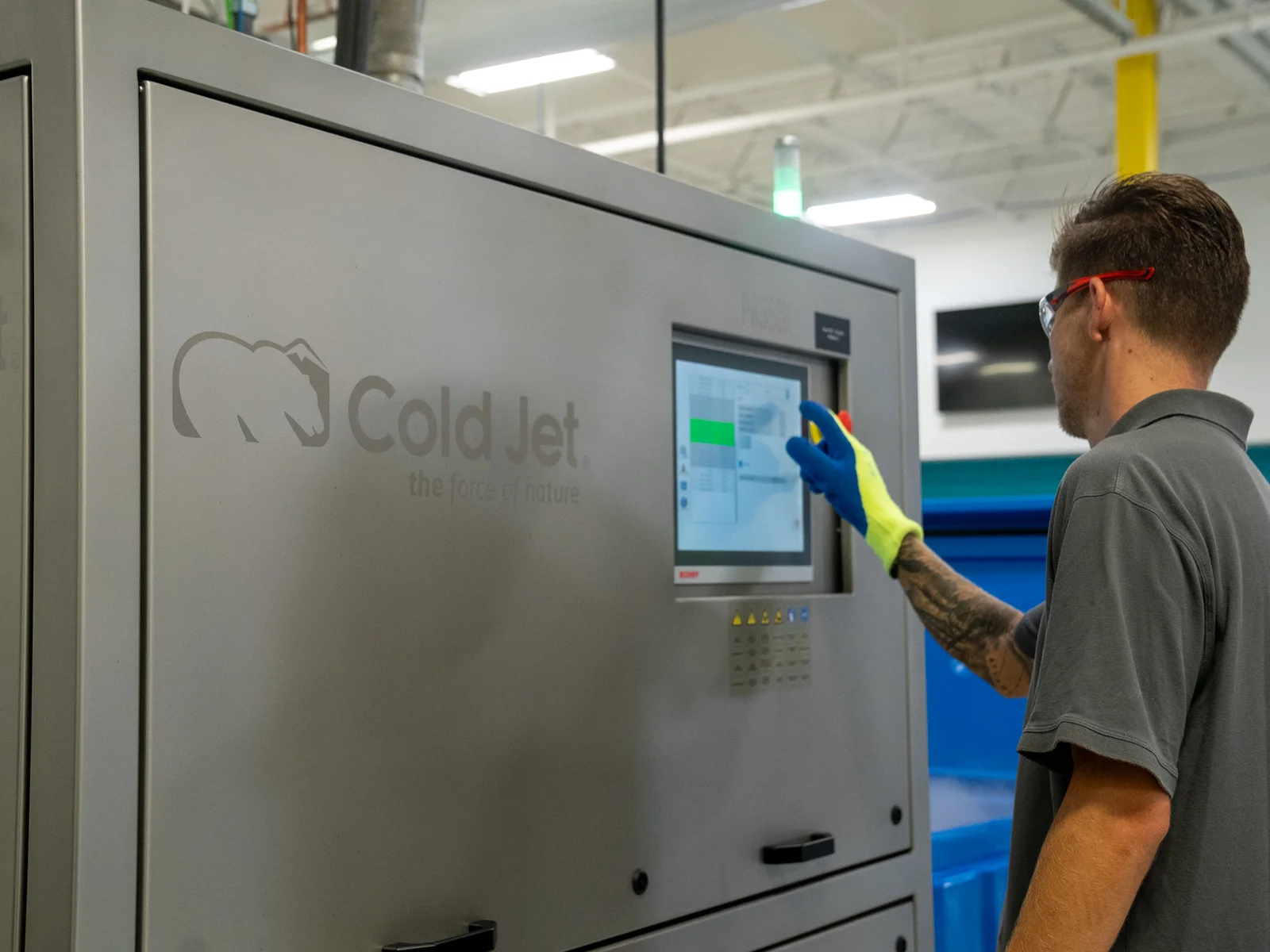
Cold Jet systems produce every commercial dry ice format on the market — so you can serve customers large and small from a single operation. Available formats include:
For a gas company with liquid CO₂ supply already in place, the path to dry ice production is short. A complete dry ice production operation requires the following infrastructure — and Cold Jet works with you from the outset to guarantee the ideal installation:
Step 01
12-14%BETTER LCO₂ CONVERSION
Liquid CO₂ Supply & Storage
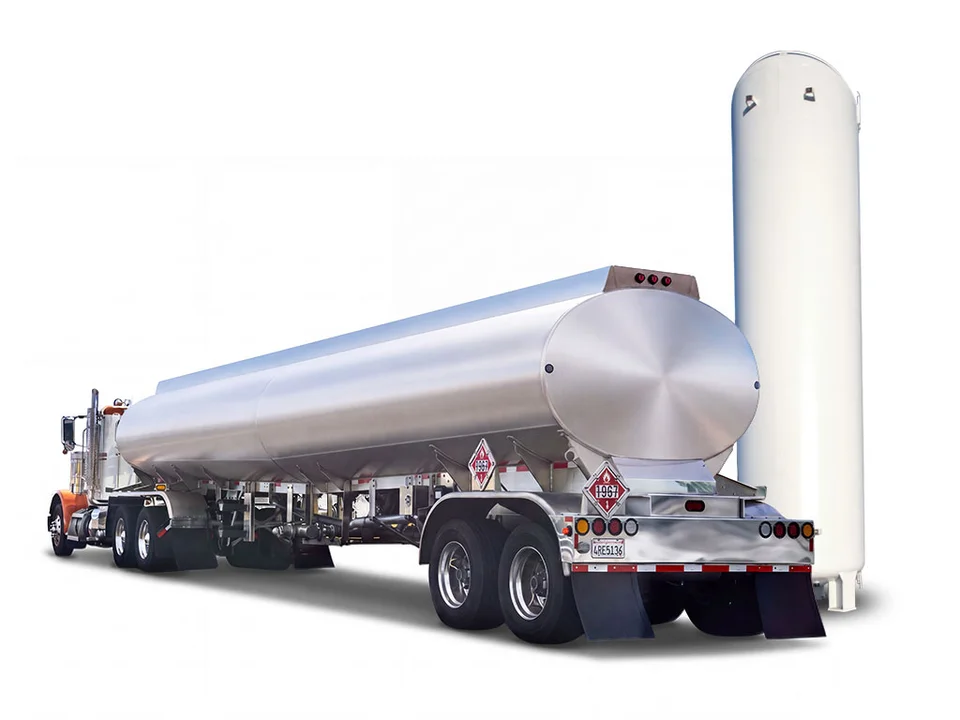
The foundation of dry ice production is access to liquid CO₂, which your gas business already has. You’ll need an on-site bulk LCO₂ reservoir on a reinforced concrete foundation, with insulated pipework connecting the exterior tank to the production system. With 12–14% better conversion efficiency than the market standard, Cold Jet systems turn more of every tanker of LCO₂ into sellable dry ice.
See how producing dry ice with Cold Jet stacks up against reselling purchased dry ice, toll production, and competing equipment across the criteria that matter most to gas companies.
| Criteria | Cold Jet Production Systems Best | Typical Competitor Pelletizers | Legacy Block Presses | Reselling Purchased Dry Ice | Third-Party Toll Production |
|---|---|---|---|---|---|
| LCO₂ Conversion Efficiency | 12–14% better than market standard; sub-cooling standard | Market standard | High LCO₂ waste per lb produced | N/A — margin paid to producer | N/A — conversion economics captured by toller |
| Cost Per Lb of Dry Ice | Lower — more dry ice per ton of LCO₂, plus up to 40% LCO₂ savings with recovery | Higher LCO₂ use per lb | High — labor and energy intensive | Highest — producer margin + freight | High — tolling fees + logistics |
| Product Formats | 3–16mm pellets/nuggets, slices, — automatic die change | Limited formats; manual die swaps | Blocks only | Limited to producer's catalog | Limited to toller's equipment |
| Supply Reliability | Full control — produce fresh on demand | In-house, but more downtime risk | Slow output limits responsiveness | Dependent on third party at peak demand | Dependent on toller capacity and schedule |
| Product Freshness & Quality | Freshest — produced at point of distribution | Fresh, but quality varies by machine | Inconsistent density and quality | Sublimation losses in transit and storage | Sublimation losses in transit |
| Margin Capture | Full margin on your own LCO₂ | Full margin, weaker economics | Partial — high production costs | Reseller margin only | Split with toll producer |
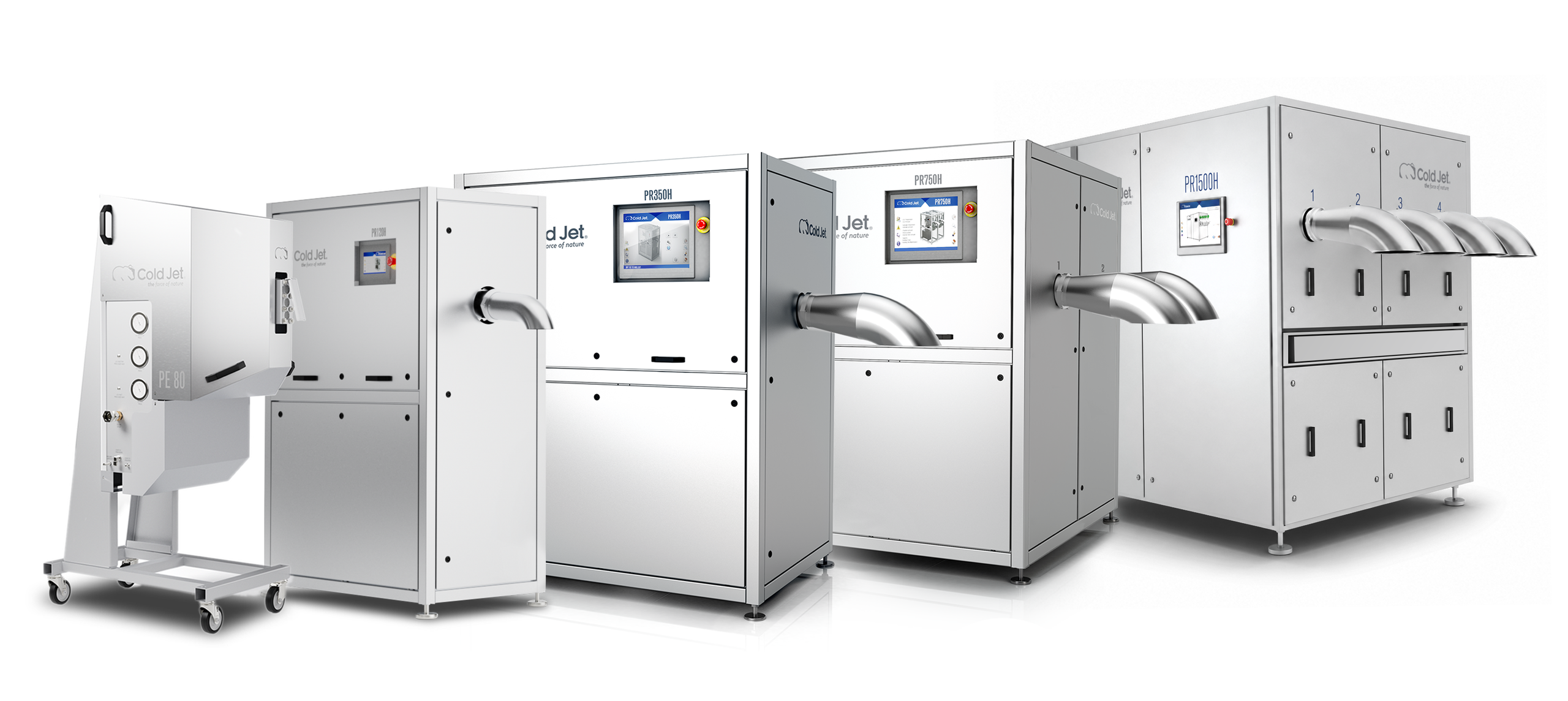
Cold Jet pelletizers and slice reformers turn your liquid CO₂ supply into high-value dry ice products. Start with the pelletizer capacity that matches your regional demand, then add slice production as your customer base grows.
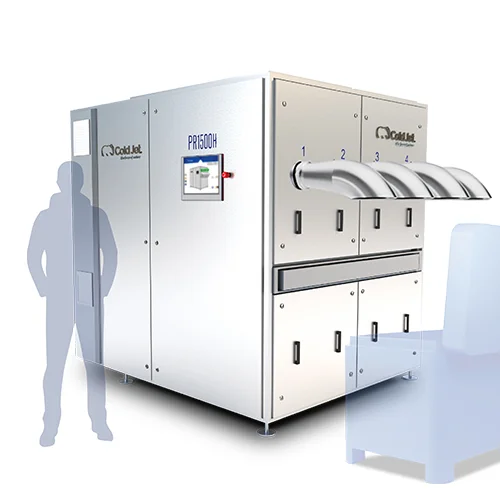
PR1500H Dry Ice Pelletizer
The PR1500H is Cold Jet’s highest-capacity pelletizer, producing up to 3,306 lbs/hr (1,500 kg/hr) of high-density dry ice pellets. Four independent barrels with automatic die change keep production running between sizes, and the complete version makes two pellet sizes at once. It’s built for industrial gas companies supplying high-volume regional markets.
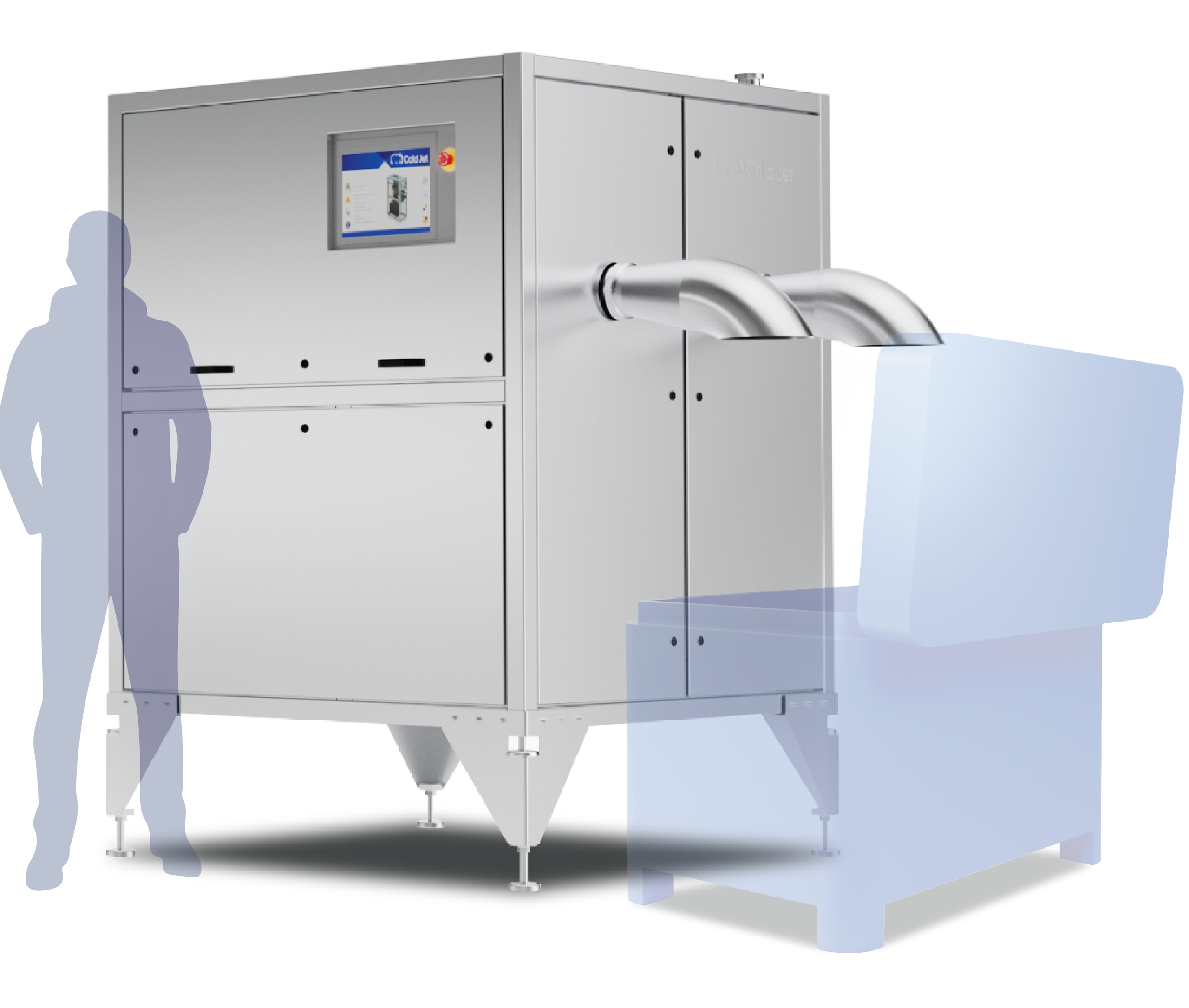
PR750H Dry Ice Pelletizer
The PR750H produces up to 1,653 lbs/hr (750 kg/hr) of dry ice pellets in a compact footprint. Closed-chamber technology delivers quality pellets from the first stroke, and automatic die change reduces downtime and CO₂ loss. It’s a strong fit for depots and branch plants that need dependable output without a four-barrel system.
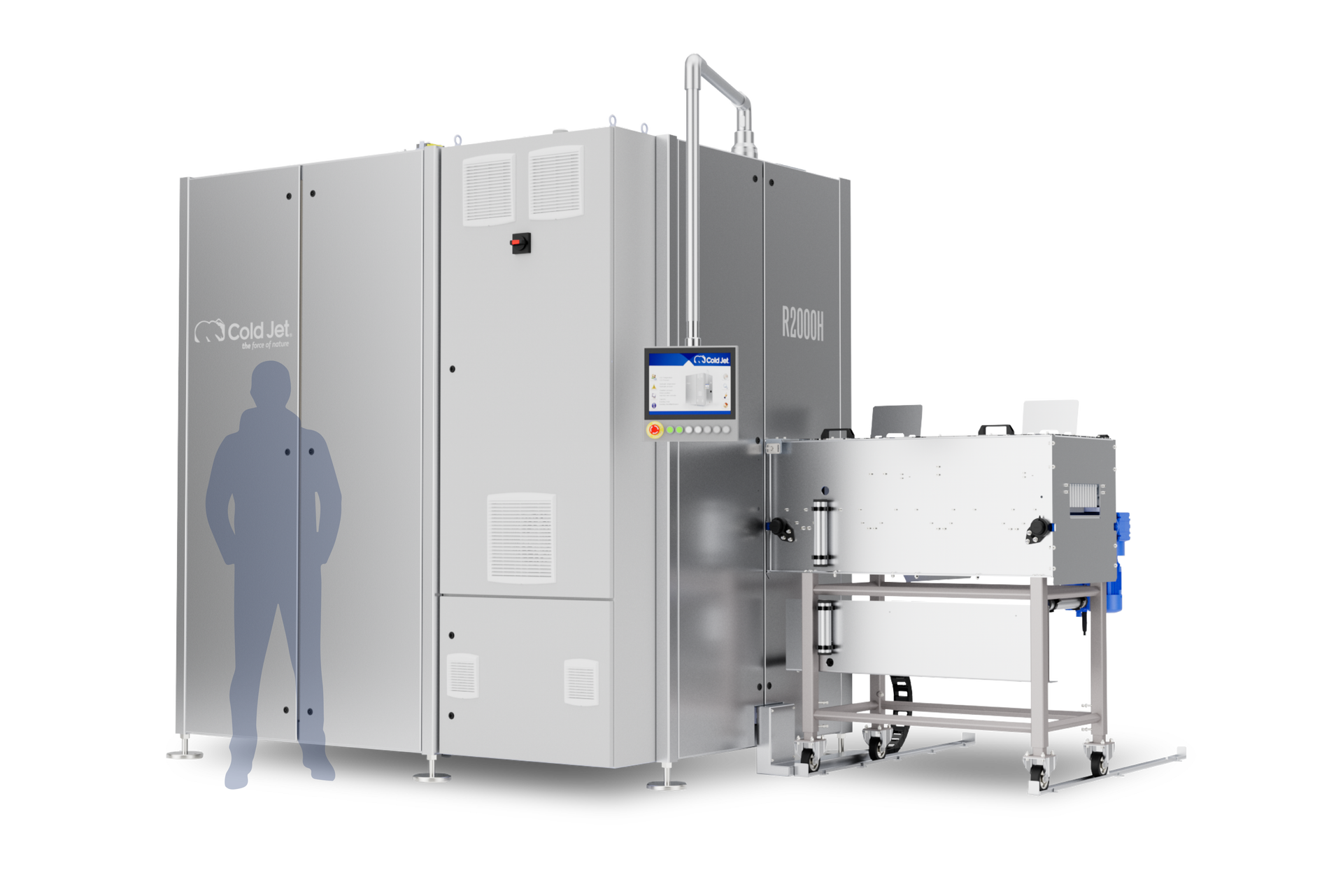
R2000H Slice Reforming System
The R2000H reforms dry ice pellets into high-density slices and mini blocks, adding a new product line for cold chain, food shipping, and airline catering customers. It reforms up to 5,511 lbs/hr (2,500 kg/hr), depending on slice format and pellet supply. A Quick Change Press Head switches slice formats in under 15 minutes.
Side-by-side specs for the Cold Jet systems best suited to industrial gas dry ice operations — so you can match the right system to your volumes, formats, and end markets.
Highest-capacity pellet production

High-volume pellets, compact footprint
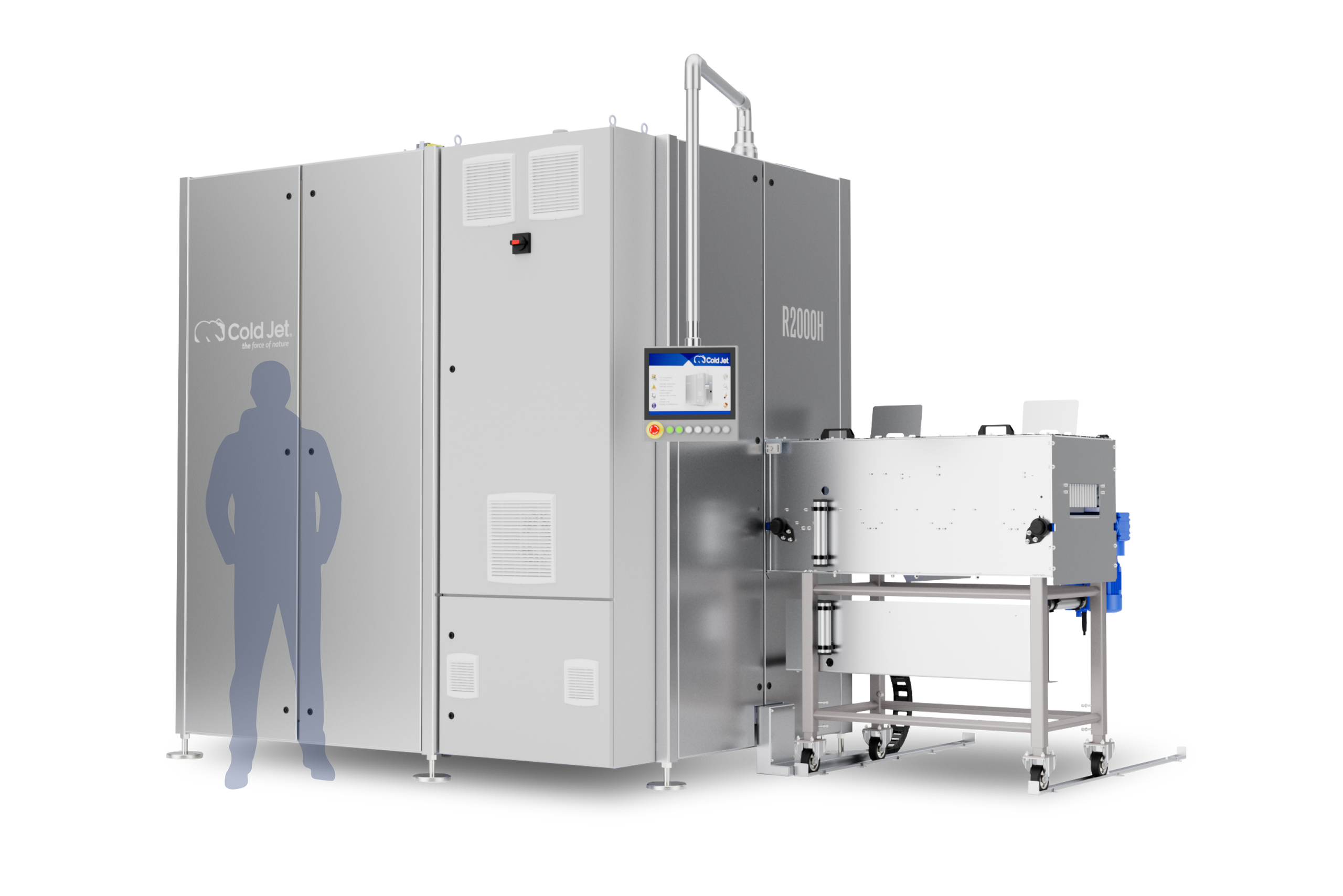
Pellet-to-slice reforming
| Specification | PR1500H Pelletizer | PR750H Pelletizer | R2000H Reformer |
|---|---|---|---|
| Production Capacity | |||
| Max Production Capacity | Up to 3,306 lbs/hr(1,500 kg/hr) | Up to 1,653 lbs/hr(750 kg/hr) | Up to 5,511 lbs/hr (2,500 kg/hr), depending on slice format and pellet supply |
| Input | Liquid CO₂ | Liquid CO₂ | Dry ice pellets, 3–10 mm |
| Output Format | Pellets: 3, 6, 10, or 16 mm | Pellets: 3, 6, 10, or 16 mm | Slices and mini blocks, 1.4–16 lbs; 1–3 in thick |
| Format Change | Automatic die change across four barrels; two pellet sizes at once | Automatic die change; two pellet sizes at once | Quick Change Press Head in under 15 min; automatic thickness adjustment |
| Best For | High-volume regional supply and central production plants | Depots and branch plants with steady pellet demand | Adding slices for cold chain, food shipping, and airline catering customers |
| Features | |||
| CO₂ Efficiency | Sub-cooling technology | Sub-cooling technology | Insulated hopper and enclosed cabinet reduce sublimation loss |
| Fast Startup | Closed-chamber technology | Closed-chamber technology | Not applicable(reforms existing pellets) |
| Control System | Industrial PC with 15" touch screen; BUS/Ethernet integration | Industrial PC with 15" touch screen; BUS/Ethernet integration | Beckhoff Industrial PC with 15.6" touch screen; recipe programs for slice formats |
| Quality & Safety | Beckhoff safety system; prepared for metal detector integration | Moisture-free enclosure protects machine parts | Less than 1% slice breakage |
| Noise Level | Below 80 dB(A) | Below 75 dB(A) | Below 75 dB(A) |
| Footprint | 87 × 72 × 85 in; 8,818 lbs | 59 × 59 × 71 in; 4,017 lbs | 89 × 65 × 94 in; 8,819 lbs |
| Remote Monitoring (Cold Jet CONNECT®) | Available | Available | Available |
Specifications shown are maximums; actual output depends on LCO₂ supply conditions and configuration. Contact a Cold Jet specialist to model capacity and payback for your operation.
If you're adding dry ice production to your gas business — or replacing aging production equipment — investing in Cold Jet systems maximizes the value of every kilogram of liquid CO₂ you handle. When evaluating this capital investment, consider both the total cost per pound of dry ice produced and the long-term value of the equipment.
Cold Jet systems deliver faster ROI and greater value through:
Lowest Cost Per Lg of Dry Ice
Sub-cooling technology delivers 12–14% better LCO₂ conversion efficiency than the market standard, so you get more sellable dry ice from every ton of LCO₂.
Trusted by the Industry's Leaders
The world's leading industrial gas companies and independent distributors build their dry ice operations on Cold Jet systems — backed by global application expertise across every dry ice end market.
Scalable Systems for Future Growth
From 176 lbs/hr entry systems to 5,511 lbs/hr industrial reformers, Cold Jet systems scale with your dry ice business — and run in parallel as demand grows.
Engineered Systems Tailored to Your Facility
From automated metering and dosing to bagging dry ice pellets, nuggets, or slices, Cold Jet works with you from the outset to guarantee the ideal installation — and can assist with LCO₂, storage tanks, piping, containers, and CO₂ sensors.
Fastest Response Time & Minimal Downtime
A global customer service organization of 70+ people, plus Cold Jet CONNECT® remote monitoring and diagnostics, keeps your production running when customers are counting on supply.
High Second-Hand Value
Cold Jet systems are built to last, with standard features like closed chamber systems, industrial PCs, and stainless steel enclosures — protecting your capital investment and holding strong resale value.
From global majors to independent distributors and welding supply companies — Cold Jet production systems power dry ice operations of every size, backed by a global customer service organization of more than 70 people.




See What Gas Companies and Dry Ice Producers Are Saying About Cold Jet
The Cold Jet dry ice production equipment produces the purest dry ice available.

We are very satisfied from the first contact up to date. The employees at Cold Jet were very professional and helpful. We are finally able to respond to requests for flexibility from our customers and produce according to their dry ice needs. In addition, we are also excited about the quality of the dry ice.
From food-grade production to safe handling and shipping, Cold Jet systems help your dry ice product line meet the standards your most demanding customers require.
Food-Grade Dry Ice Production
Dry ice used in food processing, food shipping, and beverage applications must be produced from food-grade CO₂ and protected from contamination during production and handling.
Cold Jet systems feature closed chamber production and stainless steel enclosures with bottom plates as standard, protecting product purity from LCO₂ inlet to finished dry ice. Paired with your food-grade LCO₂ supply, your dry ice product line is ready for food and beverage customers.
Beverage-Grade CO₂ Quality Guidelines
The International Society of Beverage Technologists publishes the CO₂ quality guidelines that beverage and many food customers reference when qualifying suppliers.
As a gas company, you already manage LCO₂ quality to ISBT-referenced specifications. Cold Jet's closed production process preserves that quality through to the finished dry ice — as Sutton-Garten's CEO puts it, producing the purest dry ice available.
Compressed Gas Association CO₂ Practices
CGA publications govern the safe storage, handling, and transfer of carbon dioxide — including the bulk LCO₂ systems that feed dry ice production.
Cold Jet engineers complete installations — bulk tank siting, insulated piping, and supporting infrastructure — consistent with industry-standard CO₂ handling practices, and can arrange installation through trusted affiliates.
Workplace CO₂ Exposure & Ventilation
OSHA sets permissible exposure limits for CO₂ in the workplace, requiring ventilation and monitoring wherever CO₂ gas can accumulate — including dry ice production and storage areas.
Cold Jet specifies artificial ventilation and CO₂ PPM monitoring as part of every production facility design, and machine-level features like closed chambers and separated high and low voltage systems support safe day-to-day operation.
Dry Ice Shipping Regulations (UN1845)
Dry ice is classified as UN1845 for transport, with labeling, quantity, and packaging requirements for air and ground shipment that your dry ice customers must meet.
Cold Jet systems produce the slice formats and weights the cold chain is built around — from 1 lb to 16 lb slices — with digital thickness control and recipe programs for repeatable, spec-compliant product. Optional flow packing adds sealed, branded packaging.
Contact us today to discuss production capacities, site requirements, and the investment and payback for adding dry ice production to your gas operation.