Overview
Summary
Dry ice is a food grade cooling medium, affirmed GRAS for food use under 21 CFR 184.1240, that holds fermenting batches at target temperature without adding water. At -109 °F (-78.5 °C) it carries roughly three times the cooling power of water ice, sublimates to CO₂ gas that blankets the batch against oxygen, and leaves no residue or secondary waste behind.
What is temperature controlled fermentation with dry ice?
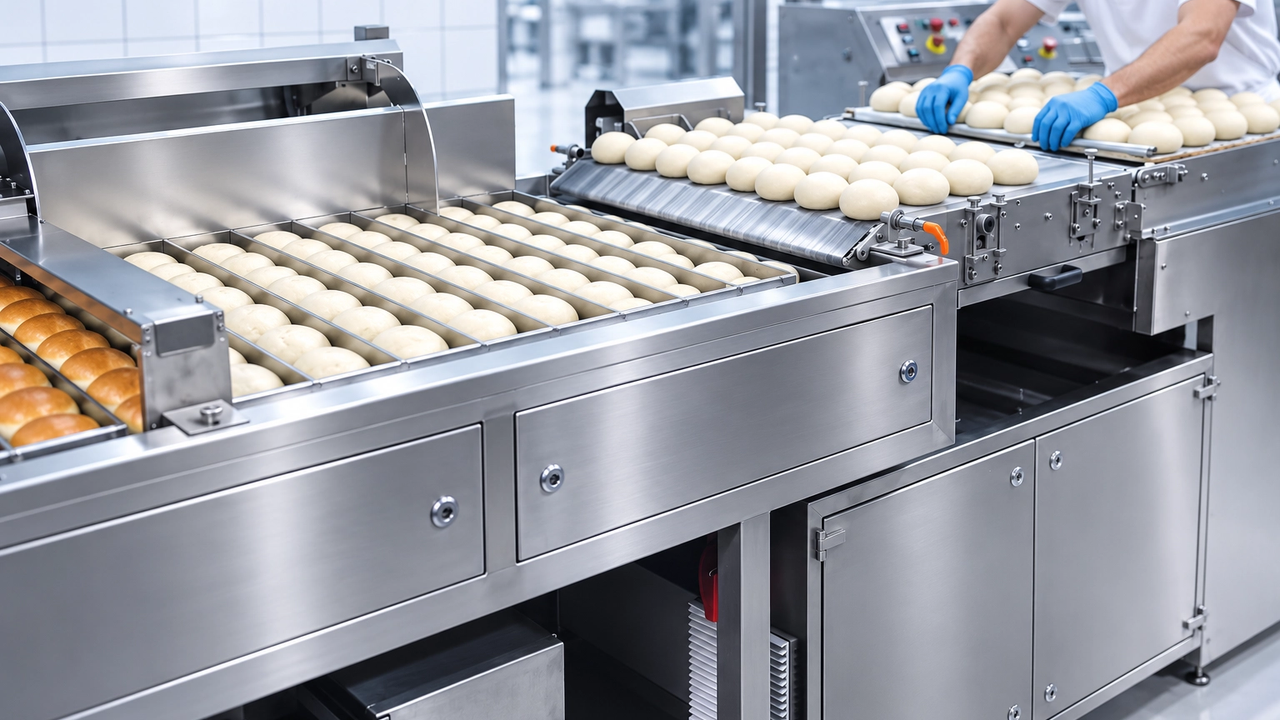
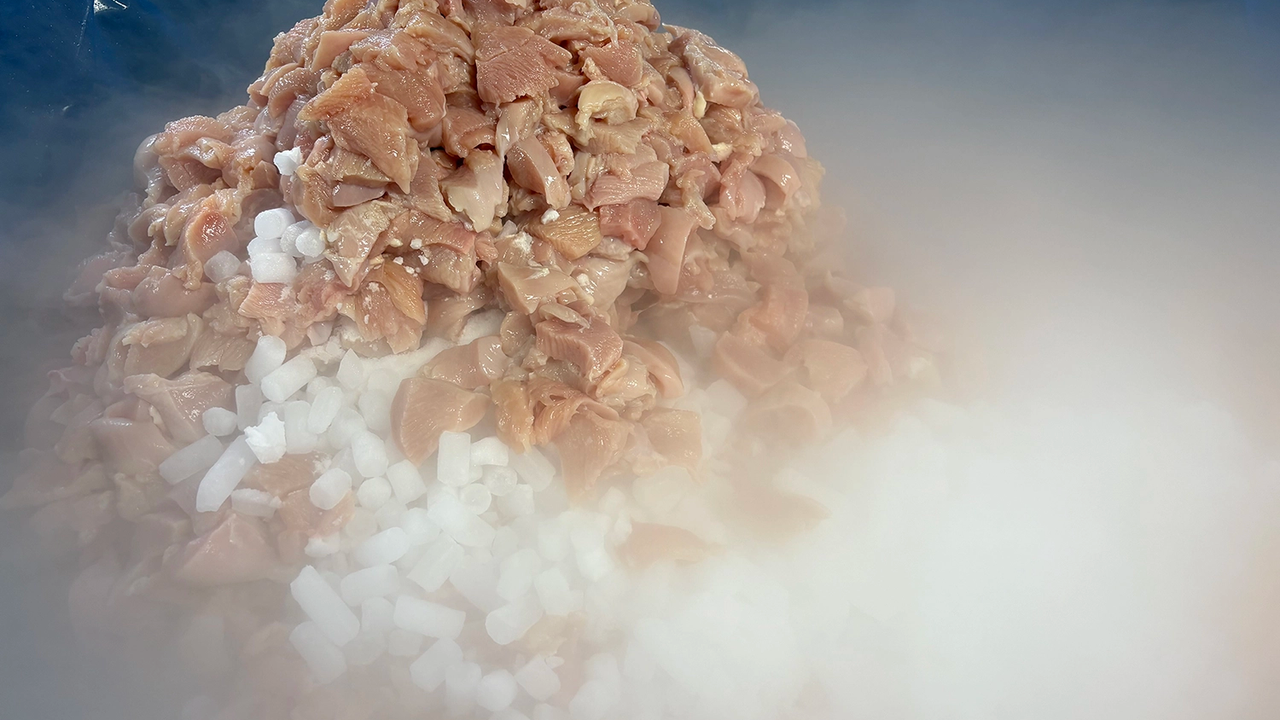
Temperature controlled fermentation with dry ice is the practice of dosing solid CO₂ pellets directly into a fermenting batch — grape must, dough, wort or mash — to hold it inside a target temperature window without diluting the formula. At -109°F (-78.5°C), dry ice carries roughly three times the cooling capacity of water ice by weight, so a smaller charge does more work. It sublimates directly from solid to gas on contact, leaving no liquid behind and releasing an inert CO₂ blanket that displaces oxygen at the surface of the batch. Winemakers add 3 mm pellets to picking bins, cold soaks and fermentation tanks to hold must in the 40–55°F (4–13°C) range and protect it from oxidation before inoculation. Industrial bakeries dose pellets into dough mixers to offset friction heat and land inside the 75–78°F (24–25.5°C) final dough temperature window that governs proof timing and crumb structure. Brewers and distillers use it to pull wort down to pitching temperature and to purge headspace after transfers. Carbon dioxide is affirmed GRAS under 21 CFR 184.1240, and dry ice is recognized by the FDA, USDA and EPA as a food grade cooling medium. Producers using dry ice at volume increasingly make it on-site with a Cold Jet pelletizer, converting bulk liquid CO₂ into fresh pellets on demand rather than ordering, storing and losing inventory to sublimation.
Challenge
Why fermentation needs cooling that adds nothing to the batch
Every fermentation has a temperature window, and the cost of leaving it is measured in the finished product. Must that warms during a long cold soak starts fermenting on wild yeast before the winemaker is ready. Dough that leaves the mixer a few degrees hot proofs early and runs gassy through the divider. Wort that sits warm on its way to the fermenter invites spoilage organisms. Dry ice puts cold energy straight into the product, sublimates without leaving water behind, and blankets the batch in inert CO₂ as it goes.
12–14%
Better LCO₂ Conversion vs. Market Standard
3x
Water Ice
Cooling Power
Zero
Water Added to Batch
−109°F
Dry ice temperature
−78.5°C
Benefits
What Are the Benefits of Using Dry Ice for Fermentation Temperature Control?
Dry ice carries three times the cooling power of water ice and adds no water to the batch
Fermentation generates its own heat. Yeast metabolism, mixer friction and warm incoming fruit or ingredients all push batch temperature up at exactly the moment it needs to stay flat. Glycol jackets and cold rooms cool from the outside in and respond slowly. Chilled water and water ice cool faster, but every pound you add to hit a temperature target also changes the hydration of the batch.
Dry ice puts cold energy directly into the product. At -109 °F (-78.5 °C) with roughly three times the cooling capacity of water ice, a smaller charge does more work. It sublimates from solid straight to gas on contact, so nothing is left behind to dilute the formula, and the CO₂ released displaces oxygen at the surface of the batch on its way out.
 Precision
Cooling That Adds No Water to the Batch
Dry ice sublimates from solid straight to gas, so it removes heat without leaving liquid behind. Hydration, Brix, gravity and formula ratios stay where the recipe put them, which matters most in dough, must and wort where added water changes the finished product.
 Efficiency
Three Times the Cooling Power of Water Ice
At -109 °F (-78.5 °C), dry ice carries roughly three times the cooling capacity of water ice by weight. Cold energy goes directly into the product instead of working through a jacket wall or the air in a cold room, so batches come down to target faster and hot spots in mixers and blenders are eliminated rather than averaged out.
 Quality
Repeatable Batch-to-Batch Consistency
Dosing dry ice by weight is a measurable, repeatable control input. Bakeries can hold final dough temperature inside the 75–78 °F (24–25.5 °C) window through summer heat and long mix cycles; wineries can hold a cold soak at temperature for days. Consistent temperature in means consistent fermentation kinetics, flavor development and schedule out.
 Protection
An Inert CO₂ Blanket as It Sublimates
Sublimating dry ice releases CO₂ gas that is heavier than air and settles over the surface of the batch. That blanket displaces oxygen, protecting must from oxidation and browning during cold soak and purging headspace in tanks and vessels — cooling and inerting from a single input.
 Supply
Fresh Dry Ice, Made When You Need It
Purchased dry ice sublimates in storage and arrives on a delivery schedule that rarely matches harvest, a peak bake or a brew day. On-site production converts bulk liquid CO₂ into fresh pellets on demand, eliminating sublimation loss on inventory you already paid for and freeing the floor space the bins occupied.
Applications
Where Is Dry Ice Used in Temperature Controlled Fermentation?
Dry ice is used wherever a fermenting batch has to be held in a narrow temperature window without being diluted — from grape must at harvest, to dough in the mixer, to wort on its way to the fermenter.
Validated For
- Food Grade CO₂ — 21 CFR 184.1240
- FDA, USDA & EPA Recognized
- HACCP Critical Control Points
- 3 mm Pellets for Fermentation
- Zero Water Added to the Batch
Chill Fruit, Hold a Cold Soak and Protect the Must From Oxygen With Dry Ice Pellets
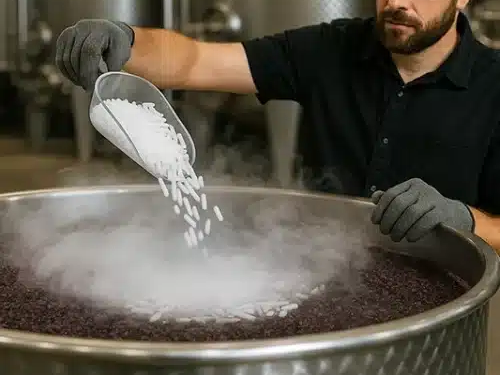
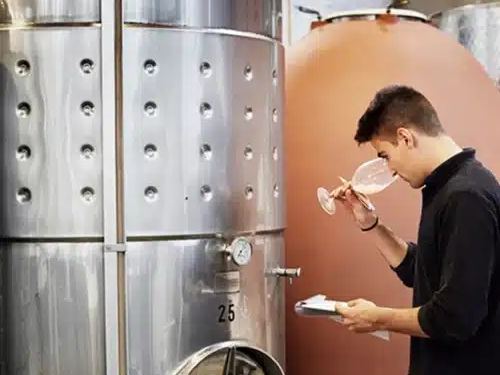
Wines built on primary fruit character are made in a protective, low-oxygen environment. Dry ice does two jobs at once in the cellar: it removes heat from fruit and must, and the CO₂ it releases blankets the surface against oxidation. 3 mm pellets are ideal for this application.
Protect the fruit from heat at harvest
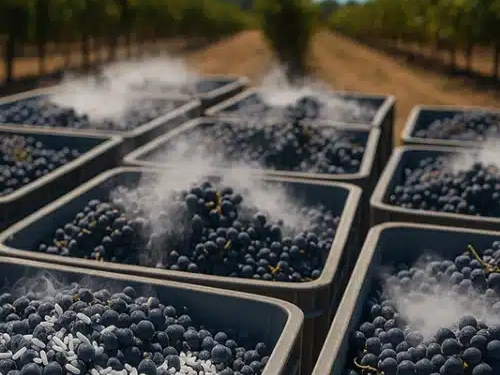
Grapes begin to oxidize and ferment as soon as they are picked, and warm fruit arriving from a long haul is already working before it reaches the crush pad. Scattering dry ice pellets over the fruit in picking bins pulls the temperature down in transit and lays a blanket of CO₂ over the load, preserving acidity and aromatics and giving the cellar room to process on its own schedule rather than the harvest's.
Hold a cold soak without diluting the juice
Pre-fermentation maceration extracts color and aroma from the skins while there is no alcohol in the juice, but it only works if the must stays cold enough to keep wild yeast and spoilage organisms quiet — typically 40–55 °F (4–13 °C). Dosing dry ice into the fermenter and topping it up through the soak holds that window in vessels that have no jacket, and adds no water to the must in the process.
Blanket the tank against oxidation
Dry ice sublimates into CO₂ gas that is heavier than air, so it settles and stays over the surface of the must. Winemakers add pellets to the top of the tank to maintain that inert layer through cold soak and between punch-downs, to purge vessels before filling, and to establish the CO₂ rich environment carbonic maceration depends on.
Where Wineries Use Dry Ice
- Picking & Harvest Bins
- Cold Soak / Pre-Fermentation Maceration
- Fermentation Tanks
- Carbonic Maceration
- Tank & Vessel Purging
- Destemmer & Crush Pad Cooling
- Press Fraction Protection
- White & Rosé Juice Settling
- Barrel Room Transfers
- Cider & Fruit Wine Fermentation
Hit Final Dough Temperature Every Batch Without Changing the Formula
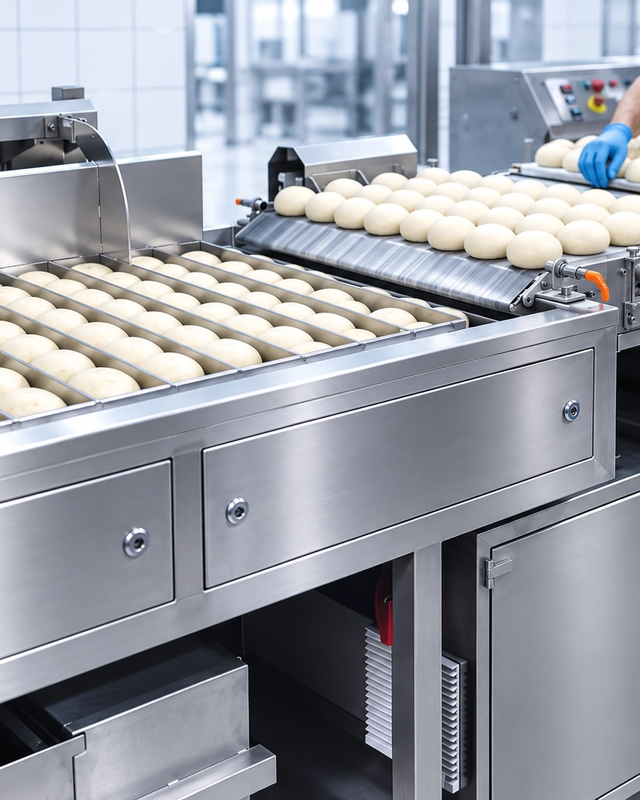
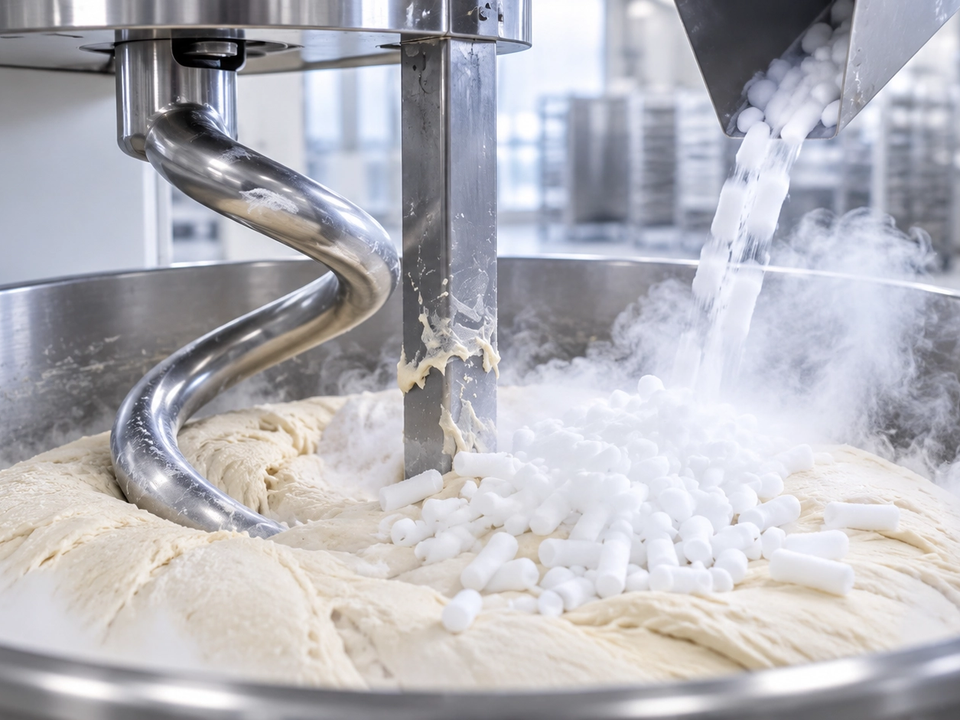
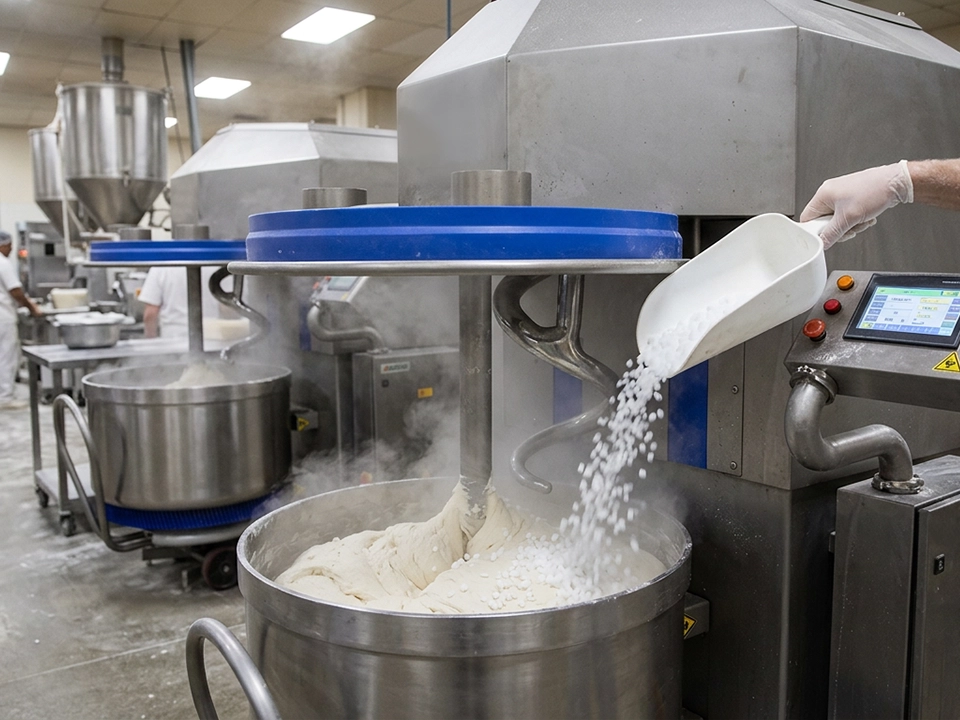
Yeast-leavened dough has an optimum temperature at the end of mix, generally 75–78 °F (24–25.5 °C). Mixing adds friction heat, and summer pushes flour, water and plant temperatures up with it. Dry ice pellets dosed into the mixer remove that heat without adding water.
Keep the yeast cool in the mixer
A spiral or horizontal mixer can add substantial heat to a dough over a full mix cycle. Adding dry ice pellets to the mixer cools the yeast as they sublimate, holding fermentation back until the dough reaches the proofer instead of letting it start in the bowl. That keeps dough out of the bucky, over-gassed state that jams dividers and rounders.
Cool without shifting hydration
Chilled water and water ice both cool a dough, but both count as formula water — which means the amount of cooling you can apply is capped by the recipe, and any ice that fails to dissolve shows up as an inconsistency. Dry ice sublimates to gas, so cooling capacity is decoupled from hydration entirely and can be dosed to the batch in front of you.
Protect batch consistency across shifts
Final dough temperature drives proof time, crumb structure, flavor development and how the dough runs through makeup. Dosing dry ice by weight turns temperature control into a repeatable input rather than an adjustment the mixer operator makes by feel, which holds first-shift and third-shift product to the same standard.
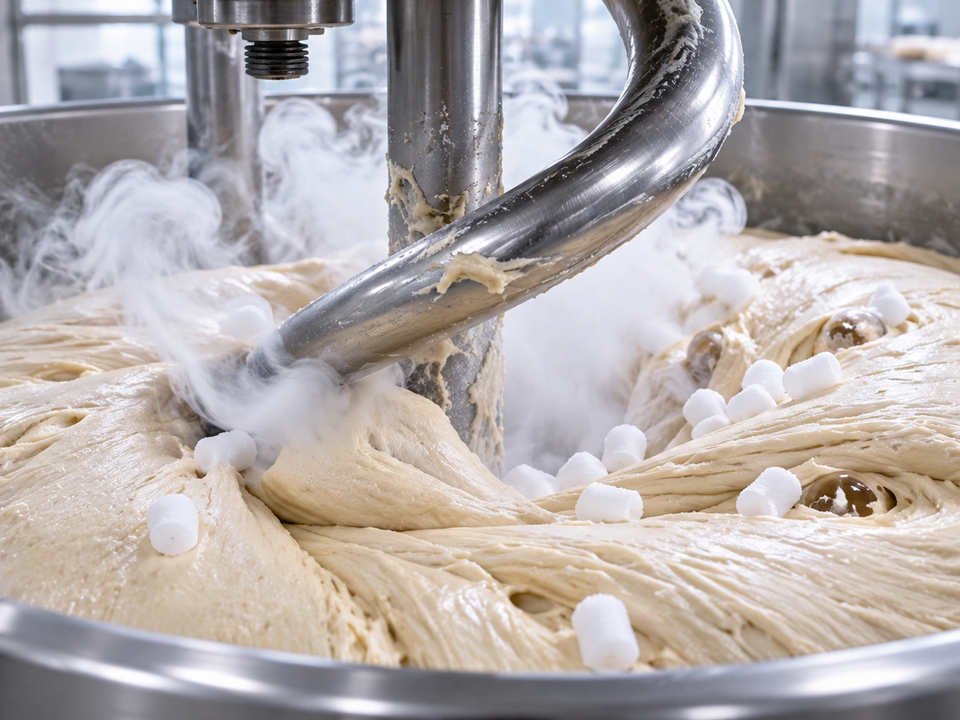
Dry ice cooling applies across the bakery mix room — bread and roll doughs, laminated and sweet goods, pizza dough, tortilla and flatbread lines, pre-ferments and sponges, and refrigerated or frozen dough destined for a long hold. It is used in these systems:
Compatible Equipment & Processes
- Horizontal Dough Mixers
- Spiral Mixers
- Continuous Mix Systems
- Dough Blenders
- Sponge & Pre-Ferment Vessels
- Bulk Fermentation Troughs
- Retarded & Frozen Dough Lines
- Tortilla & Flatbread Lines
- Pizza Dough Production
- Sourdough & Starter Management
- Meat & Filling Blenders
Bring Wort to Pitching Temperature and Keep Oxygen Out of the Vessel
Brewing and distilling run on temperature and on the exclusion of oxygen. Dry ice supports both: it removes heat directly from the liquid, and the CO₂ it releases purges headspace without a separate gas supply.
Get wort through the danger zone faster
Wort has to move from boil to pitching temperature quickly, before spoilage organisms take hold. Where a heat exchanger alone leaves the last several degrees on the table — common in summer, when supply water is warm — dry ice supplies the additional cooling needed to reach pitching temperature without a second glycol stage.
Steady fermentation in unjacketed vessels
Active fermentation is exothermic, and a batch that runs warm produces the fusel and ester character brewers work to avoid. Dry ice gives smaller producers and unjacketed vessels a way to pull temperature back into the target band for a given yeast strain, and to manage the peak of a vigorous fermentation without moving the vessel.
Purge oxygen from tanks and transfers
Oxygen pickup after fermentation is one of the fastest routes to stale, oxidized product. Pellets dropped into a receiving vessel before filling displace the air with CO₂, and a small charge after a transfer re-establishes headspace protection — useful anywhere a dedicated CO₂ gas line does not reach.
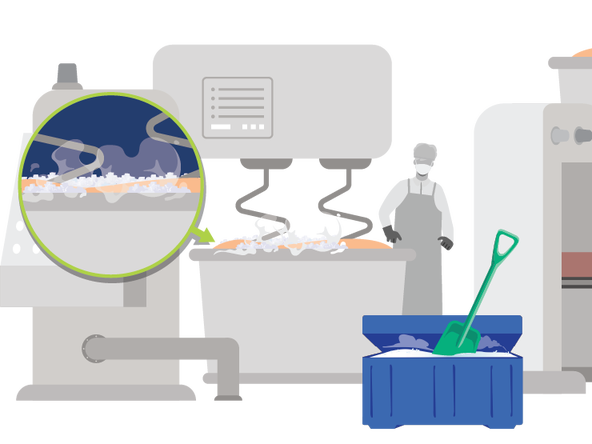
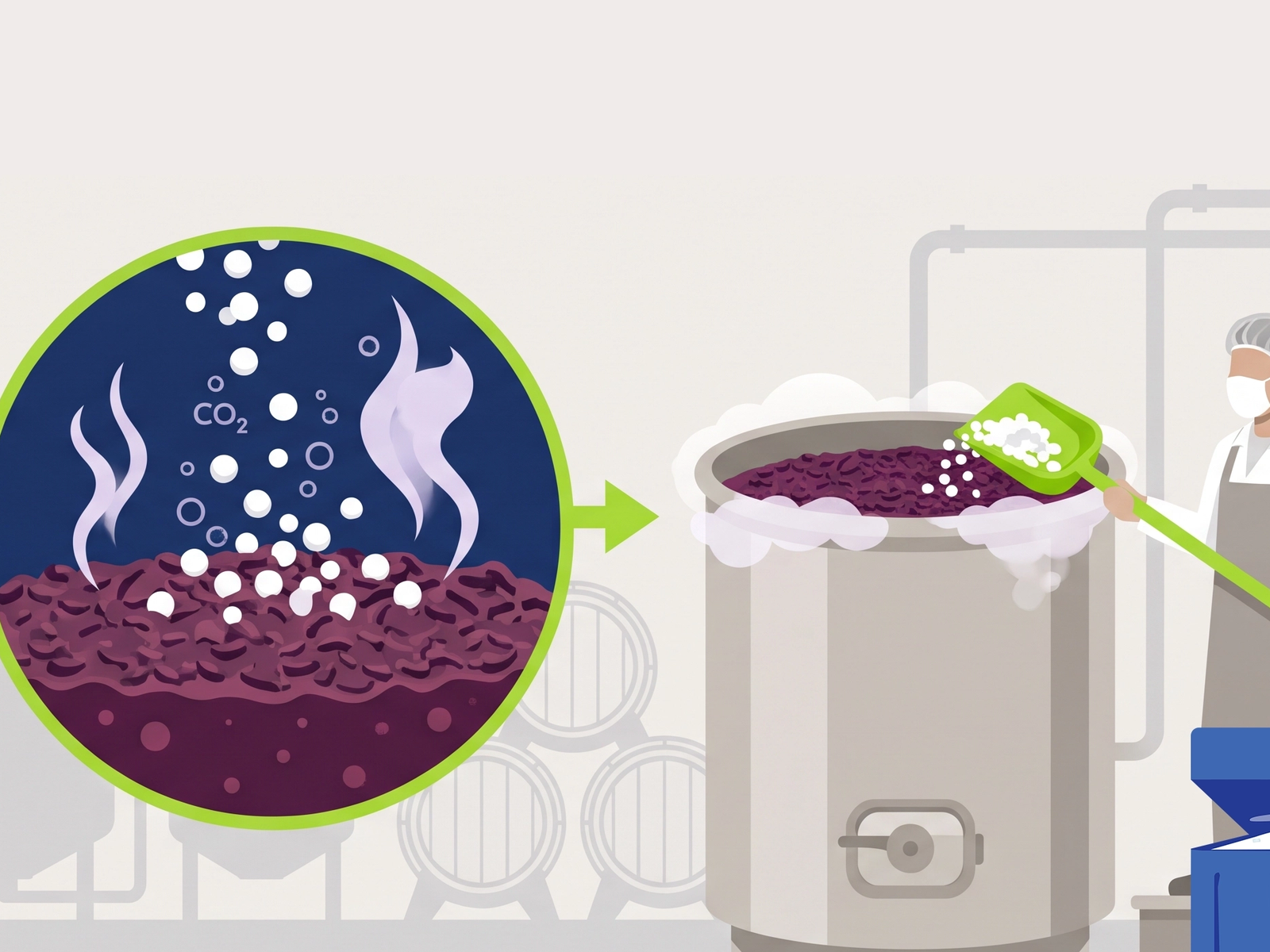
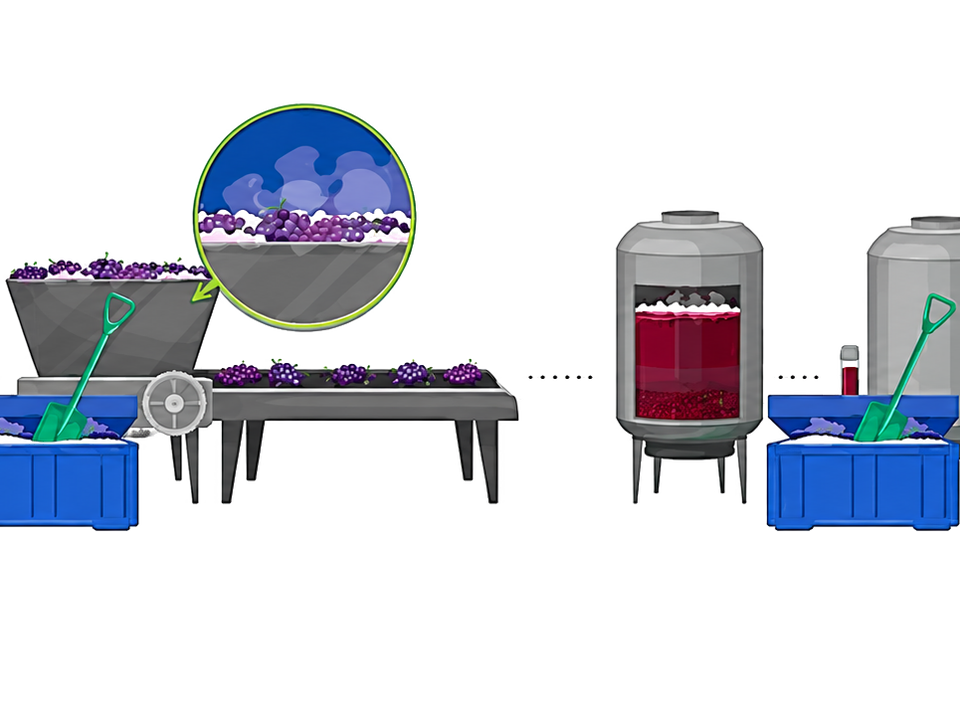
The same approach carries into other fermented products where temperature and oxygen exposure drive the outcome, including kombucha, vinegar, cultured dairy, fermented vegetables, and cocoa and coffee fermentation. Common applications include:
Where Brewers & Distillers Use Dry Ice
- Wort Cooling to Pitching Temperature
- Mash Cooling
- Fermentation Tank Temperature Control
- Cold Crashing
- Tank & Keg Purging
- Transfer & Headspace Protection
- Hop & Yeast Cold Storage
- Kombucha & Vinegar Fermentation
- Cultured Dairy
- Fermented Vegetables
Industries
Who Uses Dry Ice for Temperature-Controlled Fermentation?
Wineries, breweries, bakeries, and other food manufacturers rely on dry ice to control fermentation temperatures without adding water to the batch. See how Cold Jet production systems help food processors produce the dry ice they need onsite, on their own schedule.
Comparison
How Dry Ice Compares
to Other Cooling Methods
See how dry ice stacks up against CO₂ snow, water ice, glycol jacketing and cold room chilling across the criteria that matter most in fermentation.
| Criteria | Dry Ice Pellets Best | CO₂ Snow Horns | Water Ice / Chilled Water | Glycol Jacketing | Cold Room Chilling |
|---|---|---|---|---|---|
| Cooling Power | -109 °F — 3x water ice, direct to product | -109 °F, but much is lost to vapor | 32 °F — baseline | Indirect — limited by jacket surface area | Indirect — slowest, cools through air |
| Water Added to Batch | None — sublimates to CO₂ gas | None | Yes — counts as formula water | None | None |
| Liquid CO₂ Efficiency | 12–14% better than market standard with Cold Jet sub-cooling | ~70% more LCO₂ per lb than a Cold Jet pelletizer | Not applicable | Not applicable | Not applicable |
| Dosing Precision | Dosed by weight — repeatable and recordable | Timed shots — variable delivery | Capped by the formula's water allowance | Good, but slow to respond to spikes | Coarse — whole-room setpoint only |
| Oxygen Displacement | Yes — inert CO₂ blanket as it sublimates | Yes, with high vapor volume | No | No | No |
| Infrastructure Required | LCO₂ tank, pelletizer, 3-phase power, ventilation | LCO₂ tank plus heavy exhaust capacity | Ice plant or purchased ice, plus handling | Chiller plant, glycol loop, jacketed vessels | Refrigerated room and the space to build it |
What You Need
What Do You Need to Produce Dry Ice On-Site?
On-site dry ice production is simpler than most facilities expect. If you already keep a bulk liquid CO₂ tank for carbonation, blanketing or snow horns, you are most of the way there. These are the components of a complete installation:
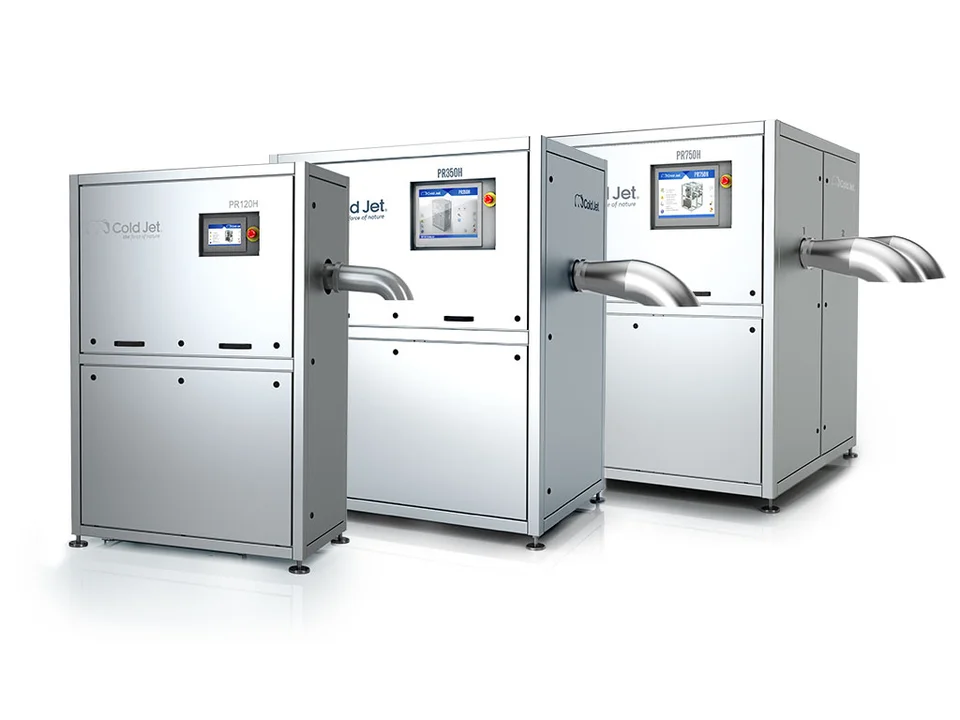
Step 01
CoreProduction System
Dry Ice Pelletizer
The pelletizer is the heart of an on-site dry ice program. It takes bulk liquid CO₂ and extrudes high-density pellets on demand. Cold Jet offers machines from 176 lb (80 kg) per hour up to 3,306 lb (1,500 kg) per hour, so you size to your peak demand rather than over-buying. Most fermentation applications run 3 mm pellets; PR-series machines change die sizes automatically in seconds if you need to run more than one.
- 01. Dry Ice Pelletizer — The pelletizer is the heart of an on-site dry ice program. It takes bulk liquid CO₂ and extrudes high-density pellets on demand. Cold Jet offers machines from 176 lb (80 kg) per hour up to 3,306 lb (1,500 kg) per hour, so you size to your peak demand rather than over-buying. Most fermentation applications run 3 mm pellets; PR-series machines change die sizes automatically in seconds if you need to run more than one.
- 02. Bulk Liquid CO₂ Supply — A bulk liquid CO₂ tank, ideally sited outdoors, feeds the pelletizer through insulated piping at 189–262 psi (13–18 bar). Cold Jet’s sub-cooling technology delivers 12–14% better LCO₂-to-dry ice conversion efficiency than the market standard, and a pelletizer uses far less liquid CO₂ than a snow horn to produce the same amount of solid CO₂. If you already run snow horns, you already have the infrastructure.
- 03. Power, Piping & Air — Installation needs a three-phase electrical supply (3 x 480 V AC / 60 Hz or 3 x 400 V AC / 50 Hz), insulated piping from the tank to the machine, and an exhaust gas line. PR-series pelletizers also use a compressed air supply at 116–145 psi (8–10 bar), ISO 8573-1 Class 3 minimum. Rated power is modest — 4.3 kW on a PR120H, 5.5 kW on a PR350H.
- 04. Ventilation & CO₂ Monitoring — CO₂ is heavier than air and collects in low-lying and enclosed spaces, so the pelletizer belongs in a well-ventilated indoor area with CO₂ monitoring and alarms. OSHA sets a permissible exposure limit of 5,000 ppm as an 8-hour TWA and a short-term limit of 30,000 ppm over 15 minutes. Cellars, mix rooms and below-grade areas warrant particular attention.
- 05. Storage, Handling & PPE — Insulated storage containers hold production between doses and slow sublimation loss — though on-site production is what removes most of that loss in the first place. Never store dry ice in a sealed container, which can pressurize. Operators handling pellets need insulated cryogenic gloves, eye protection and, where applicable, hearing protection.
- 06. Dosing & Automation (Optional) — Manual dosing by shovel or scoop is common in cellars and mix rooms. Where volume or repeatability justifies it, Cold Jet engineers integrated dosing systems that deliver a pre-programmed weight of dry ice straight into mixers, blenders, bins or conveyors — turning the dose into a controlled, recorded process input rather than an operator judgement call.
Equipment
What Is the Best Dry Ice Machine
for Fermentation Temperature Control?
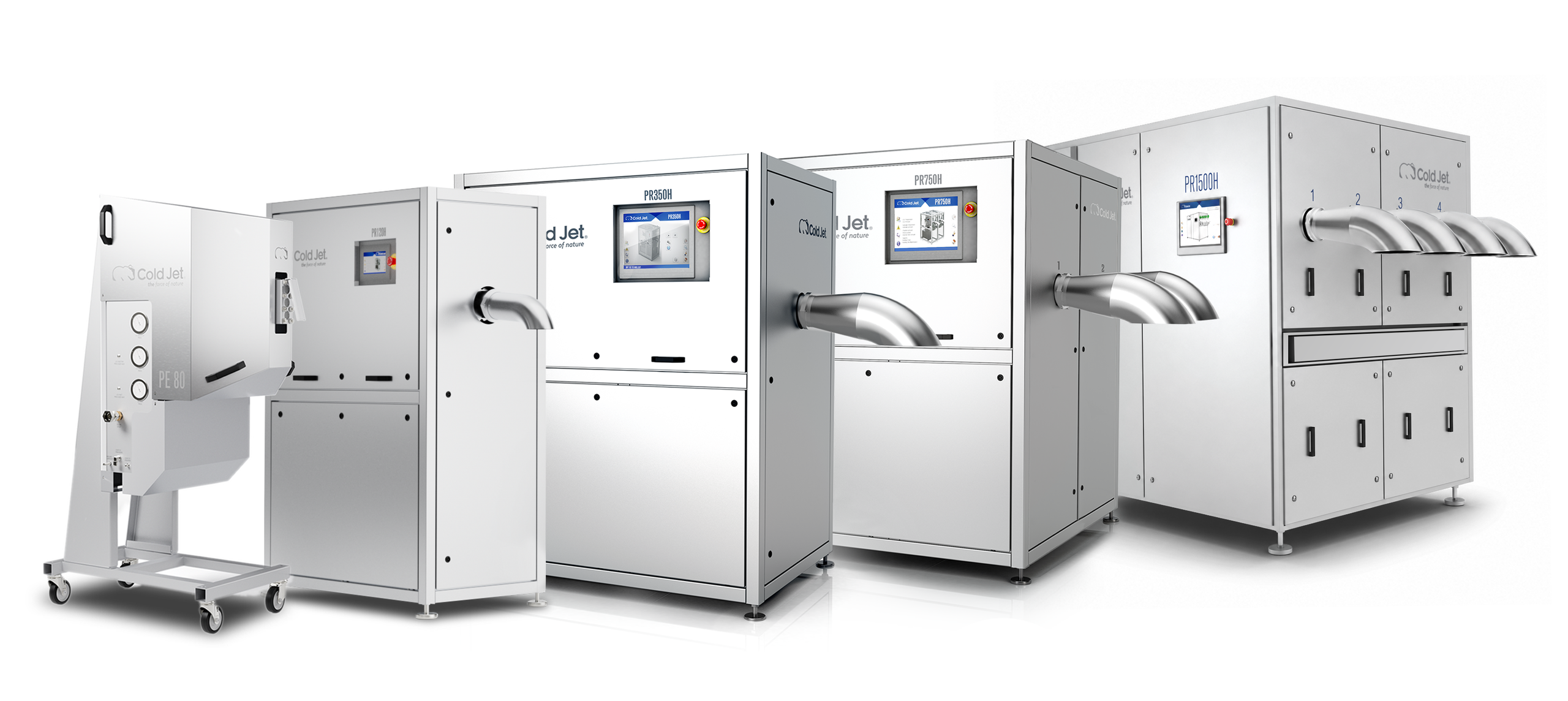
Cold Jet builds dry ice production systems for fermentation operations of every size, from a compact pelletizer on casters to a containerized production unit. Most fermentation applications call for 3 mm pellets, which sublimate quickly into a batch and dose accurately.
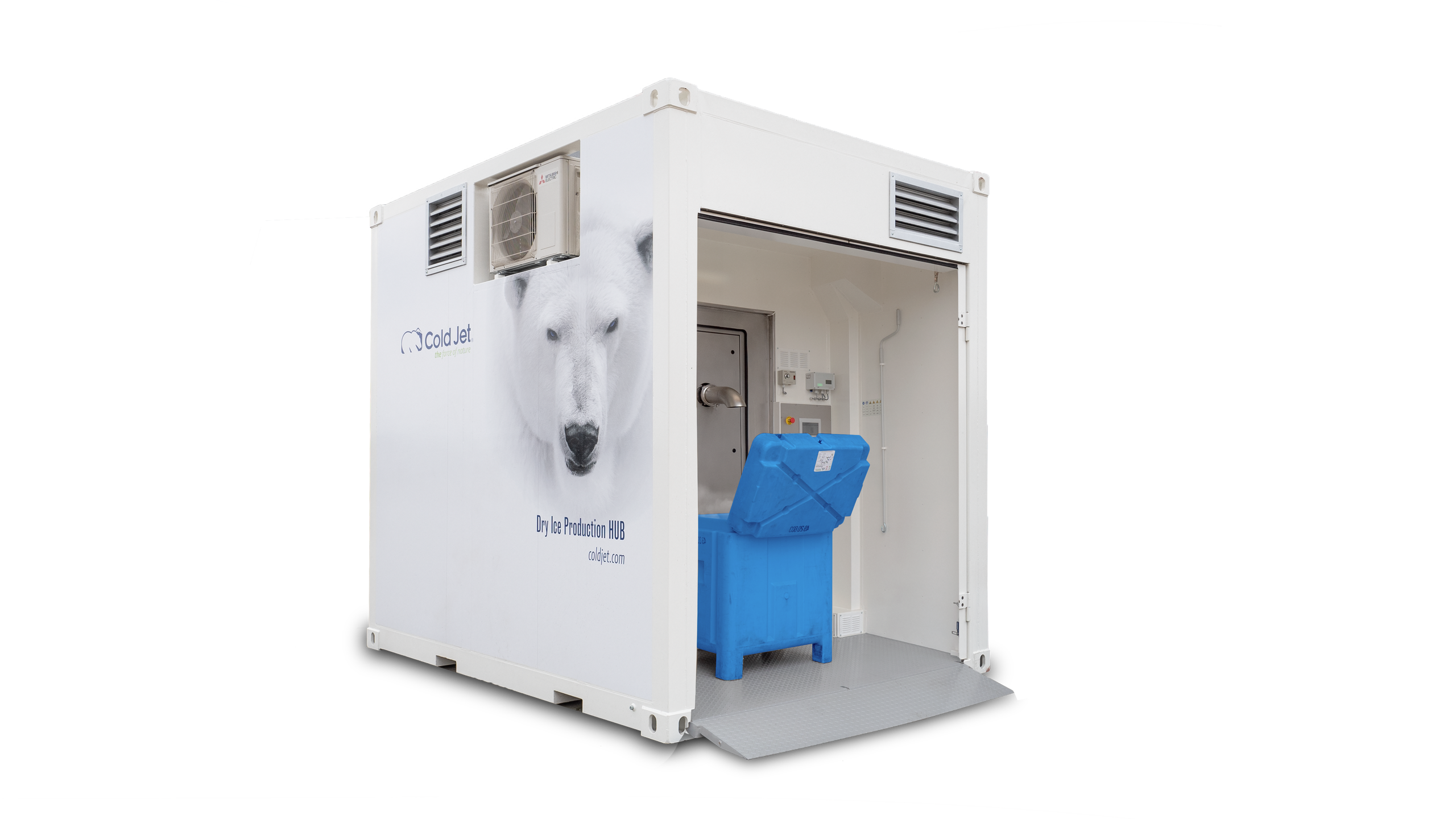
Dry Ice Production Hub
The Dry Ice Production Hub houses a PR120H or PR350H pelletizer in a ready-to-run 10 ft container, so you can produce dry ice onsite without building a dedicated production room. Connect power, liquid CO₂, and instrument air, and it’s ready to run, the right fit for high-volume wineries and bakeries that need a steady supply through harvest and production peaks.
- Up to 772 lb (350 kg) per hour with PR350H
- Self-contained 10 ft container
- Plug-and-play installation
- 12–14% better LCO₂ conversion
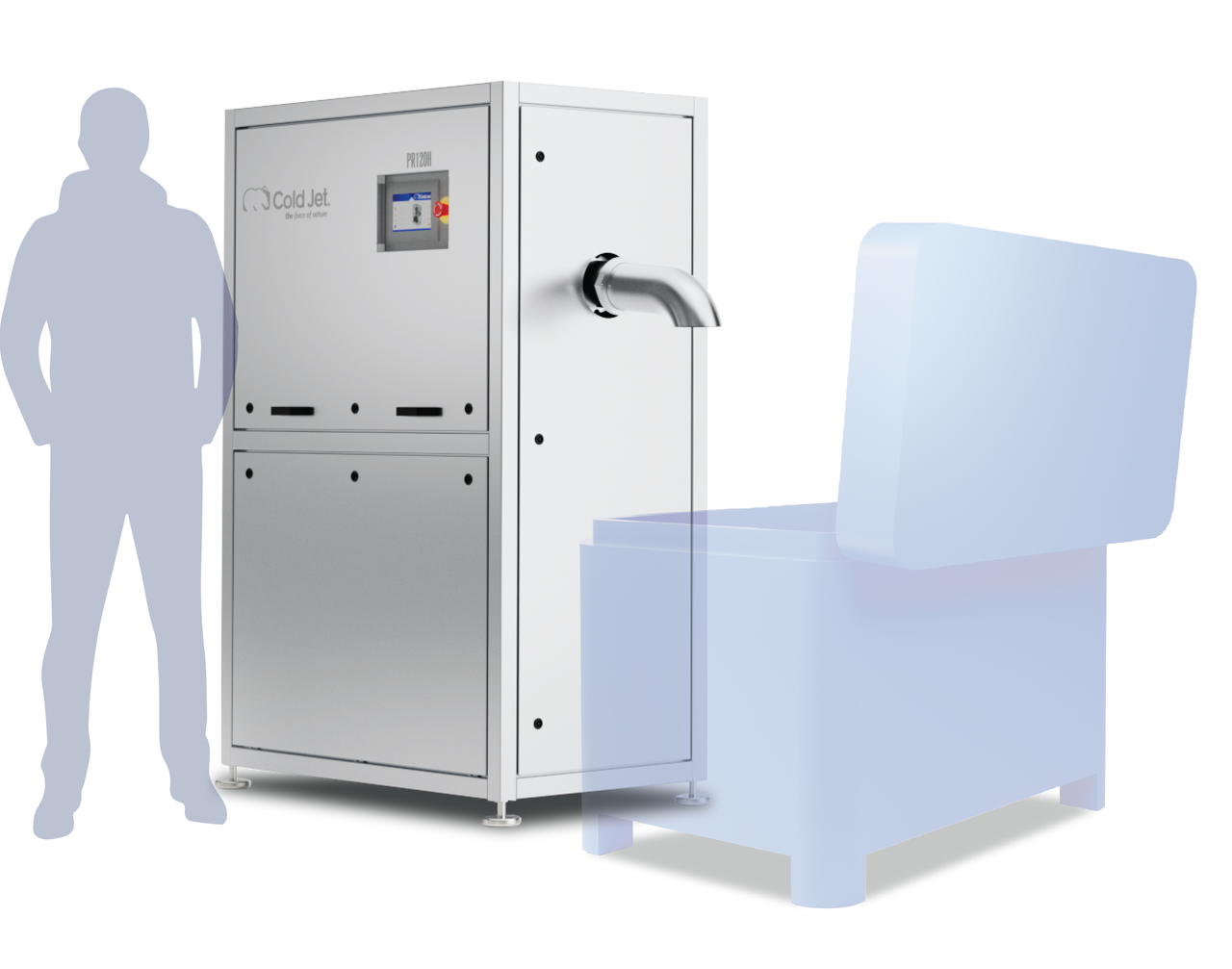
PR120H Pelletizer
The PR120H produces up to 265 lb (120 kg) of dry ice pellets per hour in a compact footprint. It’s the workhorse for mid-size bakeries and wineries that need a dependable 3 mm pellet supply through a production peak.
- Up to 265 lb (120 kg) per hour
- 3, 10, or 16 mm pellets
- 12–14% better LCO₂ conversion
- One-button operation, start-up under 5 minutes
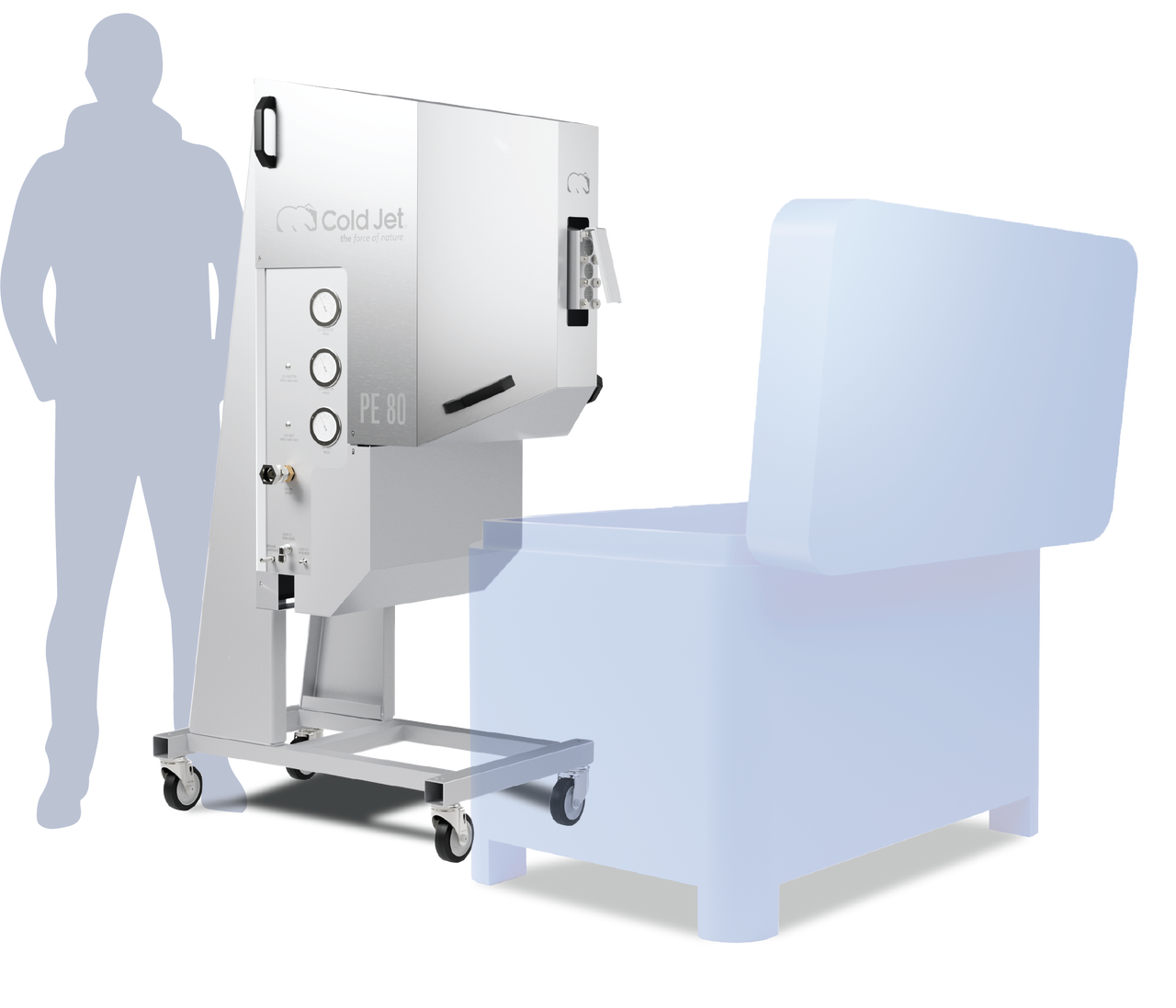
PE 80 Pelletizer
The PE 80 produces up to 176 lb (80 kg) of dry ice pellets per hour from the most compact machine in this lineup, ideal for boutique wineries, craft breweries, and distilleries taking control of their dry ice supply for the first time. It runs on fixed tanks, dewars, or micro bulk, so you can start without upgrading your CO₂ infrastructure.
- Up to 176 lb (80 kg) per hour
- 1.7, 2.2, 3.0, 8.0, or 16 mm pellets
- Compact 23.6 x 39.3 x 61.4 in footprint
- Works with dewars and micro bulk tanks
Compare Machines
How Do These Three Pelletizers Compare?
Side-by-side specs for the Cold Jet machines best suited to fermentation cooling — so you can match output and footprint to your peak demand rather than over-buying.

PR350H
High volume with automatic die change

PR120H
The bakery and winery workhorse
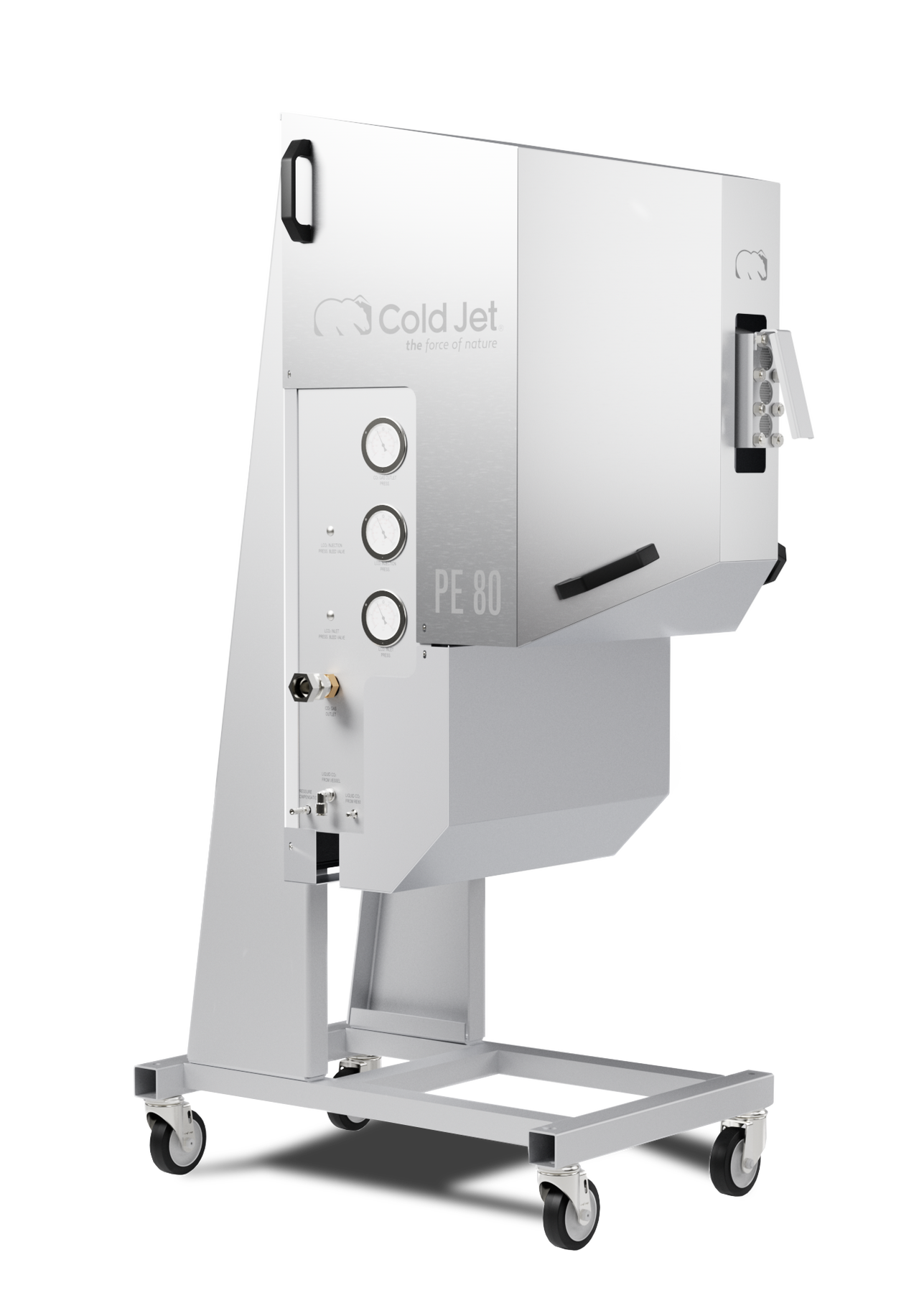
PE 80
Compact entry to on-site production
| Specification | PR350H | PR120H | PE 80 |
|---|---|---|---|
| Machine Controls | |||
| Automatic Quick Die Change | Yes — performed in seconds | Not published | Not published |
| HMI Display | 15 in (380 mm) color touch screen | 7 in (178 mm) color touch screen | Not published |
| Start-Up Time | Less than 3 minutes | Less than 5 minutes | Not published |
| Footprint (L x W x H) | 59 x 39 x 71 in(1500 x 1000 x 1800 mm) | 45 x 25 x 68 in(1150 x 650 x 1738 mm) | 23.6 x 39.3 x 61.4 in(600 x 1000 x 1560 mm) |
| IoT Enabled via Cold Jet CONNECT® | Yes — Industry 4.0 enabled | Yes — Industry 4.0 enabled | Not published |
| Production Requirements | |||
| Rated Output | Up to 772 lb/hr(350 kg/hr) | Up to 265 lb/hr(120 kg/hr) | Up to 176 lb/hr(80 kg/hr) |
| Dry Ice Pellet Sizes | 3, 6, 10, 16 mm | 3, 10, 16 mm(others on request) | 1.7, 2.2, 3.0, 8.0, 16 mm |
| LCO₂ Conversion Factor | 2.2 — Sub-Cooling Technology | 2.2 — Sub-Cooling Technology | Not published |
| Inlet Liquid CO₂ Pressure | 189–261 psi(13–18 bar) | 189–261 psi(13–18 bar) | 218–261 psi(15–18 bar) |
| Compressed Air Supply | 116–145 psi (8–10 bar), ISO 8573-1 Class 3 | 116–145 psi (8–10 bar), ISO 8573-1 Class 3 | Not published |
“—” indicates a spec Cold Jet has not published for this model — contact a Cold Jet specialist to confirm fit for your application.
Why Cold Jet
Why Invest in a Cold Jet Pelletizer
for Fermentation Temperature Control
If dry ice is already part of how you manage fermentation temperature, the next question is usually whether to keep buying it or start making it. Purchased dry ice arrives on someone else's schedule, sublimates in storage at roughly 2–5% per day, and ties up floor space in bins.
When evaluating on-site production as a capital investment, look at both the return and the operational control it gives you over a critical process input. Cold Jet machines deliver faster ROI and greater value through:
Food Grade Dry Ice, On Demand
Produce fresh pellets to your crush, bake or brew schedule instead of a delivery window — from a liquid CO₂ supply you specify and document yourself.
The Highest Density Dry Ice Available
Cold Jet's patented extrusion technology produces high-density pellets with less scrap ice and a longer shelf life, so more of what you make ends up in the batch.
Built for Peak Season Uptime
One-button operation, start-up in under five minutes and automatic die changes performed in seconds. Our machines are designed for non-stop operation when harvest or peak production will not wait.
Lowest Cost per Pound Produced
Sub-cooling technology delivers 12–14% better LCO₂-to-dry ice conversion efficiency than the market standard. Add a RE-CO₂ recovery system to recapture revert gas and cut annual liquid CO₂ costs by up to 40%.
Global Support and Cold Jet CONNECT®
Over 300 employees and more than 30 distributors support customers in 70+ countries. Cold Jet CONNECT lets us monitor, diagnose and correct remotely, so a machine issue does not become a production issue.
Custom Engineered Dosing Systems
From minor modifications to fully customized systems, we design and deploy integrated dosing that delivers a pre-programmed weight of dry ice directly into your mixers, blenders, bins or conveyors.
Our Customers & What They Say About Us
Food and beverage producers around the world rely on Cold Jet
With more than 1,000 dry ice production machines installed globally, Cold Jet supplies wineries, industrial bakeries, breweries and food processors with the equipment to make their own dry ice on demand.





See What Producers Are Saying About On-Site Dry Ice Production
Our customers gain control of their dry ice supply and their production costs

We are very satisfied from the first contact up to date. The employees at Cold Jet were very professional and helpful. We are finally able to respond to requests for flexibility from our customers and produce according to their dry ice needs. In addition, we are also excited about the quality of the dry ice.

We saw an immediate effect on our CO₂ ratio from 2.4:1 now to 1.35:1. Profit, production capability, and overall company performance is greatly improved.
Compliance
Food Safety Standards
We Help You Meet
Dry ice is a food grade cooling medium recognized by the FDA, USDA and EPA, and producing it on-site puts the supply, purity and documentation of that medium under your own control.
21 CFR 184.1240
FDA GRAS Affirmation for Carbon Dioxide
The FDA affirms carbon dioxide as Generally Recognized as Safe as a direct human food ingredient, used as a leavening agent, processing aid and gas, with no limitations other than current good manufacturing practice.
How We Comply
Dry ice is solid CO₂ and nothing else. Producing it on-site from a documented food grade liquid CO₂ supply gives you a single, traceable input with no carriers, chemicals or additives to qualify — and the certificate of analysis for your bulk supply covers the pellets you make.
HACCP
Hazard Analysis and Critical Control Points: Fermentation Temperature Limits
HACCP plans define critical limits at each control point. In fermentation, temperature is almost always one of them, and every reading has to be monitored, recorded and corrected when it drifts.
How We Comply
Dry ice dosed by weight is a measurable corrective action with a predictable effect on batch temperature, so it fits cleanly into an existing CCP and its records. On-site production also removes the supply interruption that leaves a plan without its corrective action.
FSMA 21 CFR 117
Preventive Controls for Human Food
FSMA requires a written food safety plan with preventive controls, monitoring, verification and supply-chain controls for every input that touches the product.
How We Comply
Making dry ice in-house shortens the supply chain to a single verified liquid CO₂ supplier and removes a purchased, transported, stored ingredient from the plan. Pellets are made fresh at the point of use, with no intermediate handling to document.
ISBT / FCC
Beverage & Food Grade CO₂ Purity
The ISBT Carbon Dioxide Guidelines set the working purity standard for beverage CO₂ at 99.9% minimum with limits on more than 30 trace impurities; the Food Chemicals Codex monograph sets the compendial specification the FDA points to.
How We Comply
Pellet purity is the purity of the liquid CO₂ you feed the machine, so quality is controlled at the supply agreement and verified by certificate of analysis. Cold Jet pelletizers use a stainless steel, moisture-free enclosure and introduce no additives to the stream.
OSHA 1910.1000
Carbon Dioxide Exposure Limits
OSHA sets a permissible exposure limit for carbon dioxide of 5,000 ppm as an 8-hour time-weighted average, with a 30,000 ppm short-term limit over 15 minutes. CO₂ is heavier than air and accumulates in cellars, mix rooms and below-grade spaces.
How We Comply
Cold Jet specifies ventilation and CO₂ monitoring as part of every installation, and sizes exhaust for the machine's revert gas. Because a pelletizer converts liquid CO₂ at 2.2:1 rather than the ~4.5:1 of a snow horn, it also releases substantially less CO₂ vapor into the room.