Summary
Cold Jet biogas carbon capture systems take the CO₂-rich off-gas from biomethane upgrading and purify, compress and liquefy it into food-grade CO₂ above 99.9% purity. Methane left in the stream is recovered instead of vented, lowering the plant's carbon intensity score, while the liquid CO₂ becomes a new revenue stream for RNG producers.
What is biogas carbon capture?
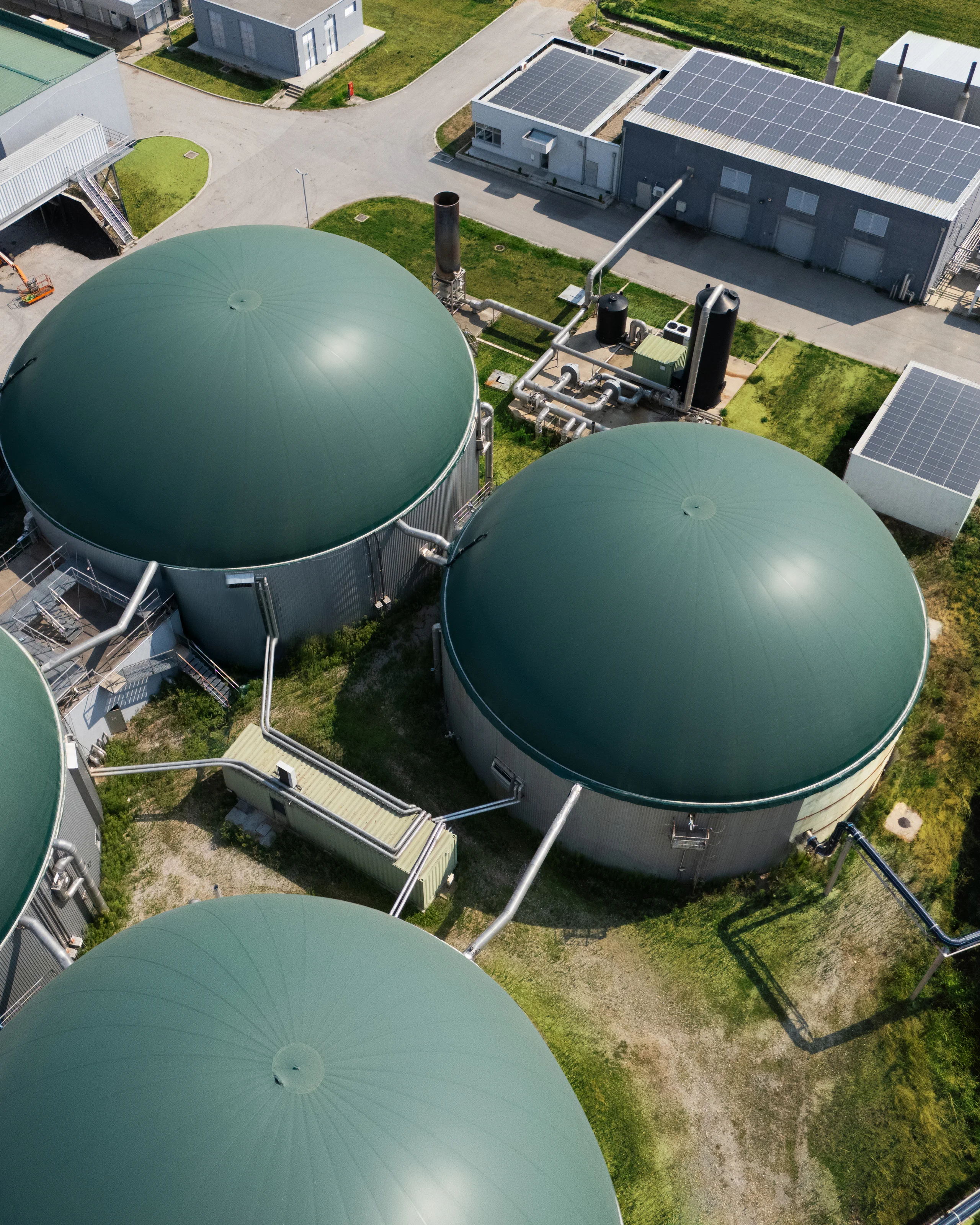
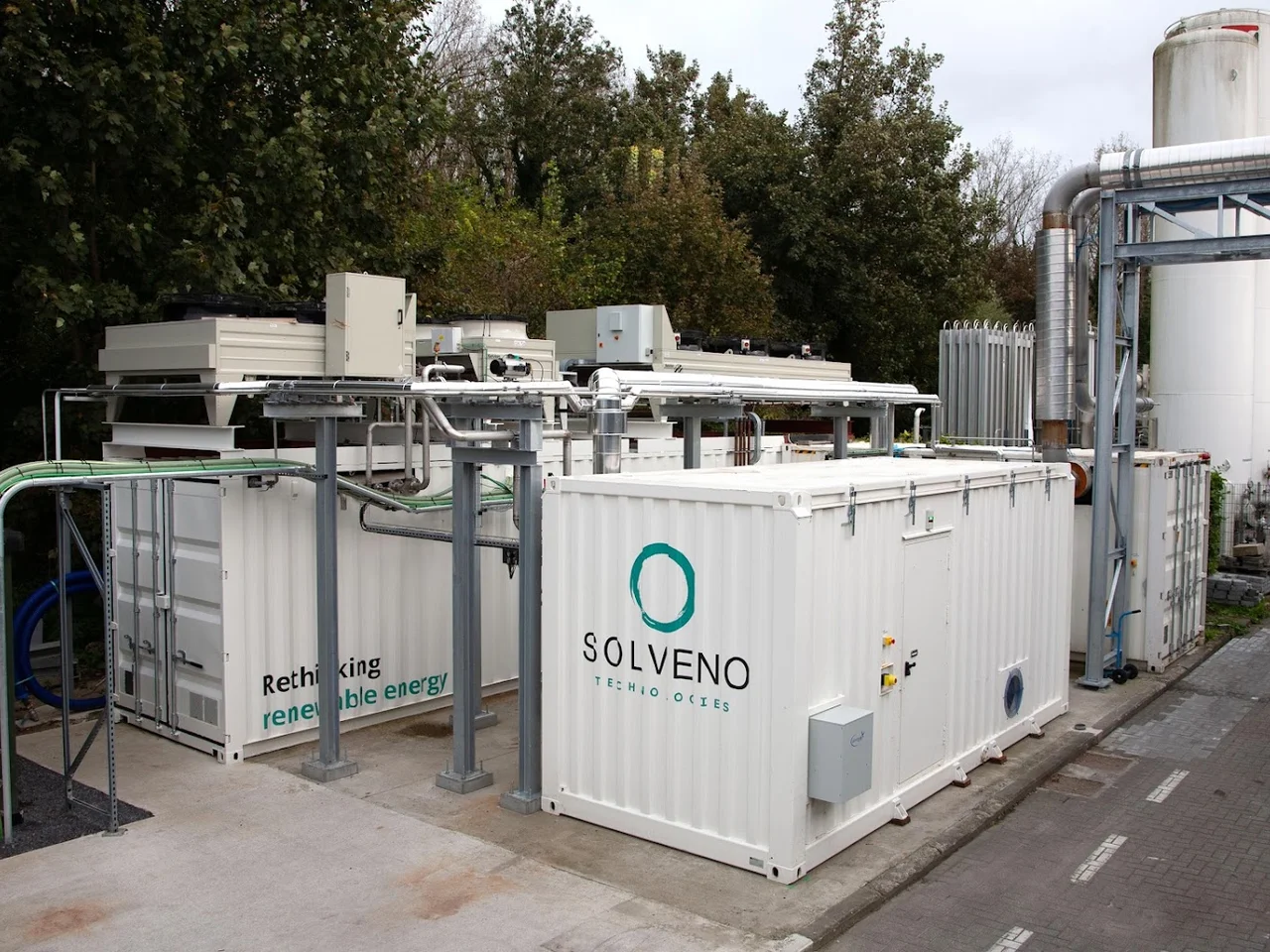
Biogas carbon capture is the recovery of the carbon dioxide separated from raw biogas when it is upgraded to biomethane, or renewable natural gas (RNG). Raw biogas is a mix of methane and CO₂; the upgrading unit, often a membrane system, splits the two so the methane can be injected into the grid or used as fuel. Without capture, the separated CO₂ is vented to atmosphere, usually carrying a small amount of methane with it. A Cold Jet CB Carbon Capture System, powered by Solveno Technologies, connects directly downstream of the upgrading step. It removes trace gases and impurities, then compresses and liquefies the CO₂ using R744 (CO₂) as a sustainable refrigerant. The result is high-purity, food-grade liquid CO₂ that can be sold to beverage, food, greenhouse and dry ice buyers — or turned into dry ice on site — while the recovered methane no longer escapes. The containerized, fully autonomous units scale from 350 to 4,500 kg of CO₂ per hour.
Turn vented CO₂ into a saleable product
Most biomethane plants vent the CO₂ separated during upgrading. That stream carries residual methane, a potent greenhouse gas, which raises the plant's carbon intensity score — and it throws away a product the market is buying. Cold Jet CB carbon capture systems recover the methane, purify and liquefy the CO₂ to food grade, and give RNG producers a second revenue stream alongside biomethane.
Zero
Methane Slip
>99.9%
CO₂ Purity
Up to 4,500 kg/hr
Capture Capacity
7.2% CAGR
CO₂ Demand Growth
What are the benefits of biogas carbon capture?
Eliminate methane slip and turn waste CO₂ into revenue
Cold Jet CB carbon capture systems recover the CO₂ separated during biomethane upgrading and liquefy it to food-grade purity, while recovering residual methane that would otherwise be vented.
Venting the upgrading off-gas wastes a saleable product, releases methane, and raises the carbon intensity of the RNG you sell. Capture turns that liability into a second revenue stream.
 Revenue
New CO₂ Revenue Streams
Captured CO₂ is purified and liquefied into food-grade product that sells into beverage, food processing, greenhouse, dry ice and e-fuel markets. RNG plants add a second saleable product alongside biomethane — and dry ice typically earns substantially more than liquid CO₂.
 Emissions
Eliminate Methane Slip
Residual methane in the upgrading off-gas is recovered rather than vented. Solveno's patented liquefaction technology delivers zero methane slip — often a requirement for biogas installations to meet strict environmental standards — so less of the gas your digesters produce is lost.
 Carbon Intensity
Lower CI Score
Capturing CO₂ and recovering methane that would otherwise be vented significantly reduces the carbon intensity (CI) score of the upgraded biogas. A lower CI score improves plant efficiency and can strengthen the value of your RNG in low-carbon fuel markets.
 Quality
Food-Grade CO₂
Biogas-derived CO₂ carries more trace gases and impurities than CO₂ from sources like dry ice production. The CB system removes them to deliver liquid CO₂ above 99.9% purity, and an optional analysis unit can be added to guarantee food-grade quality for demanding buyers.
 Operations
Autonomous & Containerized
Each CB unit arrives containerized and runs fully autonomously, so no extra building infrastructure is required. The modular design integrates with existing upgrading equipment with minimal disruption and a straightforward installation, keeping operator workload low once the system is commissioned.
 Efficiency
Low-Energy Liquefaction
The liquefaction process is optimized for minimal energy consumption, reducing operating costs. Refrigeration runs on CO₂ itself (R744), a natural, sustainable refrigerant, as the system captures and liquefies your biogenic CO₂.
How biogas carbon capture works and where the CO₂ goes
From off-gas capture to purified, liquefied CO₂ — and the established and emerging markets that buy biogenic CO₂ from RNG producers.
- Biogas Upgrading
- Biomethane & RNG
- Food-Grade LCO₂
- Dry Ice Production
- Greenhouse Enrichment
- Beverage & Food
- E-Fuels & SAF
- CCS & Mineralization
Capture, purification and liquefaction
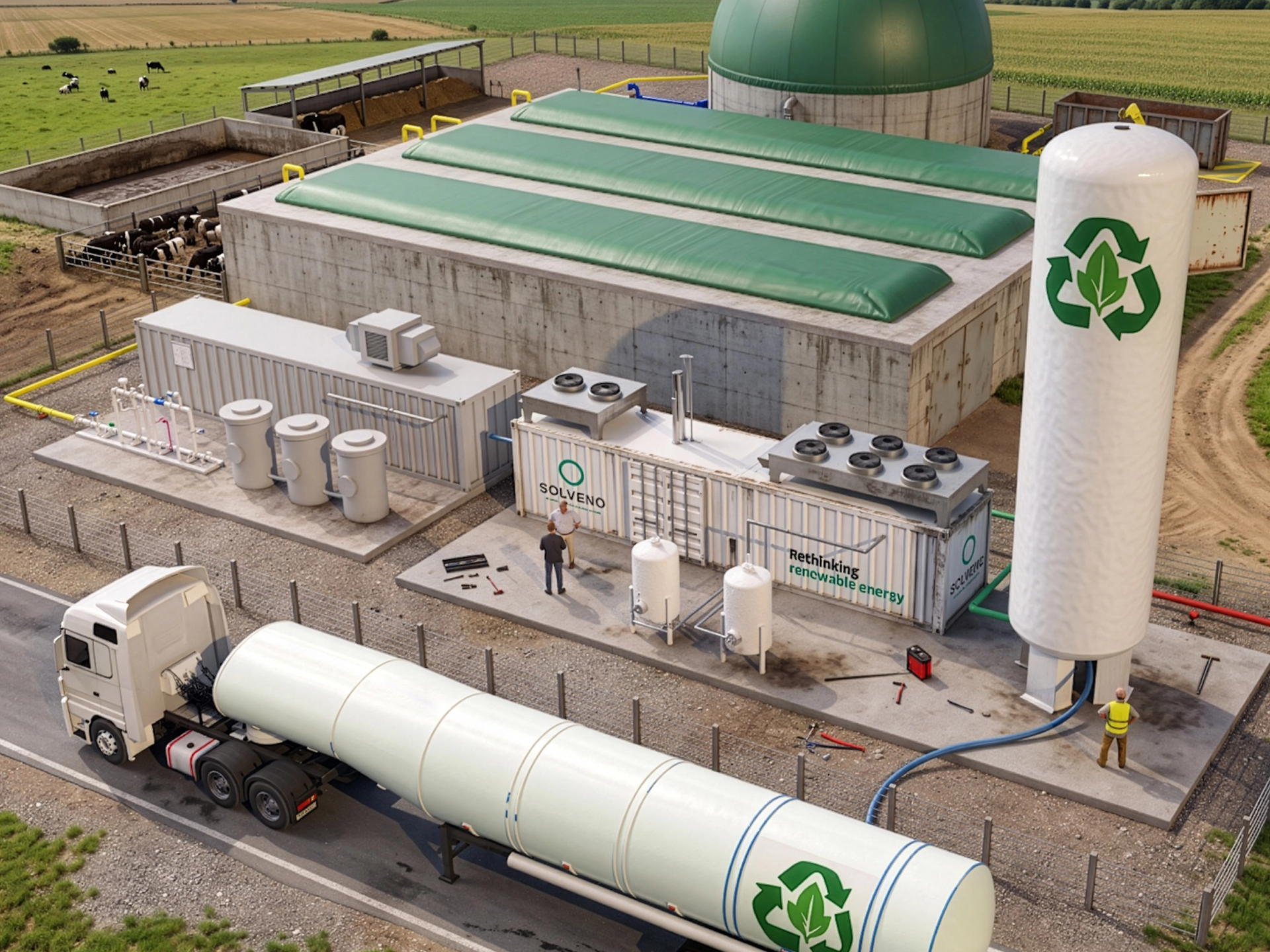
The CB system connects directly after your upgrading unit, collecting the CO₂-rich off-gas that would otherwise be vented. It purifies, compresses and liquefies that stream into high-purity liquid CO₂ while recovering the residual methane.
Off-gas capture after upgrading
After the upgrading unit — for example a membrane separation system — splits methane from CO₂, the separated CO₂ stream is collected and routed to the CB recovery unit instead of the vent. Each system is designed around your biogas composition and output requirements, so it integrates with existing upgrading equipment with minimal disruption and a straightforward installation.
Purification to food grade
CO₂ from biogas contains more trace gases and pollutants than CO₂ from other sources such as dry ice production. The CB system removes these impurities before liquefaction, producing liquid CO₂ above 99.9% purity. An optional analysis unit can be added to verify and guarantee food-grade quality.
Methane recovery and liquefaction
Solveno's patented technology condenses the CO₂ into liquid form using R744 (CO₂) refrigerant and recovers any remaining methane from the stream rather than letting it escape. The result is zero methane slip, a lower CI score and a cleaner, more profitable biogas upgrading process.
- CO₂ Off-Gas Capture
- Trace Gas Removal
- CO₂ Compression
- CO₂ Liquefaction
- Methane Recovery
- R744 Refrigeration
- Optional Analysis Unit
- Containerized Units
- Autonomous Operation
Markets for biogenic CO₂
Captured biogenic CO₂ is a saleable product, not a waste stream. Food-grade liquid CO₂ from your RNG plant supplies established markets today and emerging e-fuel and sequestration markets tomorrow.
Food, beverage and agriculture
Food-grade liquid CO₂ is used in beverage and food processing and for greenhouse enrichment of horticulture and vegetable crops. Because it is biogenic — captured from organic waste rather than fossil sources — it gives buyers a lower-carbon supply of a product they already purchase in volume, and gives your plant a steady offtake.
Dry ice manufacturing
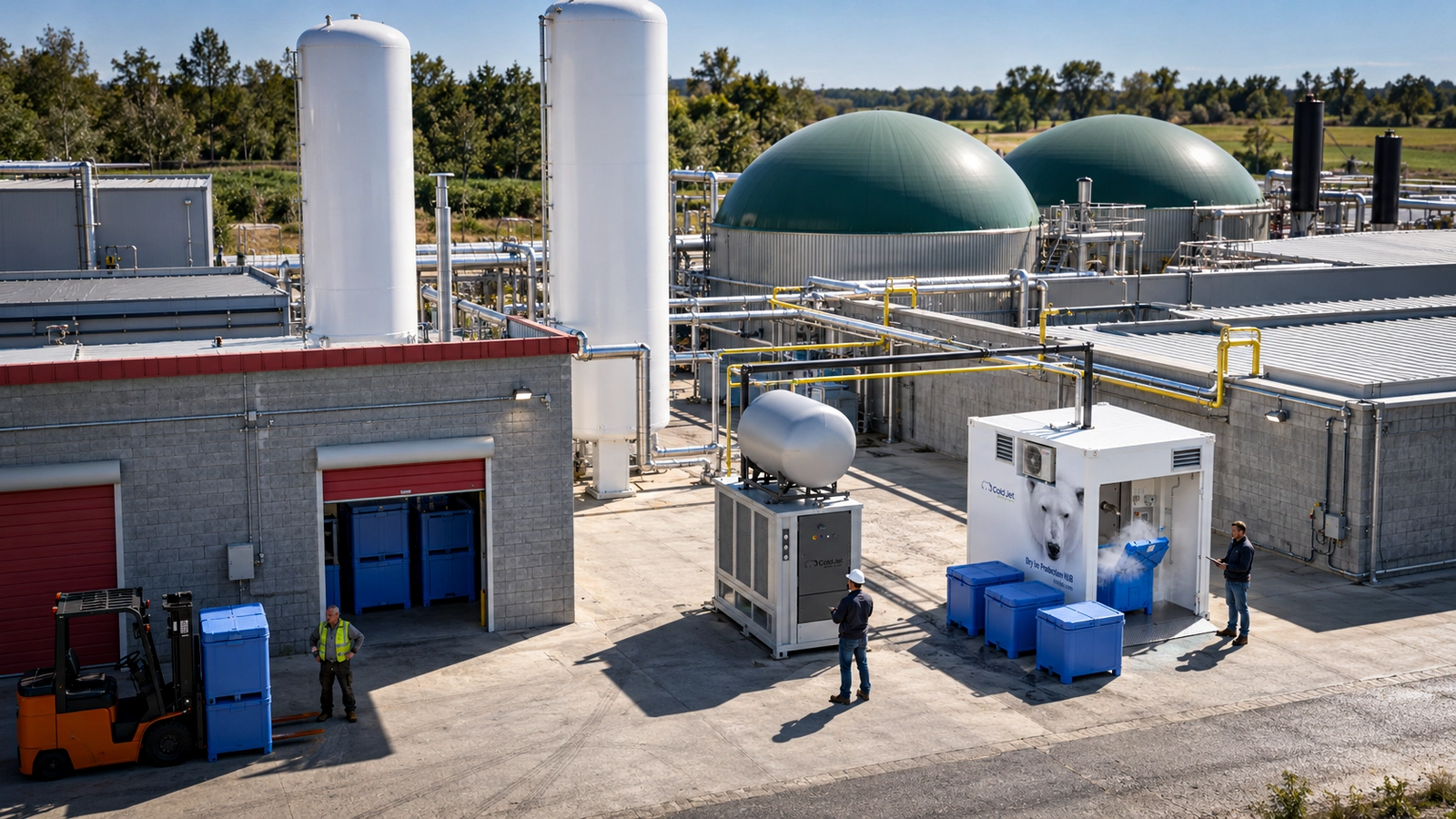
Add a Cold Jet dry ice production module and convert liquid CO₂ into dry ice on site. The Dry Ice Production Hub, housed in a 10 x 10 ft (3 x 3 m) ISO container, sits alongside your biogenic LCO₂ source and produces dry ice on demand for blasting and cold-chain cooling markets.
E-fuels, CCS and mineralization
New CO₂ applications are expected to drive significant volume demand toward 2050 net-zero targets. Biogenic CO₂ is a feedstock for e-methanol, e-methane and sustainable aviation fuels, and can be permanently stored through carbon capture and storage or mineralization.
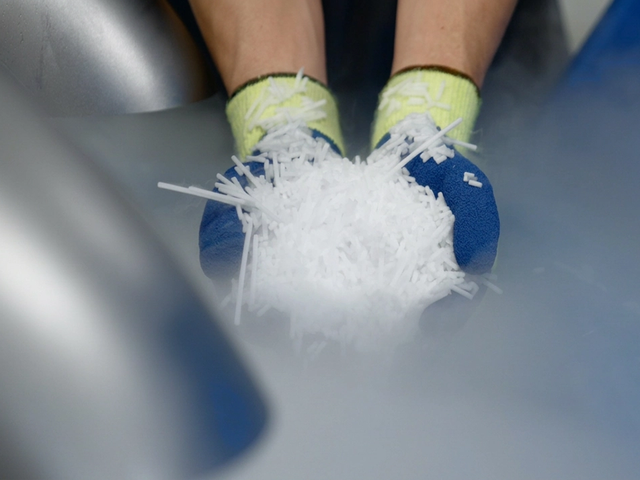
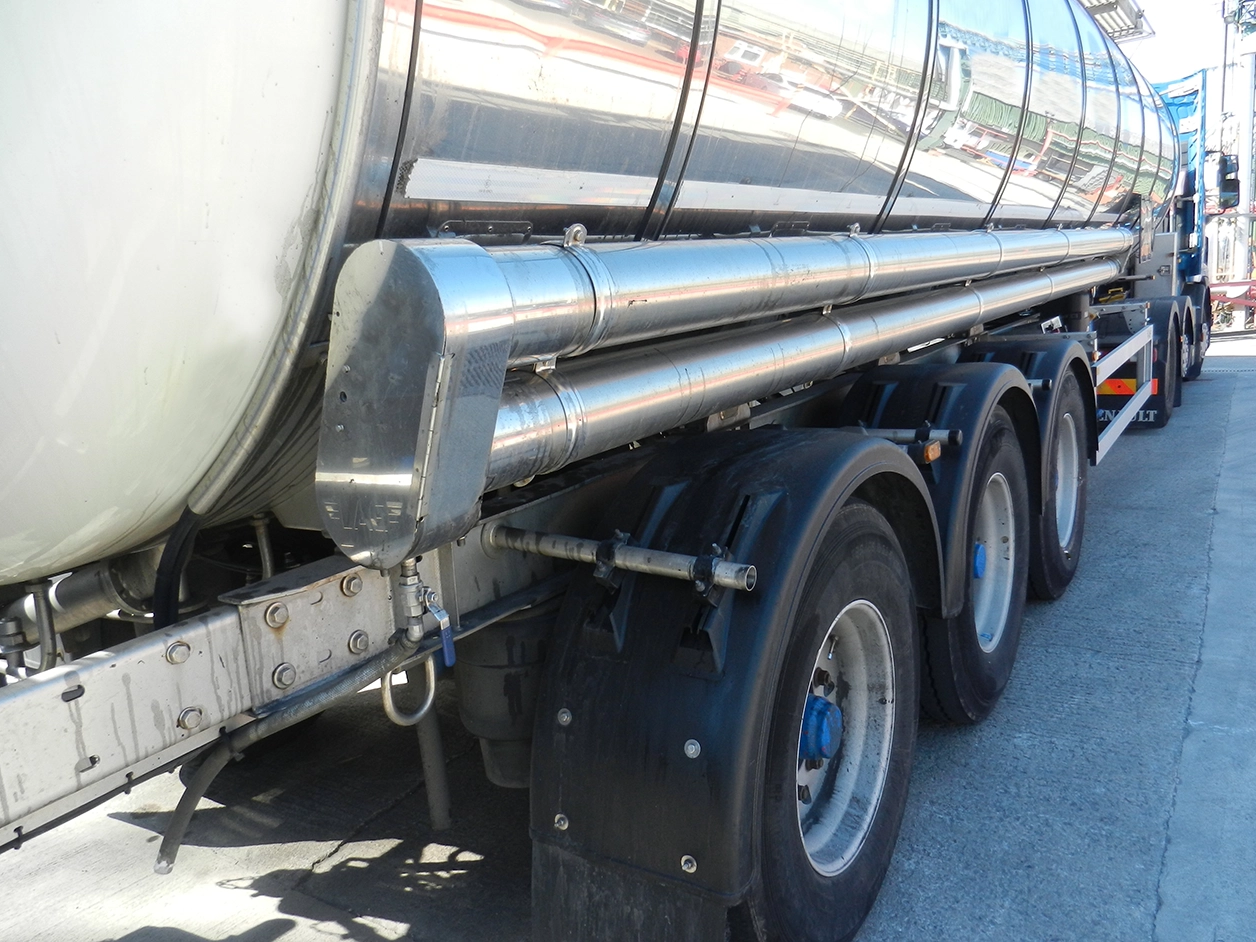
Biogenic CO₂ captured at RNG plants supplies the following markets:
- Beverage & Food Processing
- Greenhouse Enrichment
- Dry Ice Blasting
- Dry Ice Cooling
- Fire Suppression
- E-Fuels & SAF
- CCS & Mineralization
Biogas carbon capture: what equipment is needed?
A biogas carbon capture installation relies on several key components:
Step 01
CB carbon capture system
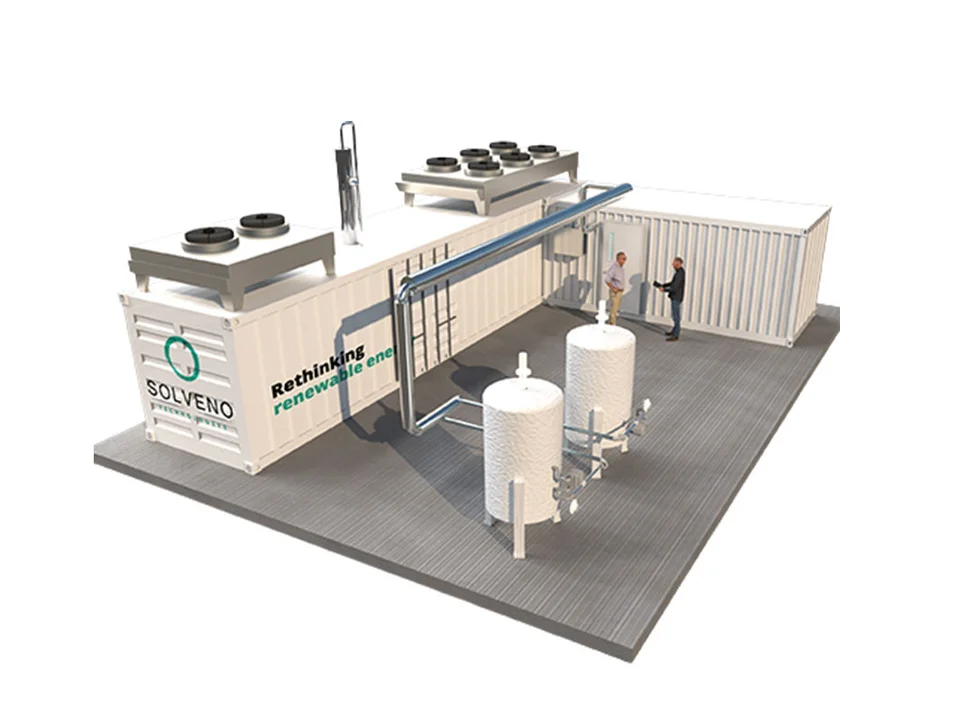
The core of the installation is a Cold Jet CB Carbon Capture System, powered by Solveno Technologies. Each fully autonomous, containerized unit purifies, compresses and liquefies CO₂ using sustainable R744 refrigerant. Standard models include the CB 12 and CB 17, and the modular platform scales from 350 to 4,500 kg of CO₂ per hour, so the system is sized to your plant's off-gas flow and biogas composition.
- 01. CB carbon capture system — The core of the installation is a Cold Jet CB Carbon Capture System, powered by Solveno Technologies. Each fully autonomous, containerized unit purifies, compresses and liquefies CO₂ using sustainable R744 refrigerant. Standard models include the CB 12 and CB 17, and the modular platform scales from 350 to 4,500 kg of CO₂ per hour, so the system is sized to your plant's off-gas flow and biogas composition.
- 02. Connection to your upgrading unit — The CB unit takes its feed from the CO₂ off-gas of your existing upgrading system, such as a membrane separation unit, and is designed to integrate with minimal disruption.
- 03. CO₂ offtake or dry ice production — Plan where your liquid CO₂ will go. We can help you identify demand for CO₂ and dry ice in your area and find buyers, or add a Cold Jet dry ice production module to convert it on site.
- 04. Engineering and operator training — Every biogas site is different, so our engineers assess your input composition, output requirements and local regulations before designing the system. After installation, we train your team to operate it effectively and provide ongoing consultation to maximize plant performance.
- 05. Optional analysis unit — Add an analysis unit to verify CO₂ quality and guarantee food-grade standards for your most demanding buyers.
How biogas carbon capture
compares to alternatives
See how CO₂ capture and liquefaction compares with the common ways biomethane plants handle their upgrading off-gas today.
| Criteria | CB Carbon Capture Best | Venting to Atmosphere | Thermal Oxidation |
|---|---|---|---|
| Methane Slip | Zero – methane recovered | Yes – residual methane vented | Destroyed – oxidized to CO₂ |
| CO₂ Emissions | Captured – liquefied for reuse | All CO₂ released | Released – plus combustion CO₂ |
| Revenue Potential | New stream – LCO₂ and dry ice | None | None – added operating cost |
| Carbon Intensity | Significantly reduced | Highest – slip counts against CI | Reduced – no CO₂ credit |
| Energy Use | Low – optimized liquefaction | None | Supplemental fuel often needed |
| Site Infrastructure | Containerized – no new buildings | Vent stack only | Oxidizer unit and fuel supply |
What is the best carbon capture system
for biogas upgrading?
Biomethane producers choose from Cold Jet CB carbon capture systems and dry ice production equipment to match their plant's CO₂ output.
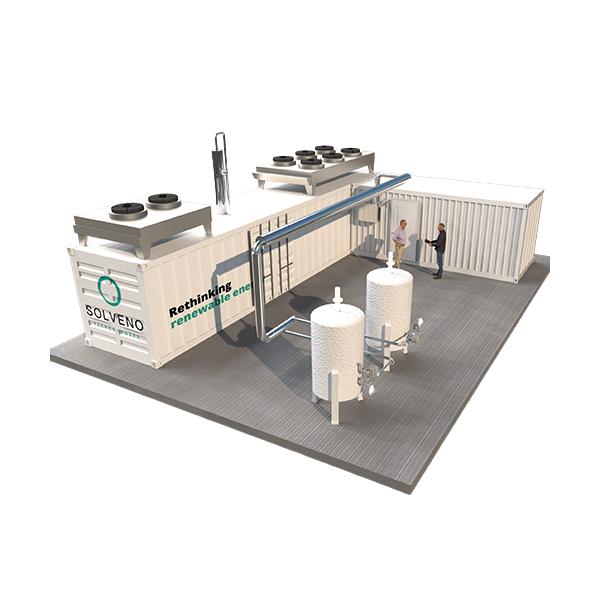
CB 12
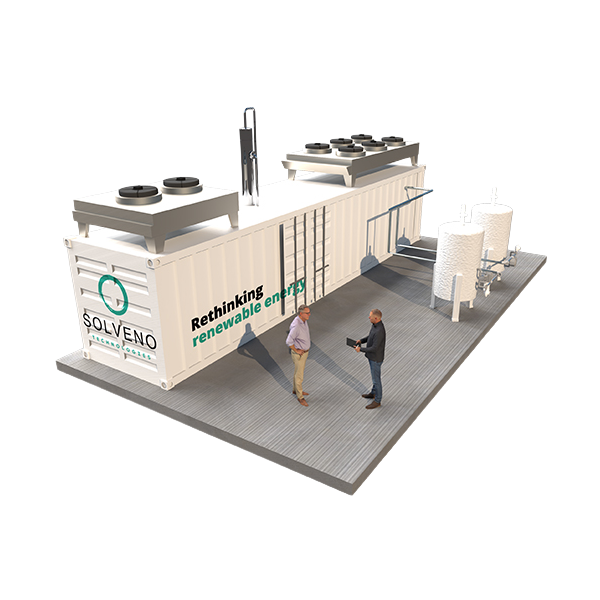
Built for biomethane plants that want food-grade CO₂ at a smaller scale. The containerized, fully autonomous CB 12 captures and liquefies up to 1,188 kg (2,619 lb) of CO₂ per hour — around 28 tons a day — while eliminating methane slip from the upgrading off-gas.
- Up to 1,188 kg/hr (2,619 lb/hr)
- Up to 600 Nm³/hr raw gas feed
- >99.9% food-grade CO₂
- Approx. 28 t CO₂ per 24 hr
CB 17
Higher capacity for larger upgrading plants in a minimal footprint. The CB 17 captures and liquefies up to 1,675 kg (3,694 lb) of CO₂ per hour, delivering food-grade liquid CO₂ with zero methane slip.
- Up to 1,675 kg/hr (3,694 lb/hr)
- Up to 850 Nm³/hr capacity
- >99.9% food-grade CO₂
- Containerized & fully autonomous
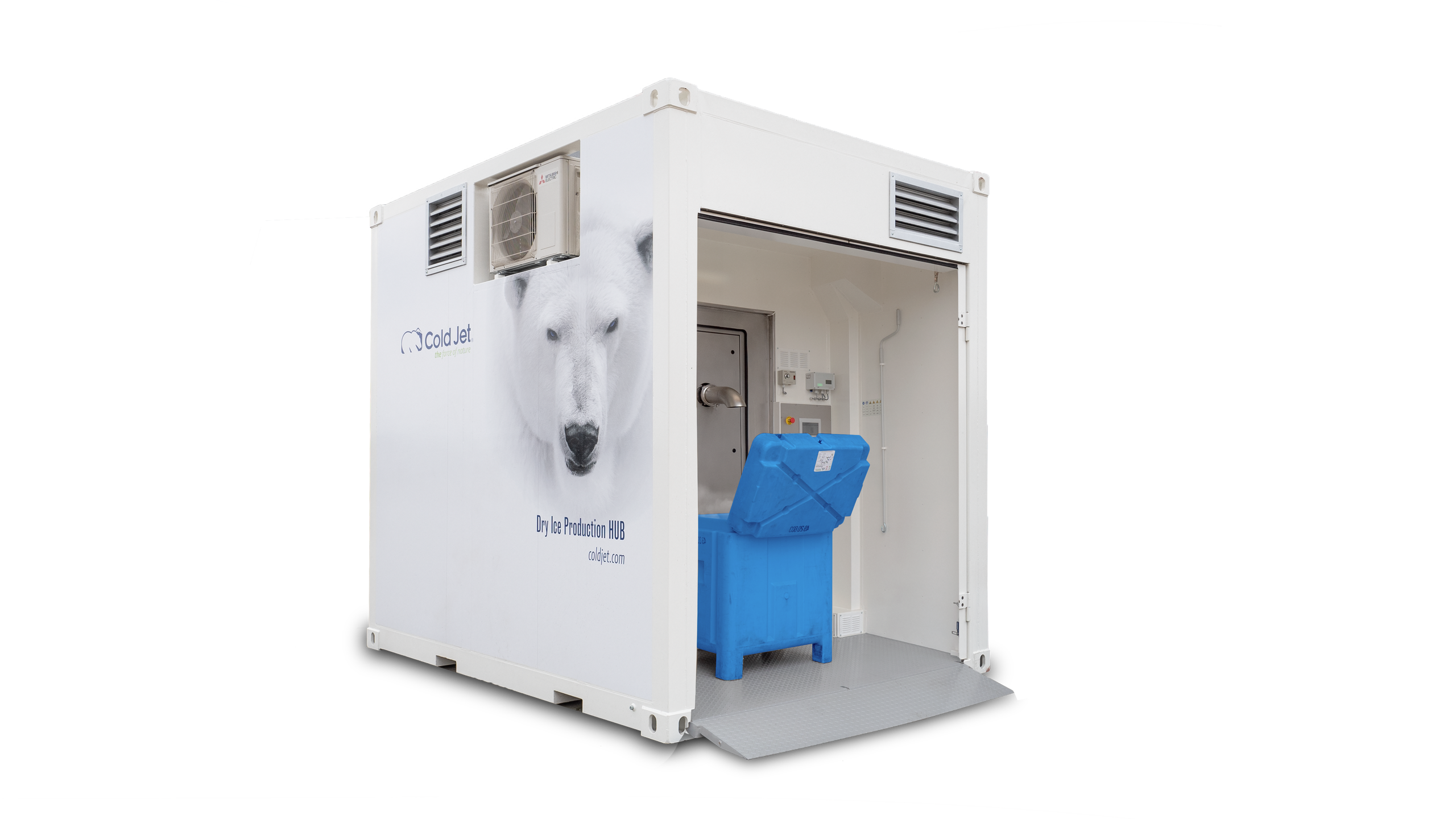
Dry Ice Production Hub
Turn captured CO₂ into dry ice on demand. This compact, modular unit sits alongside your biogenic liquid CO₂ source, opening higher-value dry ice blasting and cooling markets.
- 10 x 10 ft (3 x 3 m) ISO container
- Compact, modular design
- On-demand dry ice production
- Fed by biogenic liquid CO₂
Why choose Cold Jet
for biogas carbon capture
Our CB systems are built on patented technology for autonomous, low-energy CO₂ capture — backed by engineering support from capture through to market.
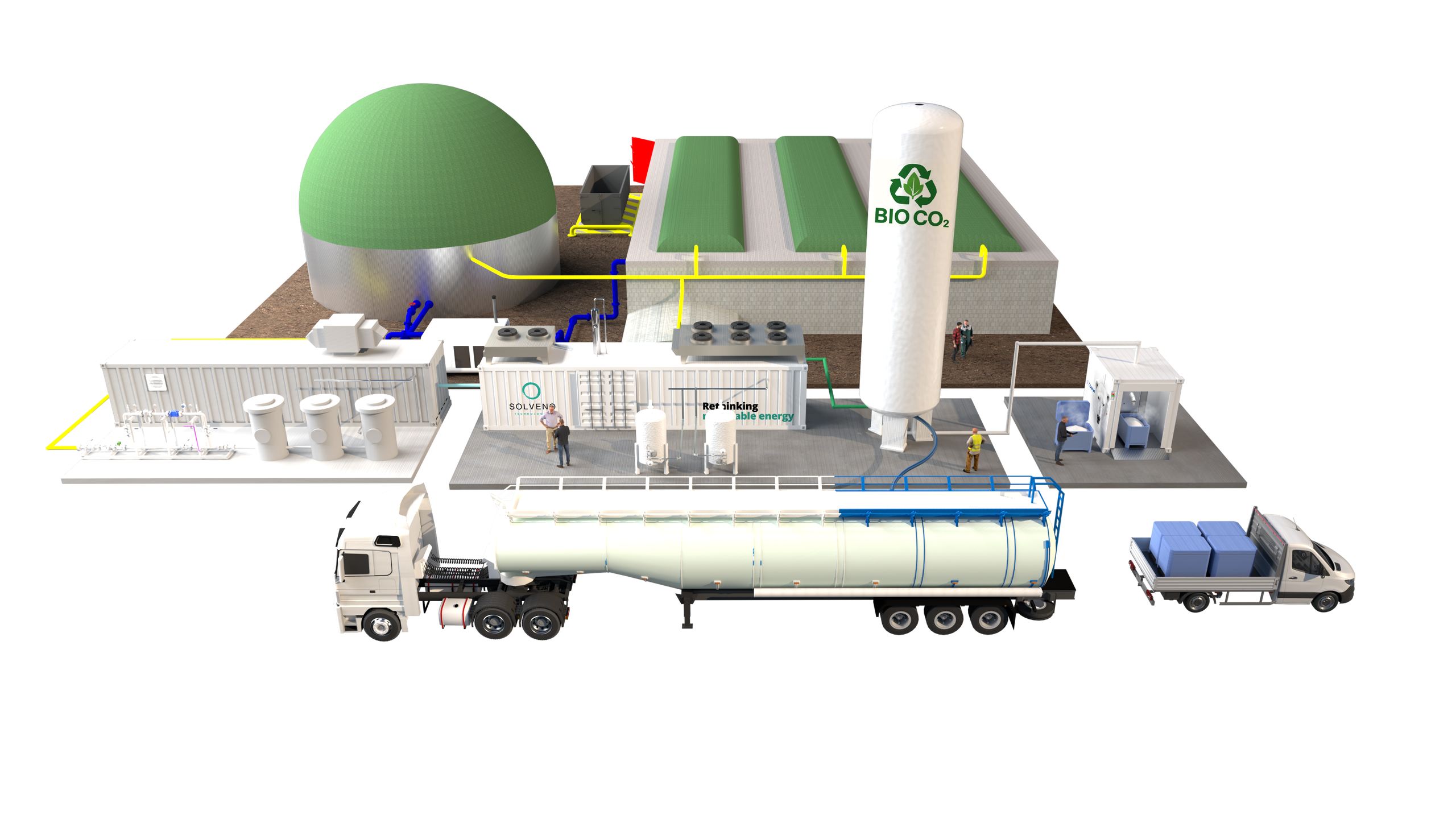
Powered by Solveno Technologies
Our CB systems are built on Solveno's patented CO₂ liquefaction technology, engineered for the higher impurity levels of biogas-derived CO₂.
Autonomous, containerized operation
CB units are fully autonomous and containerized, so they run without constant operator attention or new buildings. Every capacity shares the same core components, simplifying service and future expansion.
Low energy, lower operating costs
The liquefaction process is optimized for minimal energy consumption, and sustainable R744 refrigerant keeps the capture process itself low-impact — directly reducing your daily operating costs.
One partner from capture to market
Cold Jet covers the full CO₂ value chain — capture and liquefaction, CO₂ recovery, dry ice production and dry ice blasting — and helps you find buyers in your area.
Custom-engineered for your site
No two biogas projects are alike. Our engineers tailor each system to your biogas composition, output requirements and local regulations, from standard CB models to fully customized configurations.
Supporting emissions, quality and carbon-intensity goals
Biogas carbon capture helps RNG producers cut methane emissions, lower carbon intensity, and deliver CO₂ that meets food-grade standards.
Methane emissions
CO₂ vented from upgrading carries residual methane, a potent greenhouse gas, and zero methane slip is often required to meet environmental standards.
Patented CO₂ liquefaction recovers the remaining methane from the off-gas instead of venting it, helping biogas installations meet strict methane requirements.
Carbon intensity
Methane lost with the upgrading off-gas counts against the carbon intensity (CI) score of the biomethane you sell.
Recovering methane and capturing CO₂ for reuse significantly reduces the CI score of upgraded biogas, improving plant efficiency and RNG value.
CO₂ product quality
Biogas-derived CO₂ contains trace gases and pollutants that must be removed to meet food-grade CO₂ standards.
Purification before liquefaction delivers liquid CO₂ above 99.9% purity, with an optional analysis unit to verify food-grade quality.