How It Works
How Does Automated Dry Ice Blasting Work?
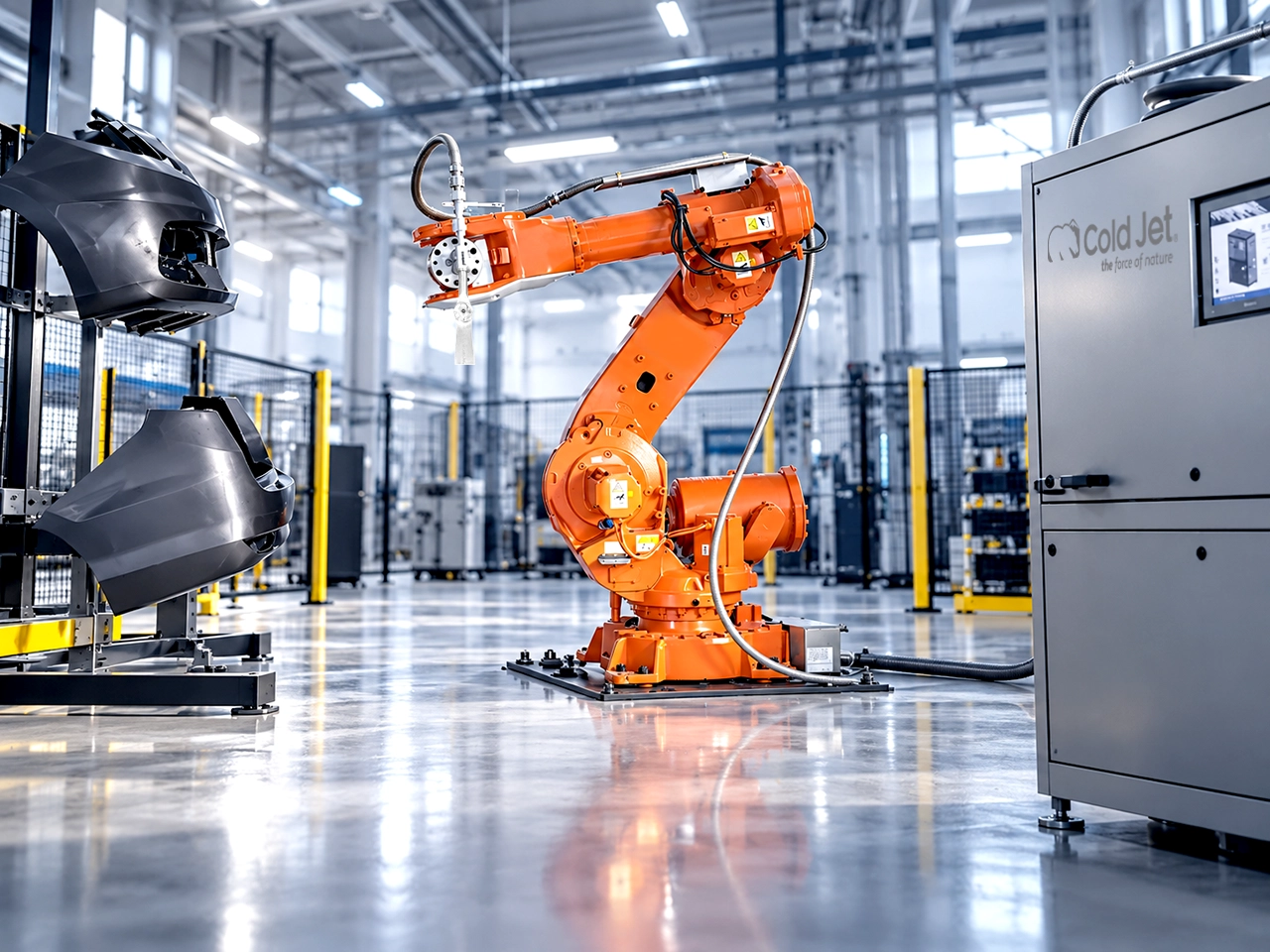
Three coordinated stages — programming the path, feeding the dry ice, and executing the blast — turn manual dry ice blasting into a repeatable production-line process.
Step 01
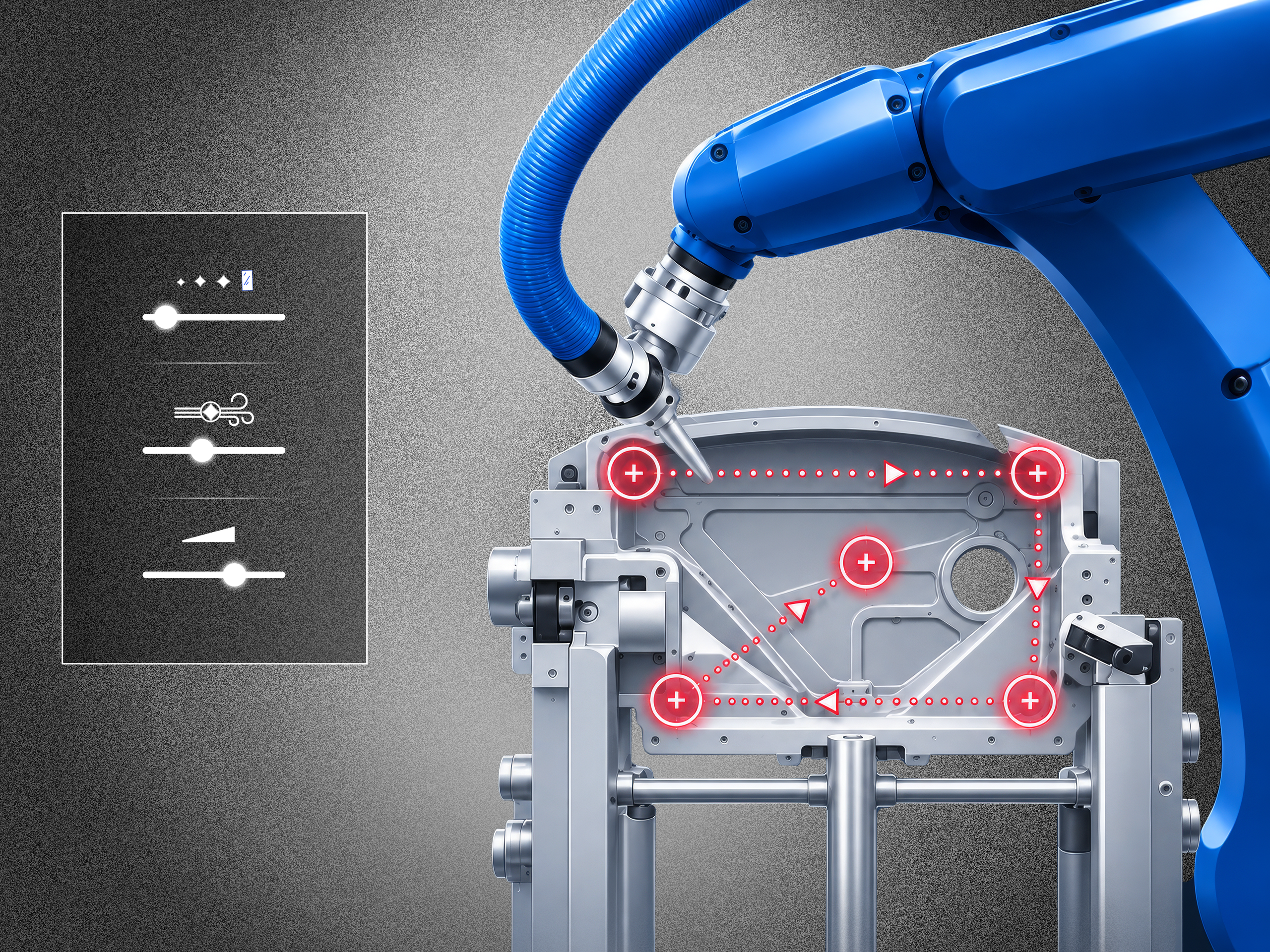
ProgrammableRobot path & parameters
Program & Set
Engineers program the robot's blast path and dial in particle size, air pressure, and dry ice feed rate on the control screen, then lock those parameters in for repeatable results.
- 01. Program & Set — Engineers program the robot's blast path and dial in particle size, air pressure, and dry ice feed rate on the control screen, then lock those parameters in for repeatable results.
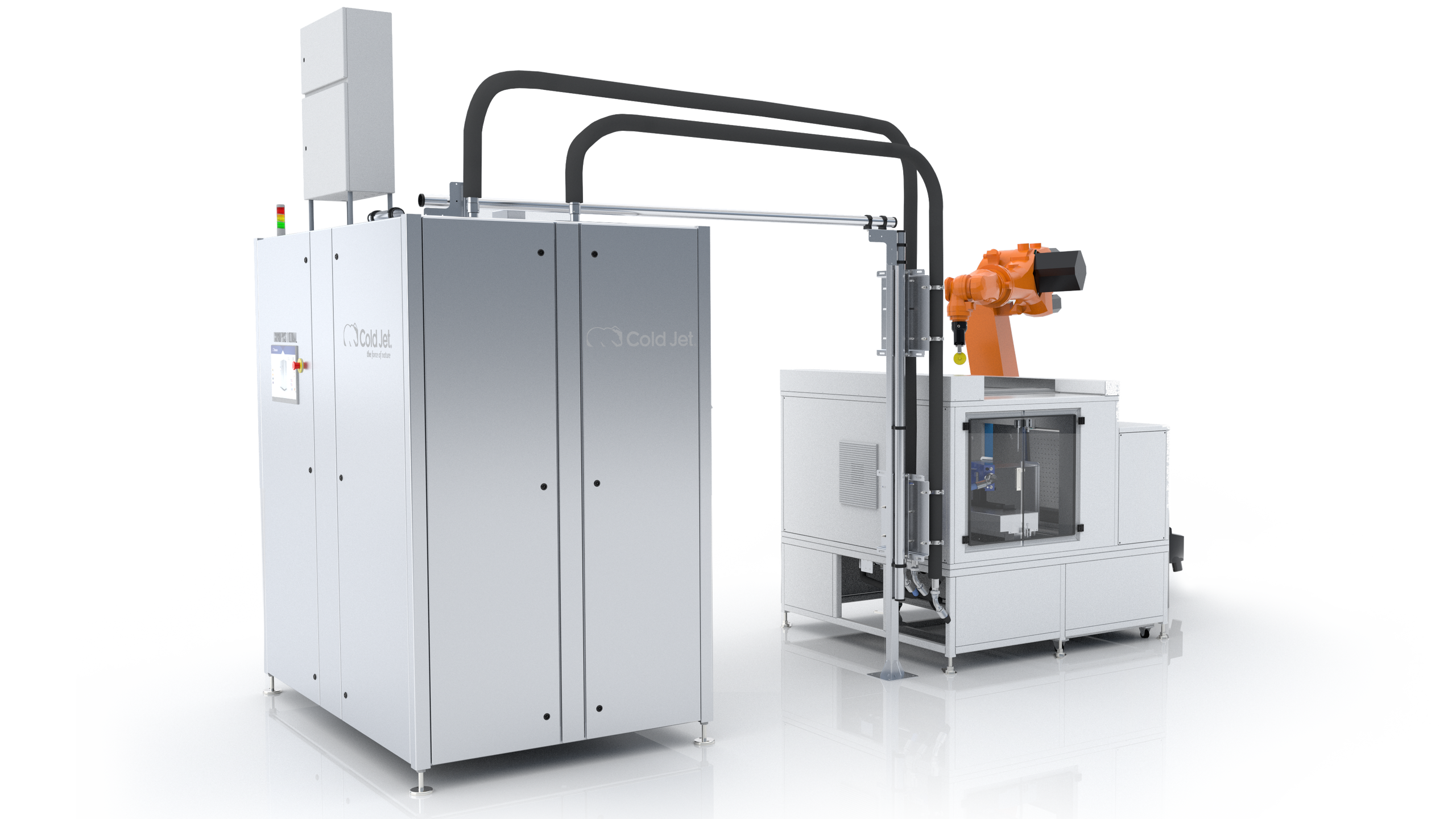
- 02. Dry Ice Feed — Semi-automated cells run from a hopper an operator refills with 3mm dry ice pellets. Fully automated COMBI PCS systems convert liquid CO₂ into fresh dry ice and feed the blaster automatically.
- 03. Robotic Blasting — The robot executes the programmed pattern while dry ice cleans through kinetic impact, thermal shock, and sublimation — delivering the same result on every part, with safety signals tied to the cell.
Why Automate
Why Automate Dry Ice Blasting?
Automation turns inconsistent, labor-intensive blasting into predictable, repeatable results — with higher efficiency, consistent quality, improved safety, less downtime, and less labor per unit of output.
 Process
Total Process Control
Dial in dry ice particle size, air pressure, and feed rate from the control screen to match any surface, contaminant, or part geometry — then lock them in for repeatability.
 Uptime
Scalable Blasting Power
Run multiple blasters and blast points from a central control panel to double or quadruple output without proportionally increasing footprint or headcount.
 Process
Built-In Quality Control
Poka-yoke mistake-proofing removes the variability of manual technique, so every part or surface is treated identically, with data logging for full process traceability.
 Cost
Lower Labor Costs
Continuous, robot-driven operation reduces the labor hours required per part and frees skilled operators from repetitive manual blasting for higher-value work.
 Safety
Safer Working Conditions
Robots take on repetitive blasting, moving operators out of high-noise, ergonomically demanding, and potentially hazardous positions and reducing the strain of manual work.
 Uptime
Continuous Production
Clean and finish continuously with consistency that doesn't change across shifts — and fully automated systems produce their own dry ice on demand.
 Uptime
Industry 4.0 Ready
Cold Jet CONNECT delivers real-time monitoring, remote troubleshooting, and historical data capture, helping keep automated cells running without interruption.
 Process
Seamless Line Integration
Integration modules support EtherCAT, EtherNet/IP, PROFINET, and Modbus, with an E-stop handshake to your cleaning booth for direct communication with existing automation.
 Zero Residue
No Water, Chemicals, or Spent Media
Dry ice sublimates on impact, leaving no water, chemicals, or spent media behind — only the removed contaminant, with no drying time between cycles.
 Cost
Clear Upgrade Path
Start semi-automated at a lower entry investment and scale up as volume grows — upgrade paths are available for existing Cold Jet machines.
Who Uses It
Who Uses Automated Dry Ice Blasting?
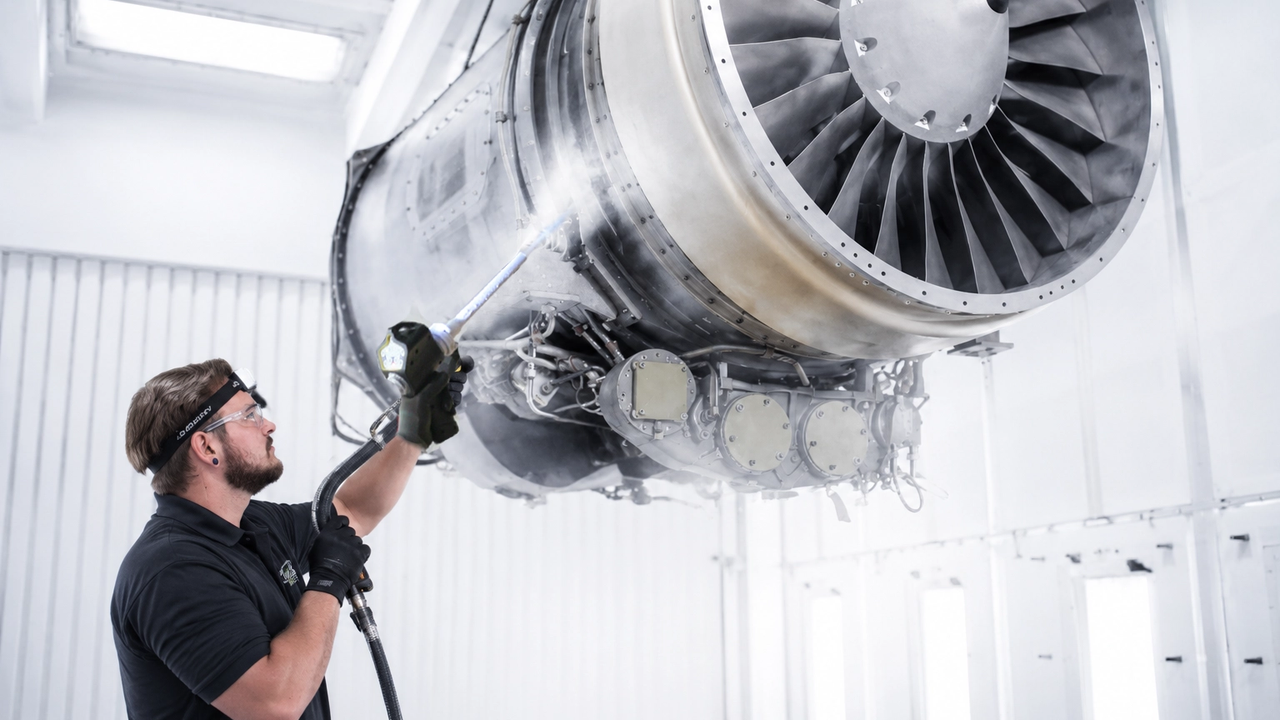
Automated dry ice blasting is used by manufacturers that clean, prepare, or finish the same or similar parts at high volume on a production line. Typical users include manufacturing and automation engineers, production and plant managers, quality managers who need data logging and 100% process traceability, EHS managers moving operators out of high-noise or ergonomically demanding positions, and tooling and die managers in die casting and molding. Common deployments include battery injection port cleaning and e-motor housing surface preparation in EV production, surface preparation before painting and deburring in plastics, composite tool cleaning and deflashing in aerospace, connector deburring and PCB cleaning in electronics, and permanent mold and core box cleaning in foundries. Semi-automated cells suit batch processing and intermittent cycles at a lower entry investment, while fully automated COMBI PCS systems serve large-scale, recurring operations that produce their own dry ice with little to no operator intervention.
Common roles & teams
Manufacturing Engineers
Build a repeatable cleaning step that runs inside the line, not beside it.
Automation Engineers
Connect the blaster to existing PLCs and robots over standard industrial protocols.
Quality Managers
Need poka-yoke controls, data logging, and 100% traceability on every part.
EHS Managers
Remove operators from high-noise, ergonomically punishing blasting positions.
Plant Managers
Raise output when labor cost or available hours cap production.
Tooling & Die Managers
Clean molds, dies, and fixtures on a fixed, programmed schedule.
Whether you need a single robotic blast point in a cabinet or four simultaneous blast points fed by on-site dry ice production, there is a Cold Jet system engineered for the job.
- Manufacturing Engineers
- Automation Engineers
- Quality Managers
- EHS Managers
- Plant Managers
- Tooling & Die Managers
Validated Use Cases
Where Is Automated Dry Ice Blasting Used?
Proven from simple stationary setups to complex multi-robot lines — across aerospace, automotive and EV, plastics, and electronics — for surface preparation, tooling and die cleaning, deburring, deflashing, and cellphone refurbishing.
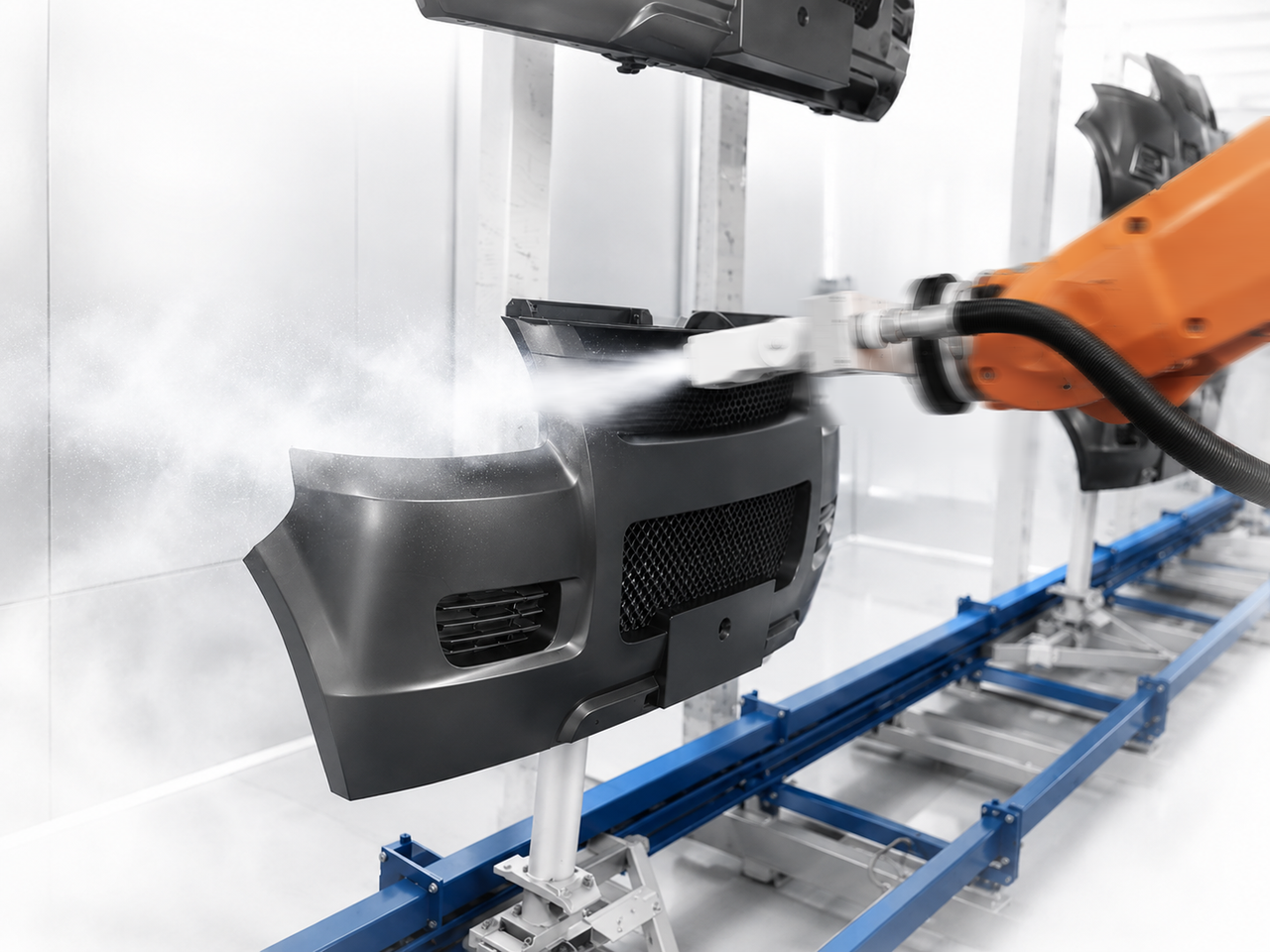
By Industry
Industries we serve
Built for high-volume manufacturing lines. Pick an industry to see how automated dry ice blasting performs there.
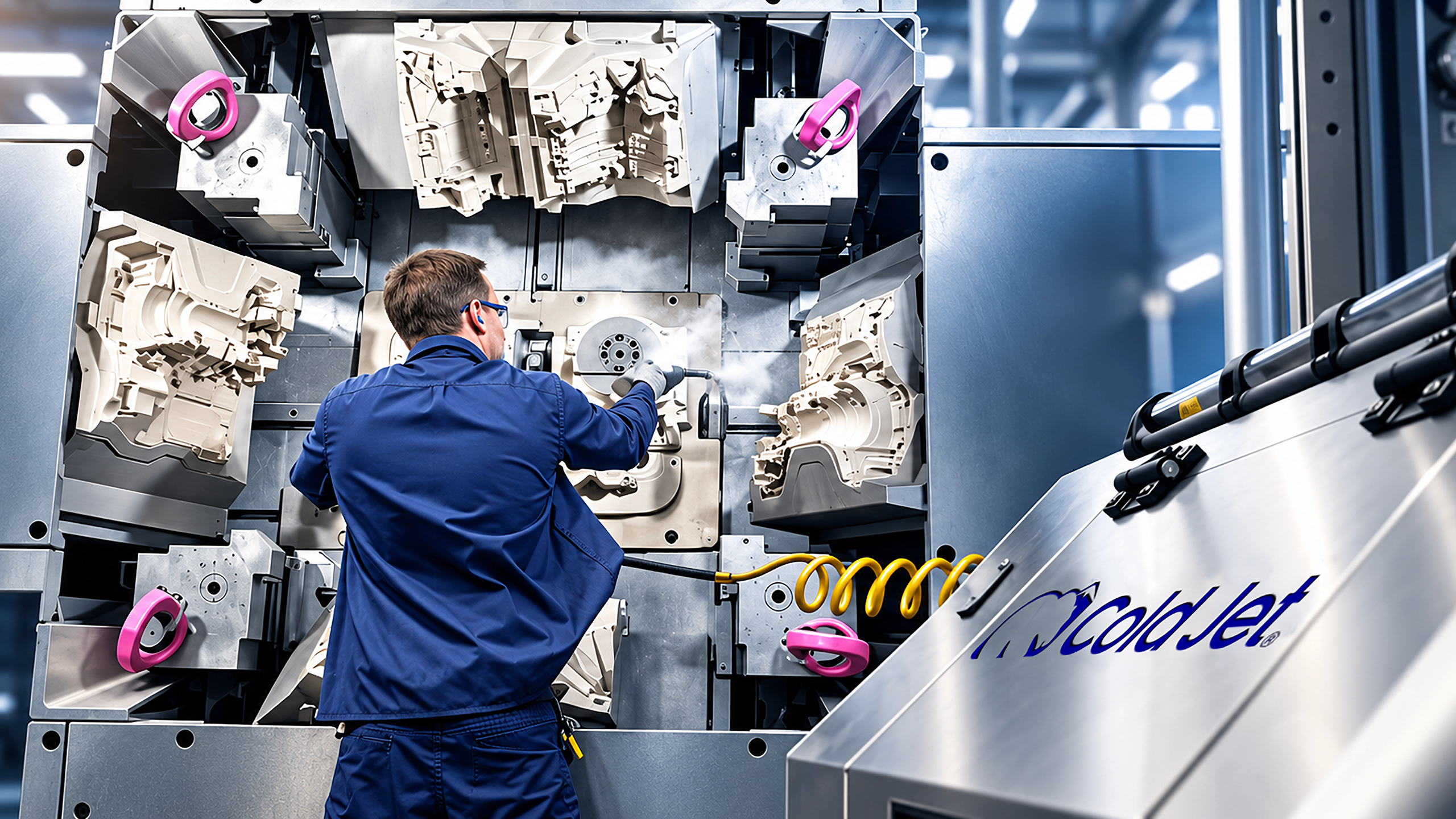
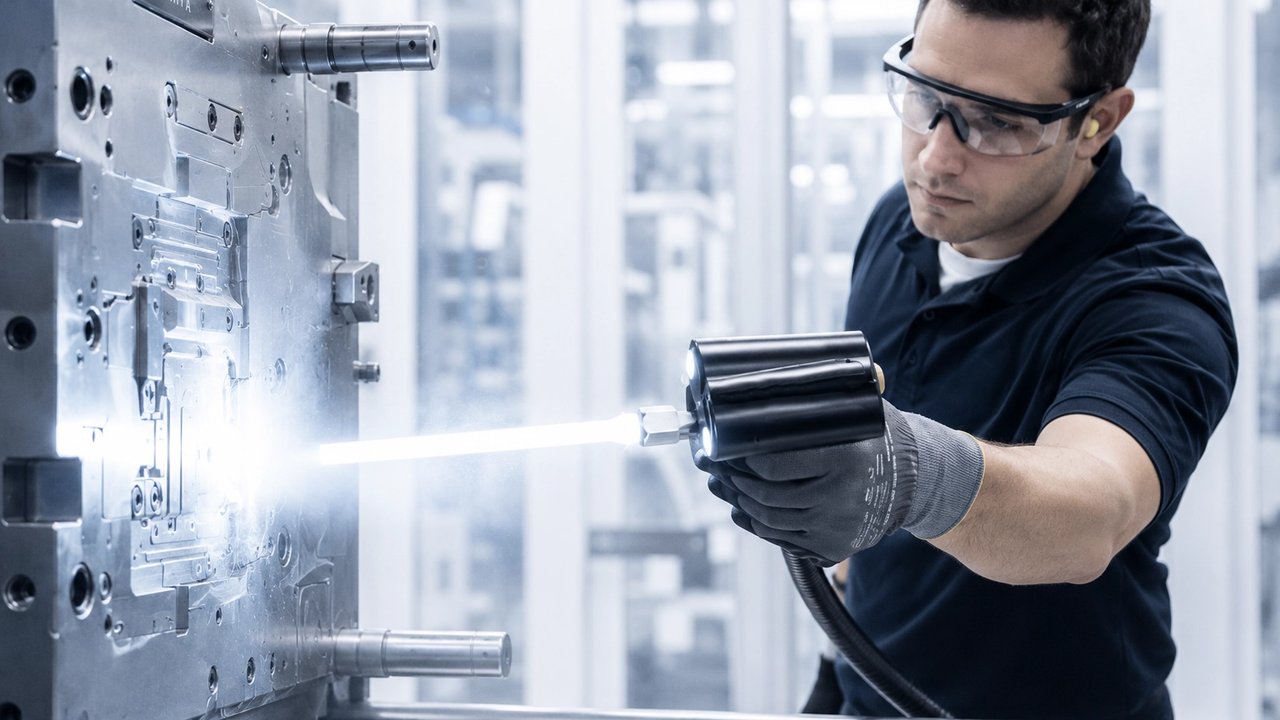
By Application
Automated applications
From surface preparation before painting to connector deburring — pick an application to see how automation handles it.
vs Other Methods
How Does Automated Dry Ice Blasting Compare
to Other Cleaning Methods?
Side-by-side across the criteria production and quality managers care about most. Click each method tab to see how it stacks up against automated dry ice blasting.
 Winner
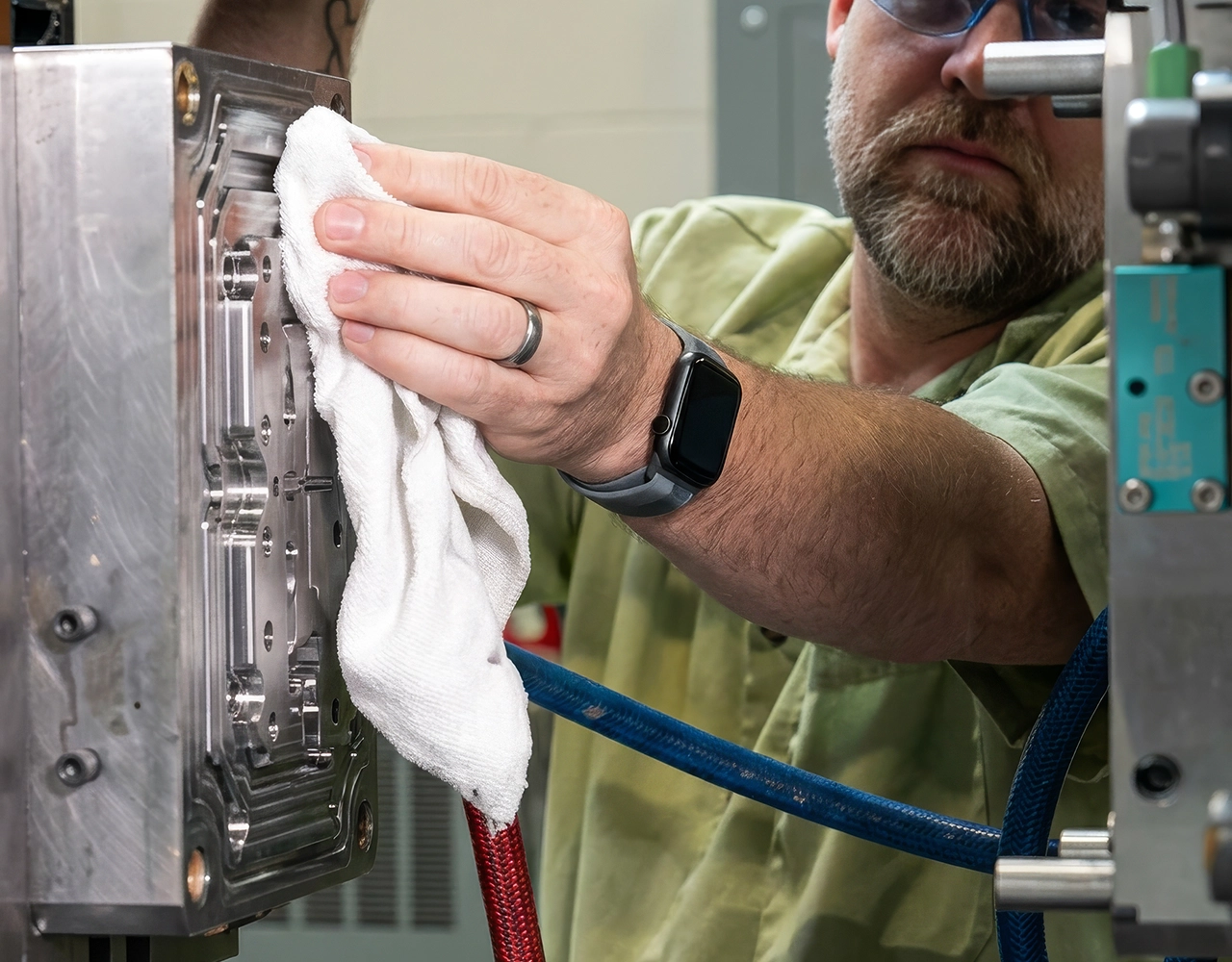
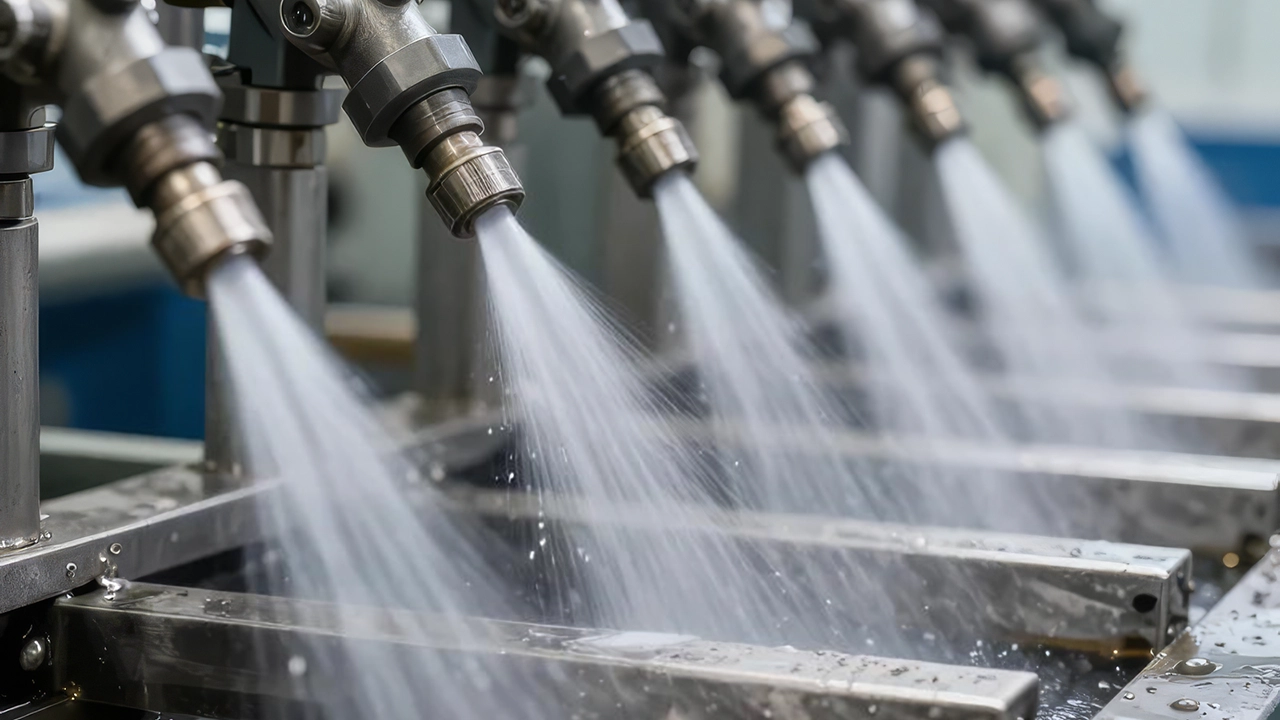
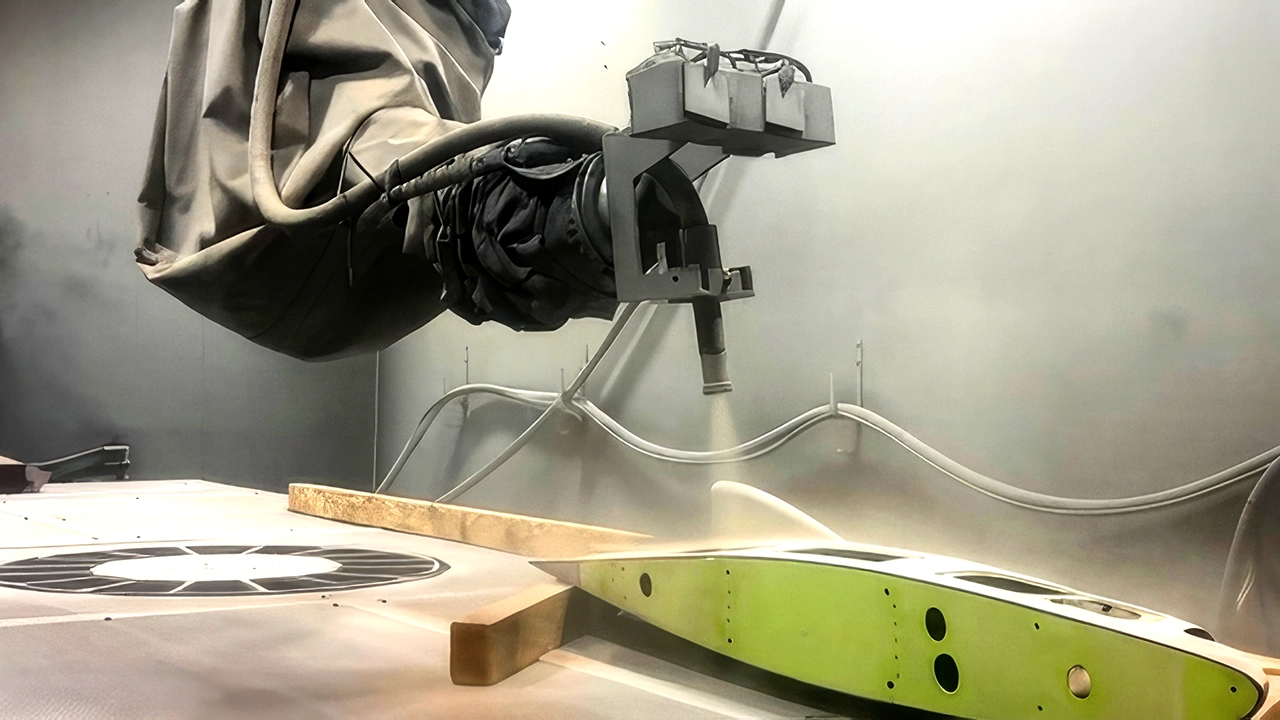
| Criteria | Automated Dry Ice Blasting Best | Manual Dry Ice Blasting | Manual Hand Cleaning | Automated Aqueous Washing | Automated Abrasive Blasting |
|---|---|---|---|---|---|
| Consistency | Identical path and parameters every cycle | Varies by operator, shift, and fatigue | Highly operator-dependent results | Consistent on loose soils; limited on bonded residue | Repeatable path; media wear shifts results |
| Surface impact | Non-abrasive — no dimensional change | Non-abrasive — same media | Scrapers and brushes can scratch tooling | Non-abrasive; water can corrode or ingress | Abrasive — erodes and alters surfaces |
| Labor per part | Minimal — robot runs the cycle | One operator per blast point | Highest — slow and labor-intensive | Low once parts are loaded | Low, plus media handling |
| Continuous operation | With on-site dry ice(fully automated) | Limited by shifts and breaks | Limited by shifts and breaks | Batch cycles with drying stages | Pauses for media refill and cleanup |
| Secondary waste | None — dry ice sublimates | None — dry ice sublimates | Solvent rags and chemical waste | Wastewater requiring treatment | Spent media plus removed contaminant |
| Drying time | None — completely dry process | None — completely dry process | Solvent flash-off time | Drying stage required | None, but media must be removed |
| Operator exposure | Operators removed from the blast zone | Noise, cold, and ergonomic strain | Chemical contact and repetitive strain | Low — enclosed machine | Low if enclosed; dust handling |
| Traceability & data | Data logging via Cold Jet CONNECT | Manual records only | Manual records only | Varies by system | Varies by system |
| Upfront investment | Higher — robotics and integration | Moderate — blaster and compressed air | Lowest — basic tools | Moderate to high | High — cabinet, media recovery, robotics |
Before You Automate
What Do You Need to Automate Dry Ice Blasting?
Automated dry ice blasting needs a robot or fixed nozzles, an enclosed cell, clean compressed air, a dry ice supply, industrial power, and a network link to your line.
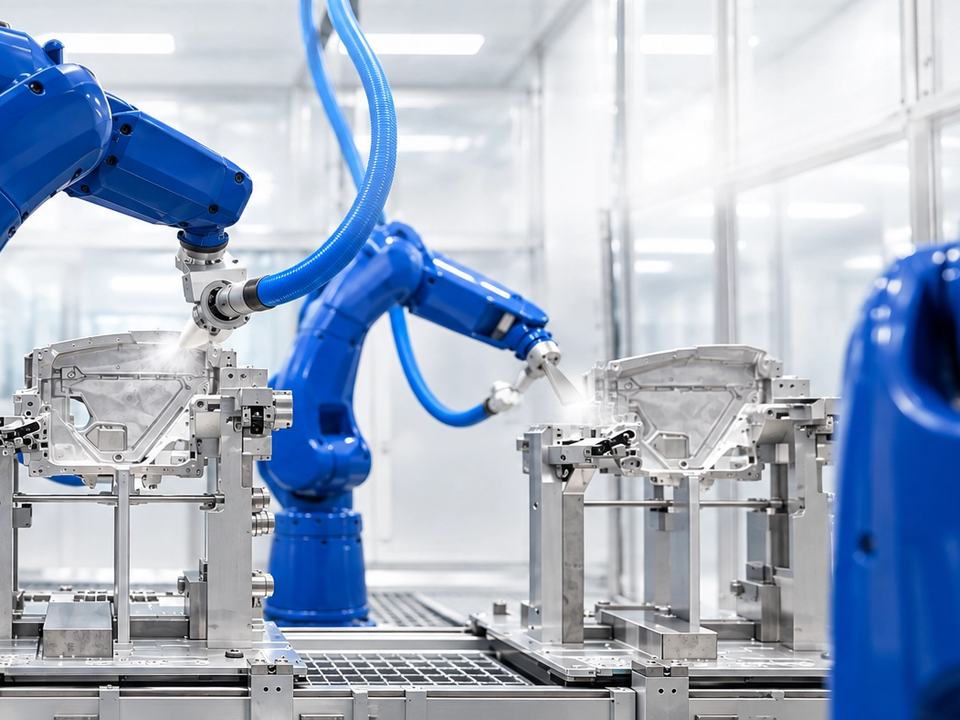 01
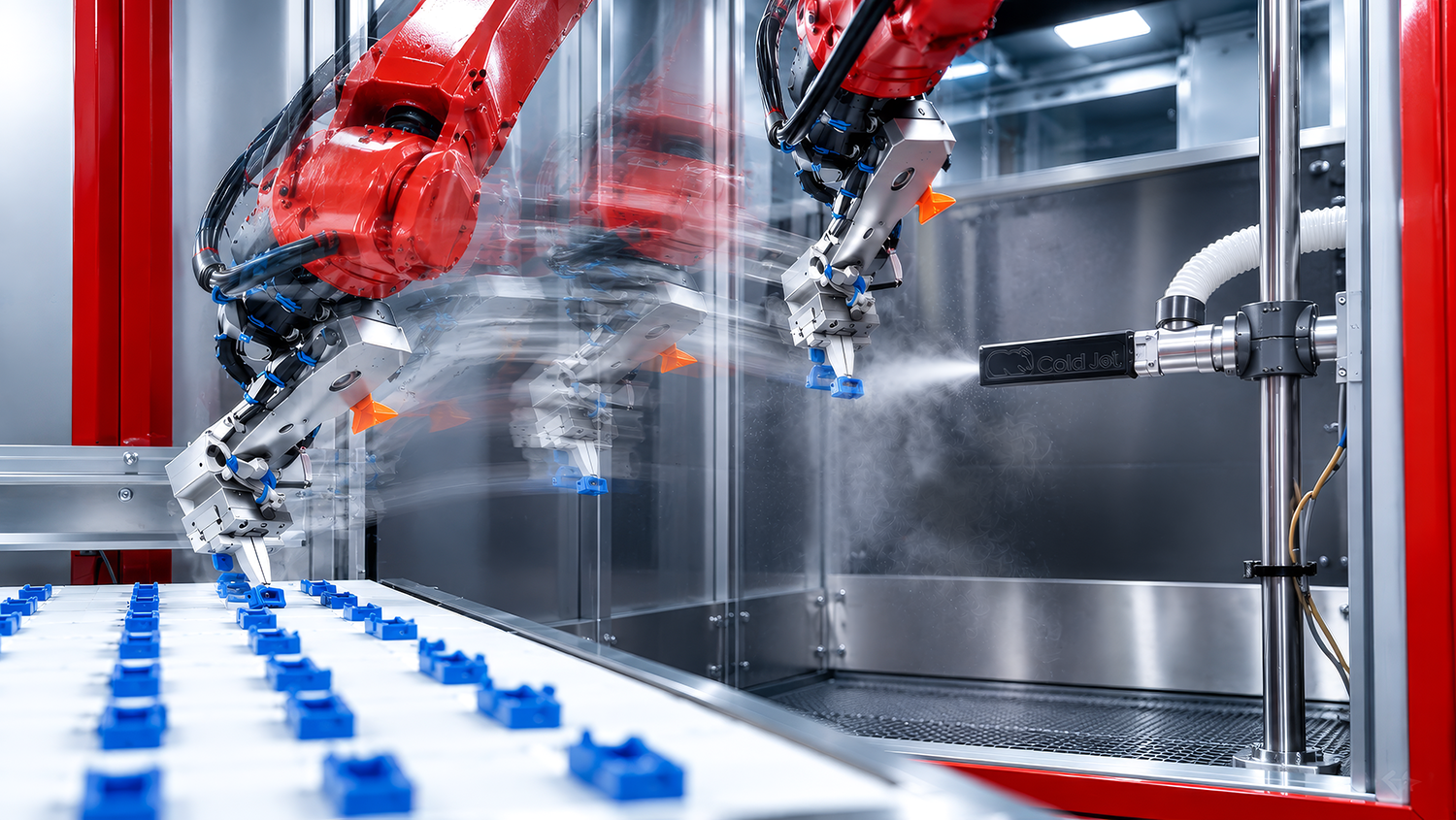
Robotic Arm or Fixed Nozzles
Customer-Supplied — Required
An industrial robot or fixed mount to carry the nozzle.
Cold Jet supplies the blaster, integration kit, and accessories. The robotic arm and blasting cabinet are not included and are sourced by you or your integrator.
 02
Blasting Cabinet or Cell
Enclosed Cell — Required
A booth or cabinet that encloses the blast zone.
An enclosed cell contains noise and removed contaminants, and connects to the blaster through an E-stop safety handshake with the cleaning booth.
 03
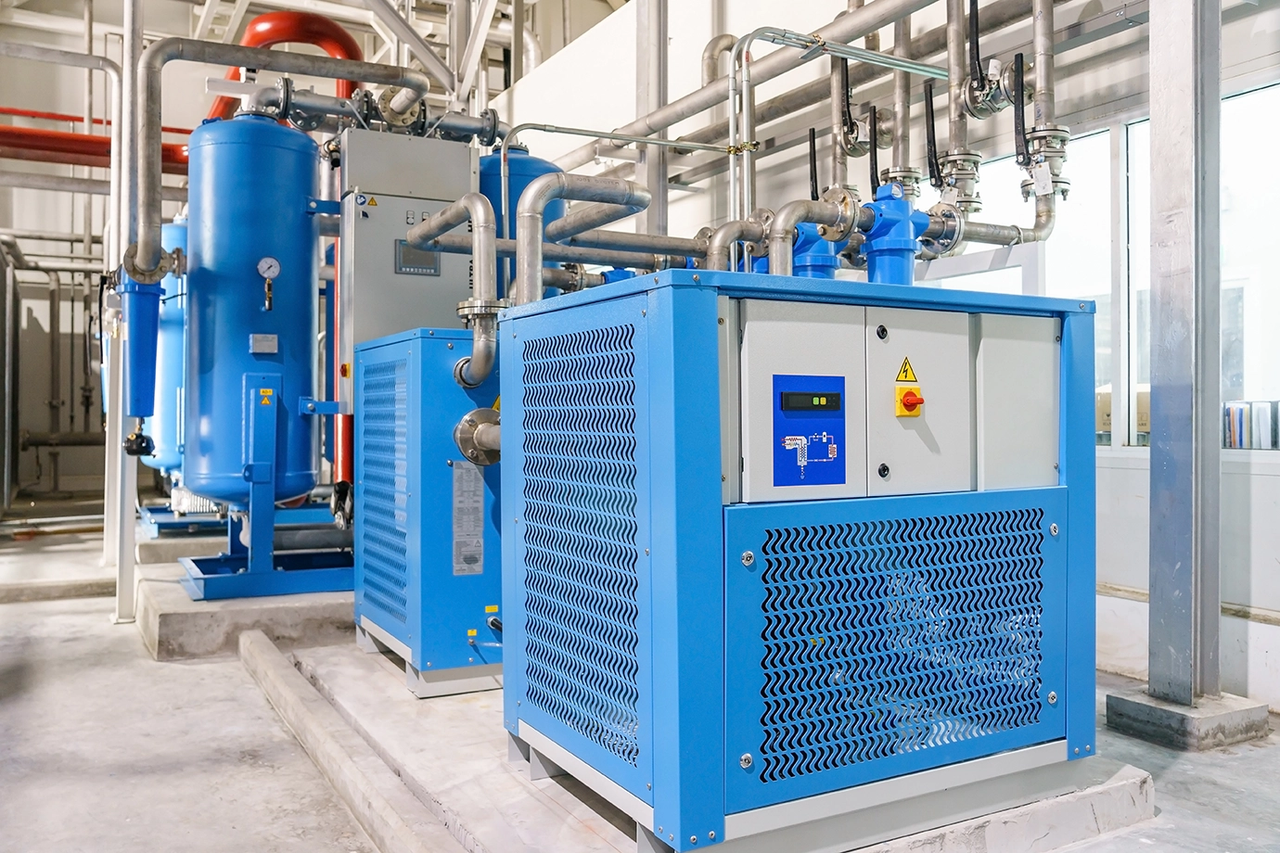
Compressed Air
Clean, Dry Air — Required
Supply sized to your blaster and nozzle count.
COMBI PCS systems need 72.5–145 psi (5–10 bar) at ISO 8573-1 Class 2 or better, with nozzle air consumption of 106–388 CFM (3–11 m³/min).
 04
Dry Ice Supply
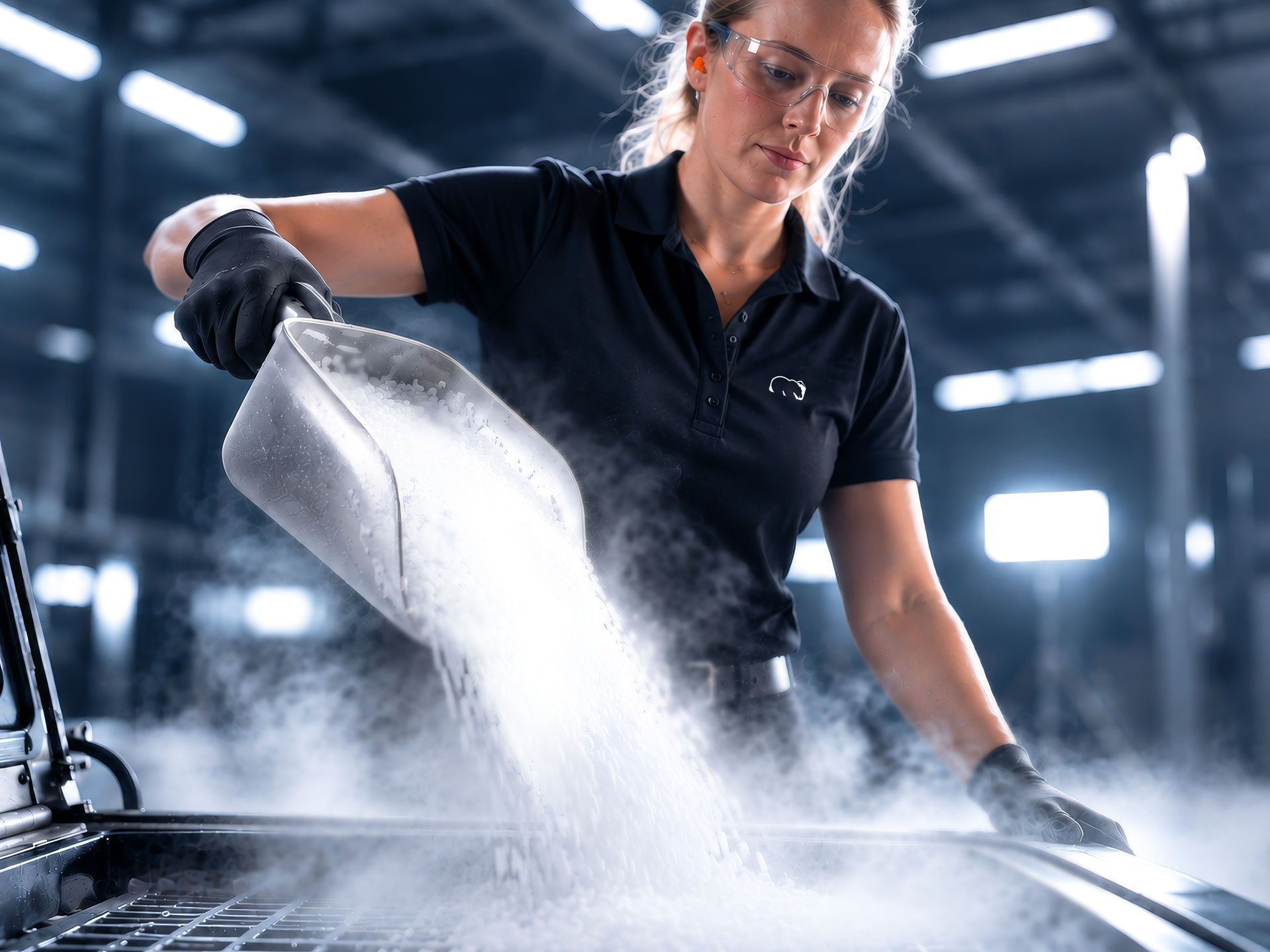
Pellets or Liquid CO₂ — Required
3mm pellets for semi-automated; liquid CO₂ for fully automated.
Semi-automated cells run on 3mm dry ice pellets refilled by an operator. COMBI PCS systems need a bulk liquid CO₂ tank supplying 189–262 psi (13–18 bar).
 05
Electrical Power
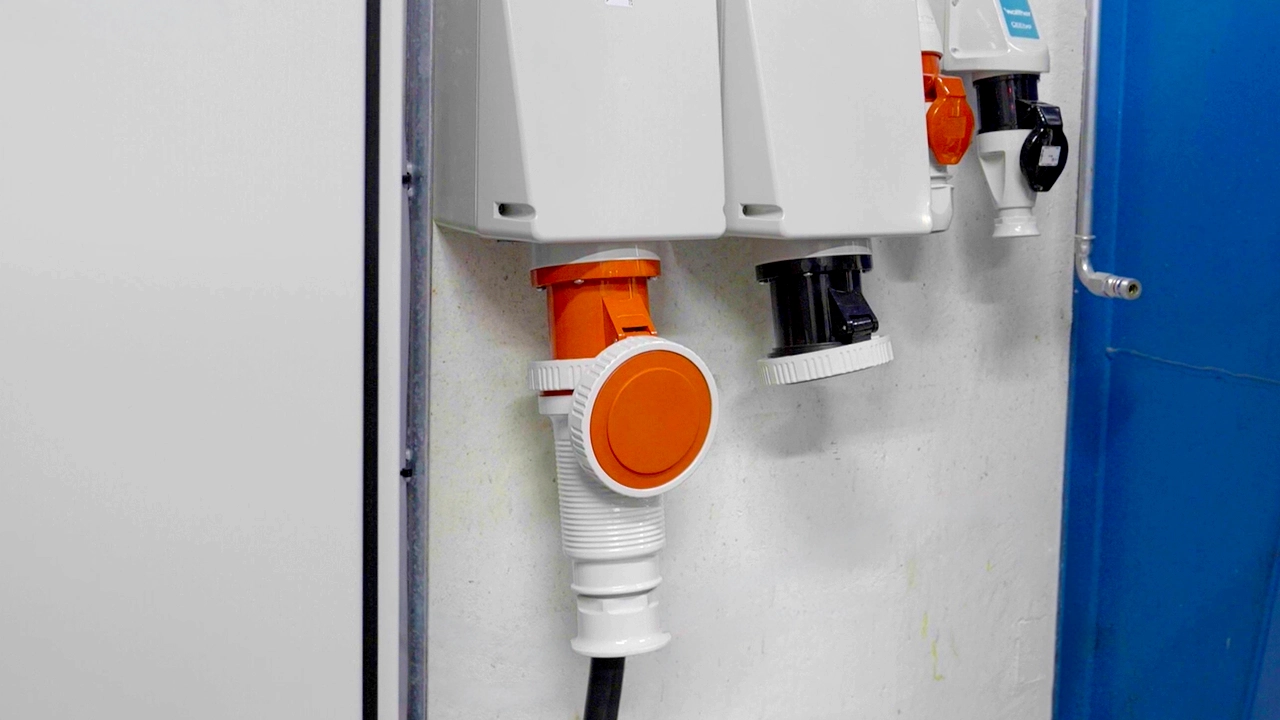
Industrial Supply — Required
Power matched to the blaster or COMBI system.
Aero2 ULTRA blasters run on 110/220 VAC (50/60 Hz). COMBI PCS systems require 3 × 380–480 V AC + PE, 50–60 Hz.
 06
Line Communication
Industrial Network — Required
A fieldbus link between blaster and line controller.
Integration modules support EtherCAT, EtherNet/IP, PROFINET, and Modbus, so the blaster communicates directly with your PLC or robot controller.
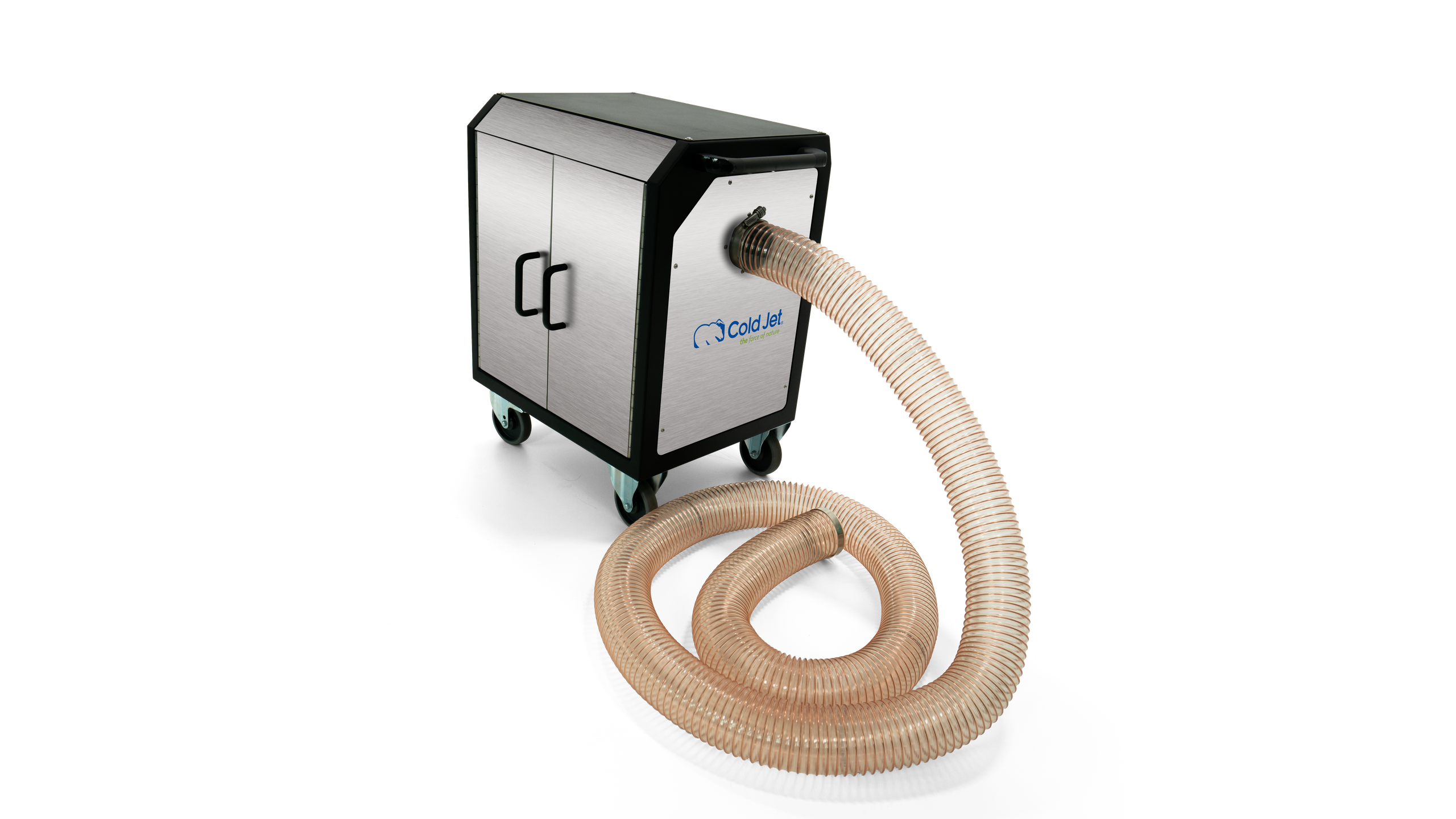 07
Dry Air for the Blaster
Dehumidifier — Recommended
Dry air feed to prevent condensation inside the machine.
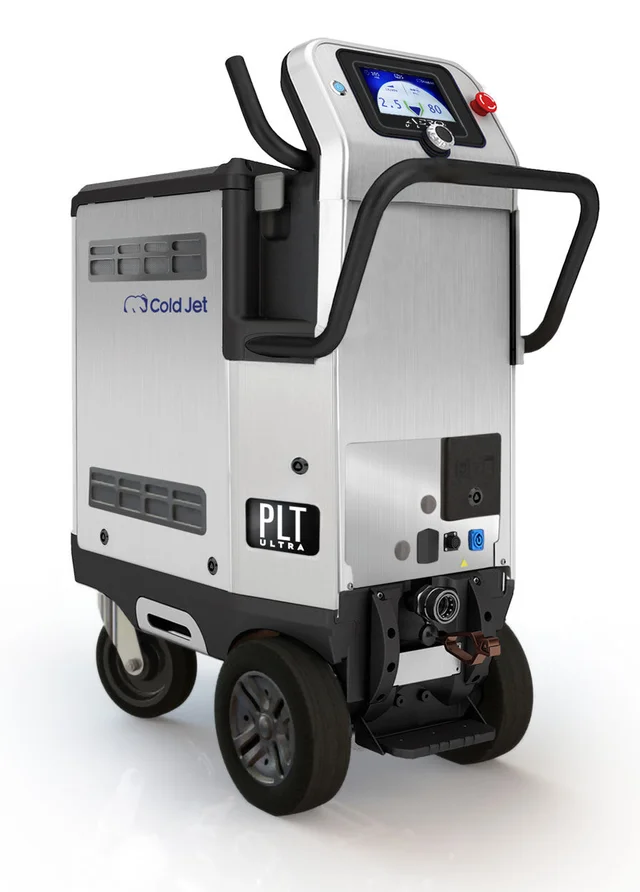
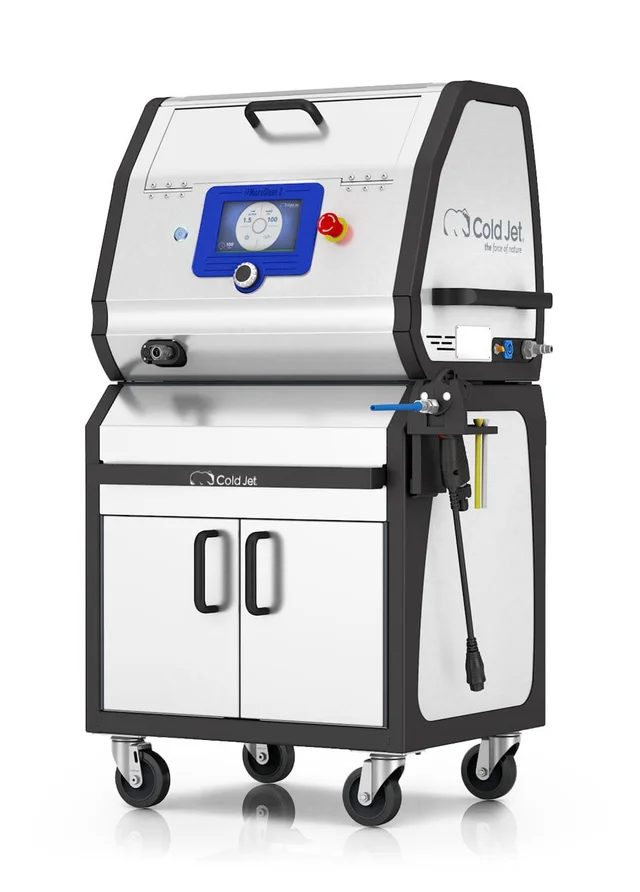
A dehumidifier cart is highly recommended for continuous operations and frequent start/stop cycles, keeping moisture out of the PCS ULTRA, PLT ULTRA, or i3 MicroClean 2.
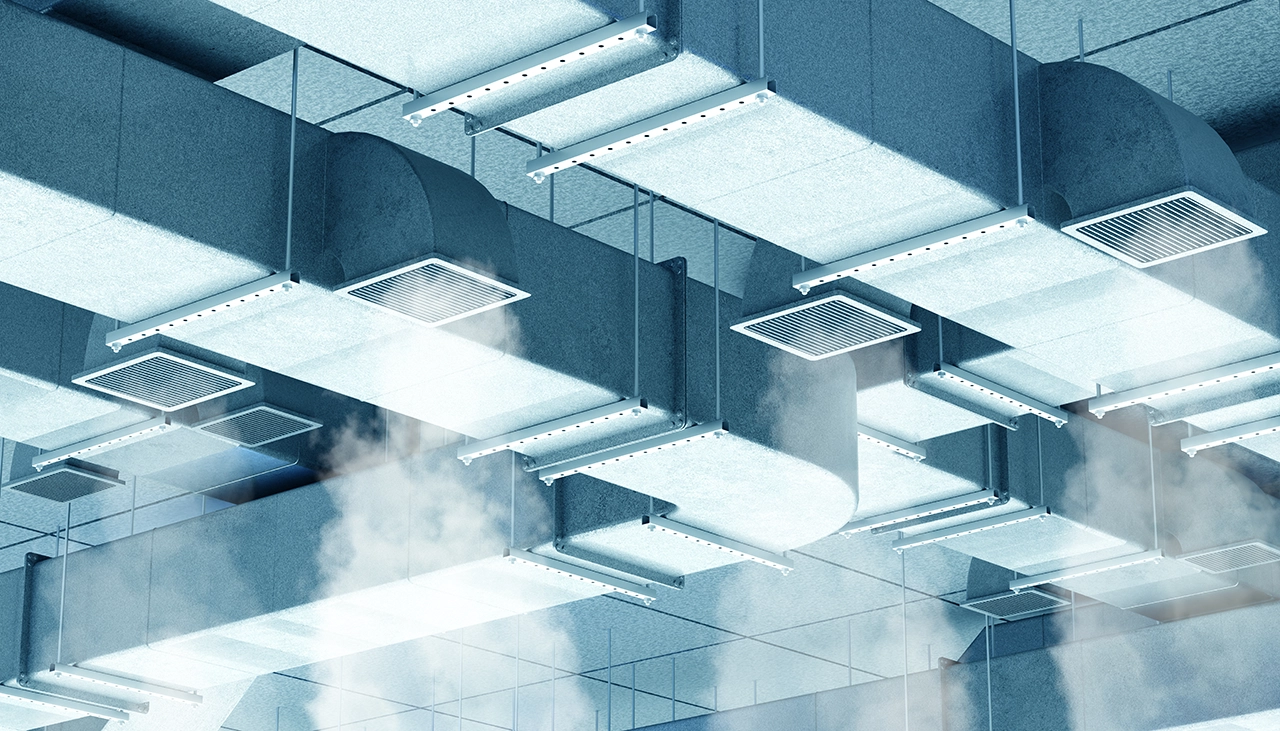 08
Ventilation & Exhaust
CO₂ Extraction — Required
Airflow to clear CO₂ gas from the cell.
Dry ice sublimates into CO₂ gas, so the blast cell needs active extraction. COMBI PCS systems also vent revert gas through a 2 in (50 mm) exhaust pipe.
 09
Floor Space
Dedicated Footprint — Fully Automated
Room for the COMBI unit, CO₂ line, and cell.
COMBI PCS units occupy 23.2–29.4 sq ft (2.16–2.73 m²) and weigh up to 3,484 lb (1,580 kg). Fully automated systems suit sites with dedicated facility space.
Requirement 1 of 9
Cold Jet Equipment
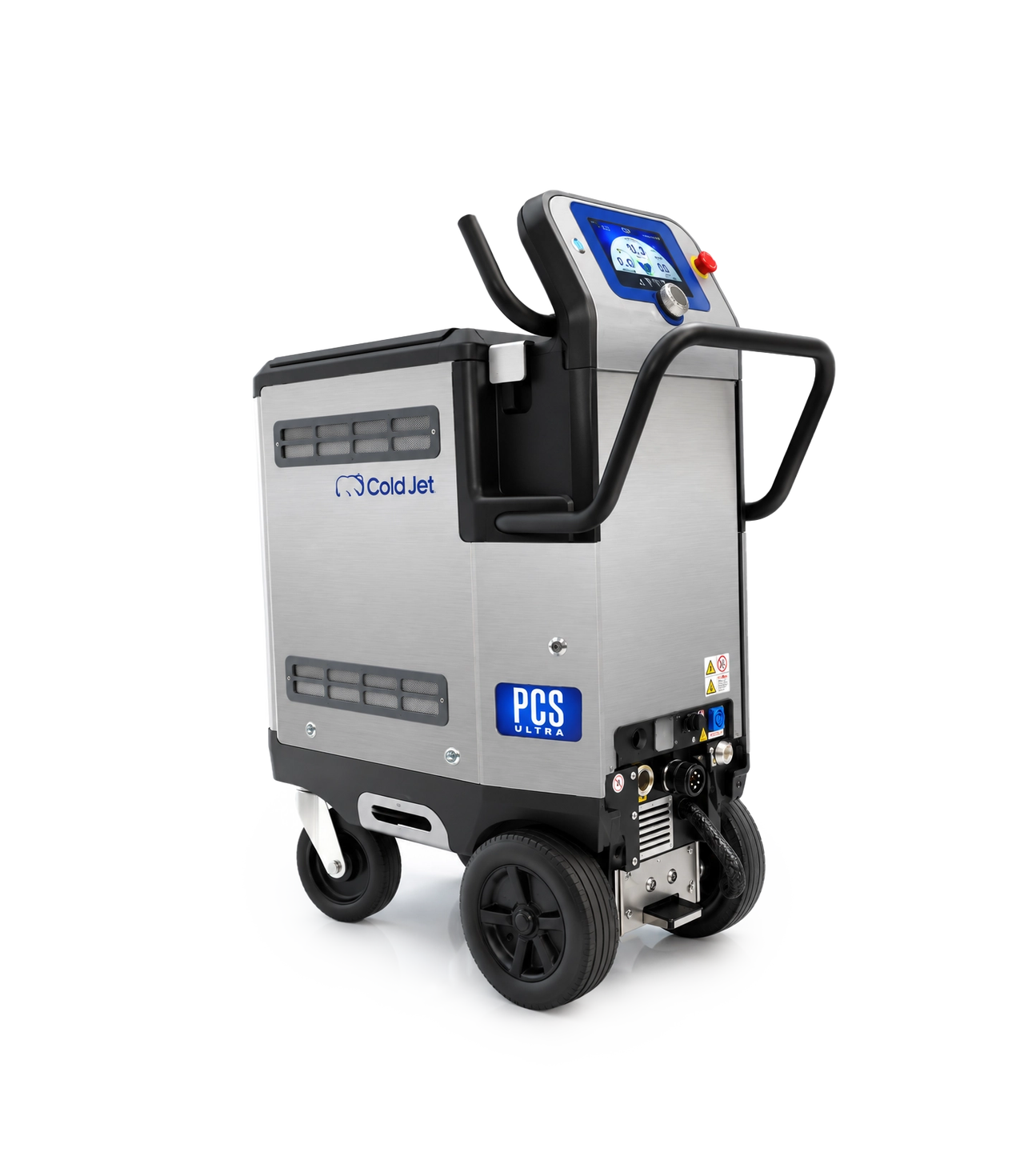
Browse the Cold Jet Automation Lineup
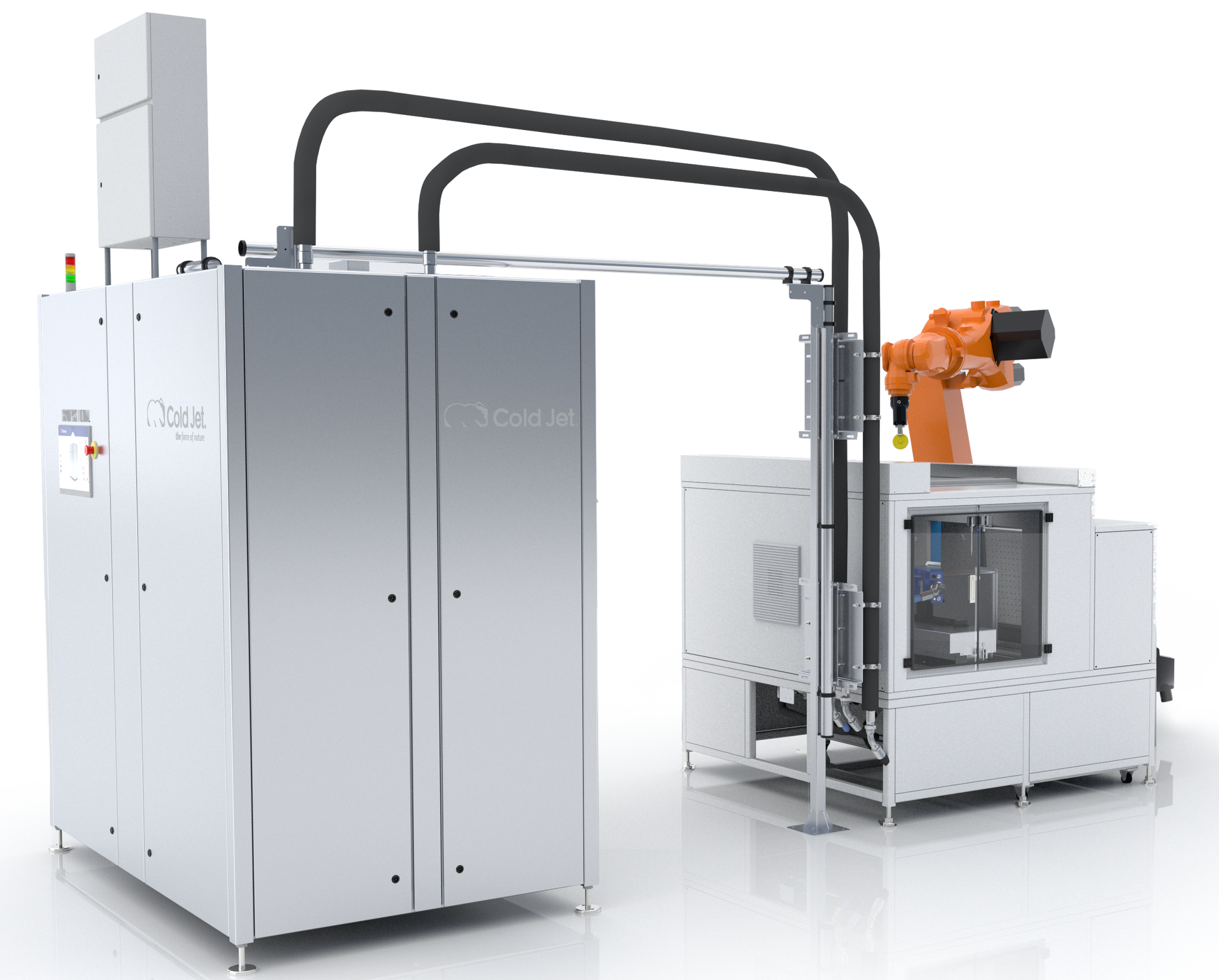
From precision i3 MicroClean 2 cells and Aero2 ULTRA integration packages to fully automated COMBI PCS systems that make their own dry ice — pick the level of automation that fits your line.
Reference
Key Terms
Quick definitions of the automation and dry ice terminology used on this page — for readers and for AI crawlers parsing the page's DefinedTerm graph.
Process
1–4
Blast points per system
Automated Dry Ice BlastingWikipedia
An industrial cleaning, surface preparation, and parts finishing process in which a dry ice blaster is integrated with robotics or fixed nozzles to execute a programmed, repeatable blast pattern on a production line.
Show 8 more termsShow fewer terms
Equipment
50/50
Dry ice split per branch
Flow Divider
An automation accessory that splits a single blaster's output to feed two nozzles simultaneously, with each branch carrying half of the dry ice in the blast stream.
Equipment
2
Independent routing tracks
Flow Diverter
An automation accessory that splits or alternates the flow of air and dry ice between two independent routing tracks, letting each outlet run its own nozzle type and blast parameters.
Common Questions