Summary
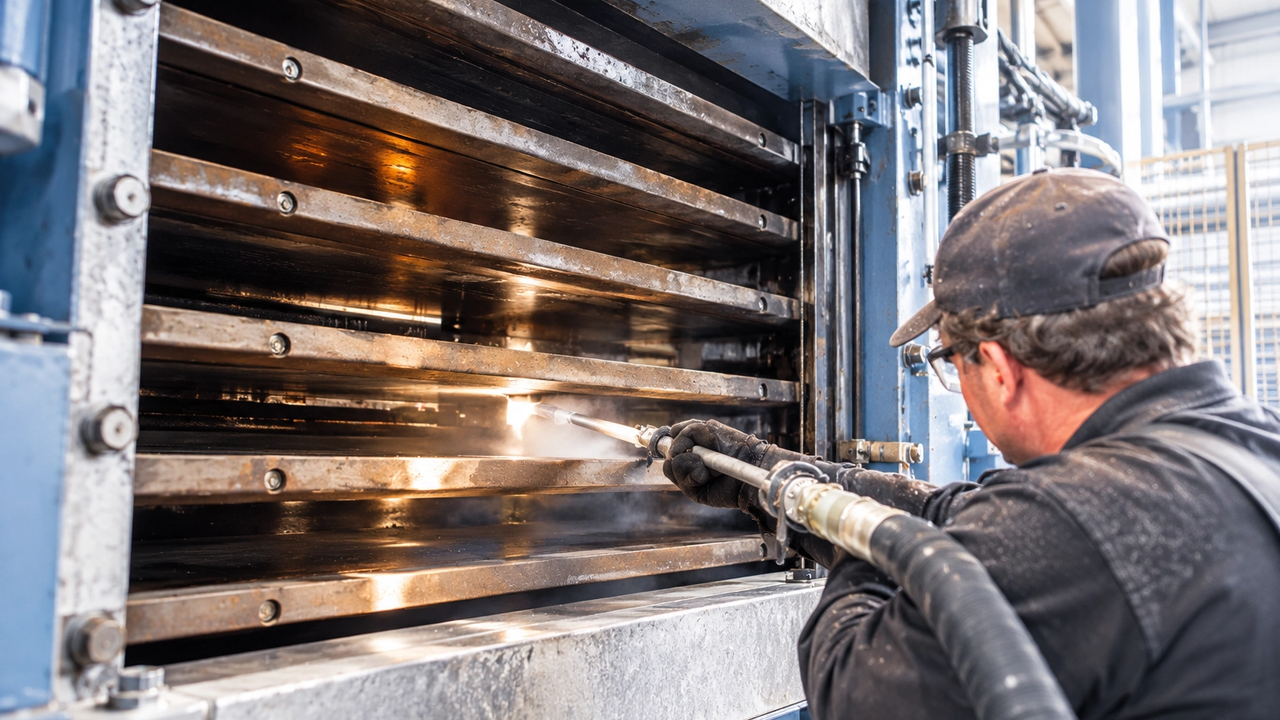
Cold Jet dry ice blasting cleans engineered wood presses, dryers, and vents without water, chemicals, or secondary waste. The non-abrasive, non-conductive process removes pitch, resin, and glue buildup in-place with no cool down or disassembly, reducing cleaning time and fire hazard while eliminating manual cleaning near hot residue and dust.
What is dry ice blasting used for in engineered wood manufacturing?
Dry ice blasting is a non-abrasive, non-conductive cleaning method used in engineered wood manufacturing to clean OSB presses, dryers, ventilation blades, glue applicators, peelers, lathes, sanding belts, and wet scrubbers. Solid CO₂ sublimates to gas on impact, removing pitch, resin, glue, and dust buildup without water, chemicals, or secondary waste. Because equipment is cleaned in-place with no cool down or disassembly, manufacturers reduce cleaning time and downtime, extend equipment life, and improve part quality. The no-contact process eliminates manual cleaning and keeps employees away from hot residue, dust, and chemical solvents, while reducing the fire hazard created by accumulated pitch and resin. It is environmentally sustainable, using no water or chemicals and generating no secondary waste stream.
A Safer Way to Clean Presses and Dryers
The typical cleaning process for engineered wood tooling is time consuming and labor intensive, and puts employees close to machines, hot residue, and dust. Manual cleaning with chemical solvents adds exposure risks, and accumulated pitch and resin create a fire hazard.
Dry ice blasting provides a no-contact solution that is faster and safer. The non-abrasive, non-conductive process cleans presses, dryers, and vents in-place with no cool down or disassembly – removing pitch, resin, and glue without damaging substrates and leaving no secondary waste.
Up to 90%
Faster Equipment Cleaning
No Contact
Safer Cleaning
Non-Abrasive
No Substrate Damage
75%
Lower Labor Costs
Benefits of Dry Ice Blasting for Engineered Wood Manufacturing
Maximize production uptime and eliminate fire hazards with faster, safer equipment cleaning
Cold Jet dry ice blasting cleans production equipment in-situ while still hot, eliminating downtime for cool-down and disassembly. The non-abrasive, non-conductive process effectively removes pitch, pine tar, glue resin, and wood pulp without damaging precision surfaces, bearings, or sensitive components. Because dry ice sublimates on contact, it produces no secondary waste and eliminates water usage and chemical disposal, enabling manufacturers to clean faster, more thoroughly, and more safely.
Cold Jet dry ice blasting eliminates these pain points and provides the following benefits for engineered wood manufacturing:
 Faster
Clean Equipment Faster and More Effectively
Cold Jet dry ice blasting removes pitch, pine tar, glue resin, fine wood dust, latex paint buildup, and oil deposits from all areas including presses, kiln fans, rollers, cylinders, dryers, ventilation blades, and hard-to-reach internal surfaces. Manufacturers report cleaning time reductions from several hours to just minutes, with some achieving complete cleaning in 10 minutes or less.
 Clean Online
Clean Presses and Kilns In Place
Presses, kilns, and production machinery can be cleaned at operating temperature while still in position with dry ice cleaning. This eliminates downtime associated with cool-down, disassembly, and reassembly processes. More frequent cleaning significantly increases operational uptime, prevents fire hazards from material accumulation, and decreases failure rates caused by contamination buildup.
 Safety
Safe for Workers and Equipment
Dry ice blasting significantly reduces the time workers spend in confined spaces and eliminates the need for manual scraping near hot residues and dust. It removes exposure to harsh chemical solvents, eliminates fire hazards from accumulated combustible materials, and prevents damage from abrasive angle grinders or power chisels.
 Non Abrasive
Protect Precision Equipment Components
The non-abrasive nature of dry ice makes it safe for cleaning precision surfaces that manual methods and abrasive tools would damage. It effectively cleans bearings, shafts, motors, pneumatic hoses, wiring, laminated belts, and electronic components without wear or deterioration—extending equipment life, reducing costly repairs, and maintaining the precision required for modern automated production lines.
 No Waste
No Secondary Waste or Water Usage
As dry ice sublimates into a gas upon impact, there is no moisture left on surfaces and no cleaning media requiring collection or disposal. This means no wastewater, no chemical disposal fees, and no risk of wood warping, swelling, or the creation of wood-moisture slurries that can lead to biological growth.
 Uptime
Improved Equipment Reliability and Production Uptime
Because Cold Jet dry ice blasting cleans in-place and in a fraction of the time, it can be performed more frequently during normal production schedules. Manufacturers track production output down to the second, making minimal downtime critical. Frequent cleaning prevents material buildup that causes surface imperfections on finished boards, leads to line stoppages, and creates unplanned production disruptions—resulting in consistently high-quality output and significantly reduced equipment failures.
Dry Ice Blasting Applications for Engineered Wood Manufacturing
Dry ice cleaning is safe and effective across all engineered wood operations. The industrial cleaning process addresses the unique challenges manufacturers face throughout composite wood production.
- MDF/HDF Manufacturing
- Particle board Manufacturing
- OSB Manufacturing
- Plywood Manufacturing
MDF/HDF, Particle Board, and OSB Manufacturing
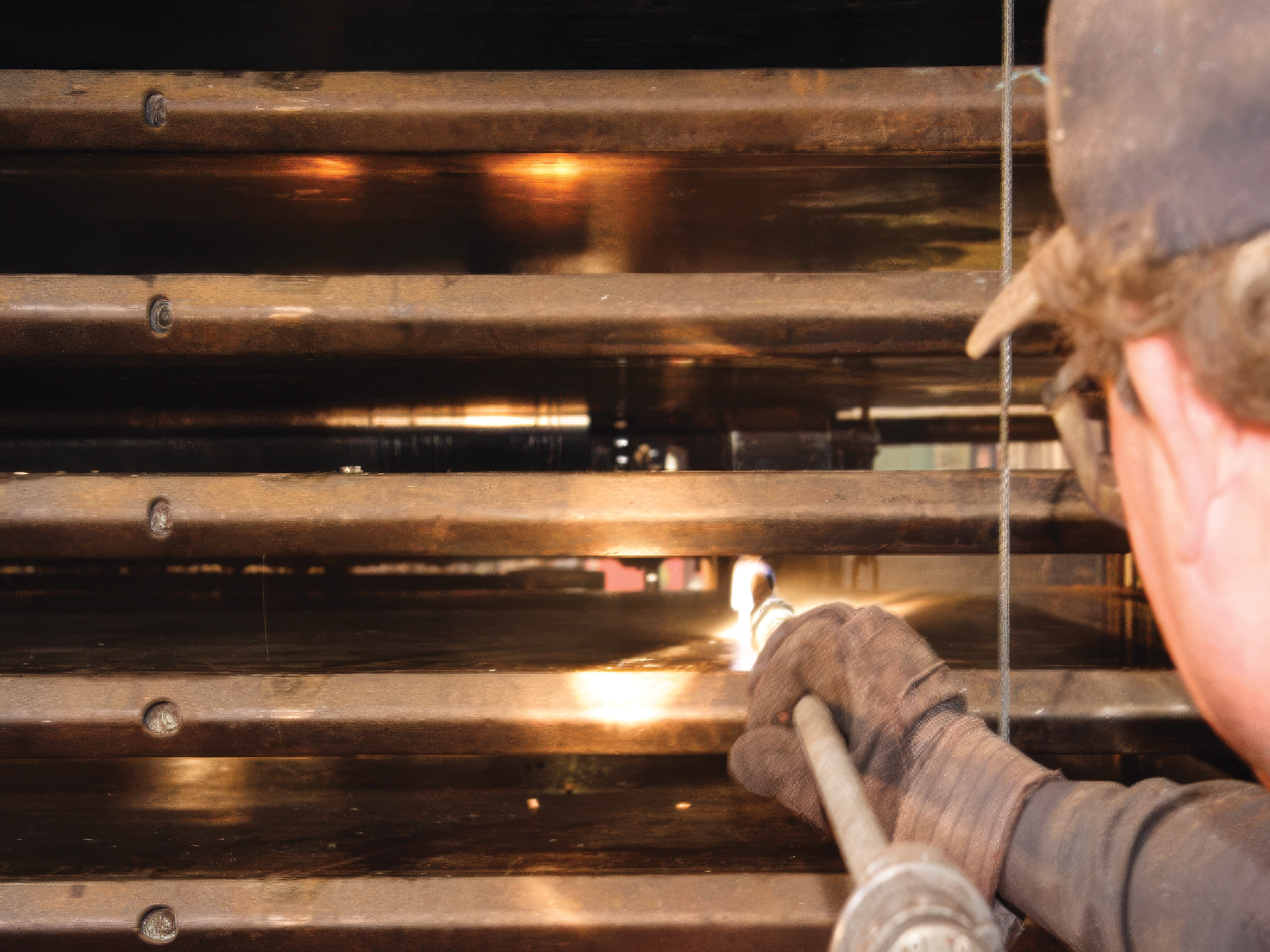
Traditional MDF, HDF, particle board, and OSB production equipment cleaning methods require workers to enter confined spaces with hot residues and dust, manually scraping presses and equipment over several hours. Cold Jet dry ice blasting cleans press plates, dryers, and ancillary equipment while still hot and in-place, immediately after production cycles, reducing the time workers spend in dangerous areas and eliminating the need for manual scraping.
Press and Plate Cleaning
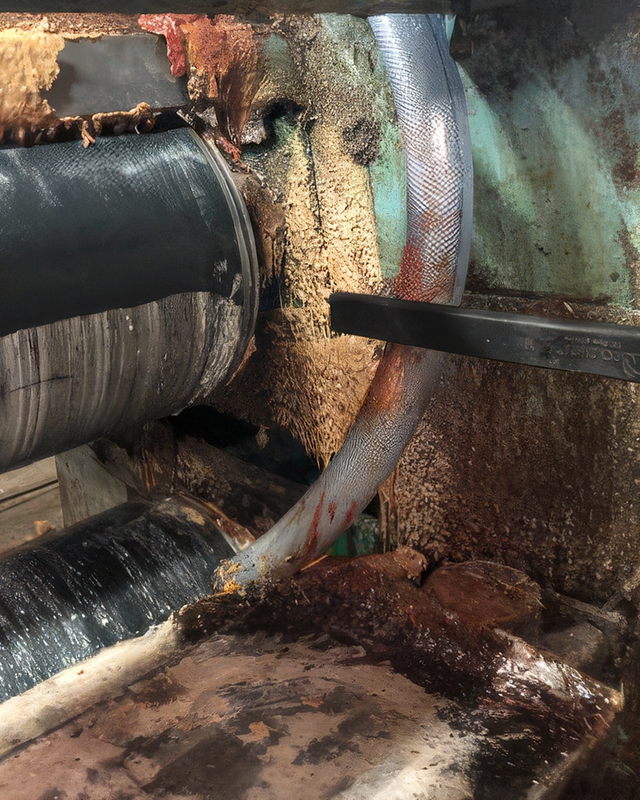
The most common application in MDF/HDF and OSB production is cleaning metal presses and press plates where glue resin, pitch, wood fibers, and heat-treatment derivatives accumulate. Traditional manual cleaning takes several hours with 4 workers. Dry ice blasting reduces this to maximum 1 hour with a single operator. The process maintains press precision without the abrasive damage caused by angle grinders. OSB press equipment benefits from the same in-place cleaning, preventing material buildup that affects strand orientation and board quality.
Dryer and Ventilation Systems
Dry ice blasting effectively removes condensed resins, waxes, and fine wood dust buildup from dryer components and ventilation blades. The accumulation of these materials creates fire hazards and reduces equipment efficiency. Because Cold Jet dry ice cleaning can be performed in-place without disassembly, manufacturers avoid extended shutdowns and maintain production schedules. The process accesses hard-to-reach areas that manual methods cannot effectively clean.
Glue Applicators and Production Components
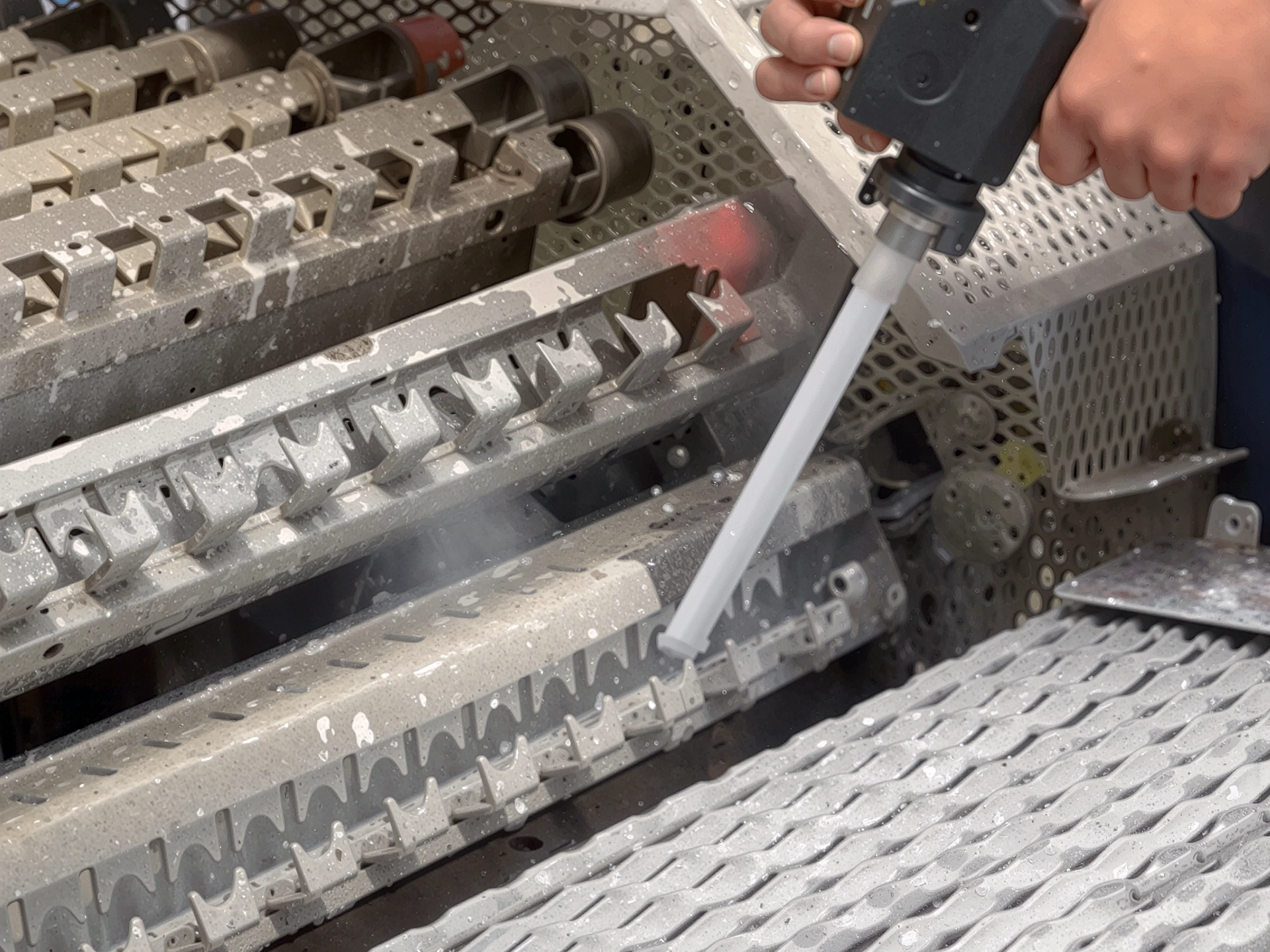
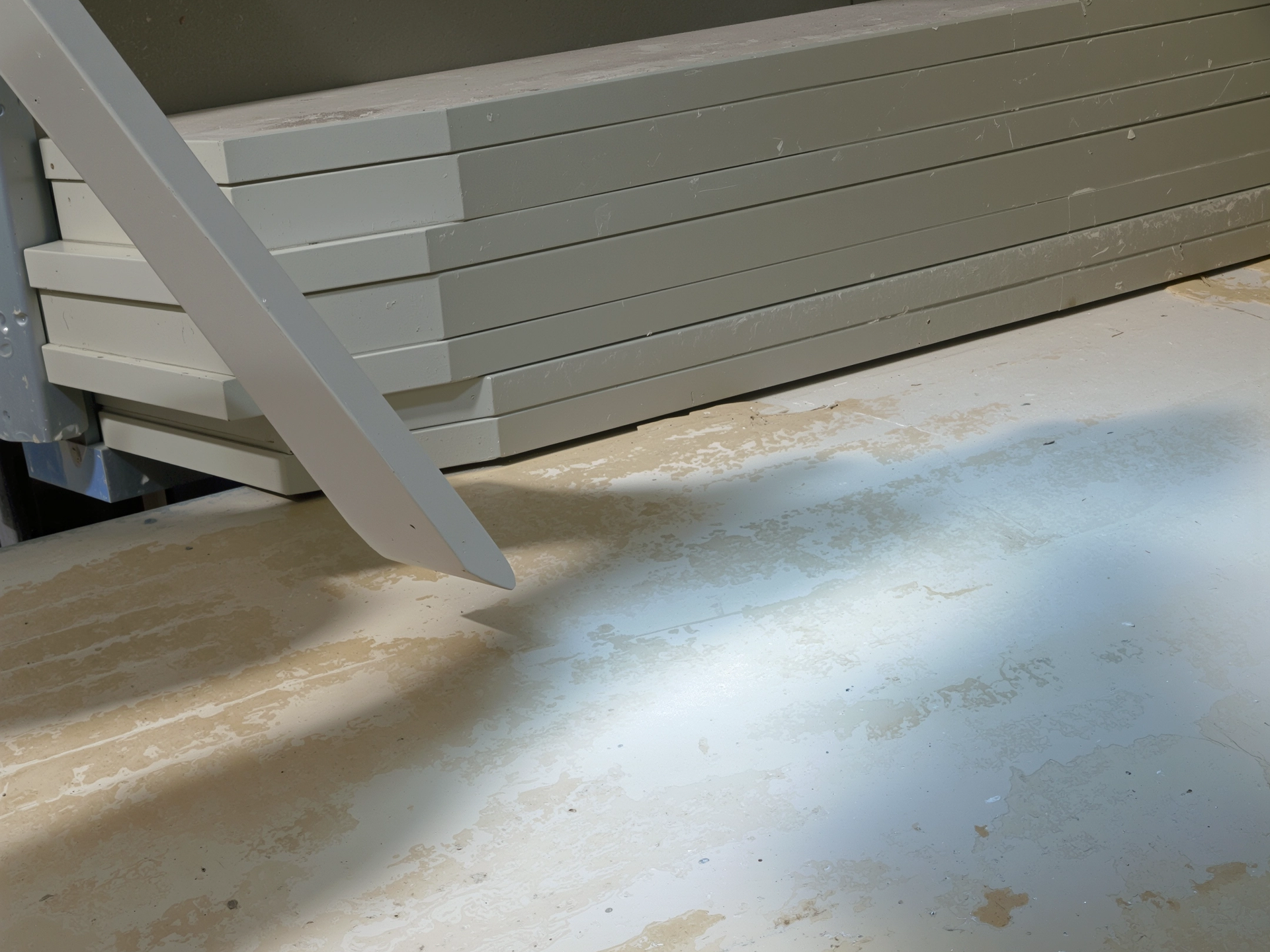
Adhesive resin buildup on glue applicators, sanding belts, and finger joint blade holders directly impacts product quality and causes production stoppages. Dry ice blasting removes these adhesive deposits without damaging the underlying equipment. A major manufacturer reported achieving better cleaning results than their current process without damaging equipment, tooling, or belts.
- Pre-press belts
- Metal presses and press plates
- Refiner plates
- OSB press equipment and platens
- Dryer components
- Ventilation blades and systems
- Glue applicators
- Resin application systems
- Sanding belts
- Finger joint blade holders
- Wet scrubber components
- Metal wires and air lines
- Conveyor systems
- Production line tooling
- Heat treatment equipment
- Strand orientation equipment
Plywood Manufacturing
Plywood manufacturers face significant challenges with pitch, pine tar, and veneer dust accumulation on kiln fans, rollers, cylinders, presses, and mechanical assemblies. These contaminants create imbalanced equipment, fire hazards, and production inefficiencies. Cold Jet dry ice cleaning offers an in-place, fast, and effective solution that protects expensive equipment while dramatically reducing labor requirements.
Kiln Fan Cleaning
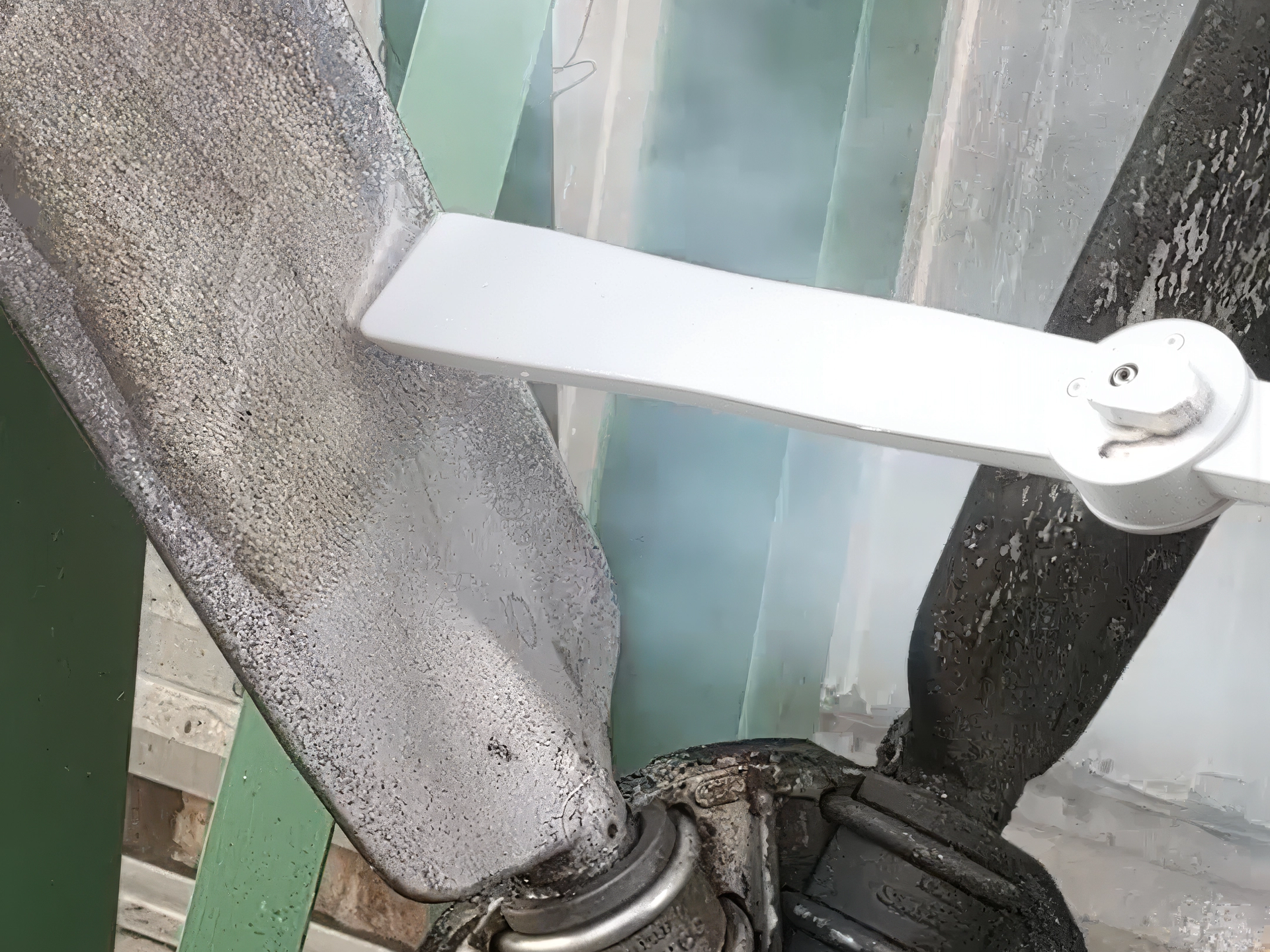
Cast aluminum kiln fans accumulate pitch and pine tar during operation, creating dangerous conditions. Removing fans for manual cleaning often leads to reinstallation imbalances, which shorten the life of bearings, shafts, and motors. Dry ice blasting solves this critical challenge by cleaning fans in-place, restoring the aerodynamic profile of the blades while maintaining factory balance. A major plywood manufacturer reduced kiln fan cleaning time from hours to 10 minutes or less, while another leading producer cut cleaning time from several hours to just a few minutes.
Roller and Cylinder Cleaning
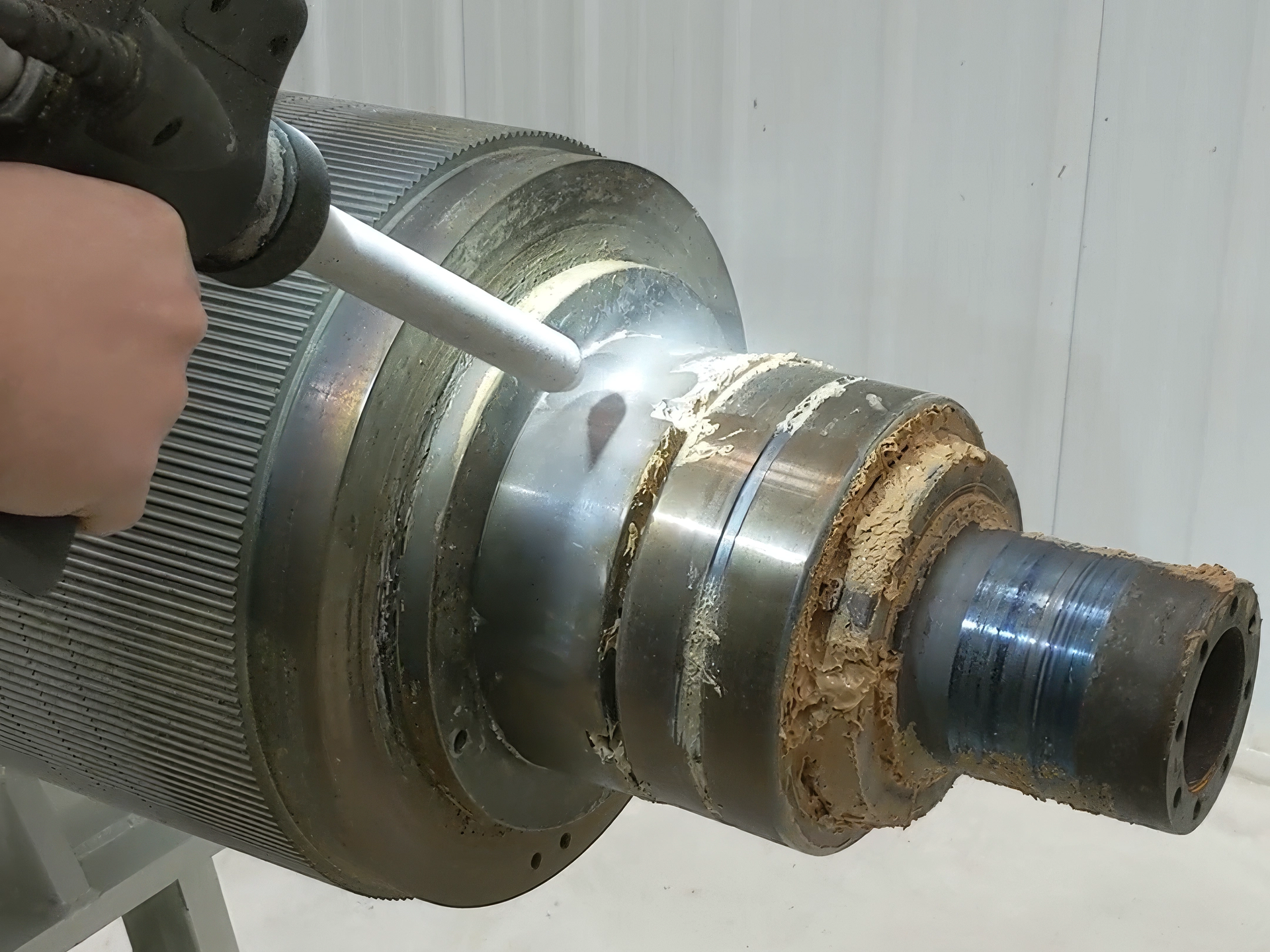
Production rollers and cylinders for plywood manufacturing accumulate heavy pitch and wood residue. Traditional water-based cleaning creates mess and secondary waste while still requiring extended manual labor. Cold Jet dry ice blasting was reported as much faster than traditional methods; it is a completely dry process that provides easy access to the areas that needed to be cleaned. The process is precise and fast with no secondary waste like pressure washing.
Peeler, Lathe, and Veneer Equipment
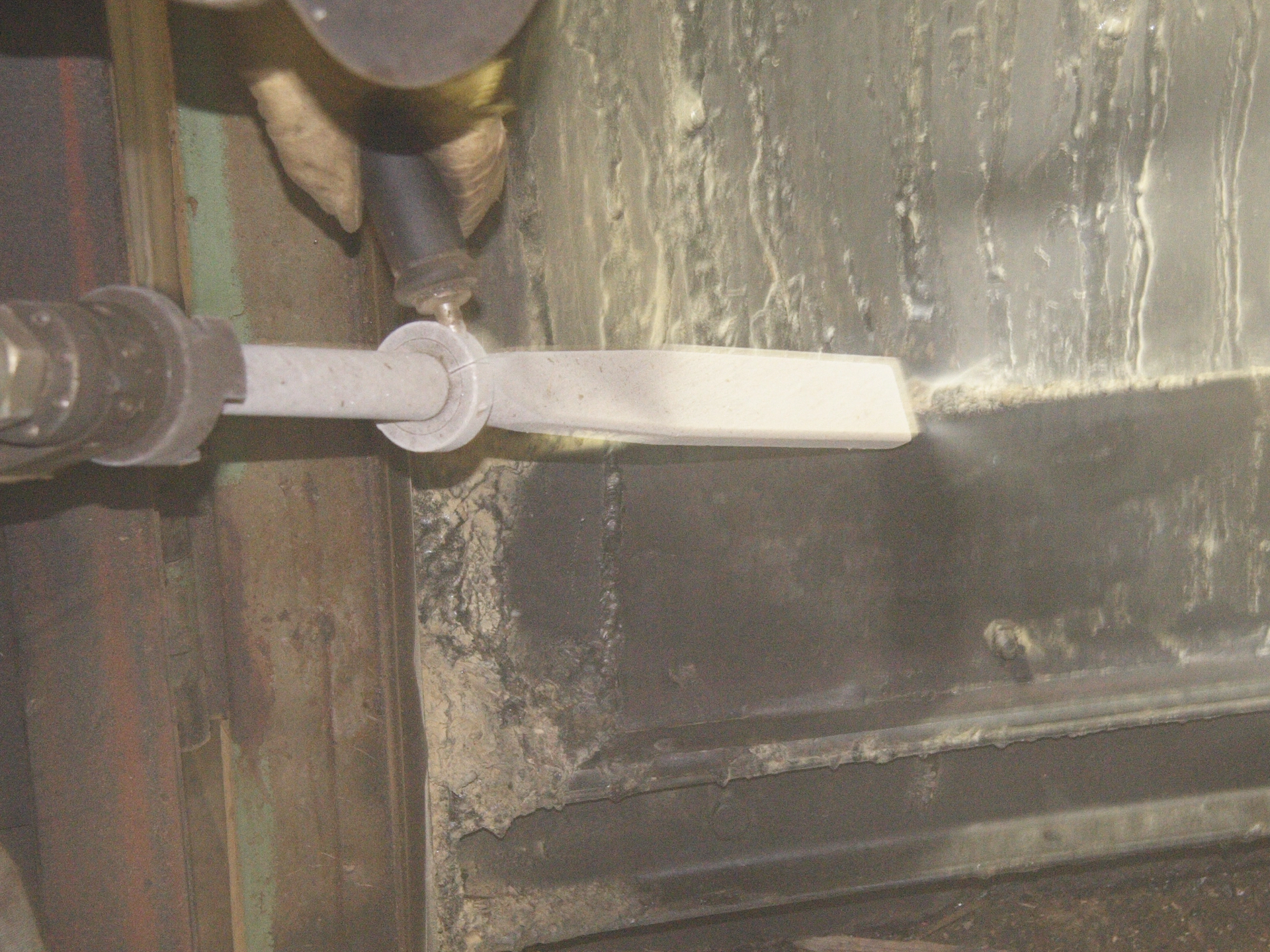
Dry ice blasting effectively cleans peeler and lathe machinery, veneer production equipment, wet scrubber components, and metal wires without damaging precision surfaces. The completely dry process eliminates moisture that can warp or damage veneer, while accessing intricate areas of cutting equipment that manual methods cannot reach, maintaining the tight tolerances required for quality veneer production.
- Cast aluminum kiln fans
- Production rollers and cylinders
- Peeler machinery and equipment
- Glue spreader rolls
- Lathe machinery
- Tipple and tray systems
- Veneer production equipment
- Veneer dryers
- Pitch-clogged steam coils
- Hot press platens
- Wet scrubber components
- Metal wires and air lines
- Bearings, shafts, and motors
- Mechanical assemblies
- Resin application systems
- Conveyor systems
- Finishing equipment
What Do Engineered Wood Manufacturers Need for Dry Ice Cleaning?
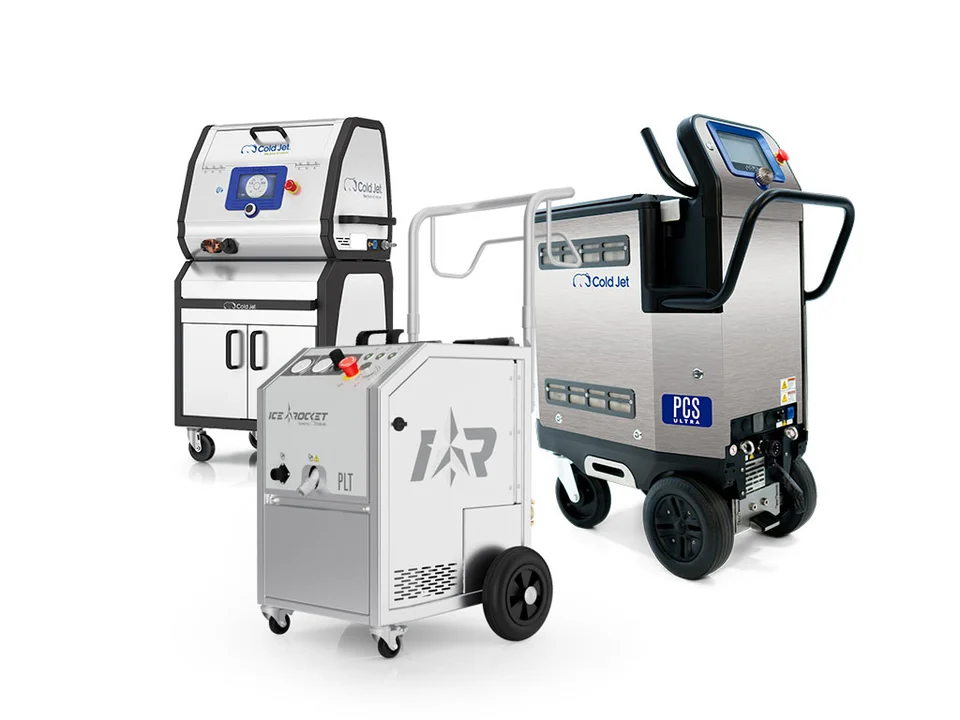
A dry ice cleaning configuration for engineered wood manufacturing relies on several key parts.
Step 01
Dry Ice Blaster
Cold Jet’s complete range of dry ice blasters gives wood manufacturers precise control for any cleaning challenge. Our patented Particle Control System (PCS®) allows you to adjust particle size and cleaning intensity—from delicate pneumatic hoses and electronics to aggressive pitch, tar, and resin removal. Each system arrives ready to operate with blast and air hoses, applicator, and application-specific nozzles.
- 01. Dry Ice Blaster — Cold Jet’s complete range of dry ice blasters gives wood manufacturers precise control for any cleaning challenge. Our patented Particle Control System (PCS®) allows you to adjust particle size and cleaning intensity—from delicate pneumatic hoses and electronics to aggressive pitch, tar, and resin removal. Each system arrives ready to operate with blast and air hoses, applicator, and application-specific nozzles.
- 02. Compressed Air — Most wood manufacturing facilities have existing filtered air systems that can supply the required compressed air.
- 03. Dry Ice Supply — A reliable supply of dry ice is needed to ensure you have dry ice when you need it. We can help you identify a dry ice supplier and recommend the amount you should order based on your needs. Once identified, establish a delivery schedule that aligns with your maintenance and production schedules.
- 04. Machine and Operator Training — To ensure your team can effectively and safely use your dry ice cleaning equipment for wood manufacturing applications, proper training is essential. Cold Jet provides a training course that equips operators with the necessary techniques and safety guidelines for optimal cleaning practices.
- 05. Personal Protective Equipment (PPE) — Always ensure your cleaning team wears the correct safety gear, including gloves, hearing protection, and eye protection when operating your dry ice blaster.
How Dry Ice Blasting Compares to Alternatives
See how dry ice blasting stacks up against traditional cleaning methods across the criteria that matter most in engineered wood production.
| Criteria | Dry Ice Blasting Best | Chemical Cleaning | Manual Cleaning | Sand Blasting | Laser Cleaning |
|---|---|---|---|---|---|
| Secondary Waste | None – sublimates to gas, no residue | High – spent chemicals and wastewater | Moderate – used solvents, rags, debris | High – spent abrasive media and dust | Low – vaporized residue needs extraction |
| Speed | Fast – cleans in-place, no cool down | Slow – soak and wipe cycles | Slow – labor intensive | Slow – masking and cleanup add time | Slow – point-by-point on large equipment |
| Equipment Damage | None – non-abrasive, no substrate damage | Possible – corrosive to some surfaces | High – scraping wears machinery | High – abrasive, erodes surfaces | Possible – heat can alter surfaces |
| Regulatory Compliance | Strong – no chemicals, non-conductive | Limited – solvent and disposal rules | Inconsistent – operator dependent | Limited – silica/dust exposure rules | Limited – VOC exposure |
| Downtime | Minimal – clean in-place, no cool down | High – disassembly and soak time | High – teardown and cool down | High – containment and cleanup | Moderate – setup per surface |
| Environmental Impact | Low – no chemicals, reclaimed CO₂ | High – hazardous chemical disposal | Moderate – solvent and debris waste | High – dust and spent media disposal | Moderate – generates VOC & energy intensive |
What Is the Best Dry Ice Blaster for Engineered Wood Manufacturing?
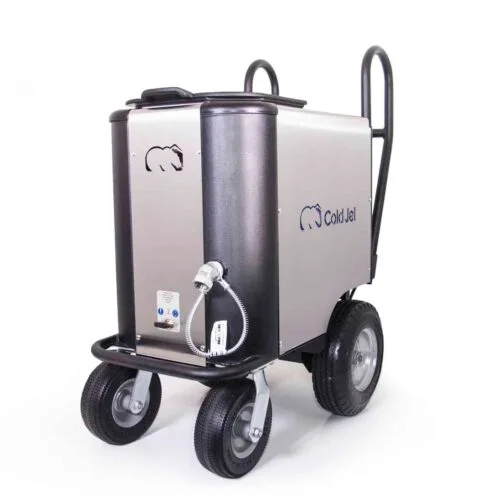
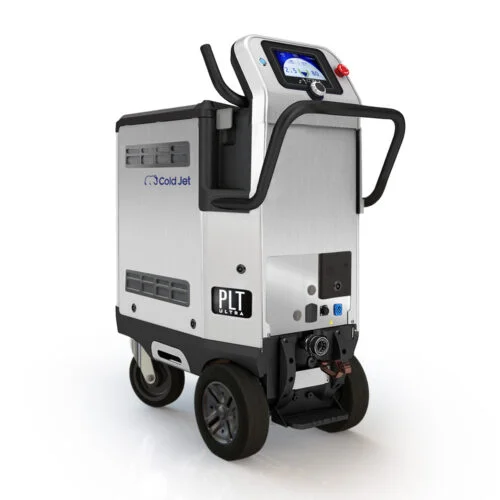
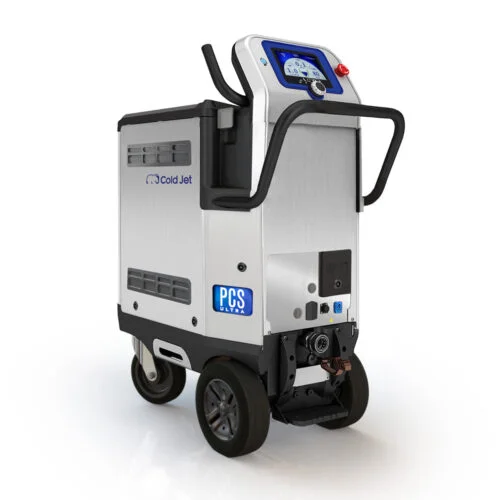
Engineered wood manufacturers choose from Cold Jet’s full lineup of dry ice blasters to match their specific production cleaning needs. Popular systems for MDF, HDF, plywood, and OSB applications include:
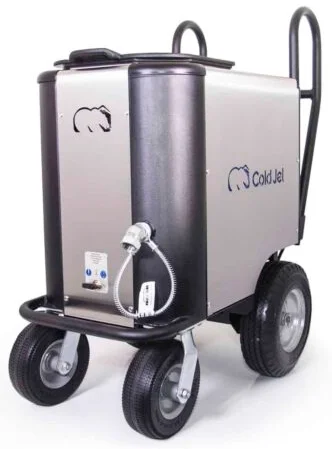
Aero® 40FP
The Aero 40 offers high-pressure performance to tackle the most stubborn pitch, pine tar, and resin deposits on kiln fans and press plates. Its specialized radial feeding system ensures consistently powerful, pulse-free blasting, which provides a uniform clean across large surface areas.
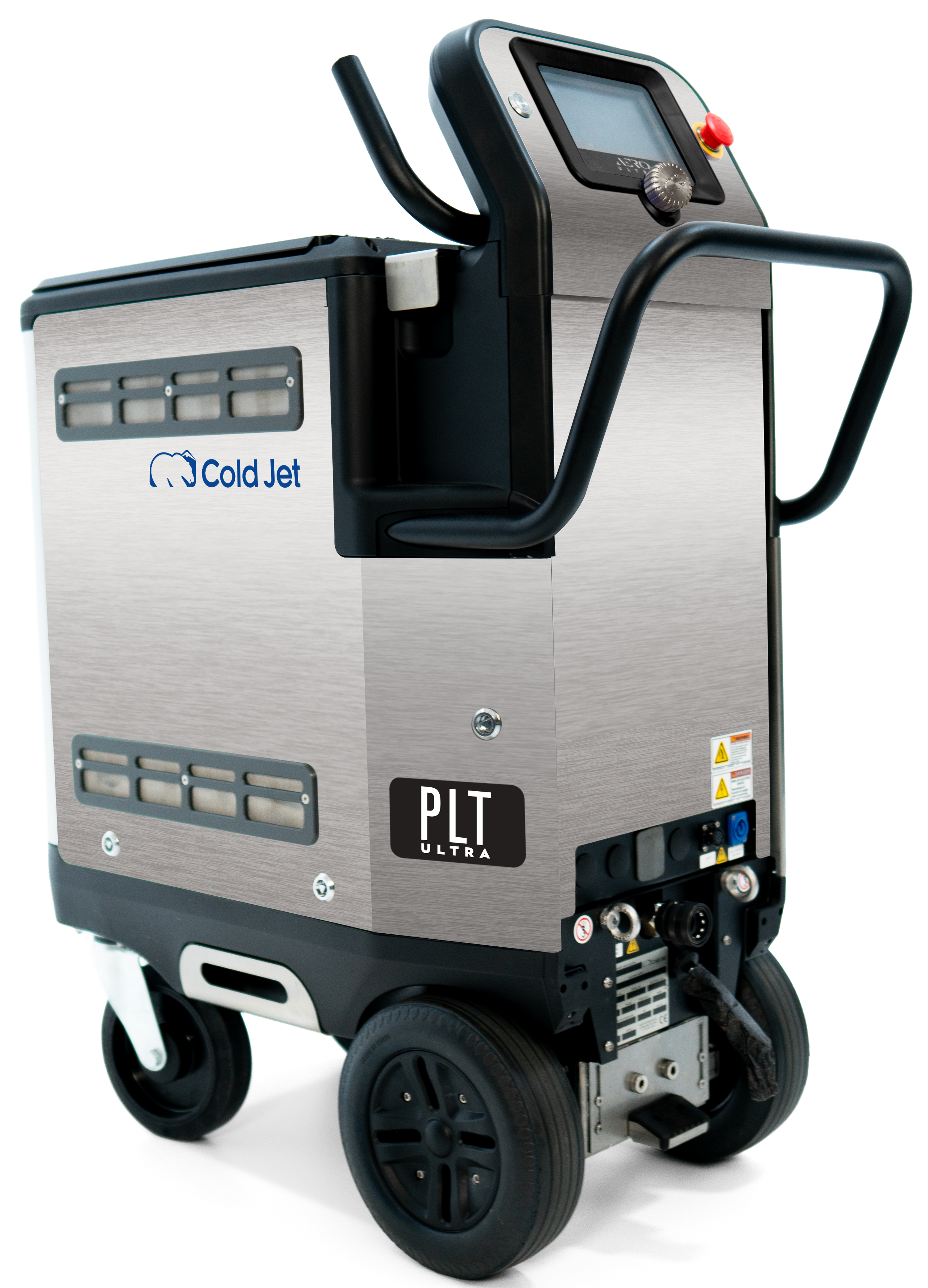
Aero2® PLT® ULTRA
The Aero2 PLT ULTRA offers exceptional cleaning speed for presses, dryers, and rollers. Designed for maximum air efficiency, the PLT ULTRA delivers high-velocity performance. Operators report the machine significantly outperforms traditional methods, reducing labor time from several hours to just a few minutes.
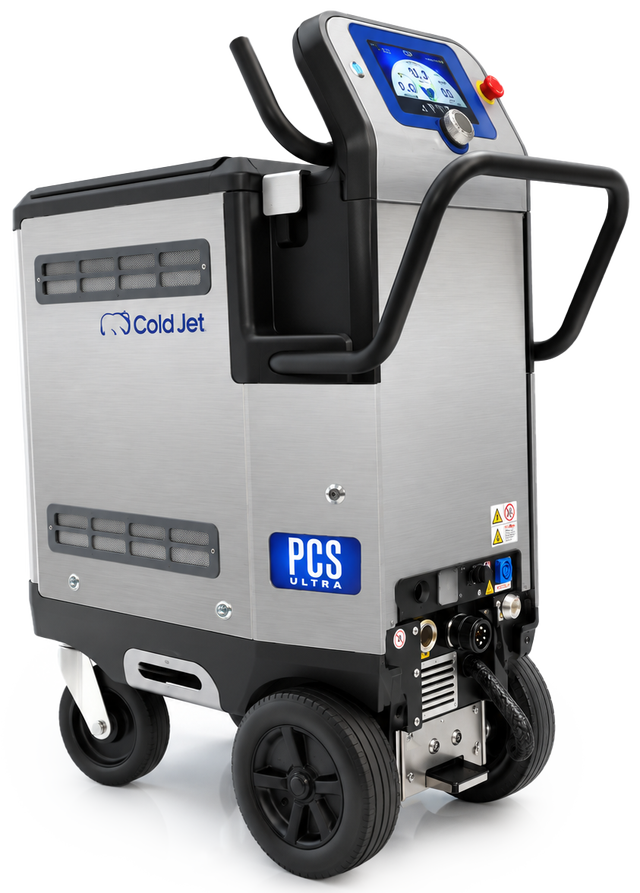
Aero2® PCS® ULTRA
The Aero2 PCS ULTRA is the most versatile solution for modern engineered wood facilities. Featuring our patented Particle Control System, this machine allows operators to dial in the exact size of dry ice needed—from 3mm pellets for aggressive resin removal on press plates to 0.3mm MicroParticles for delicate cleaning of sanding belts, sensors, and electronics. This all-in-one capability makes it the ideal solution for facilities that need to maintain both heavy machinery and sensitive automated components with a single unit.
Compare Dry Ice Blasters for Engineered Wood Production
Side-by-side specs for the Cold Jet blasters suited to engineered wood plants, so you can choose the right machine for press platens, caul plates, conveyors, and resin buildup.
| Specification | Aero® 40FP | Aero2® PLT® ULTRA | Aero2® PCS® ULTRA |
|---|---|---|---|
| Particle Control | Standard(3mm) | Standard(3mm) | Variable(0.3mm to 3.0mm, 28 sizes) |
| Controls | Analog / Standard | Digital(7" LCD, Recipes, IoT) | Digital(7" LCD, Recipes, IoT) |
| Feeder Technology | Advanced Radial Feeder | Two-Stage + Defrost Cycle | Two-Stage + Defrost Cycle |
| Application Intensity | Moderate to Aggressive | Highly Aggressive / High Power | Versatile(Precision to Aggressive) |
| Automation & Integration Capable | No | Yes | Yes |
| Hopper Capacity | 40 lbs(18 kg) | 60 lbs(27 kg) | 60 lbs(27 kg) |
Why Choose Cold Jet Machines for Cleaning in Engineered Wood Manufacturing?
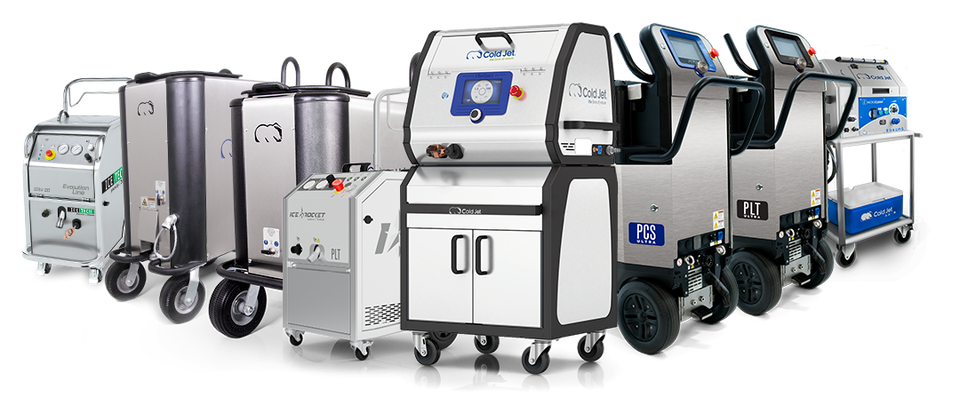
Cold Jet offers a wide range of engineered wood dry ice cleaning equipment. When incorporating dry ice blasting into your wood manufacturing cleaning processes, you need a durable and reliable machine that you can count on when production demands it. Cold Jet machines deliver faster ROI and greater value than competitors.
Engineered Wood Manufacturing Expertise
With decades of experience in the wood products and industrial cleaning sectors, Cold Jet has developed an unparalleled understanding of the critical cleaning challenges and operational demands that engineered wood manufacturers experience.
Trusted by Wood Manufacturers Worldwide
With over 24,000 dry ice cleaning machines installed worldwide, including at leading wood manufacturers, Cold Jet is the trusted solution for wood production equipment cleaning. Our global footprint ensures that your facility—no matter where it is located—has access to local parts, service, and technical expertise.
Industry Leading Reliability
Cold Jet machines are durable and engineered to thrive in demanding wood manufacturing environments. Cold Jet dry ice blasters offer unmatched reliability and a significantly longer lifespan than competitor models. Wood manufacturers rely on Cold Jet equipment for daily use across multiple production shifts in environments characterized by high vibration, fine wood dust, and extreme temperature variations near active presses.
Lower Operating Costs
Cold Jet dry ice cleaning equipment is designed for maximum efficiency, using significantly less dry ice, compressed air, and electricity than competitor machines. Wood manufacturers report up to 90% time savings, 75% labor reduction, and eliminated waste disposal costs. ROI is often achieved in under 2 years. This directly reduces your daily operating costs without compromising on the highest standards of cleaning quality or safety.
Unmatched Support and Training
Our regional technicians are readily available and bring a deep understanding of the unique needs of wood manufacturers. We offer both expert maintenance services and comprehensive equipment training to ensure your team succeeds.
Application Specific Accessories
Cold Jet offers a wide array of accessories, including nozzle extensions for deep press reach and angled nozzles for tight spaces. We will help you perfectly configure your setup for your unique operational needs, ensuring you have the right tool for every component.
Engineered wood manufacturers around the world rely on Cold Jet
With a global install base of 24,000+ that consists of companies large and small, Cold Jet delivers valuable dry ice cleaning equipment for wood manufacturing operations. Our technology is the industry standard for manufacturers who cannot afford unplanned downtime or equipment damage.


Supporting a Safer, More Sustainable Operation
Dry ice blasting helps engineered wood manufacturers improve worker safety, reduce fire risk, and meet sustainability goals without chemicals or secondary waste.
Hot Surface and Dust Exposure
Manual cleaning of presses and dryers puts employees close to hot residue, dust, and chemical solvents, creating exposure and injury risks.
Dry ice blasting is a no-contact process that eliminates manual cleaning and keeps workers away from hot surfaces, dust, and solvents.
Reduced Fire Hazard
Accumulated pitch, resin, and wood dust on presses, dryers, and vents are a significant fire risk in engineered wood plants.
Dry ice blasting removes pitch, resin, and dust buildup more frequently and thoroughly, reducing the fire hazard without introducing chemicals.
Hazardous Waste Obligations
Water and solvent-based cleaning create wastewater and hazardous waste that carry disposal and environmental obligations.
Dry ice blasting uses no water or chemicals and leaves no secondary waste stream, supporting sustainability initiatives with reclaimed CO₂.