Summary
Onsite dry ice production gives contract cleaners a reliable supply of fresh, high-density 3 mm pellets for dry ice blasting, produced on demand at a lower cost per pound than delivered dry ice. Cold Jet pelletizers deliver 12–14% better LCO₂-to-dry ice conversion efficiency than the market standard, eliminate delivery fees, reduce sublimation losses, and can turn surplus capacity into resale revenue.
What is onsite dry ice production for contract cleaners?
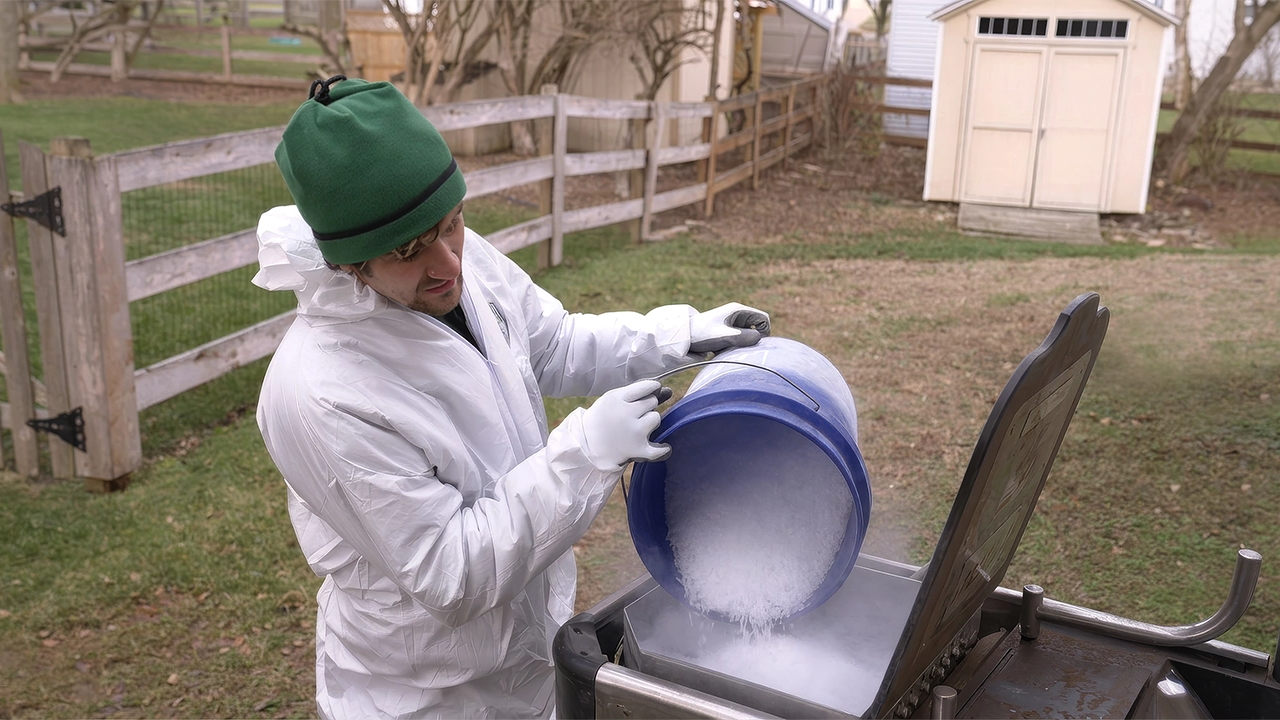
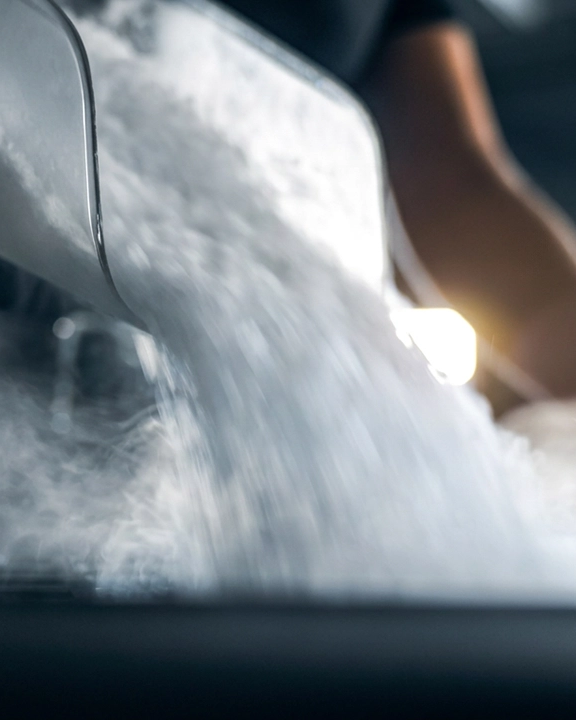
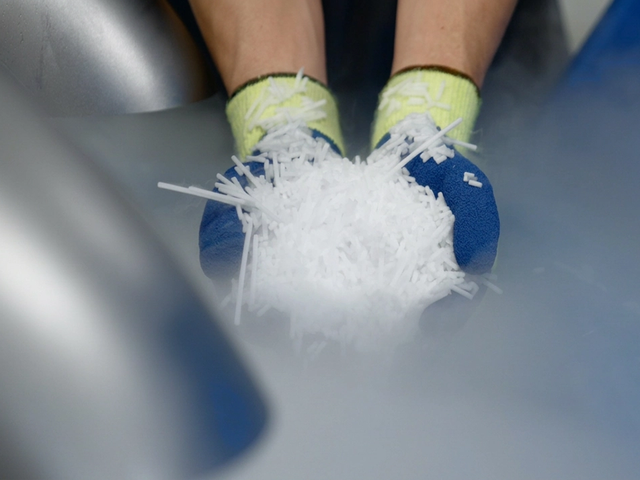
Onsite dry ice production means making your own blasting media with a dry ice pelletizer instead of buying it from a third-party supplier. Liquid CO₂ (LCO₂) is injected into the pelletizer, where it expands into dry ice snow and is compressed into dense 3 mm pellets — the exact format dry ice blasting machines are designed to use. Contract cleaners produce what they need, when they need it, so every job starts with fresh, maximum-density pellets instead of ice that has been sublimating in storage or in transit.
Why contract cleaners are bringing dry ice production in-house
Dry ice is a contract cleaner’s largest recurring consumable — and the one they control least. Relying on delivered dry ice means paying delivery fees, ordering around minimums, scheduling jobs around supplier availability, and losing weight and density to sublimation from the moment the ice leaves the production facility. Producing dry ice onsite puts supply, quality, and cost back in your hands.
24,000+
Machines installed Globally
12–14%
Better LCO₂ Conversion vs. Market Standard
176 – 3,306 lb
Max output
Lbs of Dry Ice Per Hour
80 - 1,500 kg
What Are the Benefits of Producing Your Own Dry Ice for Blasting?
Onsite production gives contract cleaners fresh, high-density dry ice on demand — at a lower cost per pound
Dry ice begins sublimating the moment it is produced, so every day between the pelletizer and the blast nozzle costs you weight, density, and cleaning performance. Contract cleaners that depend on third-party suppliers also absorb delivery fees, minimum-order requirements, and the risk of a canceled job when a delivery falls through. Producing dry ice onsite with a Cold Jet pelletizer solves all of it: you make exactly the amount you need, exactly when you need it, with the freshest and highest-density pellets available.
 Quality
Fresh, High-Density Dry Ice On Demand
Dry ice starts sublimating the moment it is made — losing weight, density, and cleaning power in storage and transit. Producing onsite means your crews always blast with the freshest, highest-density pellets available, which clean faster and more effectively than aged, delivered ice.
 Cost
Lower Cost Per Pound
Onsite production replaces a delivered price per pound with the cost of your liquid CO₂ contract plus power. Delivery fees, fuel surcharges, and minimum order quantities come off the invoice entirely. Cold Jet’s sub-cooling technology delivers 12–14% better LCO₂-to-dry ice conversion efficiency than the market standard, so less LCO₂ is consumed for every pound of blasting media produced.
 Flexibility
Supply Independence and Scheduling Flexibility
Take jobs when they come — not when a delivery window allows. Onsite production means no more scheduling projects around supplier availability, scrambling for last-minute orders, or canceling work because a shipment fell through. Emergency remediation calls and weekend jobs are no longer a supply problem.
 Efficiency
Stop Paying for Dry Ice You Never Use
Ordering delivered dry ice means guessing your needs days in advance — and paying for ice that sublimates before you use it. Producing the right amount at the right time eliminates the waste and cost of over-ordering, and the risk of running short mid-job.
 Growth
A New Revenue Stream
Your pelletizer does not have to stop at your own crews. Surplus production capacity can supply other blasting contractors, food processors, shippers, and local businesses — turning a cost center into a revenue-generating operation.
How Do Contract Cleaners Use Onsite Dry Ice Production?
Contract cleaners produce dry ice onsite to supply their own blasting crews, to sell dry ice to other businesses in their region, and to keep remote or high-volume projects fully stocked with fresh blasting media.
- 3 mm High-Density Pellets
- 12–14% Better LCO₂ Conversion
- Up to 3,306 lbs Per Hour
- Fully Automated Operation
- Cold Jet CONNECT® Enabled
Produce Fresh Dry Ice Onsite and Give Every Blasting Job Maximum Cleaning Performance
The fresher and denser the dry ice, the better it cleans. Producing your own 3 mm pellets means your crews blast with dry ice at peak density — not ice that has spent days sublimating in transit and storage.
Fresh pellets clean better
Dry ice loses mass and density continuously through sublimation. Fresh, high-density pellets deliver more kinetic energy at the surface, which means faster cleaning, lower dry ice consumption per job, and better results for your customers.
Match production to your job calendar
Produce exactly what tomorrow’s jobs require — whether that is a few hundred pounds for a single crew or a full day of production ahead of a plant shutdown. A dry ice blaster consumes roughly 88 lbs of dry ice per hour on average, so you can size daily production directly to your booked work.
Fully automated, easy to operate
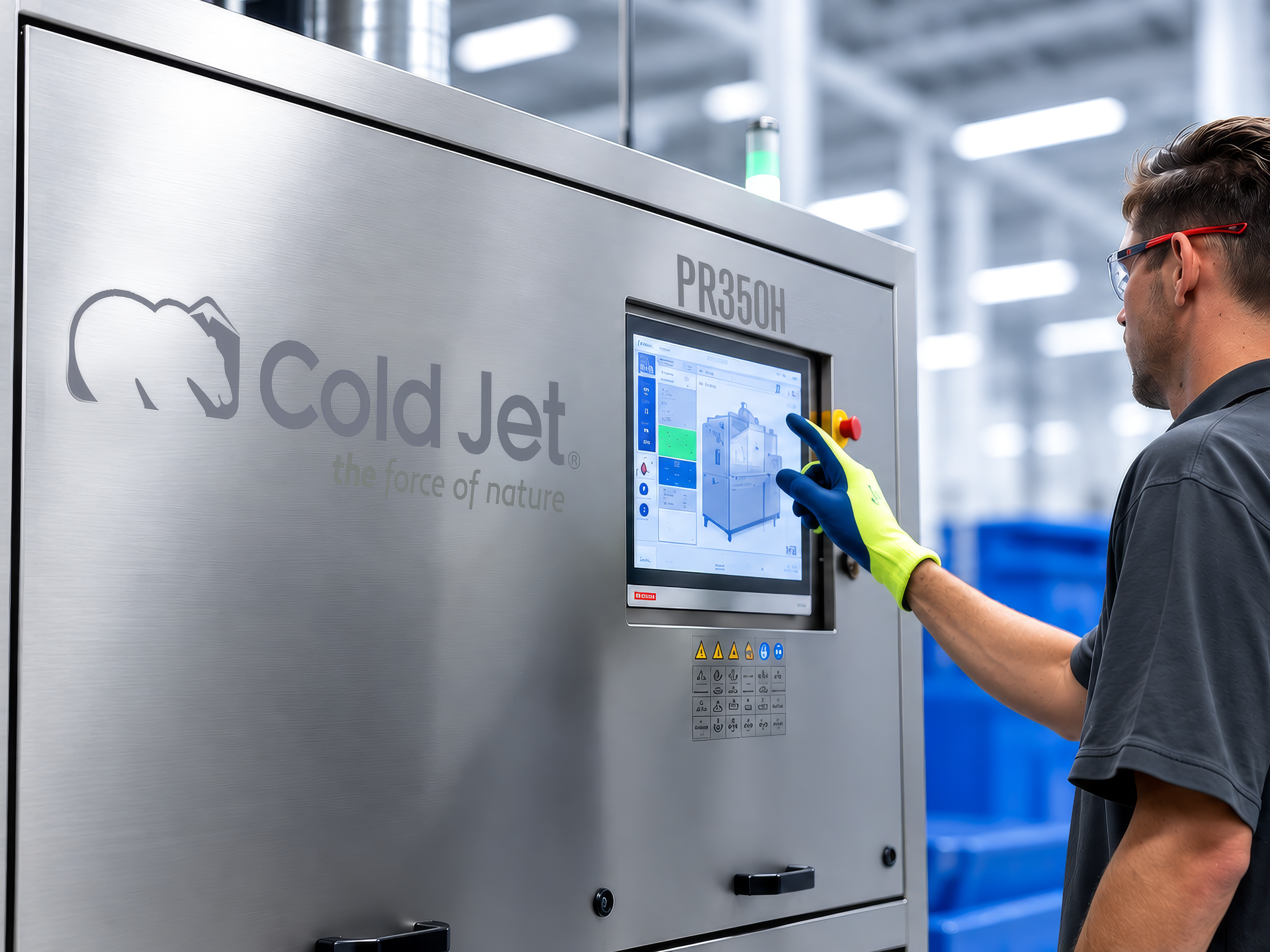
Cold Jet pelletizers are designed for one-button operation and continuous production, so any trained team member can run the machine between jobs. Cold Jet CONNECT® lets you monitor and diagnose the machine remotely.
- Food & Beverage Equipment Cleaning
- Fire, Smoke & Mold Remediation
- Historic & Building Restoration
- Automotive Detailing & Restoration
- Printing Equipment Cleaning
- Power Generation Maintenance
- Oil & Gas Equipment Cleaning
- Facility Maintenance
- Industrial Equipment Cleaning
- Mold & Tooling Cleaning
Turn Surplus Production Capacity Into a Second Revenue Stream by Selling Dry Ice Locally
A Cold Jet pelletizer can produce far more dry ice than a single blasting crew consumes. Many contract cleaners sell their surplus to other contractors and local businesses — offsetting the cost of the machine and building a standalone dry ice supply business.
Sell to blasters and beyond
Dry ice demand extends well past blasting: food processors, meat and seafood distributors, medical and lab shippers, caterers, and event companies all buy dry ice regularly. As a local producer, you can serve them all with fresh product.
Consistent quality builds repeat buyers
Cold Jet’s patented production technology makes the highest-density dry ice available, with a longer shelf life than lower-density alternatives. Customers who receive fresher, longer-lasting ice come back.
Scale production as demand grows
Start with a compact low-volume pelletizer sized for your own crews, then step up through Cold Jet’s production line — up to 3,306 lbs per hour — as your resale business grows. RE-CO2 recovery systems can further increase output from the same liquid CO₂ supply.
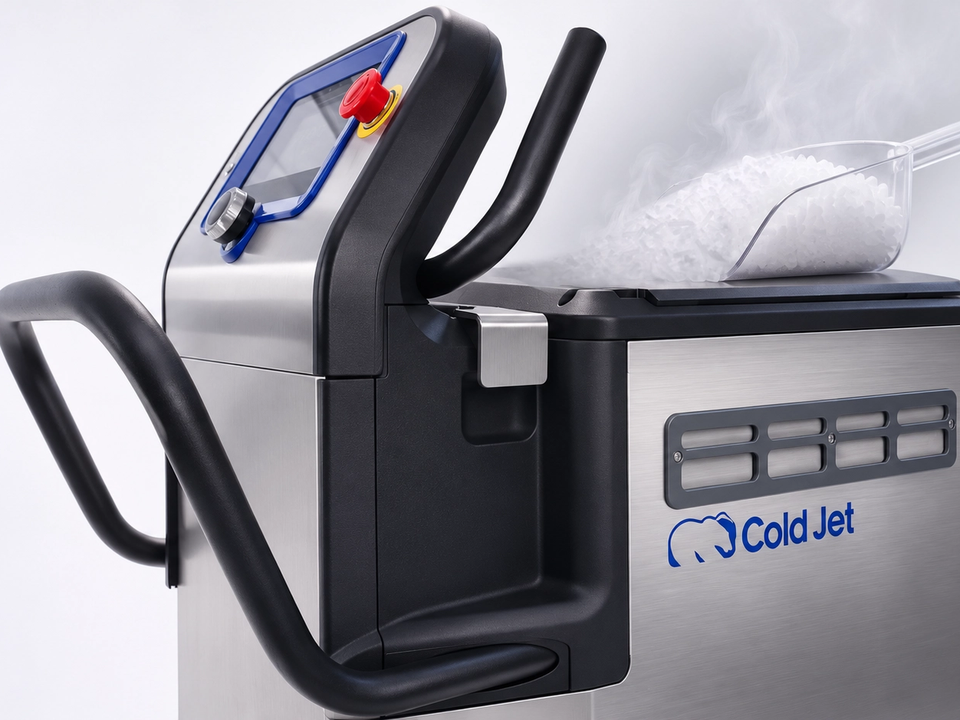
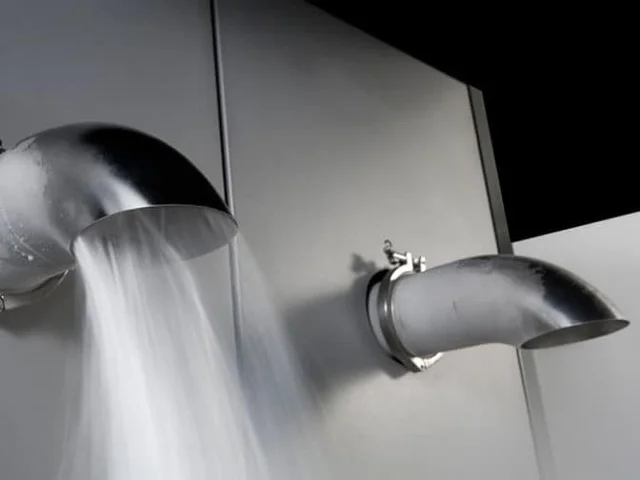
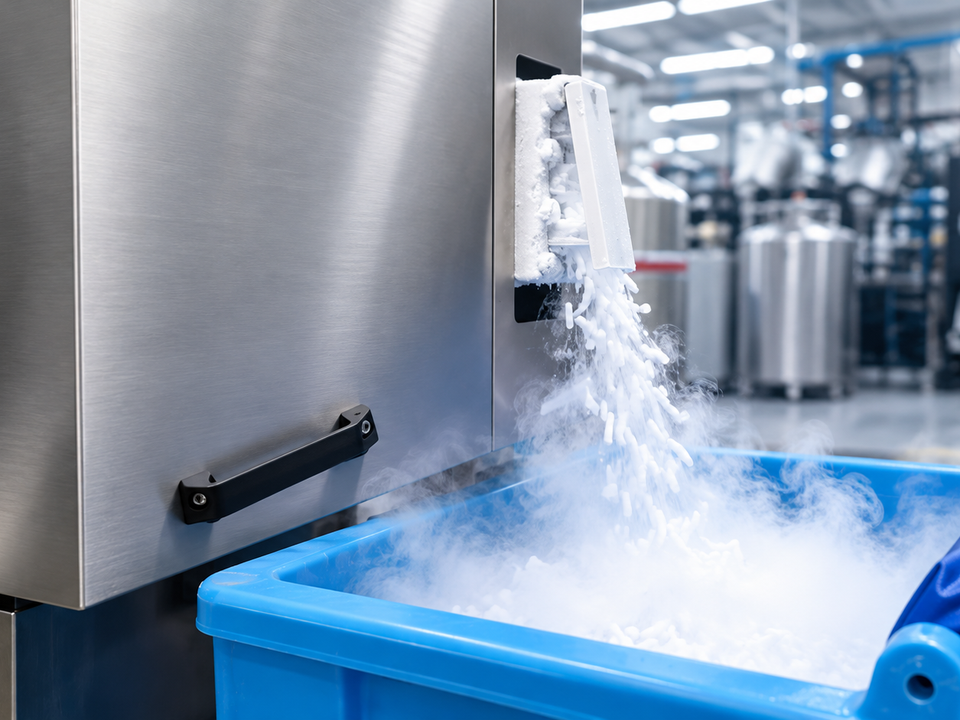
Whether you produce solely for your own blasting crews or build a regional dry ice supply business, Cold Jet’s production line scales with you — from the compact PE 80 to high-volume PR-series pelletizers, with CO₂ recovery systems that stretch every pound of liquid CO₂ further.
- Dry Ice Blasting Contractors
- Food Processors
- Meat & Seafood Distributors
- Medical & Lab Shippers
- Caterers & Event Companies
- Grocery & Food Retail
- E-Commerce Food Delivery
- Airlines & Airline Catering
- Manufacturers Using Dry Ice
- Universities & Research Labs
- Theatrical & Special Effects
What Do Contract Cleaners Need to Produce Dry Ice Onsite?
A complete onsite dry ice production setup requires supporting infrastructure beyond the pelletizer itself. When bringing dry ice production in-house, the following components are essential for a safe and efficient operation:
Step 01
CoreProduction System
Dry Ice Pelletizer
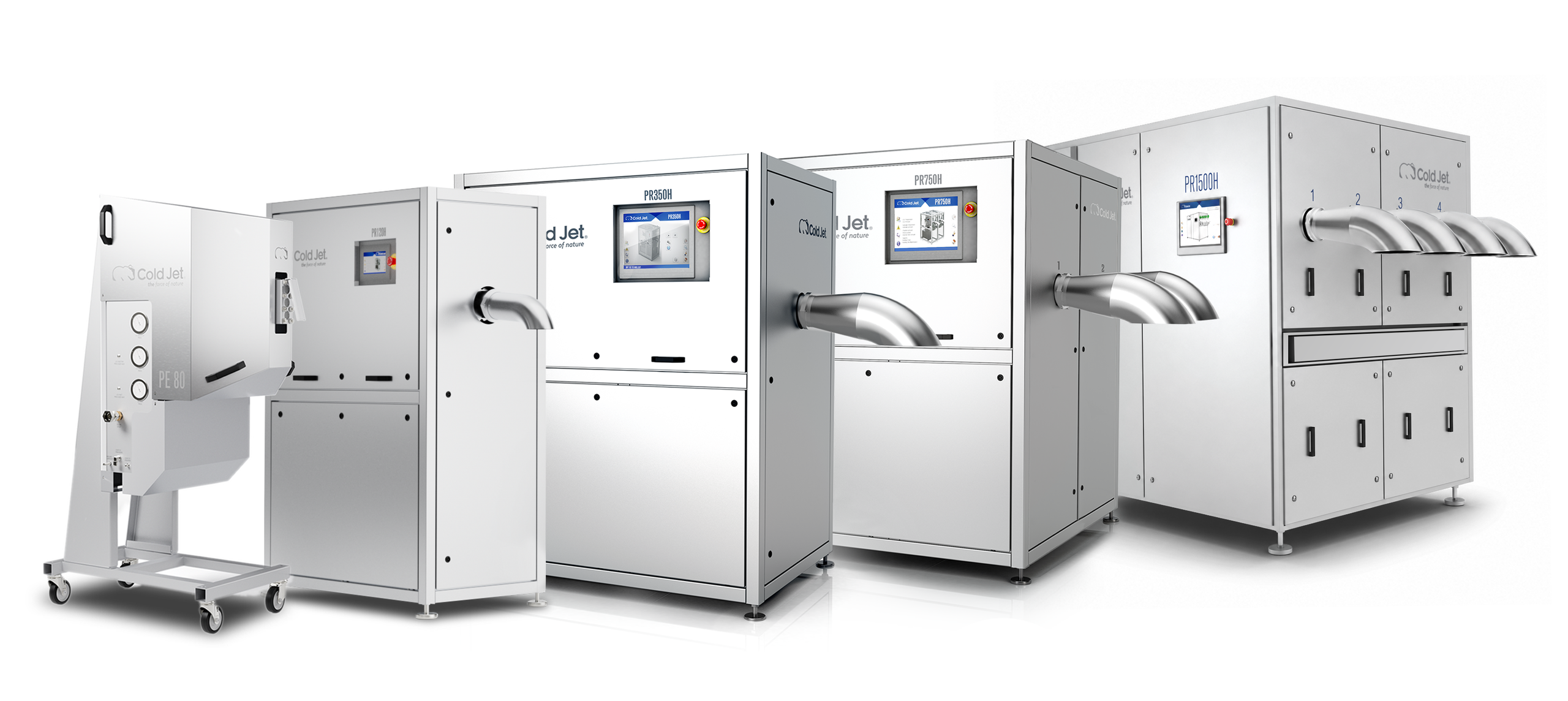
The foundation of onsite dry ice production is a reliable, easy-to-use pelletizer. Cold Jet offers a range of models — from the compact PE 80 (176 lbs/hr) to high-volume PR-series machines (up to 1,653 lbs/hr) — so you can match production capacity to your blasting workload without over-buying. Every system is fully automated for one-button operation.
- 01. Dry Ice Pelletizer — The foundation of onsite dry ice production is a reliable, easy-to-use pelletizer. Cold Jet offers a range of models — from the compact PE 80 (176 lbs/hr) to high-volume PR-series machines (up to 1,653 lbs/hr) — so you can match production capacity to your blasting workload without over-buying. Every system is fully automated for one-button operation.
- 02. Liquid CO₂ Supply and Storage — Dry ice production starts with liquid CO₂ (LCO₂), stored in an onsite reservoir and connected to the production system through insulated piping. Most LCO₂ is recovered CO₂, captured at industrial and biogas facilities and given a second life as a cooling medium. Cold Jet systems deliver 12–14% better LCO₂-to-dry ice conversion efficiency than the market standard, so more of your supply becomes sellable dry ice. If you don’t have an LCO₂ supply in place, Cold Jet can perform a site visit to determine what you need, what your investment would be, and what your payback looks like.
- 03. Power, Air, and Site Preparation — Your production area needs a three-phase electric power source, a compressed air line, a stable foundation, and enough floor space for the pelletizer, dry ice storage, and material handling. The machine should be protected from moisture and the elements.
- 04. Ventilation and CO₂ Monitoring — CO₂ displaces oxygen, so the production area must have adequate ventilation — including artificial ventilation where needed — and a CO₂ PPM monitor. Operators handling dry ice should wear proper PPE, including insulated gloves and eye protection.
- 05. Insulated Dry Ice Storage — Insulated containers minimize sublimation between production and blasting, preserving the weight and density of your pellets. Because you produce on demand, storage needs are far smaller than when stockpiling delivered dry ice.
- 06. Training and Cold Jet CONNECT® — Cold Jet provides training on safe operation of your production system, and Cold Jet CONNECT® lets you remotely monitor, diagnose, and implement corrective action from any location — keeping production running across shifts and operators.
How Onsite Production
Compares to Buying Dry Ice
See how producing dry ice onsite stacks up against traditional supply options across the criteria that matter most to contract cleaning businesses.
| Criteria | Onsite Production Best | Scheduled Delivery | Supplier Pickup | Spot / Rush Orders | Retail Dry Ice |
|---|---|---|---|---|---|
| Freshness & Density | Maximum — blast within hours of production | Reduced — sublimates in transit and storage | Variable — depends on supplier production date | Variable — whatever stock is on hand | Low — aged stock, wrong format for blasting |
| Cost Per Pound | Lowest — no delivery fees or supplier margin | Moderate — plus delivery fees and minimums | Moderate — plus your drive time and fuel | Highest — rush premiums | High — retail markup |
| Supply Reliability | Full control — produce whenever needed | Dependent on supplier schedule and capacity | Dependent on supplier hours and stock | Uncertain — availability not guaranteed | Limited quantities, not blasting grade |
| Scheduling Flexibility | Take jobs anytime — nights, weekends, emergencies | Jobs planned around delivery windows | Jobs planned around pickup runs | Emergency jobs at risk | Not viable for professional blasting |
| Waste | Minimal — produce only what each job needs | High — over-ordering plus sublimation loss | Moderate — sublimation during transport and storage | Moderate — excess from minimum orders | High — fast sublimation of low-density ice |
| Revenue Opportunity | Yes — sell surplus dry ice locally | None | None | None | None |
What Is the Best Dry Ice Pelletizer
for Contract Cleaners?
Cold Jet offers a range of dry ice pelletizers so you can match production capacity to your blasting workload — from compact low-volume units to high-volume systems that support resale. Every machine produces the high-density 3 mm pellets that dry ice blasters are designed for.

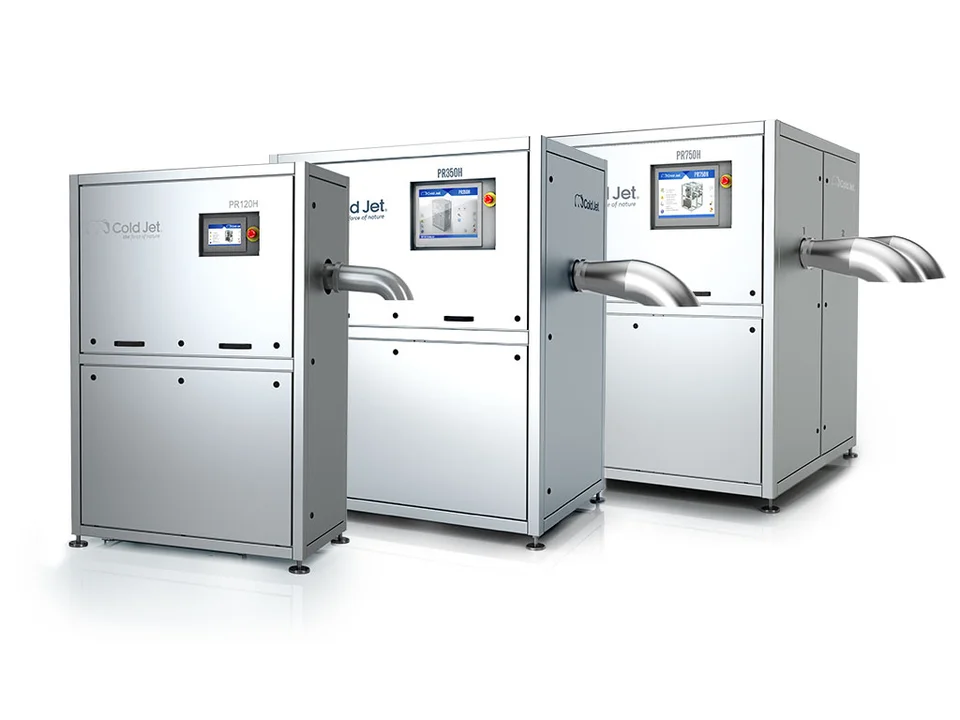
PR350H
The PR350H produces up to 771 lbs (350 kg) of dry ice per hour — built for contract cleaners scaling into a regional dry ice supply business alongside their blasting services.
- Up to 771 lbs (350 kg) per hour
- High-volume production line
- Built for regional resale supply
- Continuous production capability

PR120H
The PR120H produces up to 264 lbs (120 kg) of fresh, high-quality dry ice per hour — enough to keep multiple blasting crews supplied while building a surplus for local resale.
- Up to 264 lbs (120 kg) per hour
- High-volume production line
- Supplies multiple blasting crews
- Supports resale volume
PE 80
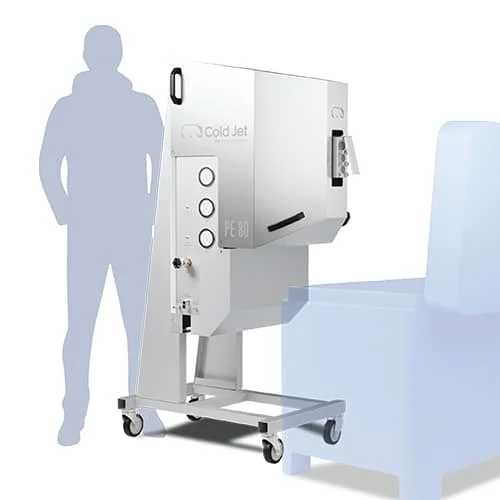
The PE 80 is the ideal entry point for contract cleaners taking control of their dry ice supply. This compact, low-volume pelletizer produces up to 176 lbs (80 kg) of high-density 3 mm pellets per hour — roughly double what a single dry ice blaster consumes.
- Up to 176 lbs (80 kg) per hour
- Compact, low-volume footprint
- High-density 3 mm pellets
- Ideal first pelletizer for contractors
How Do These Three Pelletizers Compare?
Side-by-side specs for the Cold Jet pelletizers best suited to contract cleaners — so you can match production capacity to your blasting workload and resale plans.
Regional resale scale
Multiple crews + starting resale
Compact entry point
| Specification | PR350H | PR120H | PE 80 |
|---|---|---|---|
| Production | |||
| Production Capacity | Up to 772 lbs/hr(350 kg/hr) | Up to 265 lbs/hr(120 kg/hr) | Up to 176 lbs/hr(80 kg/hr) |
| Blasters Supported (at ~88 lbs/hr each) | ~8 machines | ~3 machines | ~2 machines |
| Pellet Sizes | 3, 6, 10, or 16 mm | 3, 10, or 16 mm(others on request) | 1.7, 2.2, 3.0, 8.0, or 16.0 mm |
| LCO₂ Conversion (Sub-Cooling) | 12–14% better than market standard | 12–14% better than market standard | Not published |
| Best For | Regional dry ice supply business | Multiple crews + starting resale | Supplying your own crews |
| Machine Controls | |||
| Operation | Fully automated, one-button; 15" touchscreen | Fully automated, one-button; 7" touchscreen | Simple, user-friendly controls |
| Start-Up Time | Less than 3 minutes | Less than 5 minutes | Minutes |
| Cold Jet CONNECT® | Yes | Yes | Not published |
| Installation | |||
| LCO₂ Supply Options | Fixed tanks | Fixed tanks | Fixed tanks, or micro bulk(15–18 bar) |
| Dimensions (L x W x H) | 59" x 39" x 71" | 45.3" x 25.6" x 68.4" | 23.6" x 39.3" x 61.4" |
| Weight | 3,340 lbs(1,515 kg) | 1,552 lbs(704 kg) | 447.5 lbs(203 kg) |
| Mobility | Stationary | Stationary | Caster wheels or wall-fixed |
“—” indicates a spec Cold Jet has not published for this model — contact a Cold Jet specialist to confirm fit for your operation.
Why Invest in Cold Jet Machines
for Your Dry Ice Production
If you run a contract cleaning or dry ice blasting business, investing in a Cold Jet dry ice pelletizer transforms your largest recurring consumable cost into a controlled, in-house operation — and can turn surplus production capacity into a new revenue stream.
When evaluating this capital investment, consider both the return on investment (ROI) from eliminating delivery fees and sublimation waste, and the revenue potential of supplying dry ice to other businesses in your region.
Highest-Density Dry Ice Available
Cold Jet’s patented production technology makes the highest-quality, highest-density dry ice on the market — pellets that clean more effectively and last longer in storage.
The Global Market Leader
With more than 24,000 machines installed globally, Cold Jet is the pioneer and clear leader in both dry ice blasting and dry ice production technology — a single partner for your entire dry ice operation.
12–14% Better LCO₂ Conversion
Our proprietary sub-cooling technology uses waste gas to pre-cool incoming liquid CO₂, converting it to dry ice 12–14% more efficiently than other systems. Every pound of LCO₂ you buy goes further, cutting the cost of every blasting job and leaving more dry ice to sell.
Fully Automated, Continuous Operation
One-button operation and continuous production capability mean any trained team member can run the machine — across shifts, without specialized operators, in the most demanding environments.
Industry Leading Support and Training
Regional service technicians and 24/7 customer support keep your production running, while Cold Jet CONNECT® lets you remotely monitor, diagnose, and implement corrective action from any location.
Expert Consultancy and Custom Solutions
From site visits that scope your LCO₂ supply and infrastructure to CO₂ recovery systems that stretch your input further, Cold Jet designs, delivers, and deploys the right production setup for your business.
Businesses around the world rely on Cold Jet for their dry ice supply
With a global install base of 24,000+ machines across companies large and small — Cold Jet delivers real value to contract cleaners, blasting service providers, and dry ice producers.


Safety and Quality Standards
We Help You Meet
Producing and handling CO₂ safely is straightforward with the right equipment and site design. Cold Jet helps contract cleaners set up production operations that align with recognized CO₂ safety and quality standards.
CO₂ Occupational Exposure Limits
OSHA sets permissible exposure limits for carbon dioxide in the workplace, requiring employers to keep CO₂ concentrations within safe levels in areas where dry ice is produced, stored, and handled.
Cold Jet production setups are designed around proper ventilation and CO₂ PPM monitoring, so concentrations in your production and storage areas stay within occupational exposure limits.
Commodity Specification for Carbon Dioxide
The Compressed Gas Association’s specification defines quality grades for carbon dioxide, including the purity requirements for CO₂ used in commercial and food-contact applications.
Cold Jet pelletizers convert your sourced liquid CO₂ into dry ice without introducing contaminants — so the grade of dry ice you produce matches the grade of LCO₂ you source.
Food-Contact Carbon Dioxide Requirements
Contract cleaners serving food and beverage facilities — or selling dry ice for food cooling and shipping — need dry ice made from food-grade CO₂ that meets FDA requirements for food-contact use.
When supplied with food-grade liquid CO₂, Cold Jet systems produce dry ice suitable for food-contact applications — supporting your work in food plants and any resale into food cooling and shipping.
European CO₂ Safety Guidelines
The European Industrial Gases Association publishes guidance on the safe storage, handling, and use of carbon dioxide and dry ice, widely referenced by producers operating in Europe.
Cold Jet’s global install base spans European production facilities, and our site assessments help operators align tank installation, pipework, and ventilation with recognized CO₂ safety guidance.
Personal Protective Equipment
Dry ice is extremely cold (-109°F / -78.5°C), and OSHA requires employers to assess hazards and provide appropriate PPE for workers handling it.
Cold Jet training covers safe dry ice handling, including required PPE such as insulated gloves and eye protection — and automated production and material handling minimize direct operator contact with dry ice.