
Overview
Summary
Dry ice lets fresh seafood exporters take most or all of the water ice out of an export box. Dosed on top of a reduced layer of flake ice, or directly onto the inner liner for fillet, dry ice sublimates and supercools the pack, so the fish becomes its own refrigerant and holds temperature for up to 144 hours. A typical fresh fillet box loses about 4 kg of shipping weight, there is no melt water, and the fish shows no clouded eyes, no skin burn, and no gill discoloration.
What is dry ice supercooling for fish export?
Dry ice supercooling is a fresh seafood packing method in which solid CO₂ pellets or slices are dosed into the export box on top of a reduced quantity of flake water ice, or directly onto the inner liner for fillet. The dry ice sublimates from solid to gas over roughly 4 to 6 hours, transferring cold energy into the flake ice and the product rather than melting into it. Warmer product drives faster sublimation, which gives the pack the capacity to rapidly chill fish that goes into the box warm and then hold it there. After about 10 hours the product temperature is even throughout the box and the fish itself carries the shipment, with temperatures maintained for up to 144 hours. Because the dry ice has largely sublimated before dispatch, it does not add chargeable weight at the airport scale, and because it leaves no melt water it eliminates bio pollution on road freight. Fresh fillet is typically dosed with dry ice alone on top of the inner liner, with no water ice and no gel ice. Head-on gutted (HOG) fish is dosed with roughly 1 kg of flake ice with dry ice on top. Norwegian salmon exporters using this method report transport cost reductions of 2 to 3 NOK per kilogram of fish shipped by air, and carbon footprint reductions of up to 40 kg of CO₂ per 20 kg box on lanes to the US and Asia.
Challenge
Why fresh fish export needs less ice, not more
Every kilogram of flake water ice in an export box is paid for twice, once as chargeable weight at air freight rates and again in carbon footprint. It melts through the journey, leaves melt water in the box and on the truck, and still cannot extend the cold chain far enough for a long haul to Asia without adding more weight. Dry ice breaks that trade-off. It supercools a smaller quantity of flake ice so the pack lasts longer, slows microbial growth by holding lower temperatures in a drier, CO₂ rich box, and sublimates away before the pallet is weighed.
Up to 144 Hours
Temperature Held in Transit
4 kg
Average Weight Removed Per Box
None
Melt Water in Transit
Recycled CO₂
Cooling Media
Benefits
What Are the Benefits of Dry Ice in Fresh Fish Export?
Dry ice supercools flake ice, so you ship less water, less weight, and better quality fish
Traditional fresh export packs a box with flake water ice. The ice melts steadily through the journey, melt water pools in the box or leaks onto the road freight, and every kilogram of that ice is paid for at air freight rates. Exporters who want longer cold chain reach have only one lever, which is to add more ice, and that adds more weight and more cost.
Dosing dry ice on top of a reduced quantity of flake ice changes the math. The dry ice sublimates and transfers its cold energy into the flake ice and the product, so the flake ice lasts longer and the fish becomes its own refrigerant for the rest of the shipment. Box weight falls by roughly 4 kg on a typical fresh fillet box, the dry ice has largely sublimated by the time the pallet reaches the airport scale, and there is no melt water to manage on European road freight.
 Cost
Lower Box Weight and Lower Freight Cost
Fresh export boxes are dominated by water ice. Supercooling a reduced layer of flake ice with dry ice removes an average of 4 kg from a fresh fillet box, and because the dry ice sublimates before dispatch it is not weighed at the airport scale. Exporters shipping salmon from Norway to the US and Asia report savings of approximately €5 per box, or 2 to 3 NOK per kilogram of fish shipped.
 Quality
Better Quality With No Cosmetic Damage
Lower and more stable temperatures slow microbial growth, and a drier, CO₂ rich box limits oxidation and wrinkling. Used correctly alongside flake ice, dry ice does not cloud the eyes, burn the skin, or discolor the gills. Product arrives with even temperature throughout the box rather than a cold top layer and a warmer center.
 Cold Chain
Up to 144 Hours of Stable Temperature
Dry ice gives the pack capacity to rapidly chill product that enters the box warm, then hold it at temperature for the length of the journey. Shipments have been maintained at temperature for up to 144 hours, which opens fresh air freight lanes to the US and Asia that flake ice alone cannot reach.
 Environmental
Lower Carbon Footprint and No Bio Pollution
Shipping less water means shipping less carbon. Removing 4 kg of water ice per box reduces the carbon footprint by up to 40 kg of CO₂ per 20 kg box on Norway to US and Asia lanes, and dry ice produced from recycled CO₂ adds no new carbon to the atmosphere. Because dry ice sublimates rather than melts, there is no melt water and no bio pollution on European road freight.
 Control
In-House Production and Automated Dosing
Making dry ice on site lowers the cost per kilogram, removes delivery scheduling and third party sublimation loss from the equation, and lets you produce on demand against the day's packing schedule. Dosing scales with you, from manual scooping through recipe controlled entry level systems to fully automated dosing that detects each box and doses a programmed quantity at up to 16 boxes per minute.
Applications
What Can Dry Ice Cool in Fresh Fish Export?
Dry ice is used across fresh seafood export, from fillet boxes dosed with dry ice alone to head-on gutted fish packed with a reduced layer of supercooled flake ice. It works on air, road, and sea freight.
Validated For
- Fresh Fillet
- Head-On, Gutted (HOG)
- Air Freight
- Road and Sea Freight
- Accepted in the EU, US, and Asia
Ship Fresh Fillet With Dry Ice Alone and Take Water Ice Out of the Box Entirely
Fillet does not need a layer of flake ice.
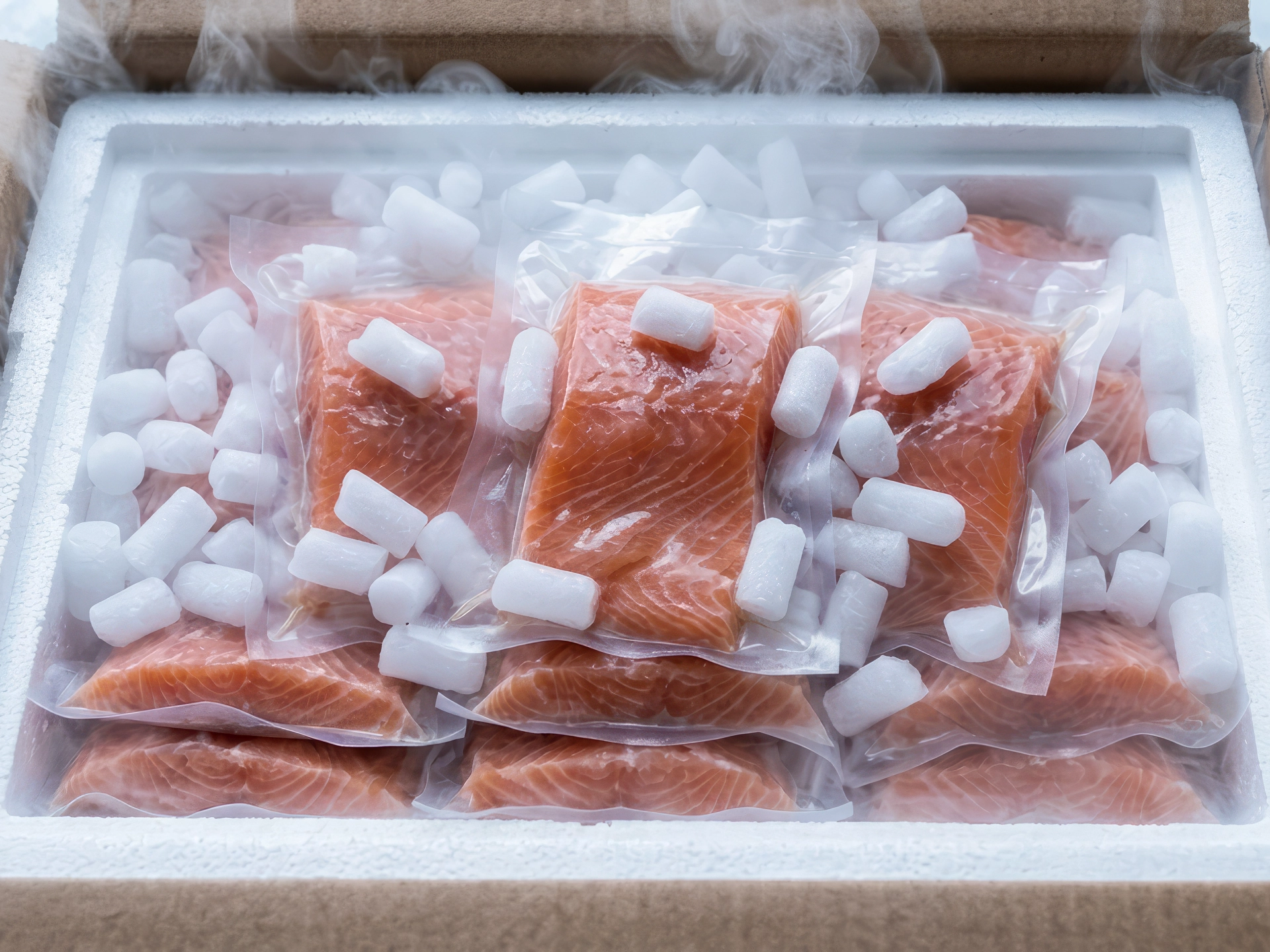
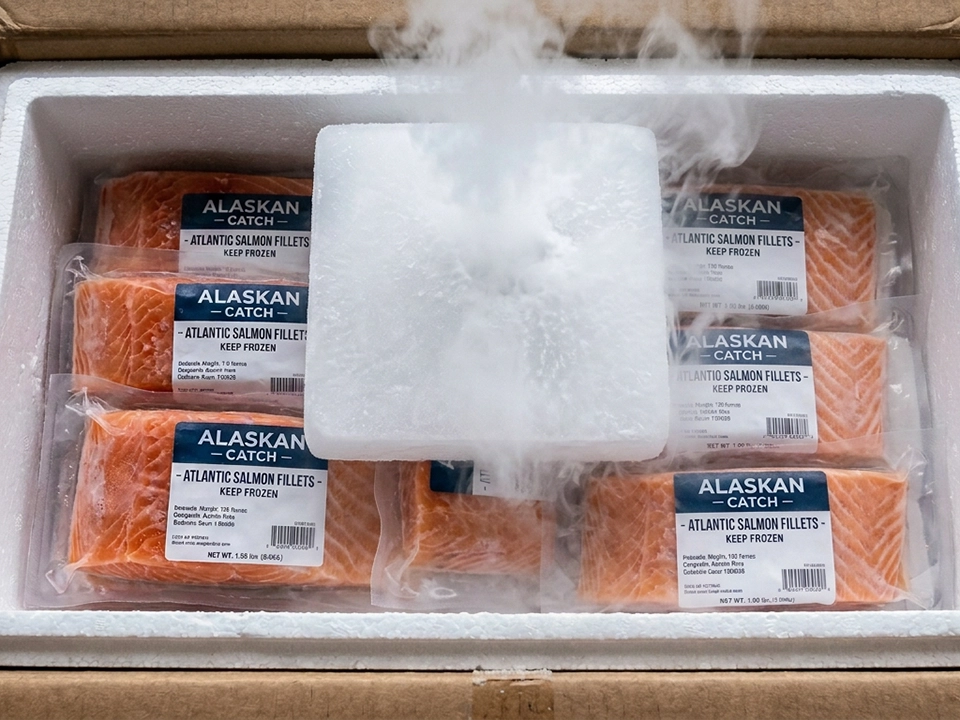
Fillet does not need a layer of flake ice. Wrapped in its inner liner and dosed with dry ice on top of the bag, fillet ships with no water ice and no gel ice at all.
Dose directly onto the inner liner
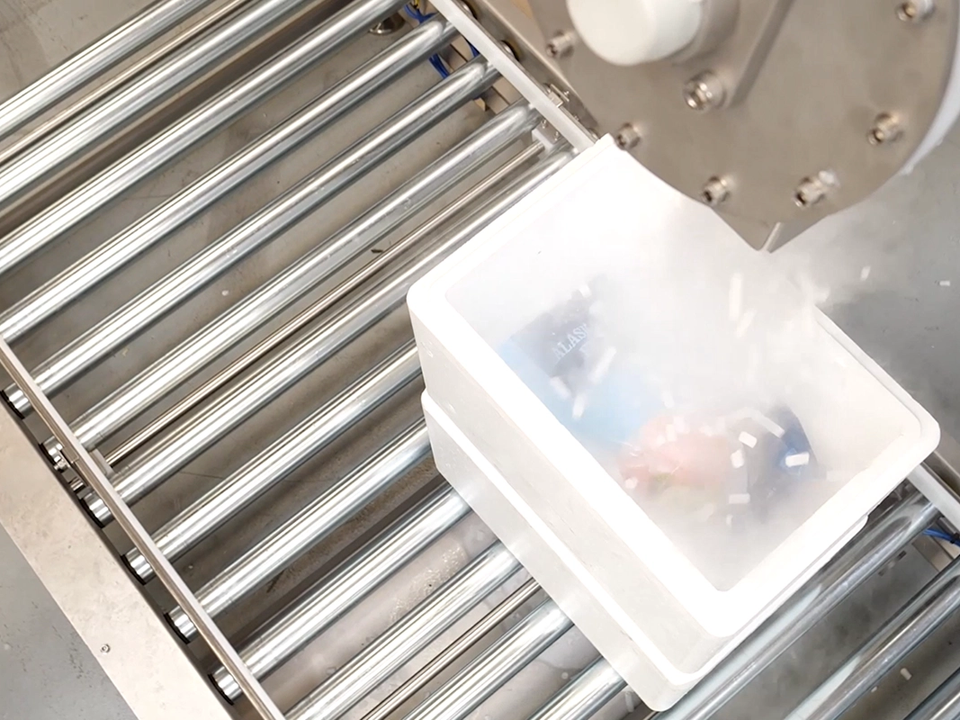
Fillet is wrapped in the inner liner, dry ice is dosed directly on top of the bag, and the lid is applied, strapped, and stacked. There is no water ice and no gel ice in the box. Shipments dosed with around 600 g of dry ice have been received and accepted by buyers in Asia.
Fit more fillet in the same box
Removing the flake ice layer frees space. Exporters pack more fillet per box and add a layer to the pallet, which matters most on internal truck shipments. The same space saving supports the move to closed boxes that leave less room for cooling media, and absorbent pads can often be reduced or removed entirely.
No melt water, no bio pollution
Dry ice sublimates to gas rather than melting. There is no water pooling in the box, no leakage onto European road freight, and no bio pollution for the receiver to manage.
Packaging and Freight Formats
- EPS Export Boxes
- Closed Solid Boxes
- Inner Liner Bags
- Reduced or Removed Absorbent Pads
- Palletized Air Freight
- European Road Freight
- Sea Freight
- Reusable Crates
- Bulk Tubs
- Last-Mile Delivery Boxes
Supercool Flake Ice With Dry Ice to Protect HOG Quality and Cut Shipping Weight
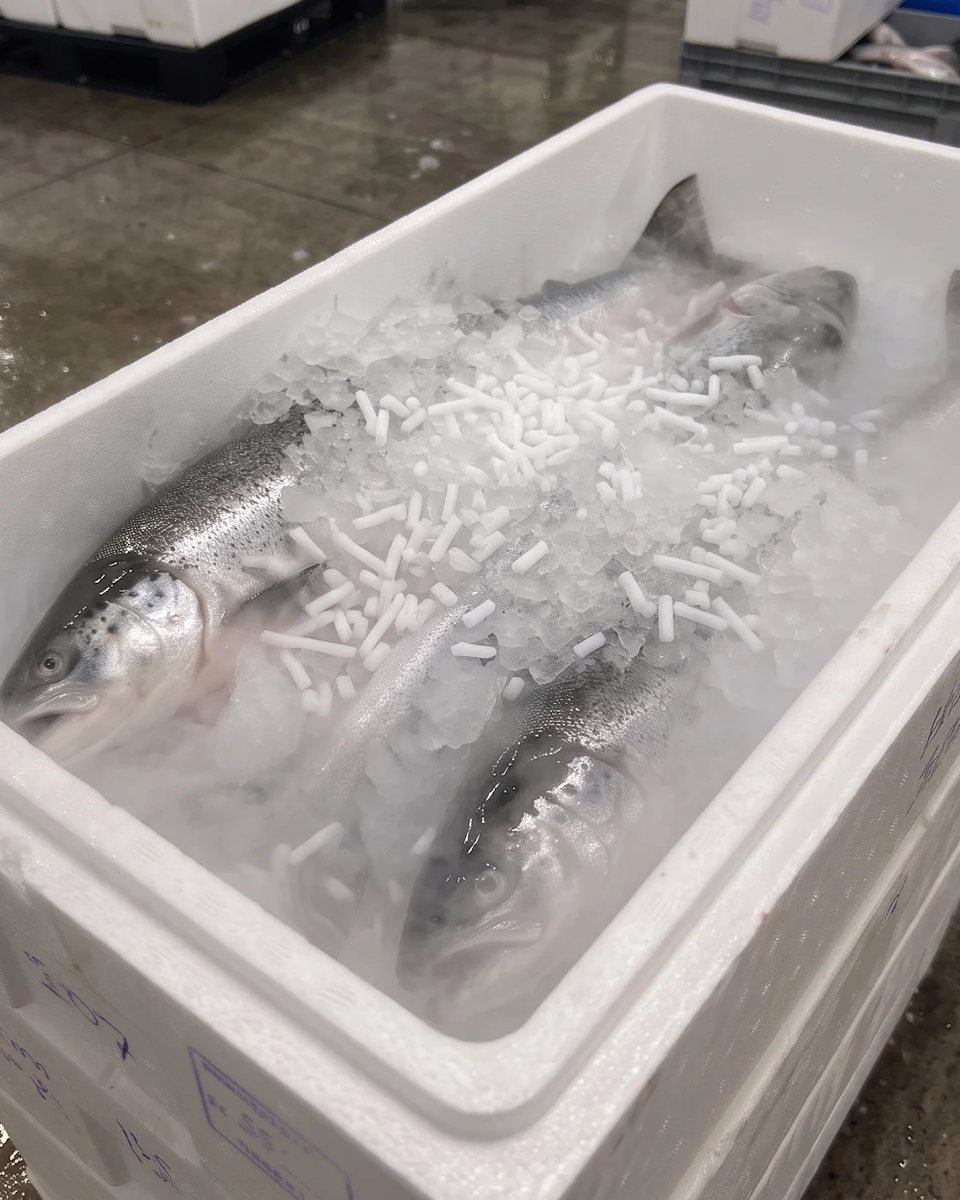
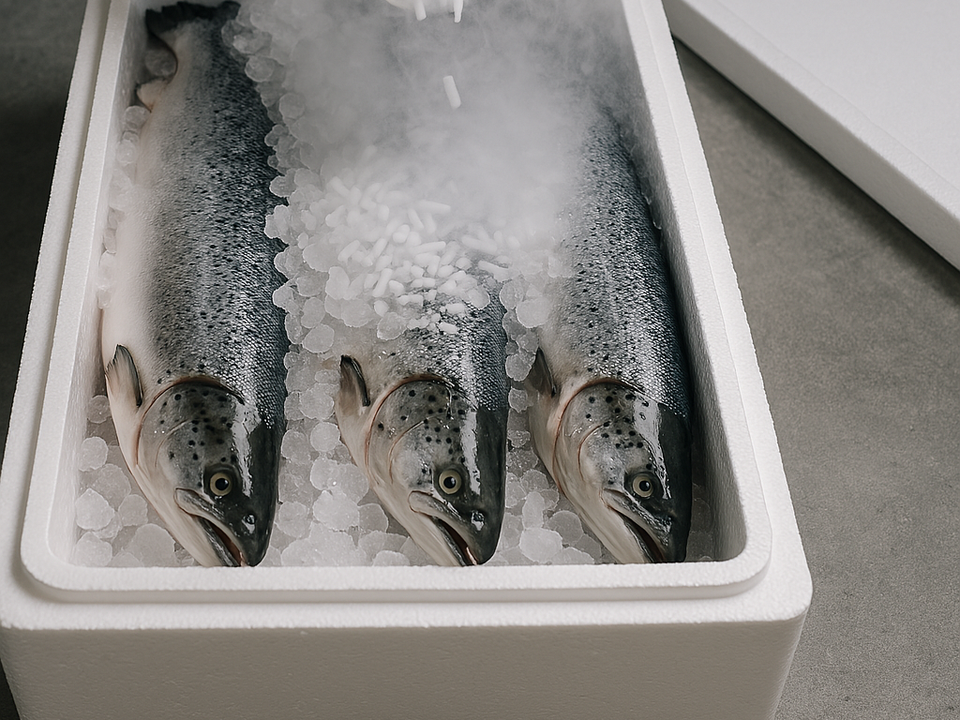
Head-on gutted fish still ships with flake ice, just far less of it. Dry ice dosed on top of a reduced flake layer supercools that ice so it lasts the journey.
A reduced flake layer, supercooled
Approximately 1 kg of flake water ice is dosed on top of the HOG, dry ice is dosed on top of the flake ice, and the lid is applied, strapped, and stacked. The dry ice loses its own weight as it sublimates while keeping the flake ice frozen. In one shipment to Asia, 500 g of dry ice on 1 kg of flake ice left 800 g of that ice still frozen on arrival.
No damage to eyes, skin, or gills
The most persistent myth about dry ice in seafood export is cosmetic damage to the fish. Used correctly with flake ice, dry ice does not cloud the eyes, burn the skin, or discolor the gills. Buyers in the US and Asia are increasingly requesting dry ice shipments for exactly the quality and sustainability reasons that myth obscured.
Rapid chill, then hold
Dry ice sublimates faster against warmer product, which gives the pack capacity to pull down fish that goes into the box warm and then hold it. After roughly 10 hours the temperature is even across the box, and the fish carries the shipment for up to 144 hours.
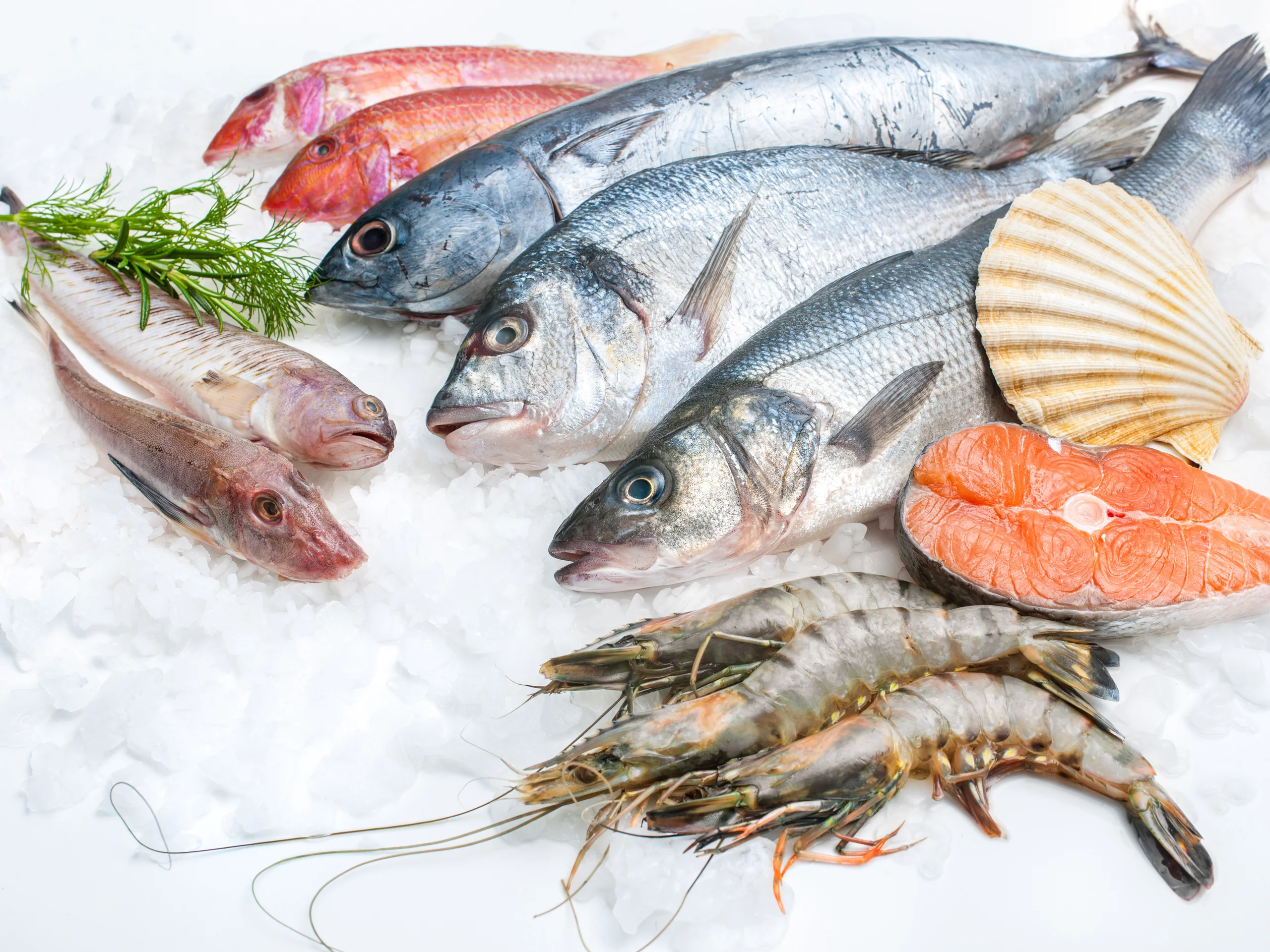
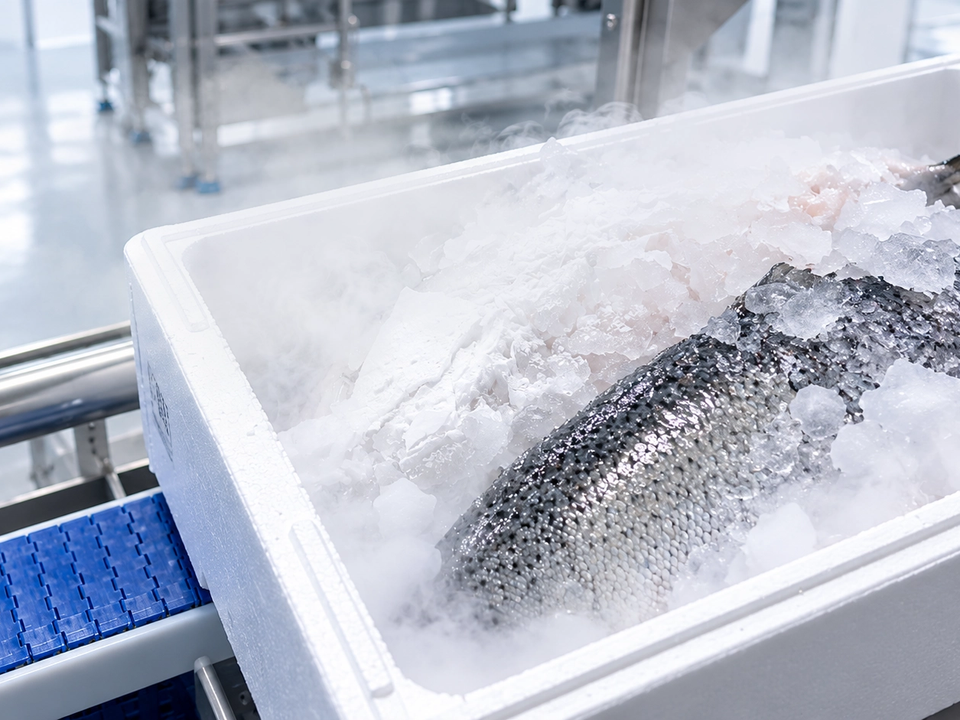
Dry ice cooling is proven at scale in fresh salmon export, with thousands of tonnes shipped every year on road, sea, and air freight. Cold Jet is also seeking partnerships with crustacean and mollusca exporters to run cost-benefit analysis and product quality testing on those species.
Species and Products
- Atlantic Salmon
- Pacific Salmon
- Tuna
- Trout
- Whitefish HOG
- Fresh Fillet
- Portions and Loins
- Frozen Product
- Crustacea (Application Development)
- Mollusca (Application Development)
- Fresh and Frozen Mixed Pallets
Industries
Who Relies on Dry Ice for Fish Export?
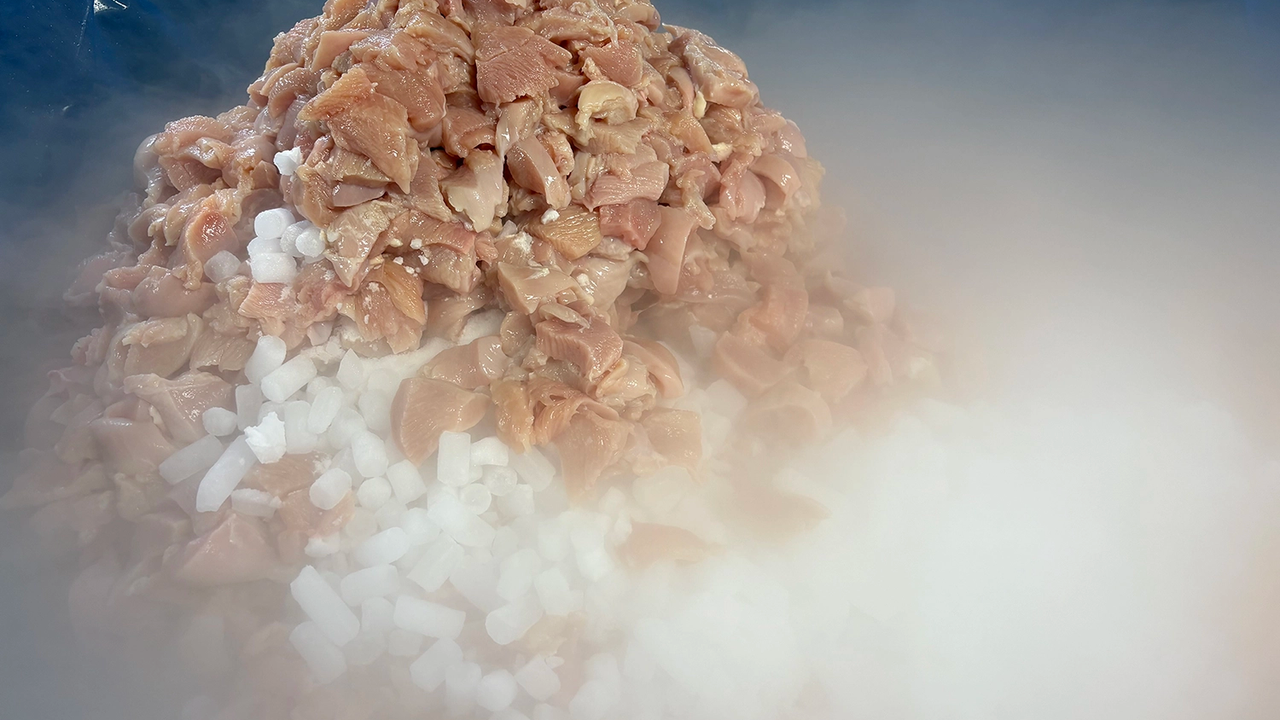
Seafood processors and the logistics providers that move their product depend on dry ice to keep fresh and frozen fish at temperature from the dock to international markets. See how Cold Jet production systems help 3PLs and food processors produce the dry ice they need onsite, on their own schedule.
Comparison
How Dry Ice Compares
to Other Cooling Media
See how dry ice stacks up against flake water ice, gel packs, freezing, and reefer containers on the criteria that decide fresh seafood export economics.
| Criteria | Dry Ice + Reduced Flake Ice Best | Flake Water Ice Only | Gel Ice Packs | Frozen Product | Reefer Container |
|---|---|---|---|---|---|
| Shipped Weight Per Box | About 4 kg lighter, sublimates before dispatch | Heaviest, every kg of ice is paid weight | Heavy, and the pack weight stays in the box | Product weight only, but fresh premium is lost | No per-box cooling weight, but slowest lane |
| Temperature Hold | Up to 144 hours, fish becomes its own refrigerant | Falls as ice melts, limited long-haul reach | Moderate, warms steadily once thawed | Indefinite while frozen | Held while powered and sealed |
| Melt Water and Bio Pollution | None, sublimates directly to gas | Melt water in the box and on road freight | Condensation and pack sweat | None until thaw | Drainage managed at container level |
| Fresh Product Quality | Slower microbial growth, no wrinkling, even box temperature | Good early, degrades as the ice depletes | Uneven contact cooling across the box | Fresh premium sacrificed entirely | Good, provided the chain holds |
| Air Freight Cost | Lowest, roughly €5 saved per box | Paid on every kg of ice, every box | Paid on pack weight plus return logistics | Lower value per kg shipped | Not applicable, sea freight only |
| Carbon Footprint | Up to 40 kg CO₂ avoided per 20 kg box, recycled CO₂ | About 10 kg CO₂ per kg of ice flown | Manufacturing plus return transport | Freezing and frozen storage energy load | Lowest per kg, but longest transit time |
What You Need
What Do Fish Exporters Need to Start Using Dry Ice?
Producing and dosing dry ice in a fish packing facility takes more than a pelletizer. These are the components to plan for when you bring dry ice into your export operation:
Step 01
15–18Bar Tank Pressure
Liquid CO₂ Supply and Storage
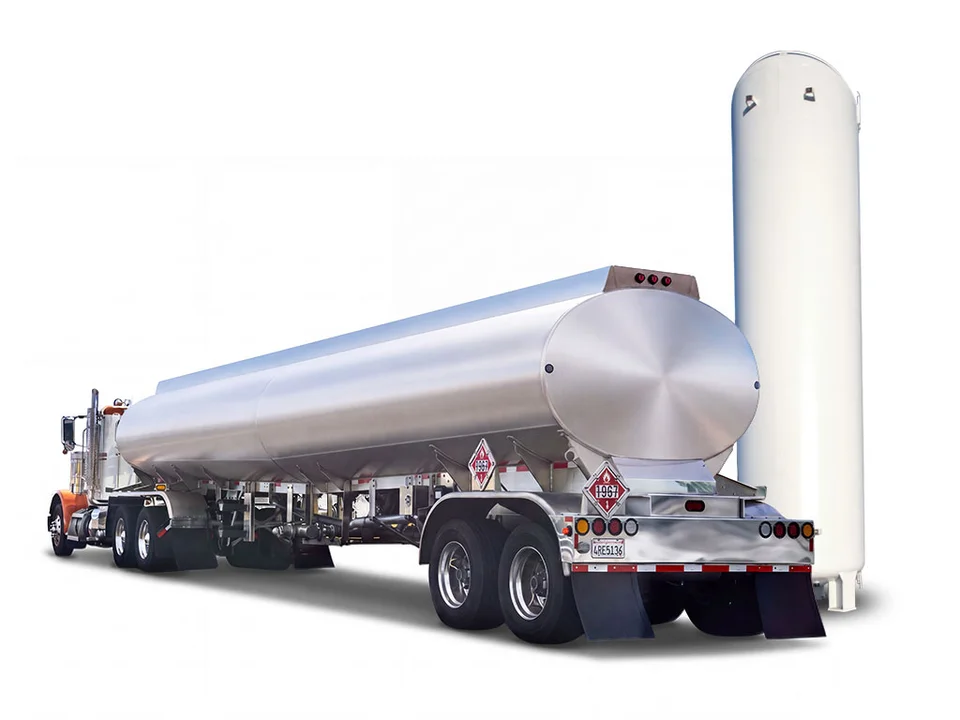
Dry ice production starts with a reliable liquid CO₂ supply. That means civils infrastructure to house an LCO₂ tank, designed and advised in conjunction with your gas supplier, plus a liquid supply line and utility connections. Low-volume systems work with fixed liquid CO₂ tanks, transportable dewars, and micro bulk tanks, so a smaller site can start producing without major infrastructure upgrades. Typical tank pressure is 15 to 18 bar (217.5 to 261 psi).
- 01. Liquid CO₂ Supply and Storage — Dry ice production starts with a reliable liquid CO₂ supply. That means civils infrastructure to house an LCO₂ tank, designed and advised in conjunction with your gas supplier, plus a liquid supply line and utility connections. Low-volume systems work with fixed liquid CO₂ tanks, transportable dewars, and micro bulk tanks, so a smaller site can start producing without major infrastructure upgrades. Typical tank pressure is 15 to 18 bar (217.5 to 261 psi).
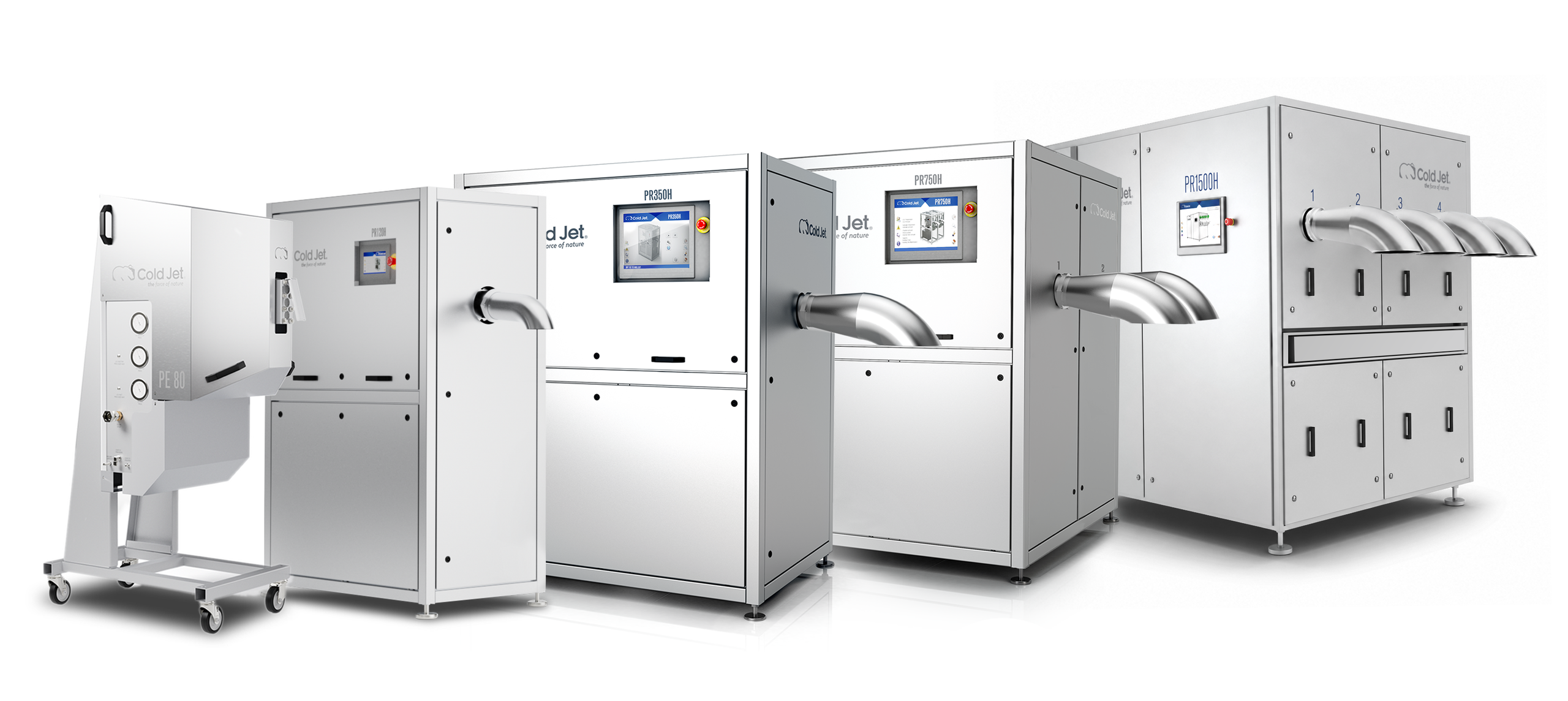
- 02. Dry Ice Production System — The pelletizer or slice system converts liquid CO₂ into dry ice onsite. Sub-cooling technology in Cold Jet pelletizers delivers 12–14% better LCO₂-to-dry ice conversion efficiency than the market standard, which means less liquid CO₂ consumed per kilogram of dry ice produced. Systems range from an 80 kg per hour unit on caster wheels, through pelletizers sized for a packing room, to all-in-one slice production and dosing machines rated up to 1,000 kg per hour.
- 03. Dosing Method — How the dry ice gets into the box is a decision you can stage. Manual scooping proves the application with no capital outlay. An entry level in-house package adds recipe control and alarms that prevent overfill. Fully automatic dosing detects each crate, doses a variable programmed quantity, and integrates with upstream and downstream control systems at up to 16 boxes per minute with full traceability.
- 04. CO₂ Monitoring and Ventilation — Safety is not negotiable. One kilogram of dry ice sublimates into roughly 500 liters of CO₂ gas, so production, packing, and cold storage areas need CO₂ monitoring with a 5,000 ppm maximum, a calculated number of air exchanges based on the volume of dry ice sublimating, local extraction, and clear signage. This is designed in at the project stage, not added after installation.
- 05. Dry Ice Storage and Handling — Dry ice produced on demand still needs somewhere to sit between the machine and the packing line. Insulated containers hold the day's production close to the dosing point and limit sublimation loss. Cold Jet's entry level package includes four dry ice containers alongside commissioning, training, and project management.
- 06. Training, Procedures, and Support — Operators need to know dosing quantities by product format, safe handling with the correct PPE, and what to do if a CO₂ alarm sounds. Cold Jet delivers commissioning and operator training as part of installation, with ongoing service and remote support available through Cold Jet CONNECT.
Equipment
What Is the Best Dry Ice Production System
for a Fish Export Facility?
Cold Jet offers dry ice production and dosing systems for seafood export, from a pelletizer sized for an existing packing room to a containerized unit for sites without production space, to an all-in-one system that produces slices and doses them straight into boxes on the line.
DS1000E
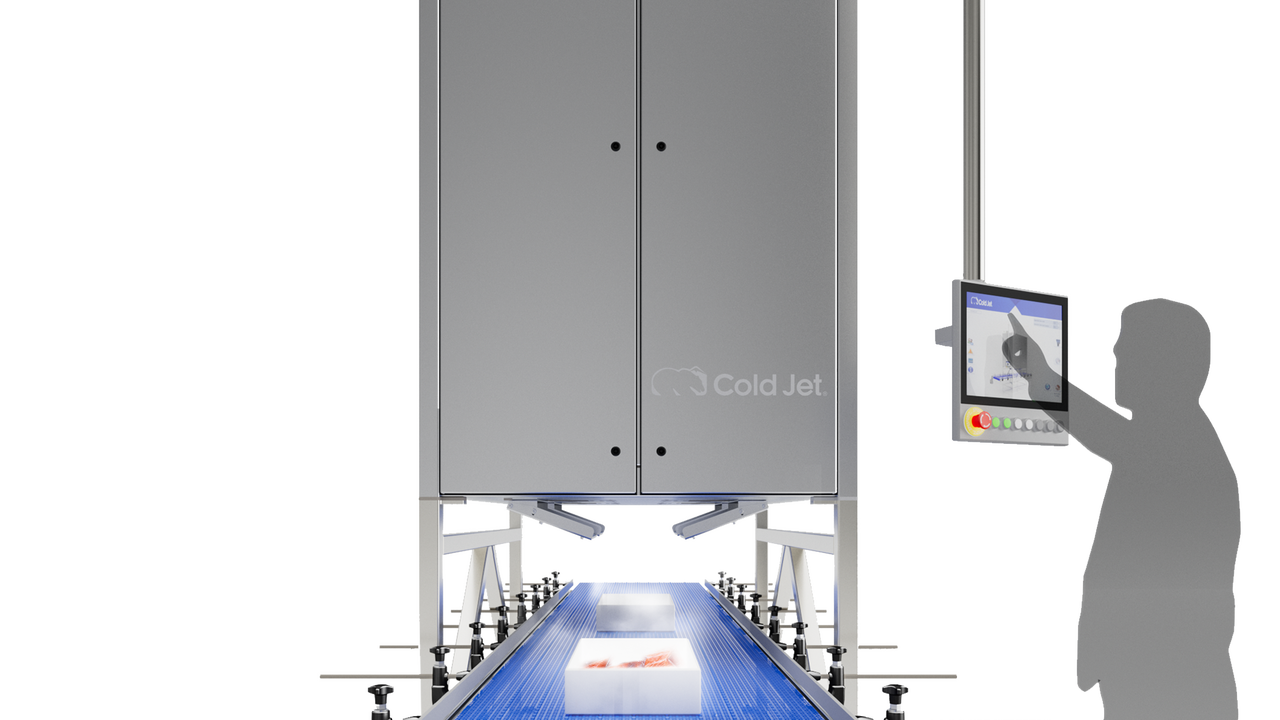
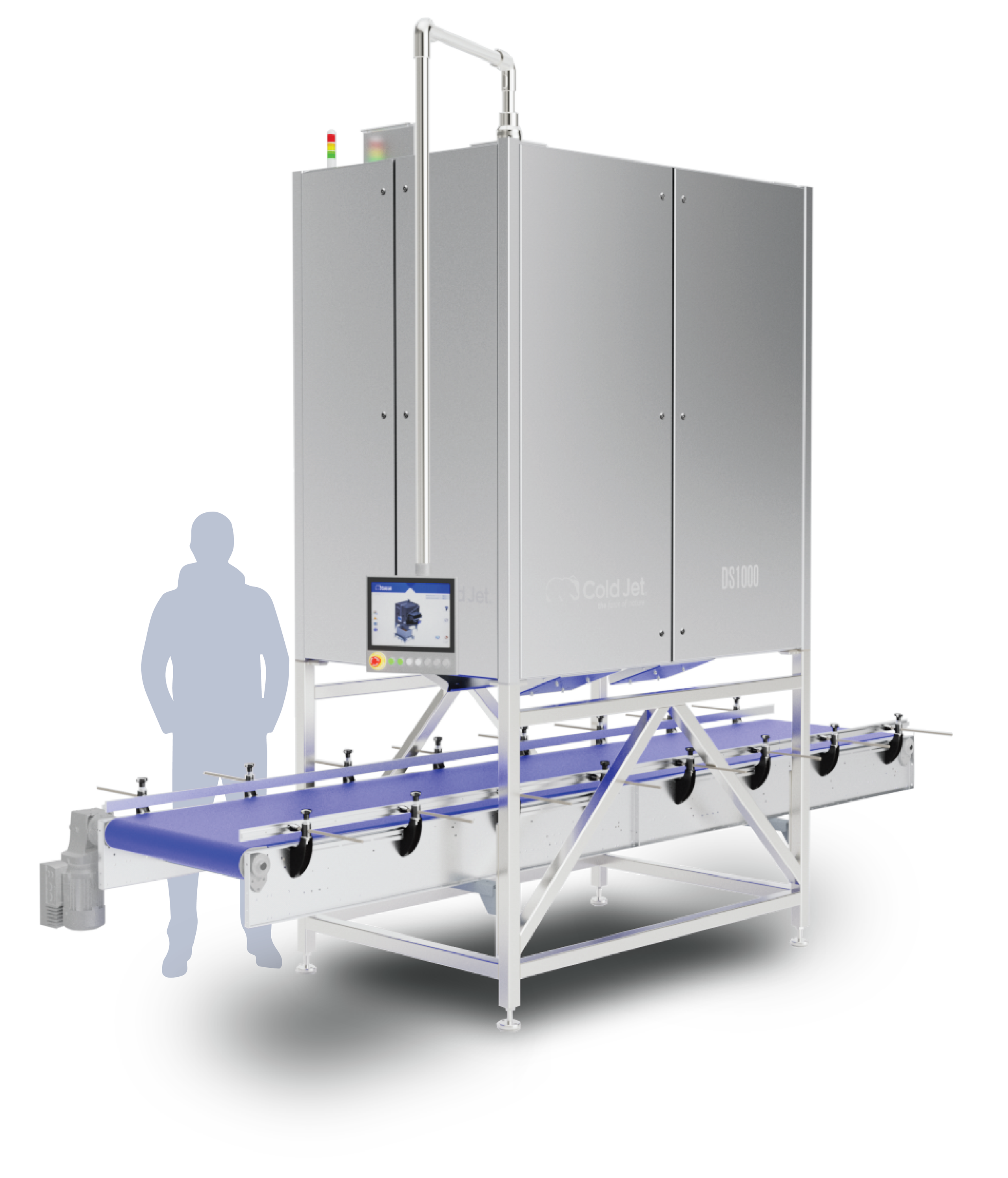
The DS1000E produces and doses dry ice slices in one fully electric, automated system, with no separate pelletizer or reformer and no manual sawing of blocks. Operators program slice weight and dosing frequency at the touchscreen, and four servo-controlled slice press heads deliver dosing speed and accuracy. It’s built for direct integration into an existing packing line, dosing straight into boxes.
- Up to 2,204 lb/h (1,000 kg/h) of slices
- Programmable slice weight 0.5–2.2 lb (0.25–1 kg)
- Four slice press heads, servo controlled
- Doses directly into boxes on the line
Dry Ice Production Hub
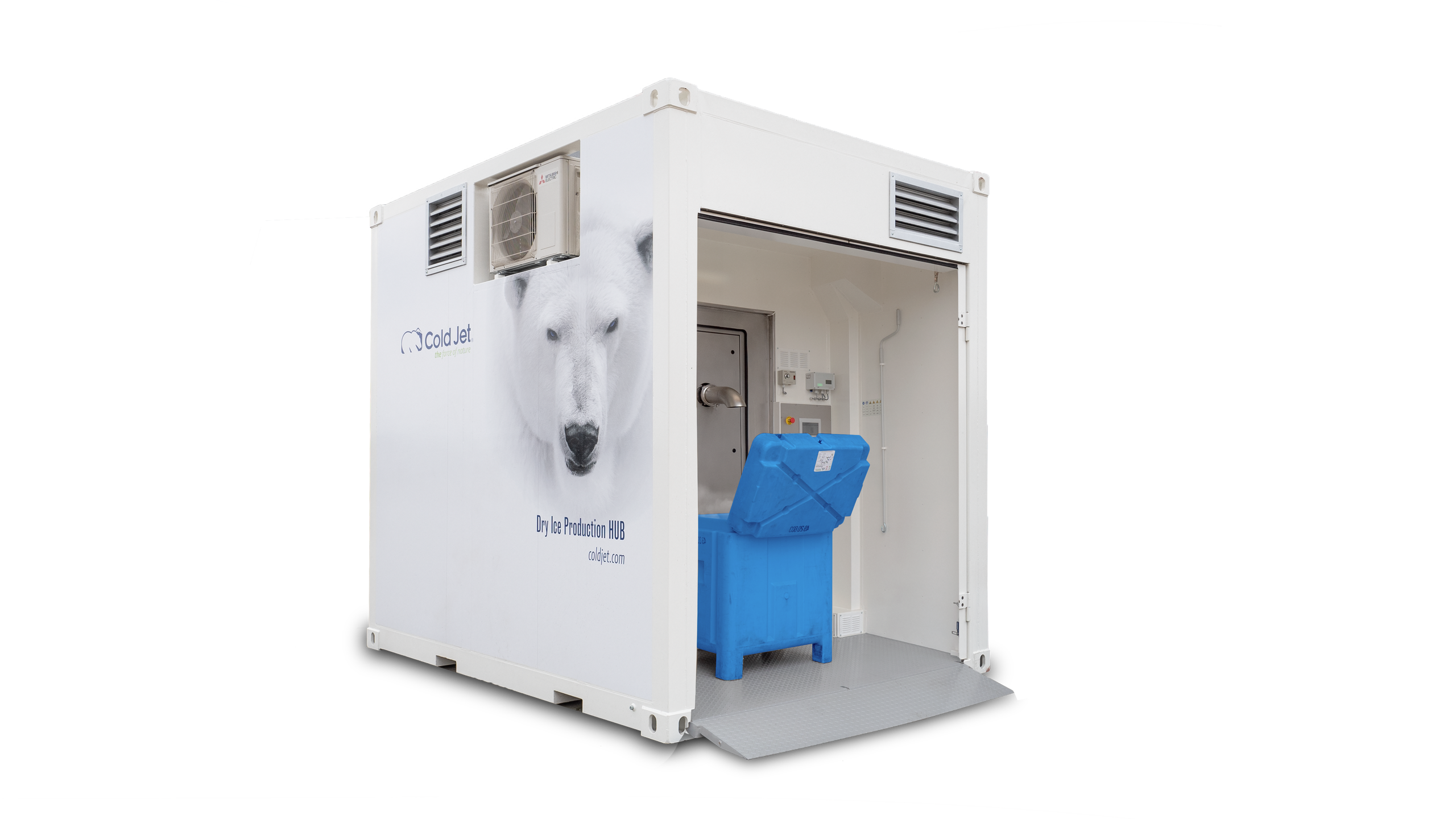
The Dry Ice Production Hub houses a PR120H or PR350H pelletizer in a ready-to-run 10 ft container, so a packing site can produce dry ice onsite without building a dedicated production room. Connect power, liquid CO₂, and instrument air, and it’s ready to run, making it a practical option for busy export facilities where floor space is already committed.
- Up to 772 lb/h (350 kg/h) with PR350H
- Self-contained 10 ft container
- Plug-and-play installation
- Cold Jet CONNECT® remote monitoring
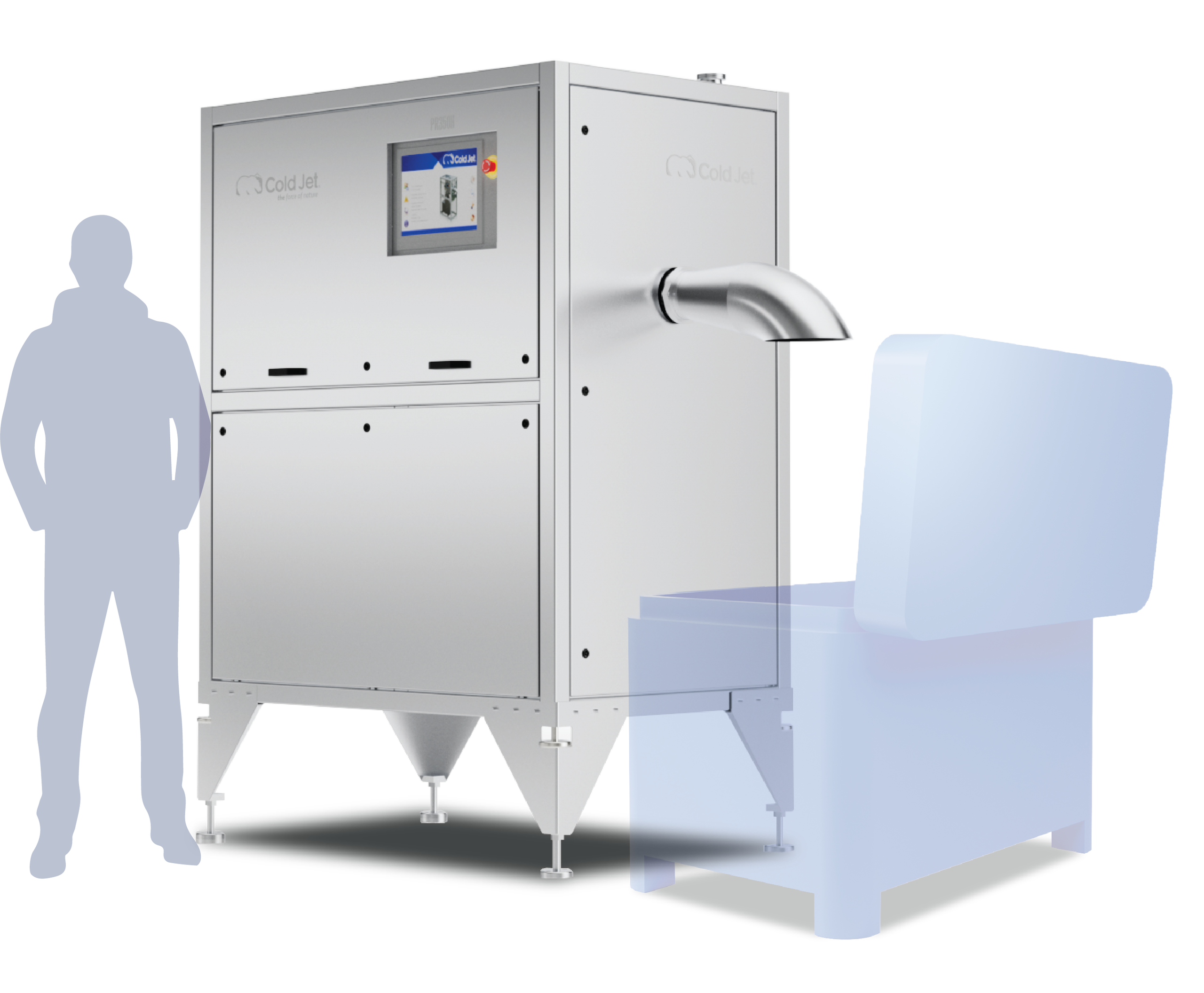
PR350H Dry Ice Pelletizer
The PR350H produces up to 772 lbs (350 kg) of high-quality dry ice pellets per hour from the first stroke, sized for packing rooms with steady, high daily volumes. Automatic quick die change switches pellet sizes in seconds, and start-up takes under 3 minutes, so production can follow the day’s catch and shipping schedule.
- Up to 772 lb/h (350 kg/h)
- Pellets: 3, 6, 10, and 16 mm
- Start-up in under 3 minutes
- 12–14% better LCO₂ conversion
Compare Systems
How Do These Three Systems Compare?
Side-by-side specs for the Cold Jet systems best suited to fresh seafood export, so you can match output and dosing to your box volume, packing line, and CO₂ supply.
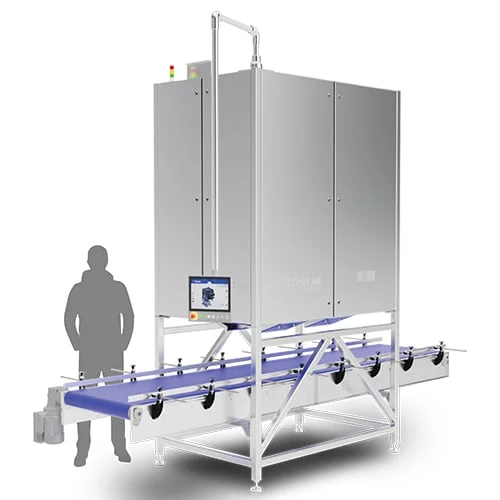
DS1000E
Produces and doses slices in one system
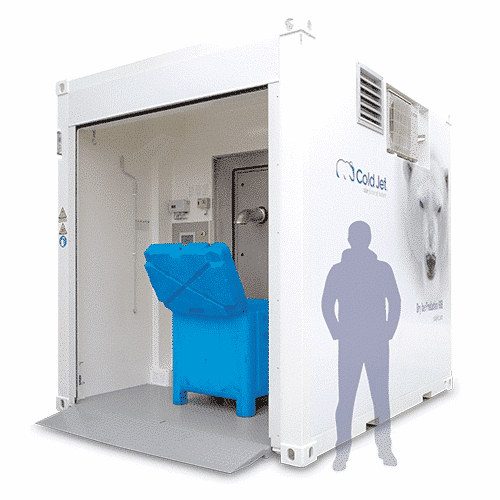
Dry Ice Production Hub
Containerized plug-and-play production
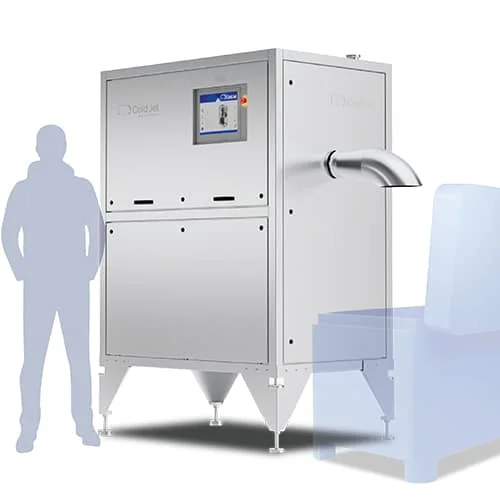
PR350H
High-volume pellets on demand
| Specification | DS1000E | Dry Ice Production Hub | PR350H |
|---|---|---|---|
| Production & Output | |||
| Dry Ice Form | Slices | Pellets | Pellets |
| Dry Ice Output (max) | 2,204 lb/h(1,000 kg/h) | 265 lb/h (PR120H) or 772 lb/h(PR350H) | 772 lb/h(350 kg/h) |
| Floor Footprint (L x W) | 74.5" x 52.5"(1890 x 1330 mm) | 10 ft high-cube ISO container | 59" x 39" |
| Machine Weight | 3,968 lb(1,800 kg) | Not published | 3,340 lb(1,515 kg) |
| Pellet / Slice Sizes | 125 x 125 mm slices, 15–60 mm thick | Depends on pelletizer(3–16 mm) | 3, 6, 10, 16 mm pellets |
| Dosing, Controls & Installation | |||
| Integrated Dosing (Yes/No) | Yes, four slice press heads | No, scoop or pair with a downstream doser | Available as an Integrated Dosing System |
| Programmable Dose Weight | 0.5–2.2 lb (0.25–1 kg) with recipe programs | Not published | 1–88 lb at ±5% with Integrated Dosing System |
| Control System | 15.6-inch color touch display, multilingual | 15-inch (PR350H) or 7-inch (PR120H) touchscreen | 15-inch color touchscreen |
| Packing Line Integration | Remote start/stop or BUS/Ethernet integration | Self-contained; connect power, LCO₂, and instrument air | BUS/Ethernet integration with plant controls |
| Remote Monitoring | Full display mirroring over LAN or internet | Cold Jet CONNECT® | Cold Jet CONNECT® |
“—” indicates a spec Cold Jet has not published for this model. Contact a Cold Jet specialist to confirm fit for your box volume, packing line, and CO₂ supply.
Why Cold Jet
Why Invest in Cold Jet Dry Ice Systems
for Fresh Fish Export
If you are moving fresh salmon, tuna, or whitefish off flake ice, the machine you choose sets your cost per box for the next decade. The variables that matter are the liquid CO₂ conversion factor, the density and shelf life of the dry ice produced, and whether the system can grow into automated dosing on your packing line.
When evaluating this investment, weigh both the payback period against freight savings and the operational fit with your packing schedule, your cold store, and your CO₂ safety plan. Cold Jet systems deliver faster payback and greater value through:
High-Density, Long-Lasting Dry Ice
Our patented production technology makes the highest density dry ice available, which means less scrap, longer shelf life in your containers, and more usable cooling per kilogram dosed into the box.
More Efficient LCO₂ Conversion
Sub-cooling technology delivers 12–14% better LCO₂-to-dry ice conversion efficiency than the market standard. Less liquid CO₂ per kilogram of dry ice produced means a lower cost per box for the life of the system.
Proven in Fresh Seafood Export
Dry ice cooling is not experimental in this industry. Thousands of tonnes of salmon ship with dry ice every year across road, sea, and air freight, and Cold Jet builds the production and dosing systems behind those lanes.
Built for Continuous Production
Our systems are designed for non-stop operation in demanding environments, with one button start-up, automatic extruder plate changes to minimize downtime, and moisture-free stainless steel enclosures.
Support, Training, and CO₂ Safety Planning
Regional technicians, commissioning, and operator training come with the system. CO₂ monitoring, ventilation, and air exchange calculations are planned into the project rather than bolted on after installation.
A Staged Path From Scooping to Full Automation
Start by buying pellets and scooping, with no capital outlay. Move to an entry level in-house package with recipe control. Scale to fully automatic dosing with box detection and variable quantities at up to 16 boxes per minute.
Compliance & Safety
Food Safety and CO₂ Standards
Built to Support
Dry ice cooling touches food hygiene rules, dangerous goods rules for air freight, and workplace CO₂ exposure limits. Here is how each one applies.
EIGA / ISBT
Food-Grade CO₂ Purity Specifications
Carbon dioxide used in or near direct contact with food must meet recognized food-grade purity specifications, such as those published by EIGA in Europe and ISBT internationally.
How We Comply
Dry ice made on site is only as good as the liquid CO₂ feeding it. Cold Jet systems convert food-grade LCO₂ into high-density dry ice without introducing contaminants, in stainless steel, moisture-free enclosures, and we work alongside your gas supplier on specification and supply.
HACCP
Hazard Analysis and Critical Control Points: Seafood Shipment Records
HACCP requires seafood processors to identify temperature control as a critical control point and to document that shipments are packed and held within defined limits.
How We Comply
Dosing quantity is a controllable, repeatable parameter. Recipe control and automated dosing apply a programmed quantity per box, with box detection and variable dosing, so the cooling step produces records rather than estimates.
IATA DGR (UN 1845)
Dry Ice in Air Transport
Dry ice is classified as UN 1845, Class 9 miscellaneous dangerous goods for air transport. Shippers must use packaging that vents CO₂ gas, mark the net quantity of dry ice per package, and follow their carrier's declaration requirements.
How We Comply
In fresh fish export the dry ice has usually sublimated before the pallet is dispatched, but where it is still present at handover the net quantity has to be declared. Programmable dosing gives you an exact, documented figure per box rather than an estimate.
EU 853/2004
Hygiene Rules for Fishery Products
EU Regulation 853/2004 requires fresh fishery products to be maintained at a temperature approaching that of melting ice throughout storage and transport.
How We Comply
Supercooling a reduced flake ice layer holds product at temperature for longer than flake ice alone, up to 144 hours, and delivers even temperature across the box rather than a cold top layer and a warmer center.
OSHA PEL / ACGIH TLV
CO₂ Concentration Management
Occupational exposure limits for carbon dioxide are set at 5,000 ppm as an eight hour time weighted average. One kilogram of dry ice sublimates into roughly 500 liters of CO₂ gas, so production, packing, and cold storage areas need active management.
How We Comply
CO₂ monitoring, air exchange rates calculated from sublimation volume, local extraction, signage, and operator procedures are planned into every Cold Jet installation and covered during commissioning and training.