Manual Chemical Cleaning Risked Blades and Workers Alike
Gas turbine engines are used to power aircraft, watercraft and generators. Typically they include an engine core, which has a compressor, a combustor and a turbine. The compressor pressurizes air to the combustor. In the combustor, fuel is mixed with the high pressure air and is ignited. Hot gas is created as a product of the reaction in the combustor and is directed into the turbine where energy is extracted to drive the compressor and the fan. Dirt and grime accumulates from atmospheric air and fuel burned during operation. As dirt and grime build up in turbofan engines, the performance of those engines may be reduced due to aerodynamic and frictional losses.
The compressor plays a key role in the optimum performance of a jet engine. Any impairment of efficiency has a significant impact on operating costs and maintenance intervals. Depending on the operating environment, dust, salts and exhaust gas deposits are major causes of reduced performance, resulting in higher fuel consumption and increased turbine wear. Therefore, proper cleaning of the compressor significantly reduces operating costs and ensures peak performance of the jet engine.
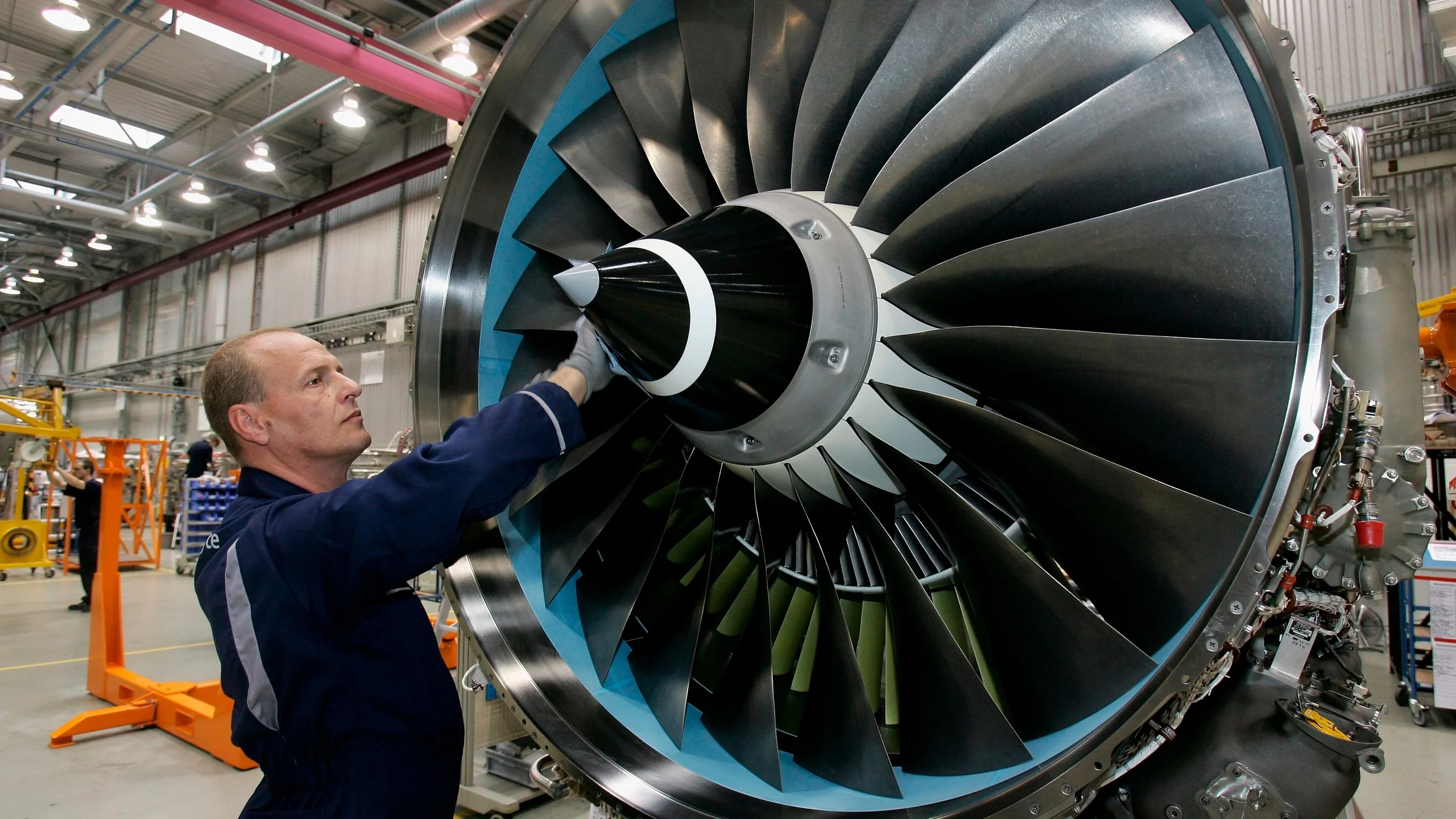
Rolls Royce, a manufacturer of gas turbine engines, was using a manual cleaning process to remove the buildup from titanium compressor blades. It required workers to scrape and scrub the blades with a combination of water and other cleaning chemicals. This method was time consuming, labor intensive and had the potential to damage the blades. It was also hazardous to the personnel who performed the cleaning. Compressor blades have very sharp corners and the workers were at risk of being injured. As a result, Rolls Royce began to explore alternative cleaning methods.
An Approved, Automated Dry Ice Cleaning Process
U.S. Rolls Royce tested Cold Jet dry ice cleaning and found that the effect of the process on the material microstructure was minimal. After the successful tests, dry ice cleaning was approved to be used in the cleaning of the compressor blades.
Cold Jet’s dry ice cleaning system uses non-abrasive media in the form of recycled CO2 pellets that will not damage surfaces or equipment. The combination of dry ice cleaning’s kinetic energy and thermal effects break the connection between the dirt and surface, lifting away contaminants. When the three by six millimeter pellets hit the blades of the compressor stages in the engine, the kinetic energy released by the impact loosens the contaminant. Unlike blasting with other media, dry ice cleaning does not leave any secondary waste. The dry ice particles sublimate upon impact – converts from solid to gas – leaving no residue in the engine. Dry ice cleaning is safe and non-toxic, does not create downstream contamination and reduces or eliminates employee exposure to dangerous chemical cleaning agents.
An approval letter for the use of Cold Jet dry ice cleaning was granted by Rolls Royce for the cleaning of aircraft turbine titanium compressor drum assemblies.
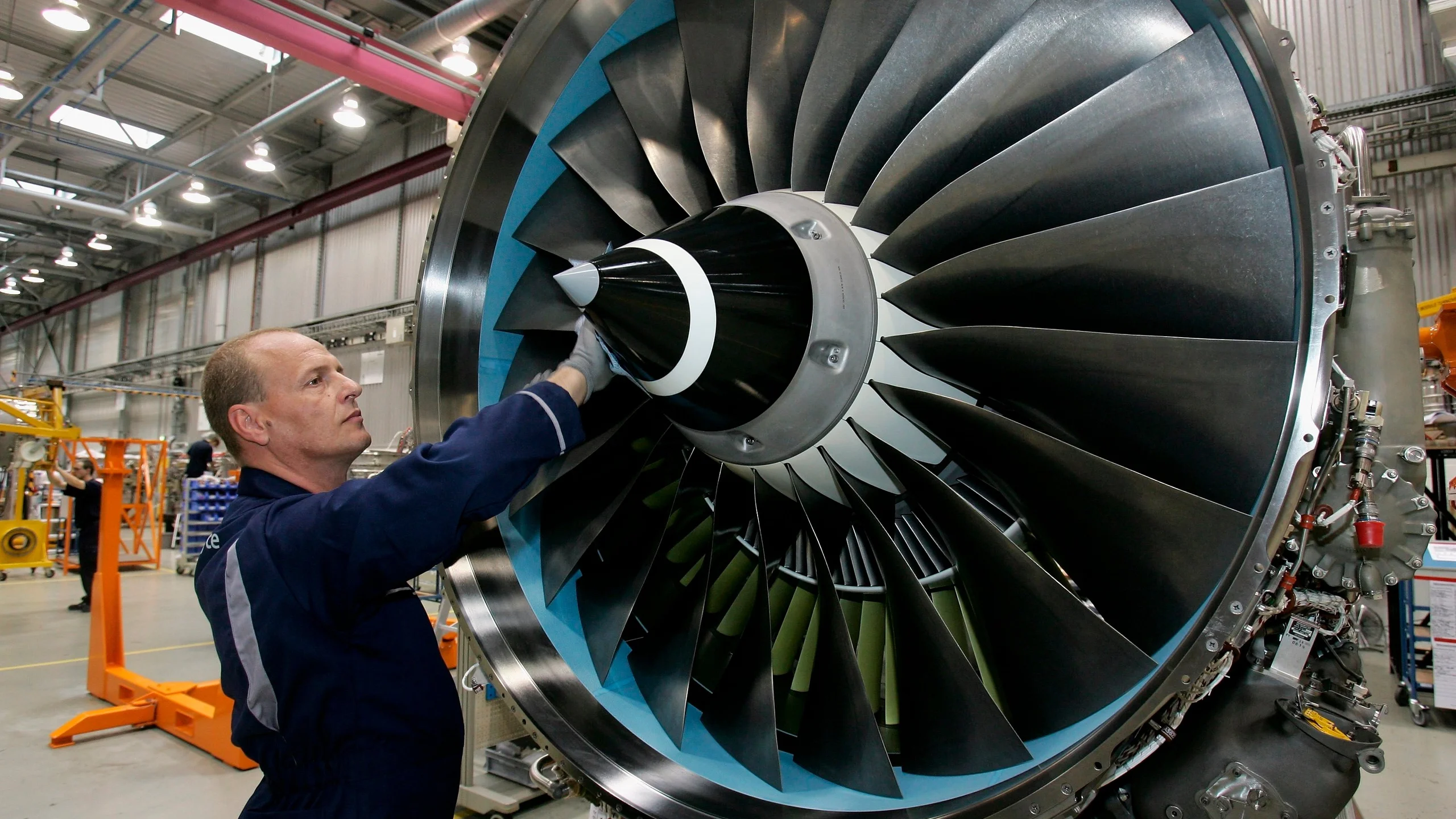
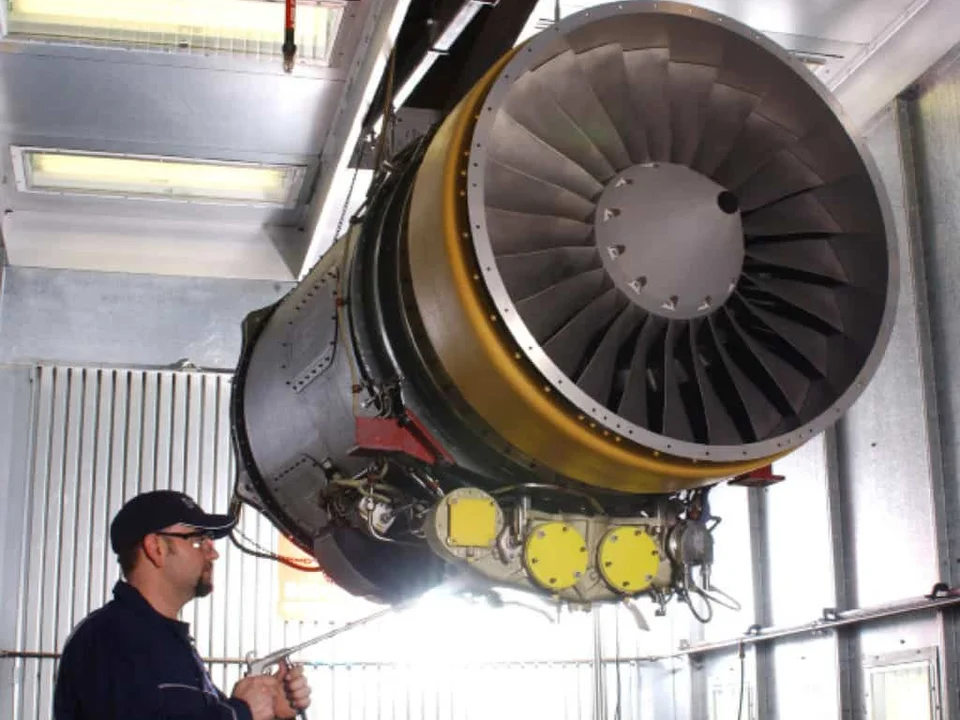
The company was happy with the results of the dry ice cleaning process and decided to integrate the process in their maintenance of the turbine engines. Rolls Royce installed an automated system (robotic manipulator) using a Cold Jet SDI-5 and a sound proof enclosure to avoid noise disturbance during the cleaning process.
Major Cost Savings and a Safer Process
90%
Cost Savings
Reduction in compressor rotor blade cleaning costs
84%
Turn Time Improvement
Faster module/component turnaround
By using the Cold Jet automated cleaning process, cost savings on compressor rotor blade cleaning improved by 90% and the module/component turn time improved 84%.
Rolls Royce eliminated the use of chemicals in the cleaning process and decreased employee exposure to harmful chemicals. Dry ice cleaning also made the cleaning process safer for their employees. They can stand at a safe distance and clean the blades without directly coming into contact with them.
The company also utilizes dry ice blasting to clean the compressor rotor between the blades, the compressor guide vanes, stators and casings.
The automated Cold Jet cleaning process improved cost savings on compressor rotor blade cleaning by 90% and module/component turn time by 84%. Rolls Royce eliminated chemicals from the cleaning process, decreasing employee exposure to harmful substances, and now also uses dry ice blasting to clean compressor guide vanes, stators, and casings.