Lead Paint on Fragile, Irreplaceable Tin Ceiling Tiles
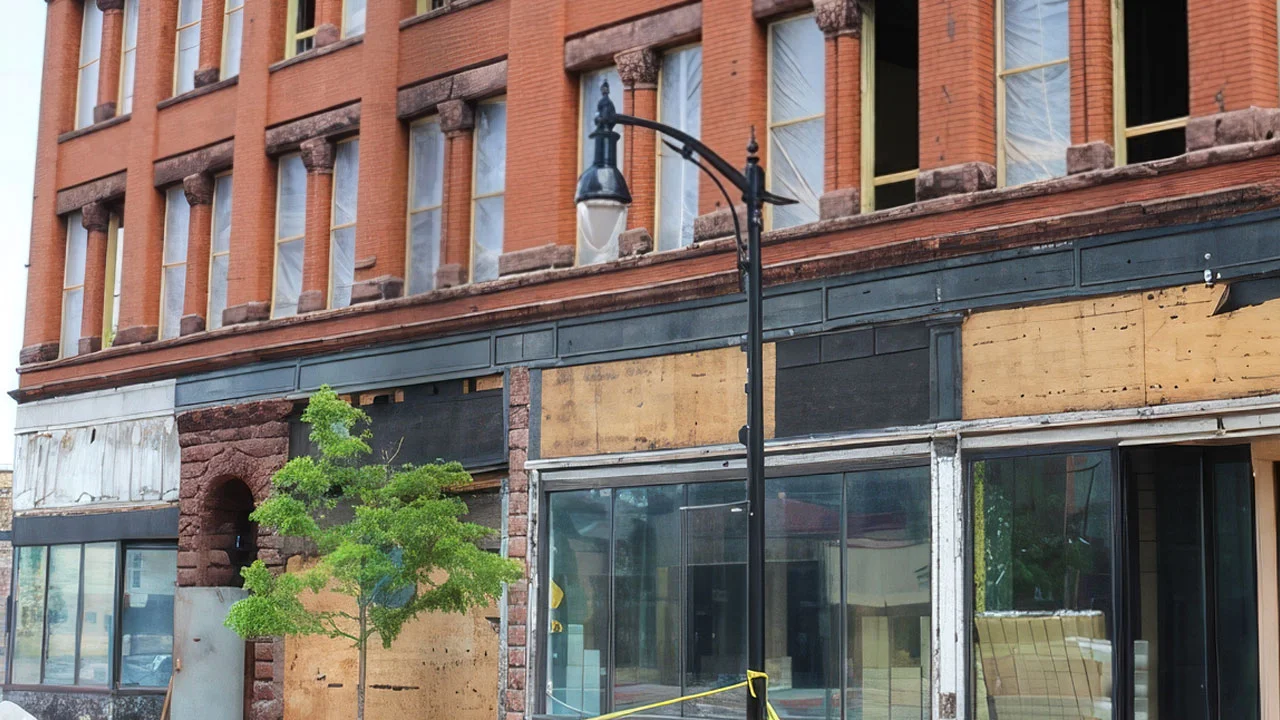
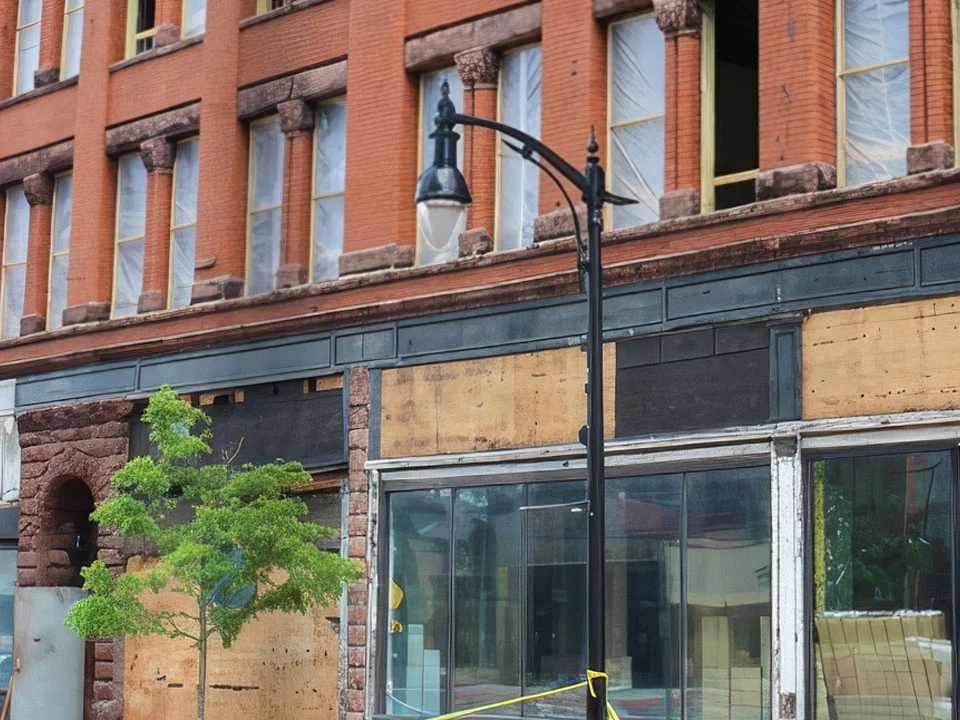
Downtown Superior, Wisconsin has a recent trend of historic building redevelopment, rather than tear down. One of the more high profile examples is the Empire Block building, which was formerly the home of Luyre Furniture. The vacant building was purchased by a developer who plans to convert it into a mixture of apartments and commercial space. On the interior of the building, the ceilings are lined with ornate tin tiles. The tiles are covered with lead paint that needs to be removed during the restoration. There is also carbon buildup and residue on the antique light fixtures, light switch plates, door knobs, mail slots and other surfaces throughout the building.
The lead paint and other buildup needs to be removed safely, effectively and in an environmentally responsible manner. All of the objects, especially the tin tiles, are delicate and have the risk of being damaged during the cleaning process.
The tiles are original fixtures of the building and are very detailed and fragile. Tin is a soft metal and cannot be cleaned with an abrasive method, that would pit and damage the metal. The tiles also cover a very large square footage (4,507 square feet) of the ceiling.
The developer reached out to several local contractors to see if they would be interested in completing the cleaning project. Most declined because they were afraid they were going to damage the material. Dryco Restoration Services, a company that specializes in dry ice cleaning, accepted the challenge.
“They gave us test plates to take back to our shop to see if we could clean the tiles without damaging them. Our lead technician called our representative at Cold Jet and he suggested how to clean the tiles without damaging them. There were certain parameters, such as air pressure, that we had to follow.
”
Dry Ice Blasting, Dialed in Through Test Cleanings
Dryco successfully removed the lead paint from the tiles in the test run so the developer decided to go with dry ice cleaning for the project.
Cold Jet’s dry ice cleaning systems use non-abrasive media in the form of recycled CO2 pellets that will not damage surfaces or equipment. The combination of dry ice cleaning’s kinetic energy and thermal effect breaks the connection between the dirt and surface, lifting away contaminants. Unlike blasting with other media, dry ice cleaning does not leave any secondary waste, because the dry ice particles sublimate upon impact – converting from solid to gas. Dry ice cleaning is safe, non-toxic, does not create downstream contamination and reduces or eliminates employee exposure to dangerous chemical cleaning agents.
A Safe, Complete Restoration of Historic Fixtures
4,507
square feet
of delicate tin ceiling tiles cleaned without damage
~100
hours
total time to complete the full cleaning project
9,150
lbs
19 500-lbs. totes of dry ice used across the project
Dryco used Cold Jet’s Aero 40HP with a Variable Fragmenting MERN Nozzle to successfully remove the lead paint from the tiles and the carbon buildup on the antique light fixtures, door knobs and other surfaces.
They cleaned the 4,507 square feet of tin ceiling tiles and the other antique fixtures amounted to another 50 square feet. In total, Dryco spent approximately 100 hours on this project and used 19 totes (9,150 pounds) of dry ice.
Dryco performs other types of blast cleaning, such as slurry, recycled glass and walnut, but they find dry ice blasting to be the most efficient method for lead abatement projects because it is safer, more effective and easier to contain the debris.
“On lead abatement projects, we primarily use dry ice blasting because it is environmentally responsible, cuts down on secondary waste and is a gentler way to clean. It’s also more worker friendly.
”
Dryco also prefers dry ice cleaning over alternative methods because they are able to complete the job quicker. With dry ice, there is no secondary waste created so less time is required to setup containment before the project and less time is needed to clean the debris up after.
Dryco successfully cleaned all 4,507 square feet of tin ceiling tiles plus 50 additional square feet of antique fixtures, using 9,150 pounds of dry ice over roughly 100 hours, with no damage to the delicate original material.