


Comprehensive Guide to Buying a Dry Ice Blaster
Within this guide, you will discover
Key Takeaways
Last updated
The Science
A Quick Primer: The Science of Dry Ice Blasting
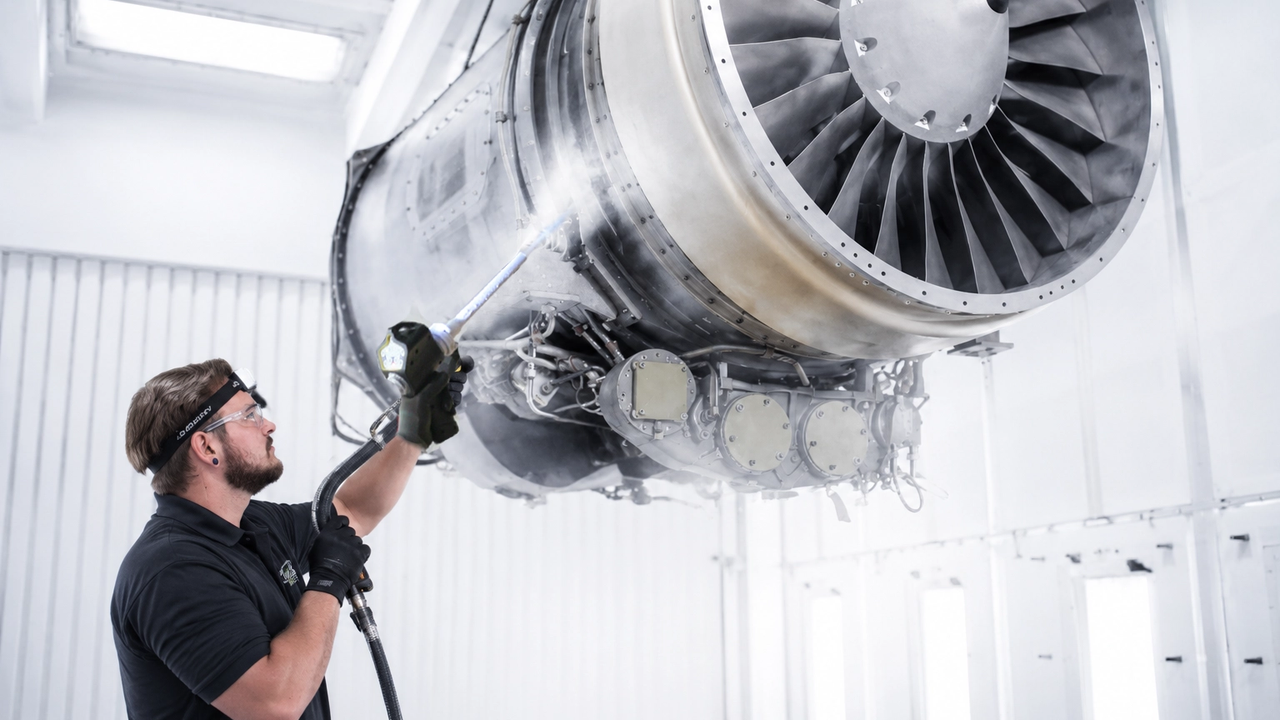
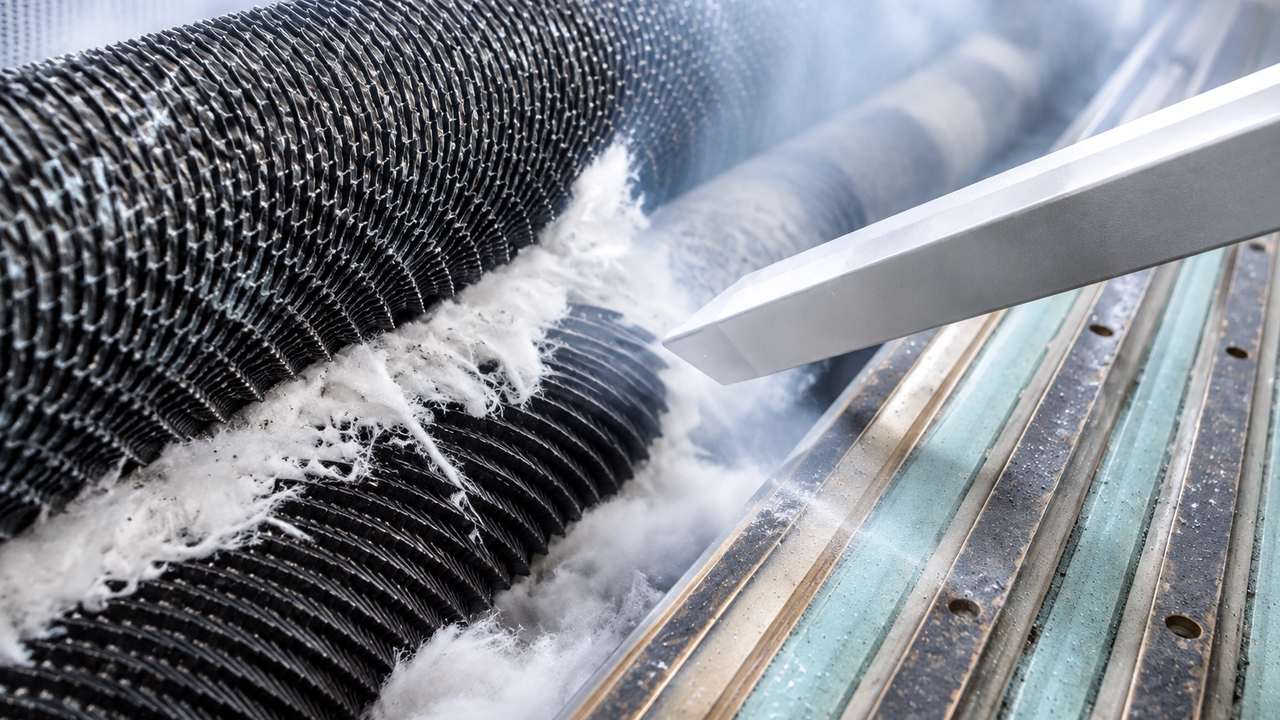
Dry ice blasting works through three underlying physical principles: the kinetic Impact of high-velocity pellets breaking the contaminant's surface bond, the thermal shock of extreme Cold (-109.3°F / -78.5°C) that embrittles and shrinks the material, and the rapid volumetric Expansion of solid CO2 instantly sublimating into a gas to lift the residue entirely away from the substrate.
While you likely already know that dry ice blasting is an effective and efficient industrial cleaning method, understanding exactly how it works is the secret to knowing what to look for in a machine. Cold Jet identifies the underlying physics of this process using the I.C.E. acronym. Here is a breakdown of that science, and more importantly, how it dictates your purchasing criteria:
Step 01
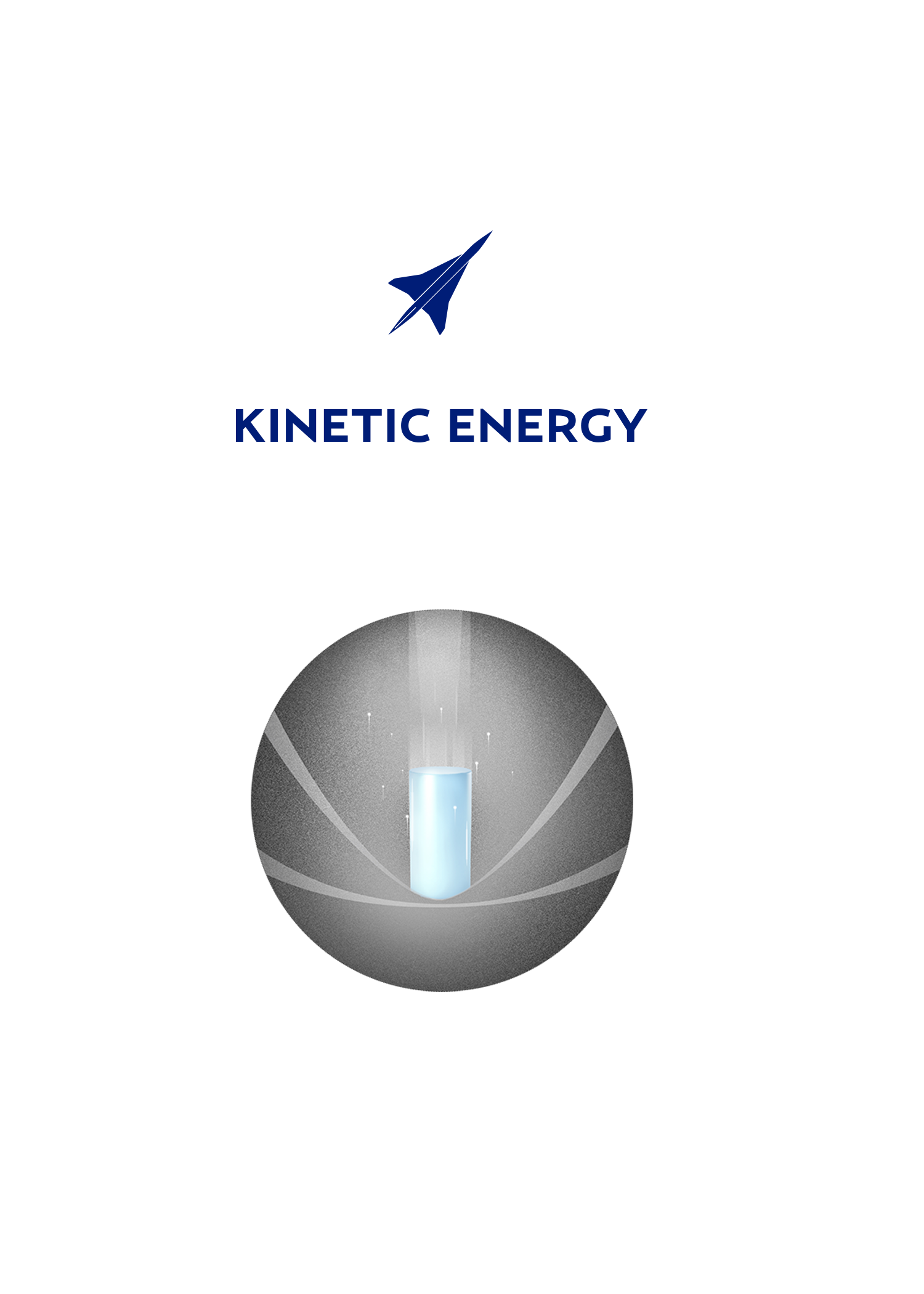
Kinetic Energybreaks the bond
Impact
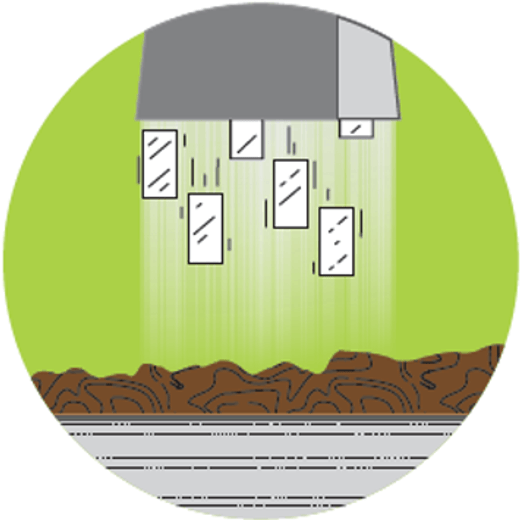
Dry ice particles or pellets are ejected from the blaster nozzle at high velocity and impact the intended surface. The kinetic energy created from this impact breaks the top layers of the contaminant, weakening its bond to the surface.
- 01. Impact — Dry ice particles or pellets are ejected from the blaster nozzle at high velocity and impact the intended surface. The kinetic energy created from this impact breaks the top layers of the contaminant, weakening its bond to the surface.
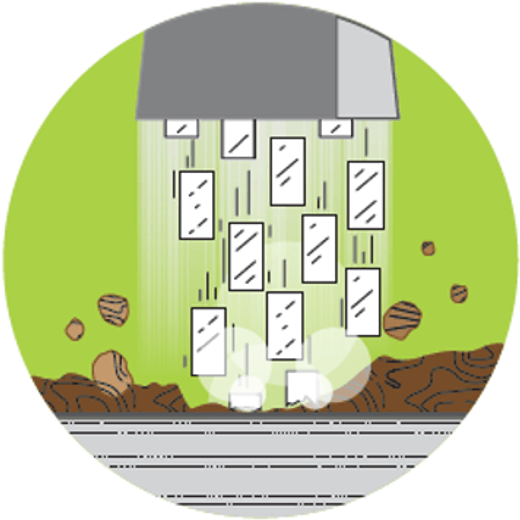
- 02. Cold — Since dry ice is solid CO2 and maintains a temperature of -109.3°F (-78.5°C), it has a thermal effect on contaminants. The extreme cold causes contaminants to embrittle and shrink, further breaking their bond to the substrate.
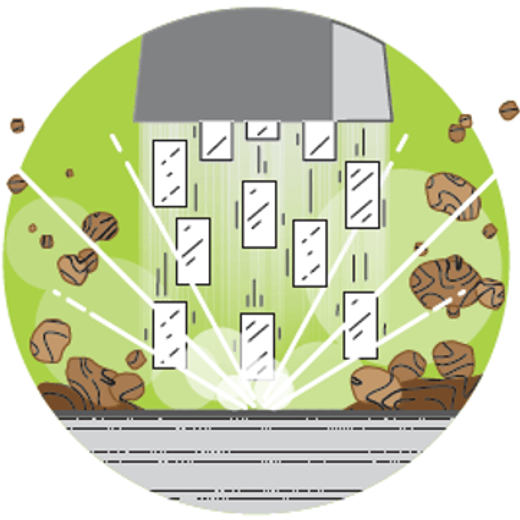
- 03. Expansion — Upon impact, solid CO2 instantly undergoes sublimation, converting into gas. This conversion causes a rapid volumetric expansion of the CO2 (up to 800 times the volume of the solid state), lifting contaminants away from the surface entirely.
Dry ice is accelerated by compressed air through a nozzle at supersonic speeds.
The temperature (-109°F / -78°C) of the dry ice causes thermodynamic shock. This helps break the bond between the surface and the contaminant.
Once the dry ice collides with the surface, it sublimates — causing a mini CO₂ explosion, lifting away the contaminant.
Because dry ice is non-abrasive and turns to gas, you are left only with a clean surface – no secondary waste.
Benefits
Translating Dry Ice Blasting Benefits into Buying Decisions
Due to its unique cleaning mechanism, dry ice blasting offers a host of operational benefits over water, solvents, or abrasives. Here is how those benefits should influence the hardware you choose:
 Benefit 1
Non-Abrasive Cleaning
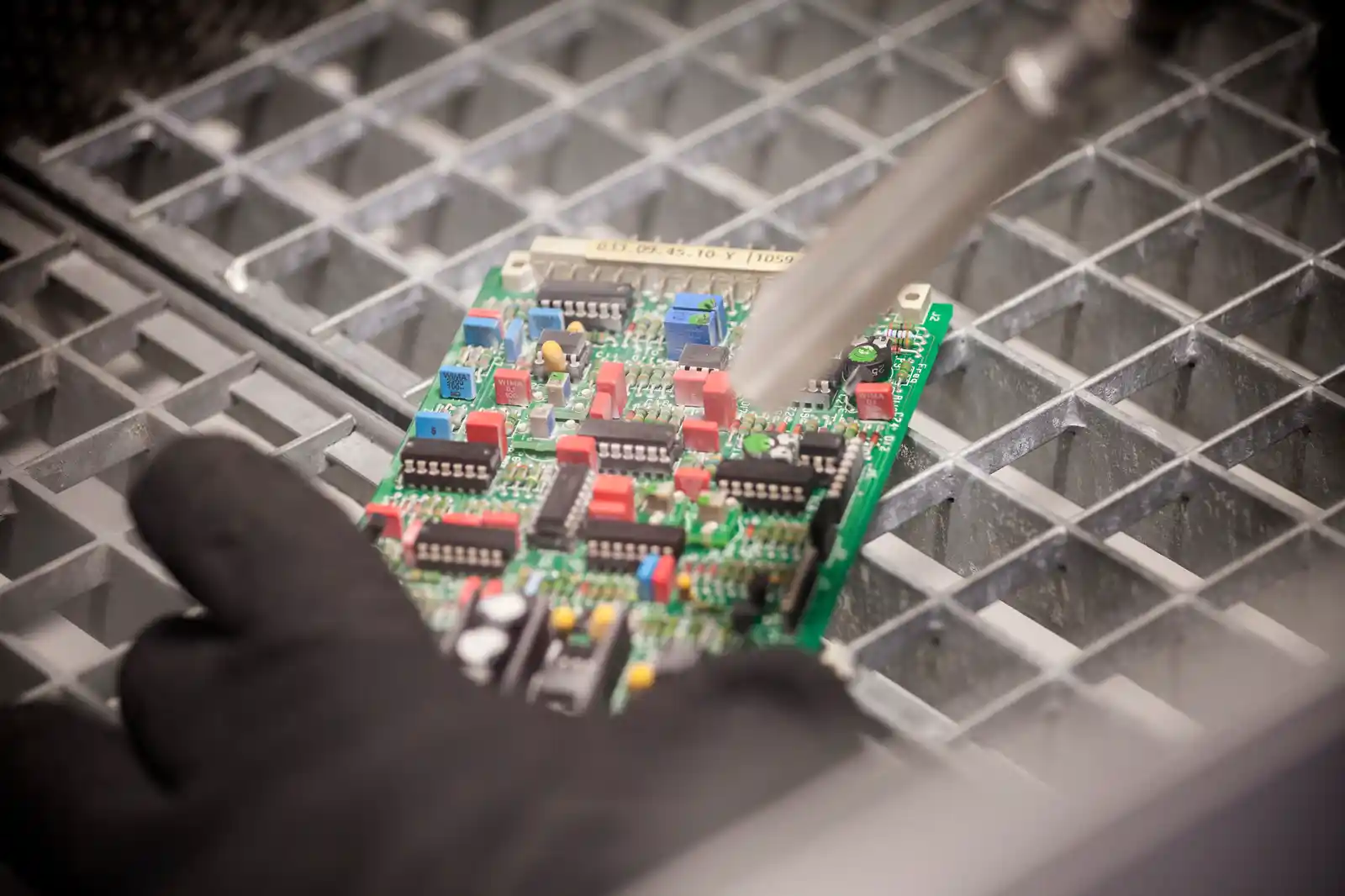
Dry ice is naturally soft (1.5 out of 10 on the Mohs Hardness scale), meaning it can clean without damaging delicate substrates. However, the level of aggression needed depends entirely on what you are cleaning. Tough contaminants like tar and grease require a highly aggressive impact, while intricate plastic molds or sensitive electronics demand a much gentler approach to avoid surface profiling.
 Benefit 2
Cleans In-Place and Online
Since dry ice is non-conductive and liquid-free, industrial machines can often be left online and “hot” during cleaning without being disassembled.
 Benefit 3
Fast Cleaning Action
Dry ice blasting allows for immediate, point-and-clean action without the need for extensive prep work or machine disassembly. Because operators can often see results in real time with a single pass, the actual cleaning process is incredibly swift.
Industries
Needs Assessment: Industrial Use Cases & Applications
The purpose for which you are purchasing a dry ice blasting machine is just as critical as any other consideration when choosing the right solution. Since dry ice blasting is so versatile, what you are cleaning (and where you are cleaning it) will heavily dictate the specific features you need. In our many years of producing the highest quality dry ice blasters on the market, we have identified the most common uses for dry ice blasting.
By Industry
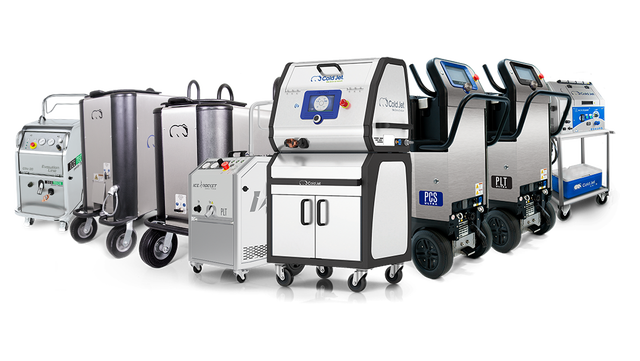
Industries Using Dry Ice Blasting
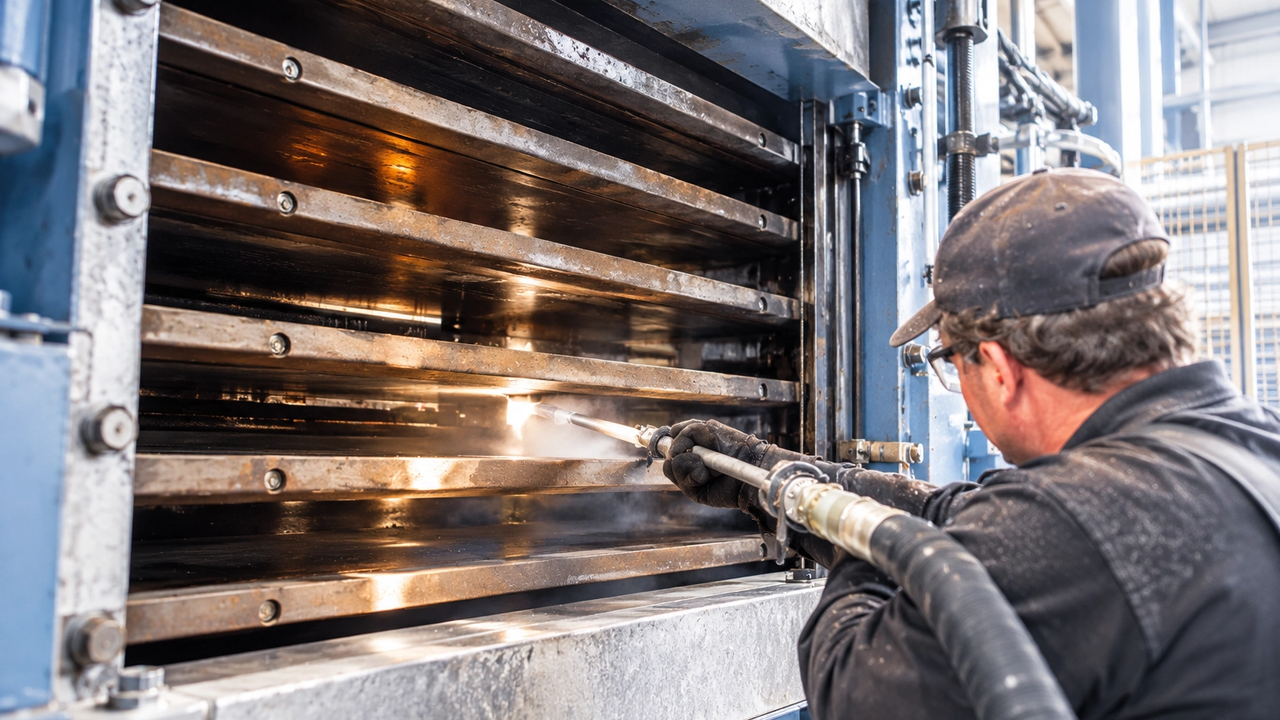
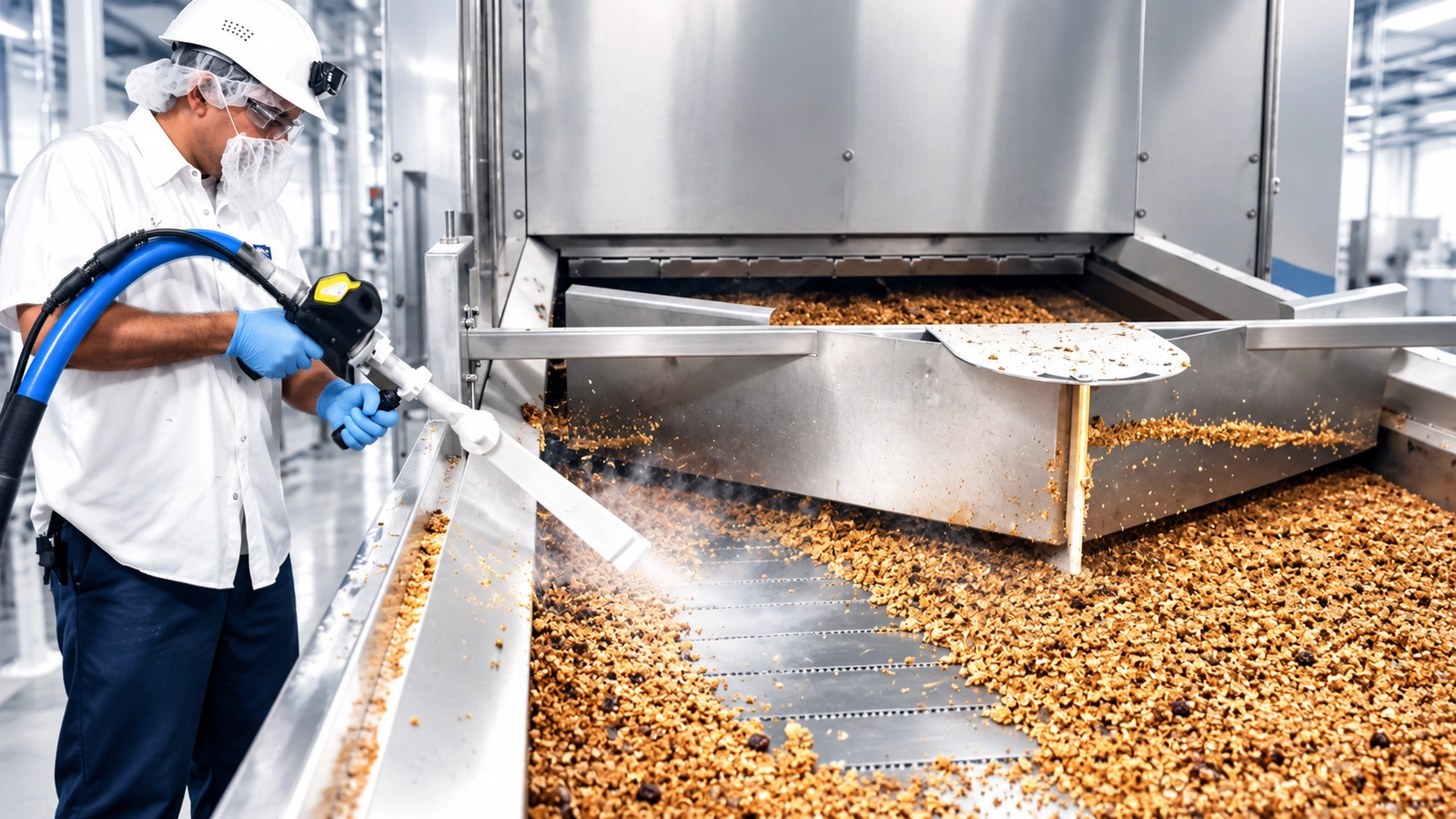
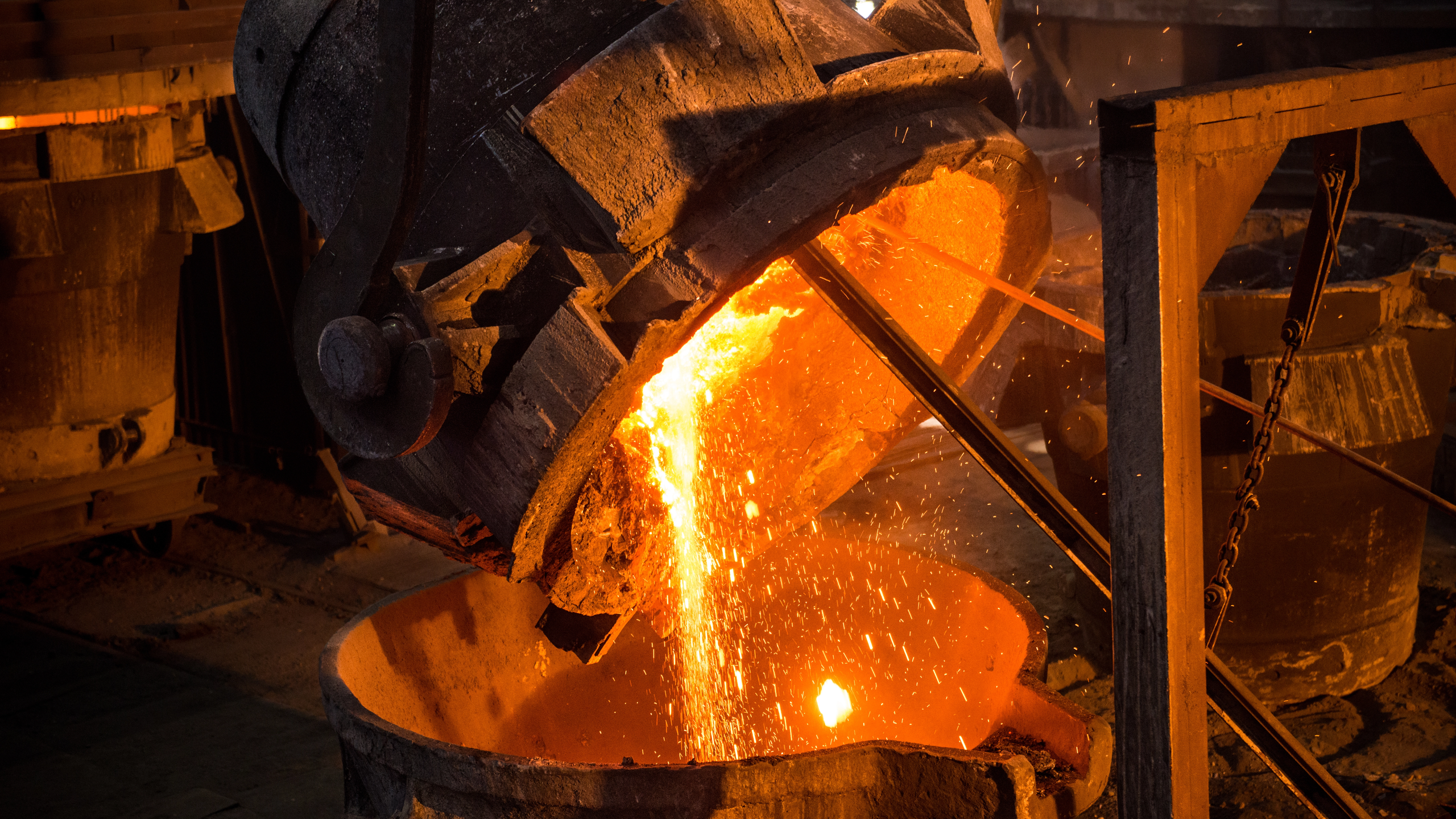
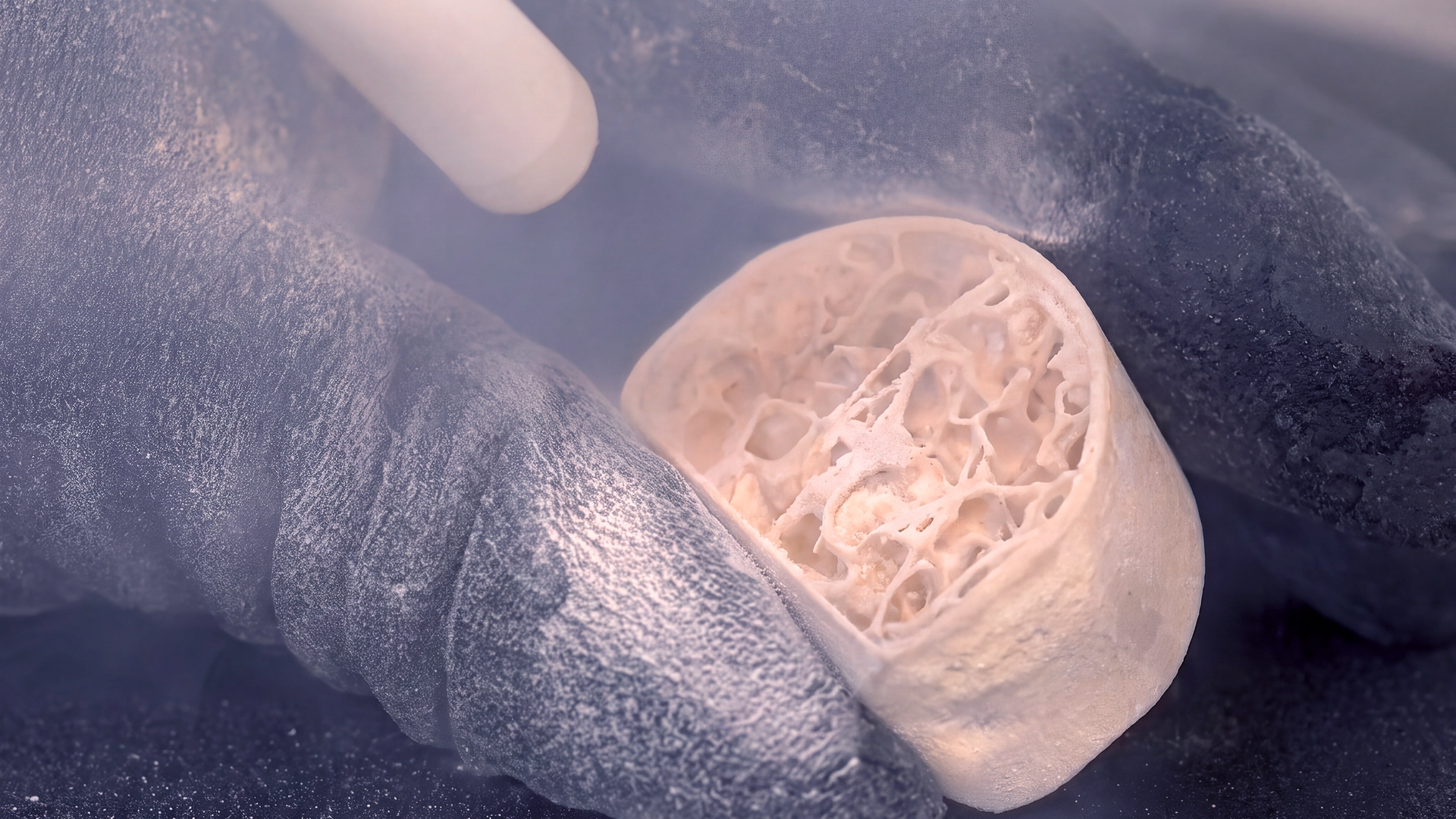
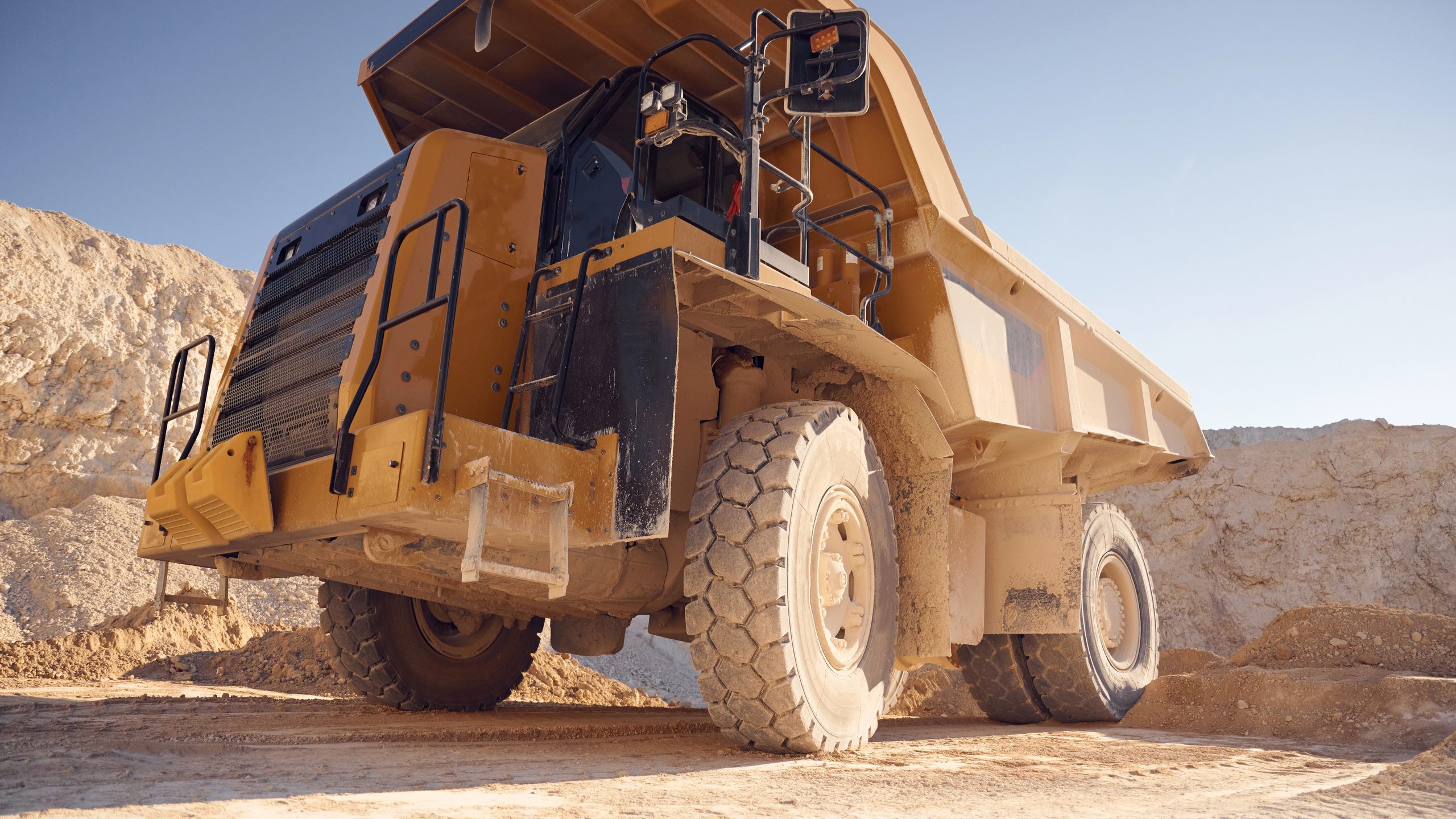
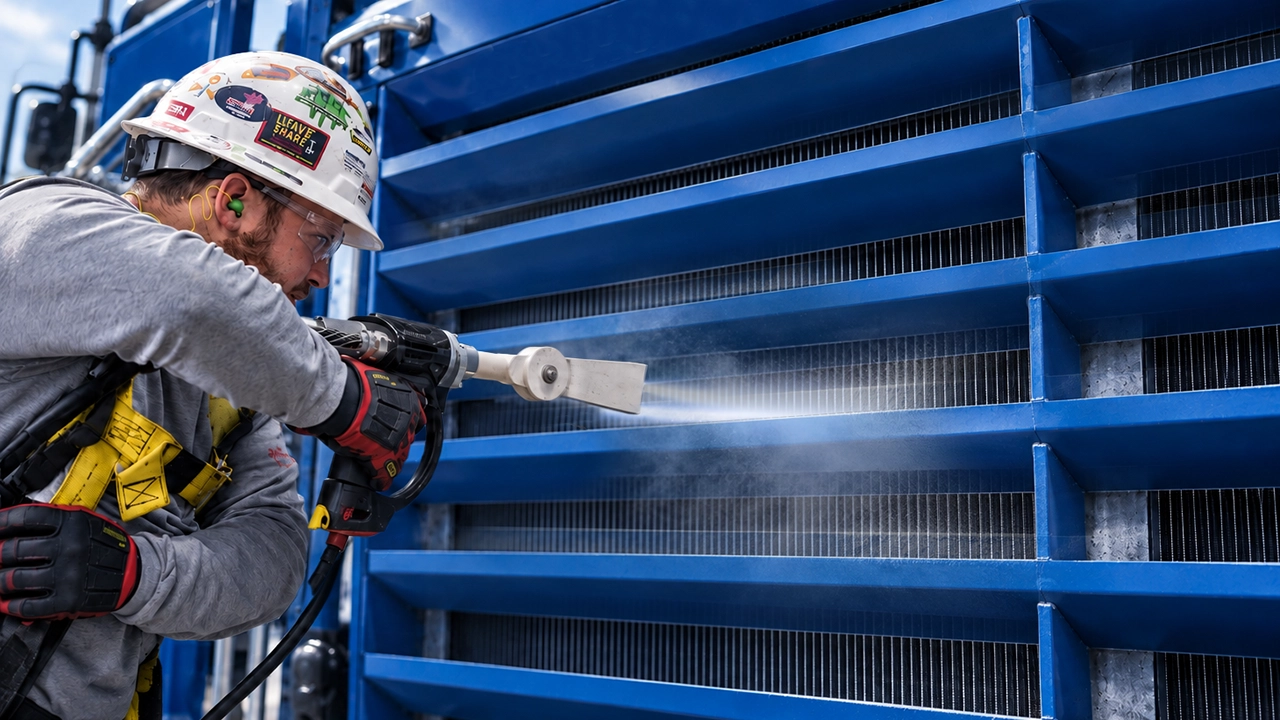
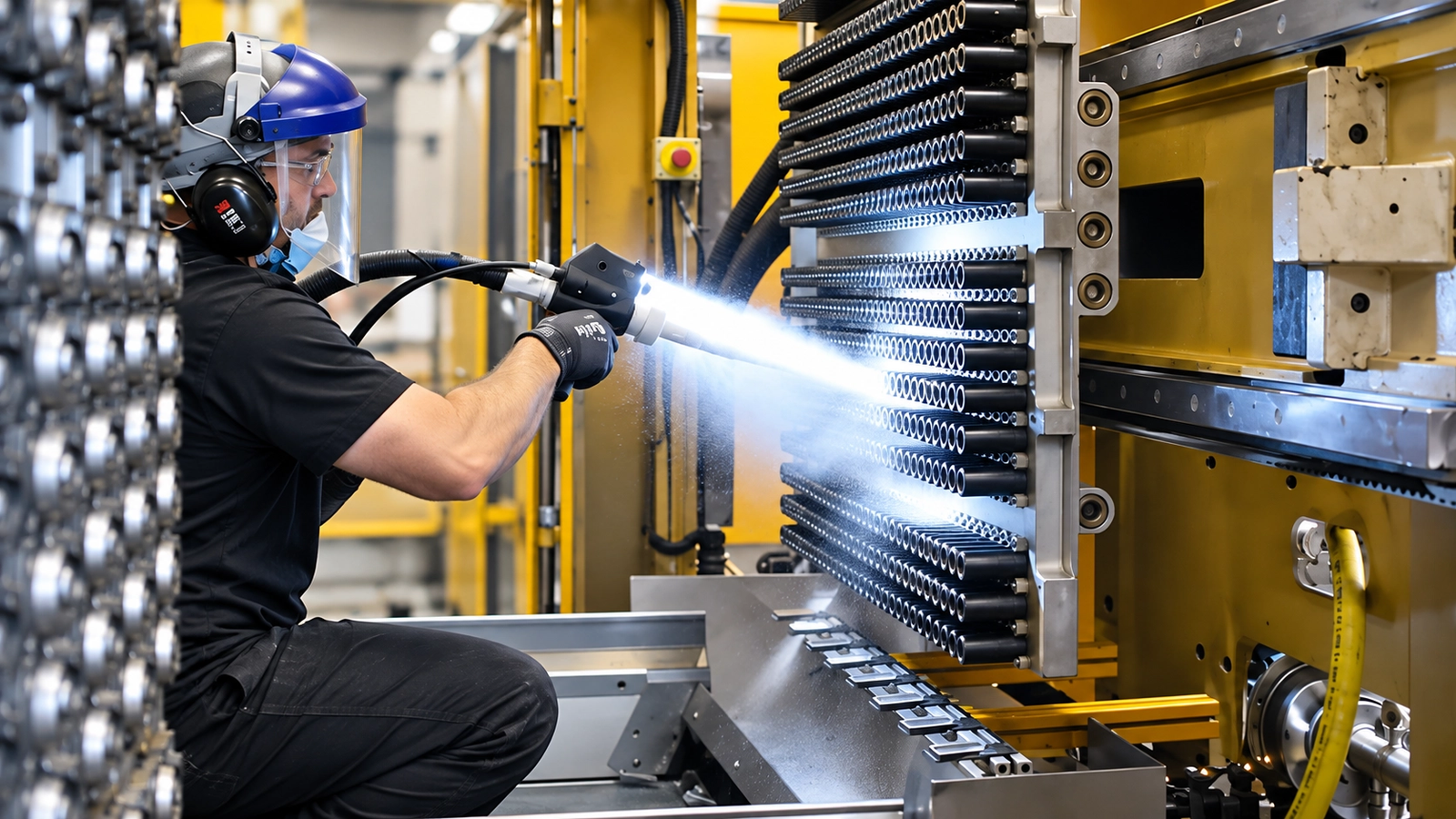
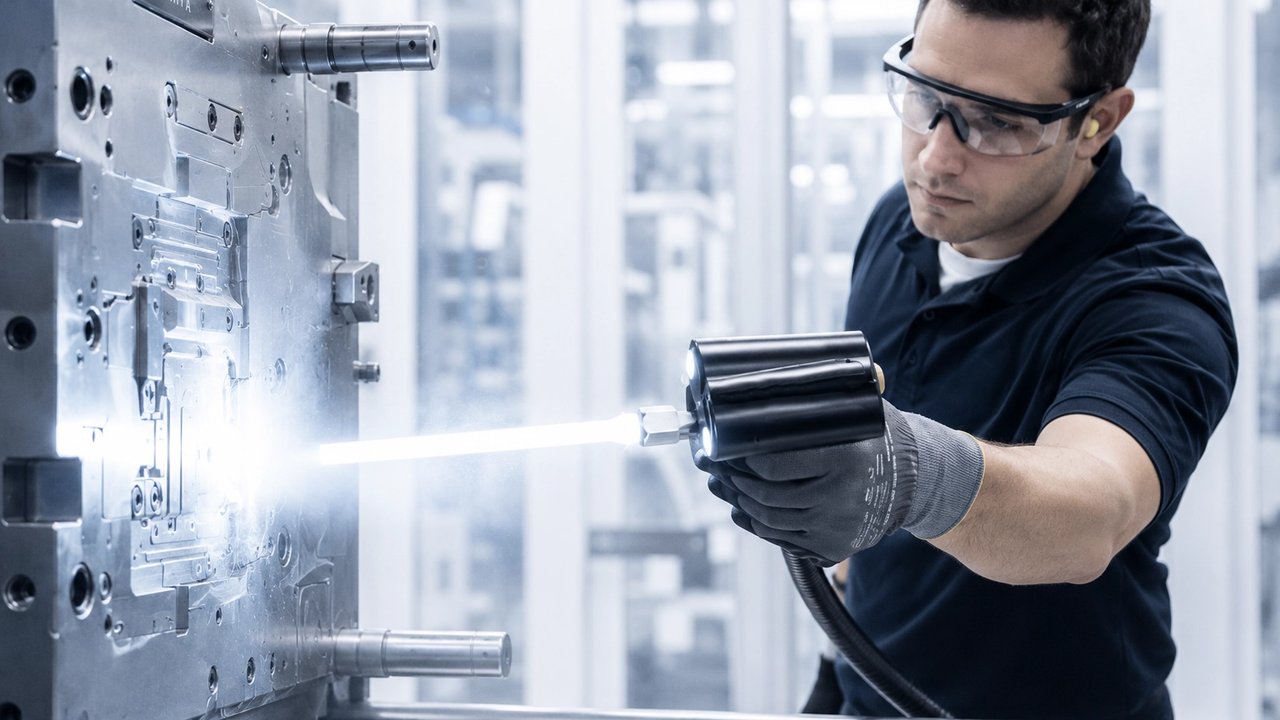
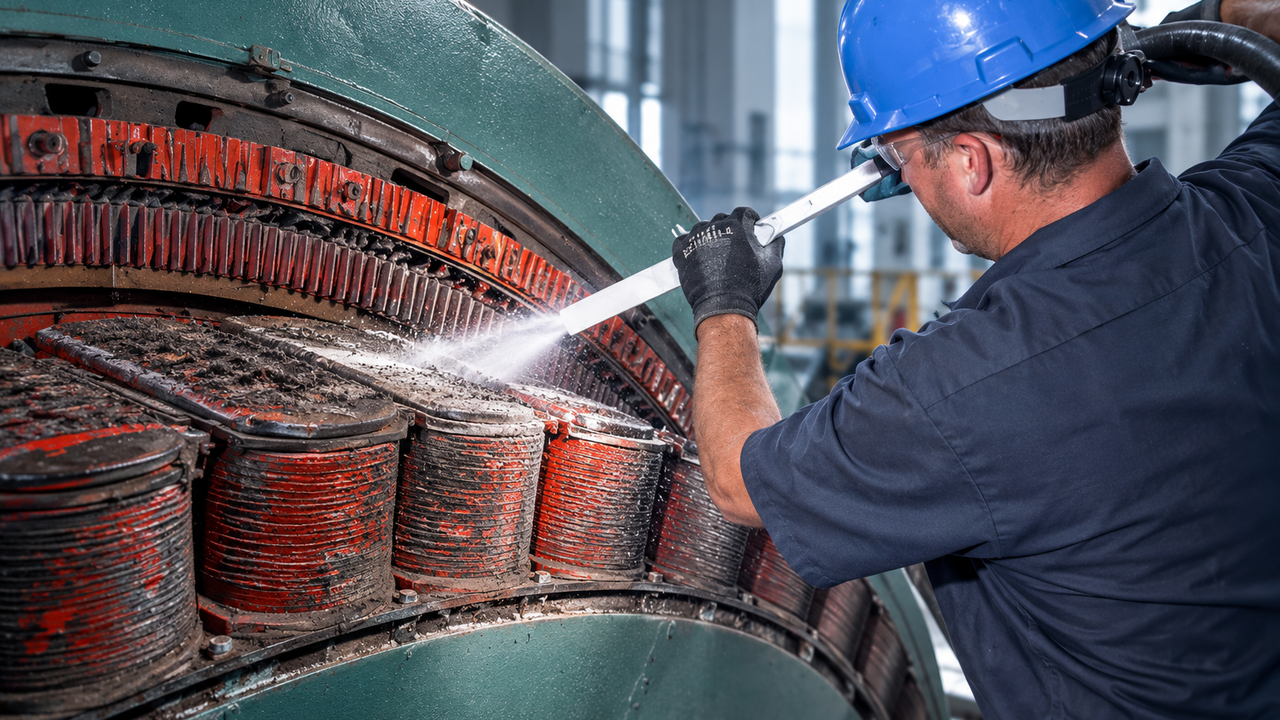
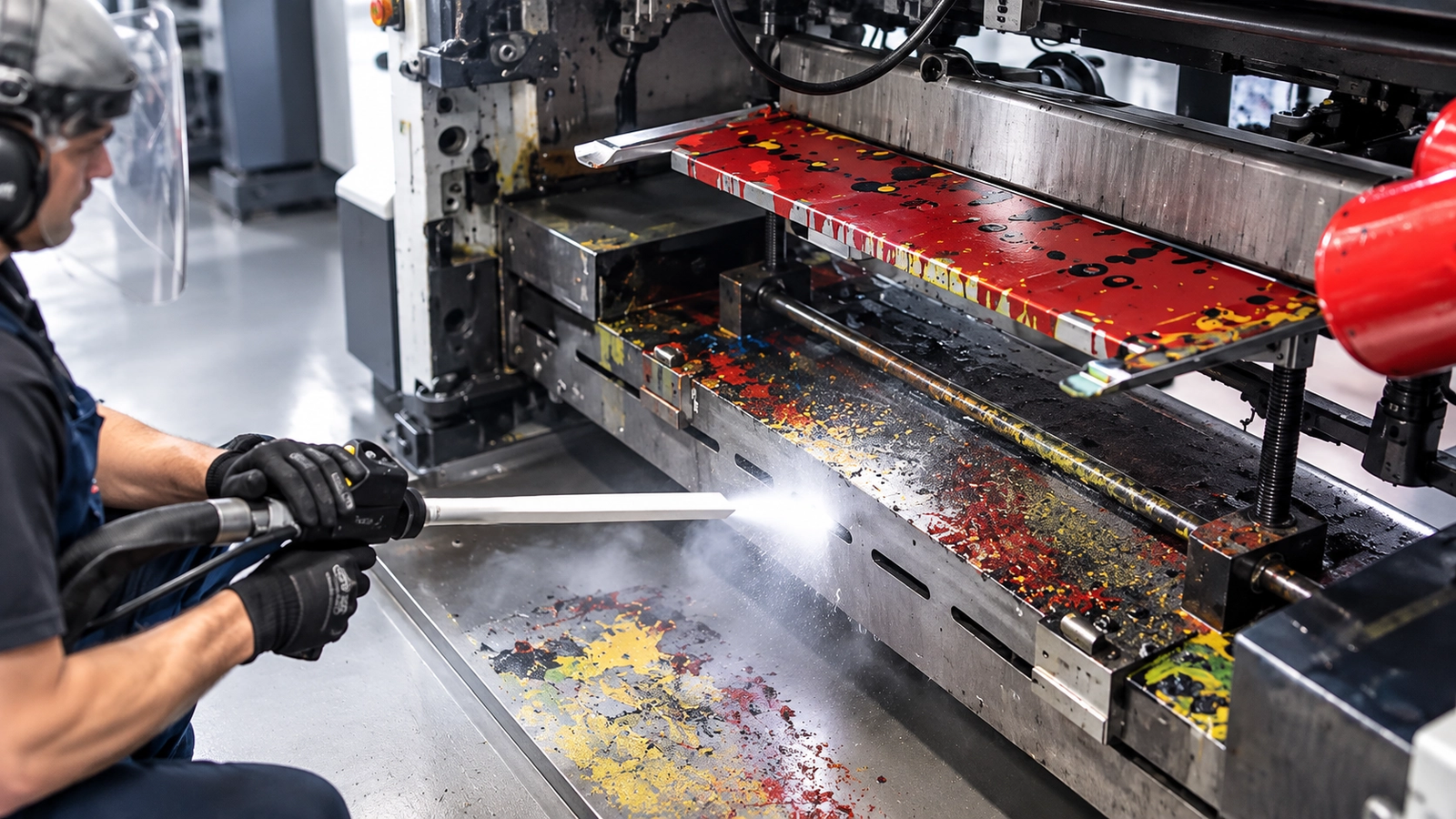
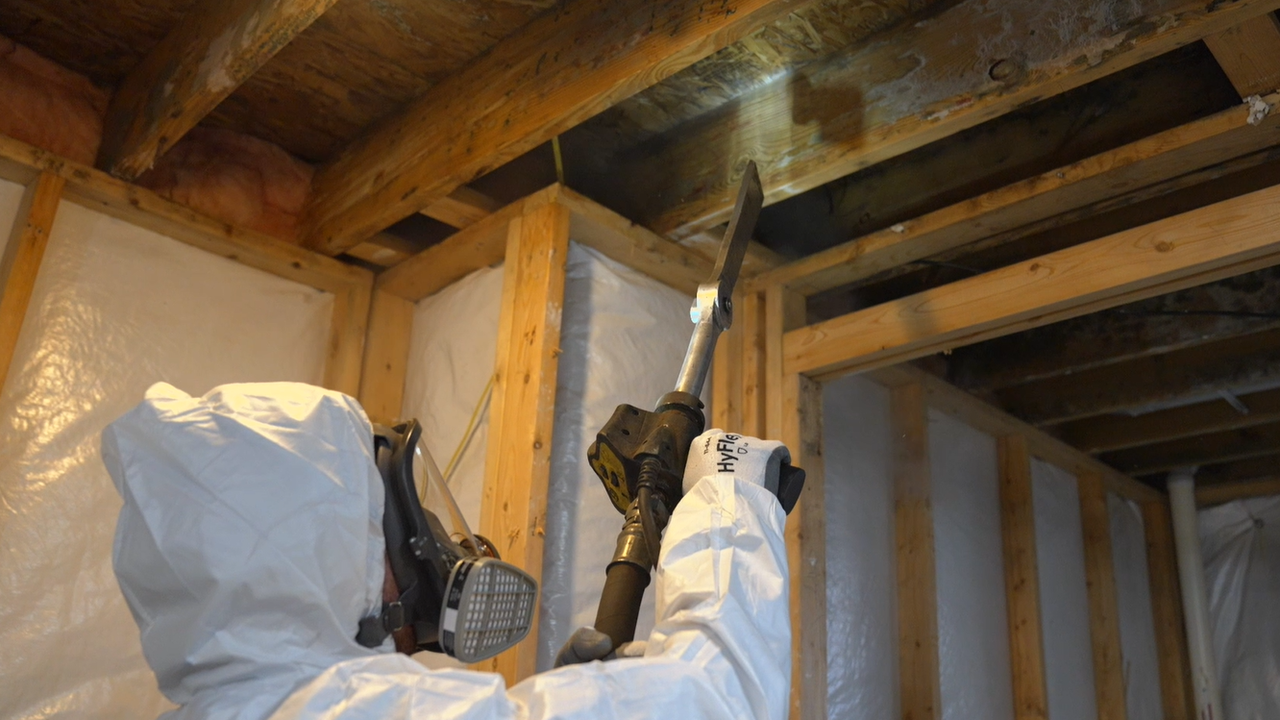
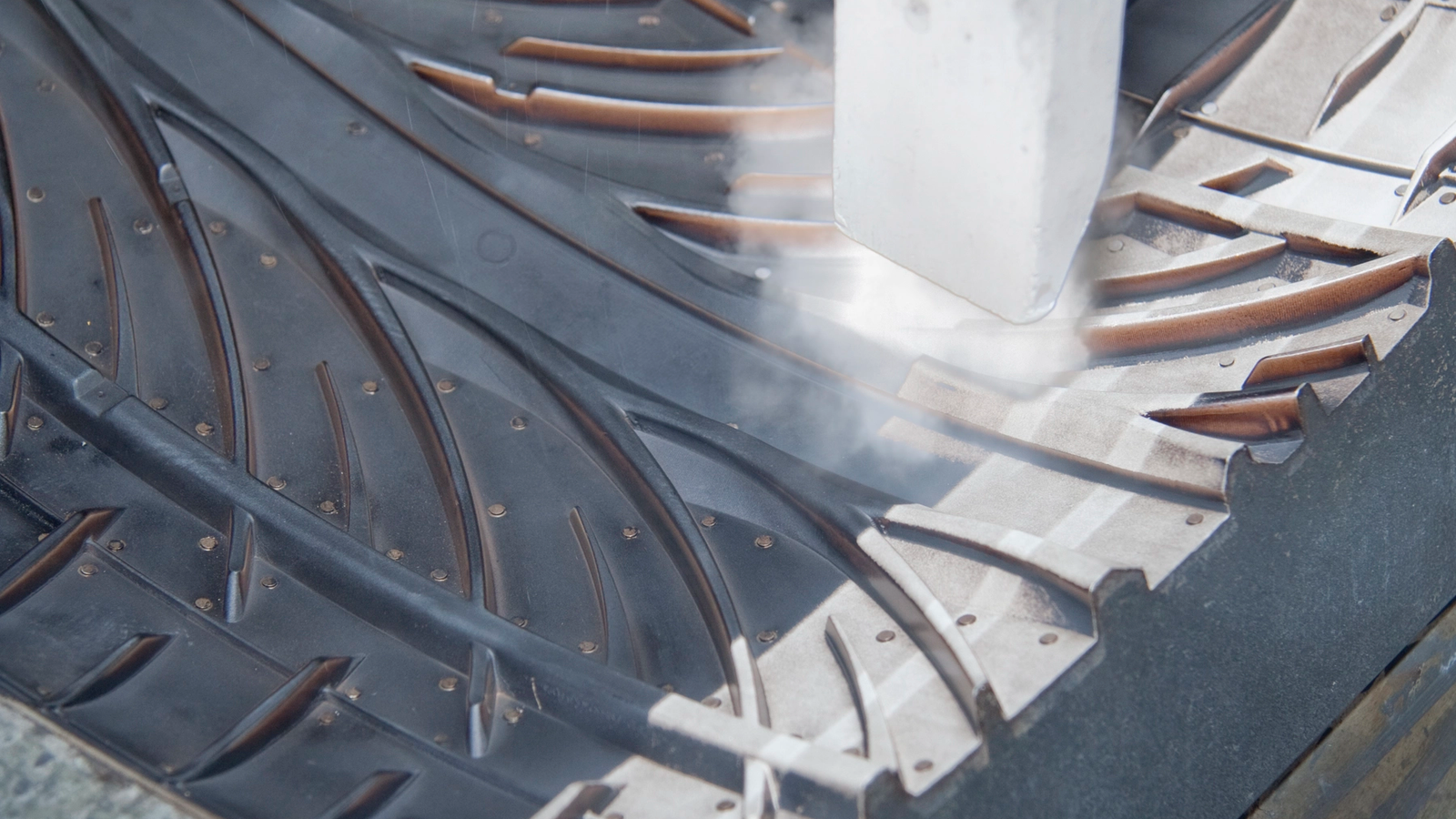
Dry ice blasting machines are used across numerous different industries that include, but are not limited to, the following:

By Application
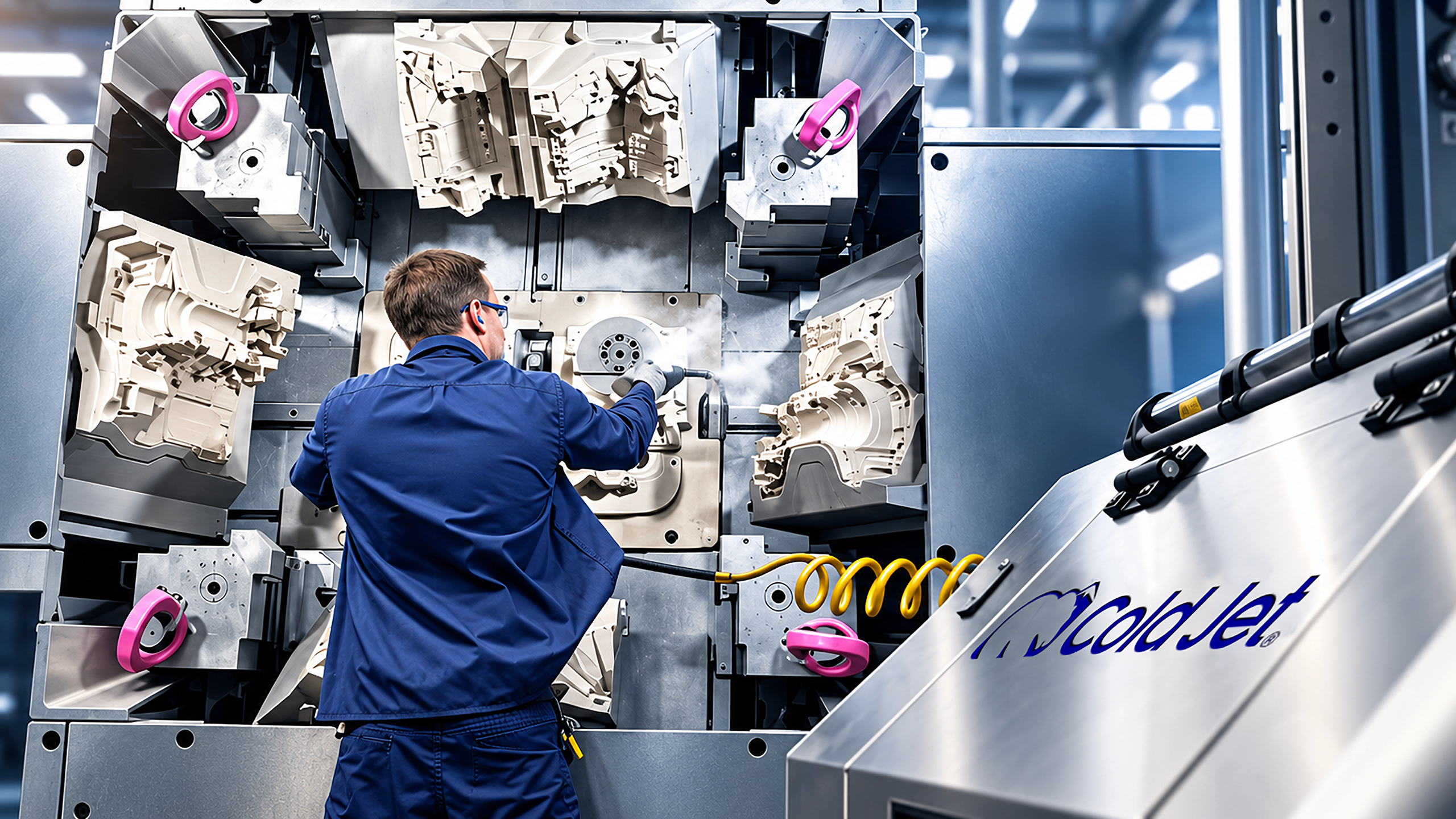
Common Applications
Dry ice blasting machines are used for a wide variety of tasks and purposes that include, but are not limited to, the following:
Work Environments
What Your Working Environment Dictates
Your specific working environment and day-to-day applications will ultimately dictate the sort of dry ice blasting hardware you will need. The following factors should influence how your individual needs drive your buying decision:
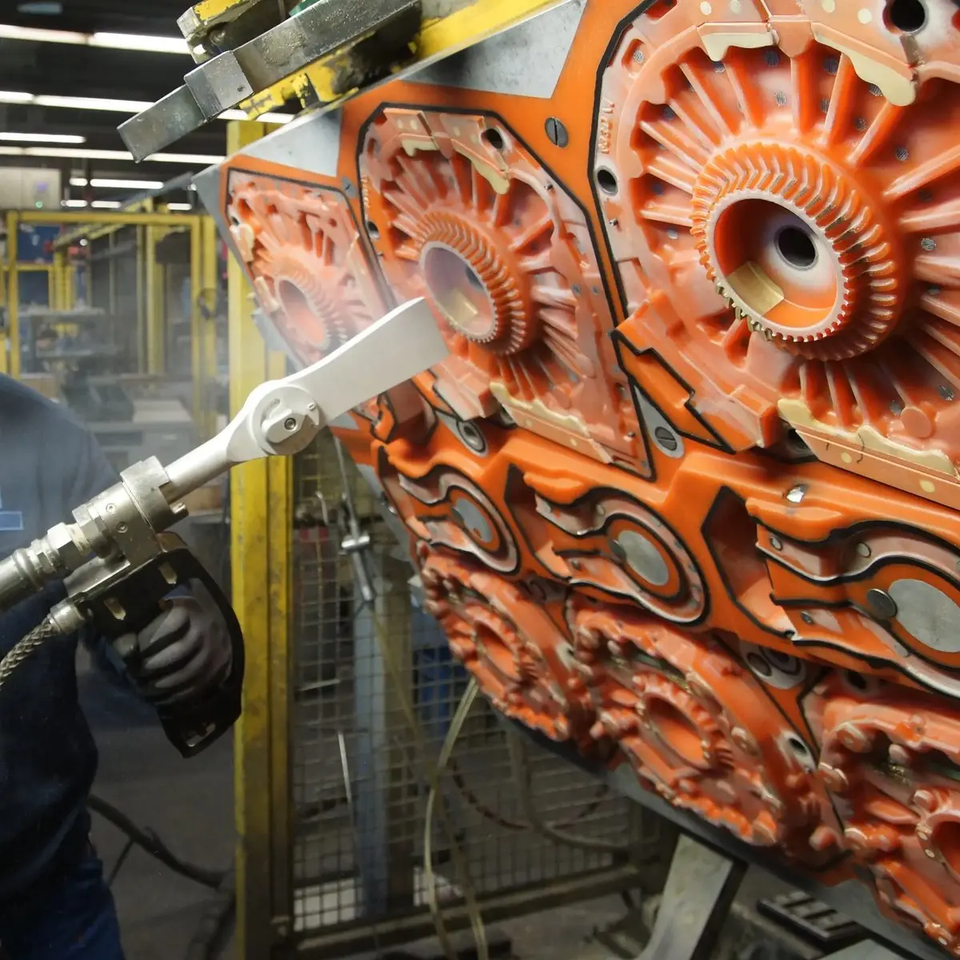
Industrial Cleaning, Decontamination, and Parts Finishing
Many industrial facilities rely on the high-frequency cleaning of large equipment, massive assembly lines, and individual tools to remain productive. Rather than just acting as a tool for occasional maintenance, dry ice blasting is often integrated into standard operations for the continuous, regular cleaning of production lines. Dry ice blasting is also utilized for the rapid deburring and deflashing of intricate parts (such as plastics) to prepare them for shipment. While minimizing downtime is always a factor, the ability to rapidly and repeatedly clean large-scale machinery in place is what makes dry ice blasting an invaluable, everyday solution for these environments.
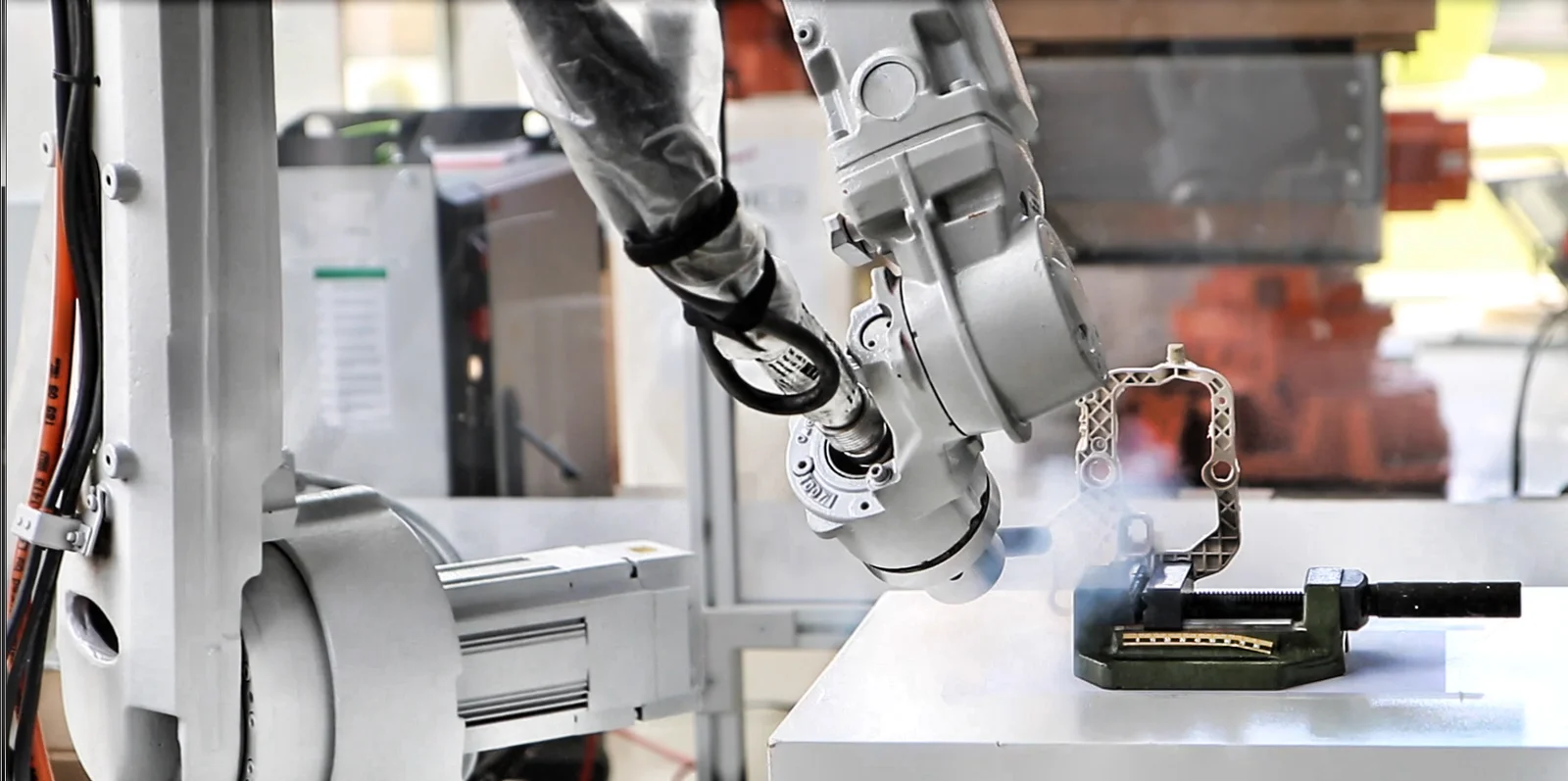
Automated Production Lines
Manufacturers utilizing automated assembly lines can seamlessly integrate dry ice blasting to clean and prepare parts in a repetitive, predictable pattern without disrupting production. These custom-built setups can be configured as semi-automated systems (where a robotic arm handles the blasting, but an operator manages the dry ice supply) or as completely self-sustaining, fully automated systems. In a fully automated setup, integrated equipment produces and feeds fresh dry ice directly into the blaster on-demand, requiring zero operator intervention.
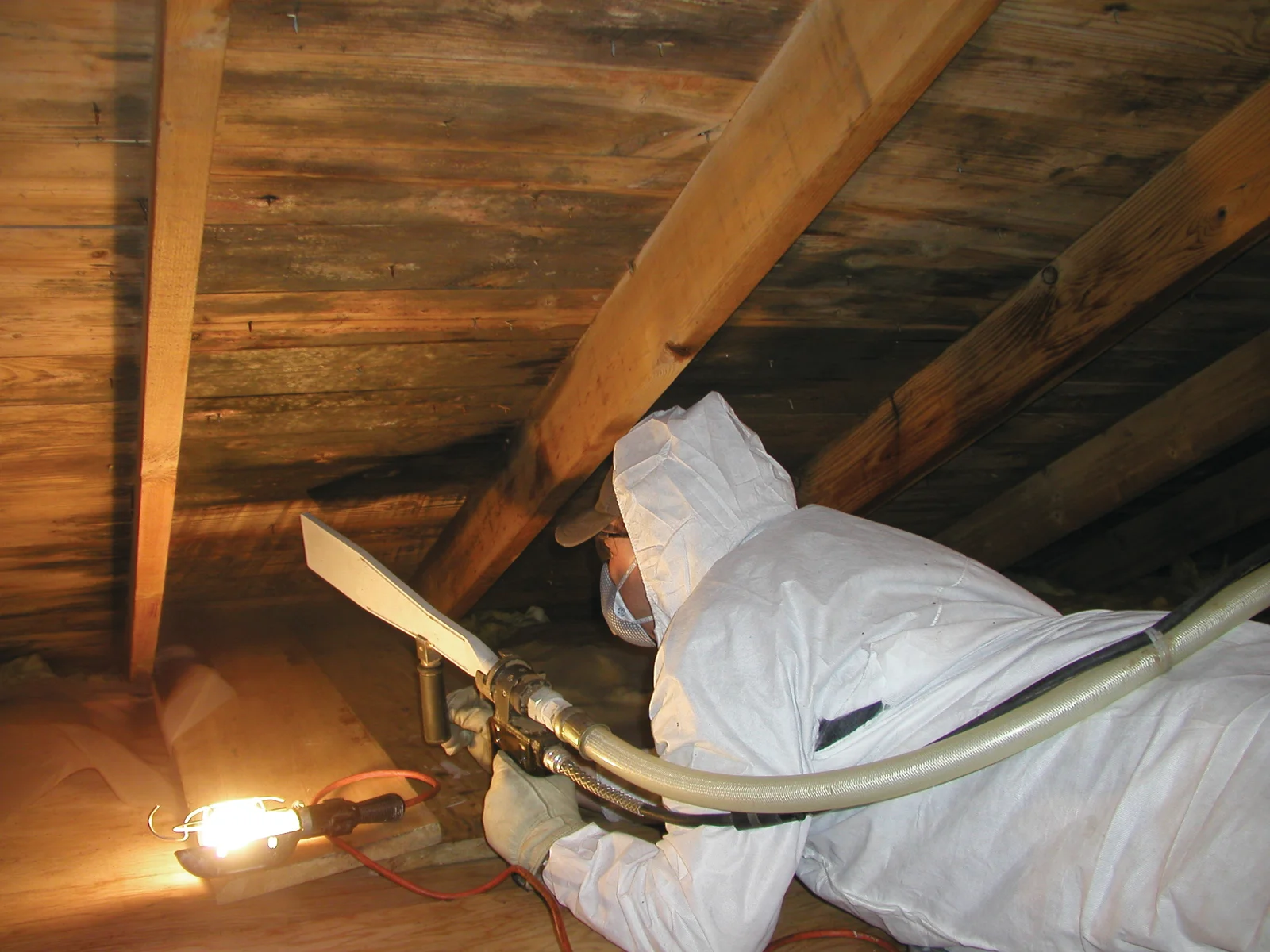
Contract Cleaning
Contractors offering professional cleaning, remediation, or restoration services increasingly face challenges such as rising operating costs, strict environmental standards, and heavy competition. To overcome these hurdles, contractors who perform cleaning tasks and jobs for other organizations or individuals favor dry ice blasting for its effective results, efficiency in time, and general cleanliness. The technology allows for a dry cleaning process that avoids the use of harsh chemicals or water, making it incredibly safe for equipment and environmentally friendly. Since dry ice blasting leaves behind no secondary waste, it results in shorter, more effective cleaning sessions and drastically reduces labor time.
Automotive Restoration and Detailing
Automotive detailing and restoration professionals utilize dry ice blasting to handle a massive spectrum of cleaning challenges on a single vehicle. In this industry, absolute versatility is the driving factor. A detailer must be able to aggressively blast heavy grease, road grime, or cosmoline off an undercarriage or transmission, and then immediately transition to gently cleaning delicate wiring harnesses, interior components, and original finishes without causing damage. Because the process leaves no moisture behind, it is entirely safe for intricate electrical systems and allows for comprehensive cleaning without requiring time-consuming vehicle disassembly.
Buying Criteria
Critical Buying Criteria: Key Dry Ice Blaster Features to Evaluate
Even if you have narrowed down your search to a dry ice blaster manufacturer like Cold Jet, not every blaster comes with the same capabilities. Some features are more critical than others, depending on your needs and application. Below is a comprehensive breakdown of the core features you must evaluate:
Compressed Air Requirements: Blast Pressure and Volume
Selecting an industrial dry ice blaster requires matching the machine's operating pressure (20–300 PSI / 1.4–20.7 bar) and air consumption volume (12–250 CFM / 0.34–7.1 m³/min) to both your facility's compressed air capacity and the adhesion strength of your target contaminant.
Using dry, compressed air is the engine of dry ice blasting. It is also a primary mechanism for controlling how aggressively you clean. Cleaning at higher blast pressure ranges results in a more aggressive clean for tougher contaminants and buildup. Blasting at lower pressure ranges results in lower aggression levels that are better suited for light buildup and delicate substrates. You must also ensure your compressed air source is capable of supplying the air pressure volume needed to operate your dry ice blasting effectively.
There are two primary metrics to evaluate:
- Pounds Per Square Inch (PSI): PSI dictates the physical force of the air pushing out of the nozzle. Higher pressure equals greater impact. The industry standard baseline for most industrial dry ice blasters is an operating range between 80 and 150 PSI (5.5 to 10.3 bar). High-pressure models can operate up to 300 PSI (20.7 bar) for higher aggression cleaning needs, while some models operate at as little as 20 PSI (1.4 bar).
- Cubic Feet Per Minute (CFM): CFM measures the overall volume of air flowing through the system. Dry ice blasters require a continuous supply of air, typically needing between 70 and 140 CFM (2.0 to 4.0 m³/min) to operate efficiently. However, some machines operate effectively at as little as 12 CFM (0.34 m³/min).
The Noise Factor
The noise of dry ice blasting (typically 85 to 120 dB) comes primarily from the compressed air expanding out of the nozzle and meeting the substrate. Operating at lower blast pressure ranges will produce lower noise levels.
- 20–300 PSI · 12–250 CFM
- 1.4–20.7 bar · 0.34–7.1 m³/min
Dry Ice Particle Size: Matching the Right Size to Your Application
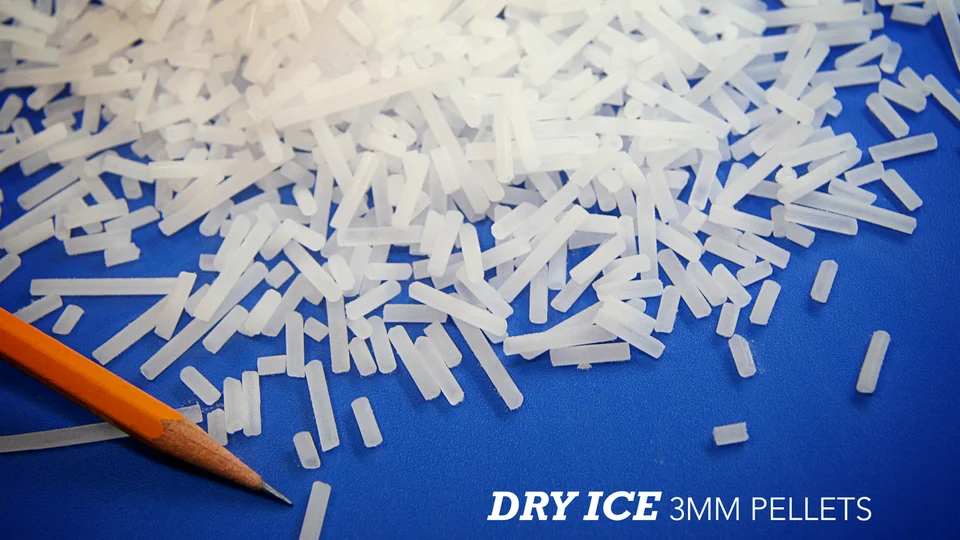
Choose standard 3 mm pellet machines for aggressive cleaning, microparticle machines (as low as 0.3mm) for delicate surface protection, or highly versatile variable-size models equipped with Cold Jet's Particle Control System (PCS®) to seamlessly transition between heavy-duty removal and precision detailing.
Not every dry ice particle size is suited to every cleaning task, so understanding what each size does is key to choosing the right machine. Standard 3 mm pellets carry more kinetic energy, making them ideal for aggressively removing dense, stubborn contaminants. On the other hand, microparticles shaved down to 0.3 mm deliver the gentle, controlled cleaning needed for delicate surfaces and light contamination. As a general rule of industrial surface preparation, the tougher the contaminant, the larger the particle needed; the more delicate the surface, the finer the particle needed.
- 0.3 mm – 3 mm
Hopper Capacity: Sizing It to Your Workload
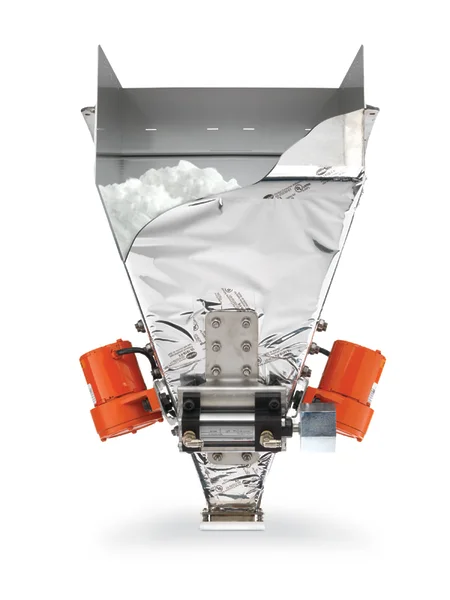
Match your dry ice blaster's hopper capacity to your workload by selecting large capacities (80+ lbs. / 36+ kg) for sustained industrial maintenance or smaller hoppers (13–20 lbs. / 5.9–9 kg) for highly mobile, precision tasks, all while ensuring the system is heavily insulated to prevent premature sublimation.
The type of cleaning you intend to perform dictates the hopper capacity you need. A blaster's hopper size determines how long you can clean continuously before stopping to reload more dry ice. Capacities typically range from compact 13 lb. (5.9 kg) hoppers up to 80+ lb. (36+ kg) hoppers built for sustained work.
It's also worth noting that a quality hopper does more than hold dry ice; insulated hopper walls keep ambient heat from prematurely sublimating the dry ice supply (turning it back into gas) before it reaches the feed mechanism, which helps prevent wasted dry ice, clumping, and clogging.
- 13 lbs – 80+ lbs
Dry Ice Feeding Mechanism: Consistent, Clog-Free Delivery
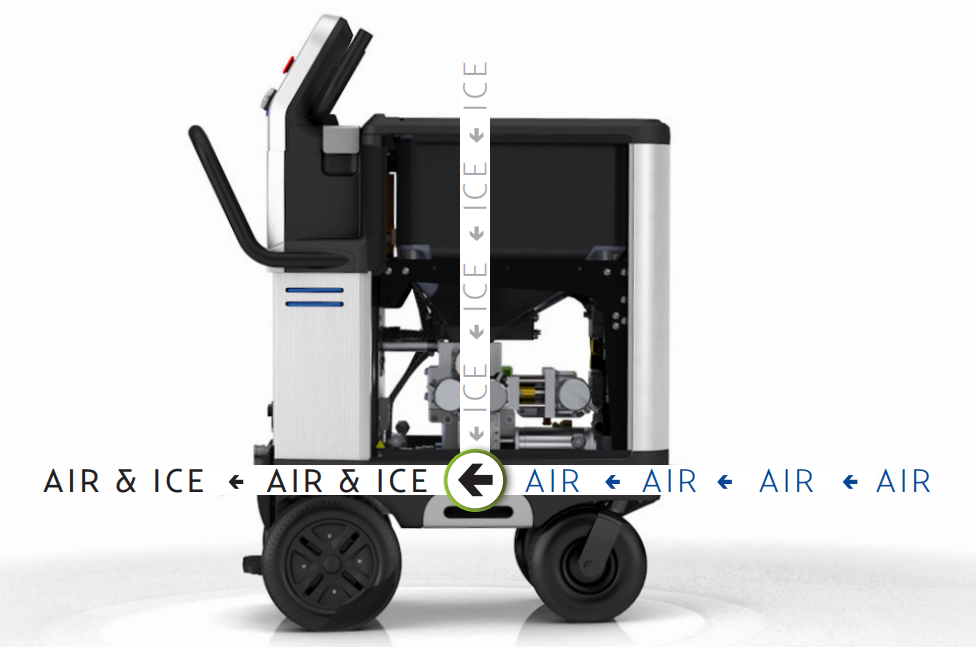
To prevent mid-job clumping, inconsistent cleaning, and freeze-ups, prioritize premium dry ice blasters equipped with automated, cold-resistant agitation technologies like Cold Jet's patented SureFlow Feeder System and active defrost cycles.
How dry ice moves through the machine dictates the consistency of your clean. A robust feeding mechanism delivers a steady, uniform flow of dry ice to the nozzle while a weak one introduces problems mid-job. The result is an inconsistent clean and frequent interruptions due to clumping, striping (gaps in the dry ice stream), and loss of pellet integrity as the dry ice travels through the blasting hose.
- Automated agitation vs. manual
Construction & Materials: The Source of Durability and Mobility
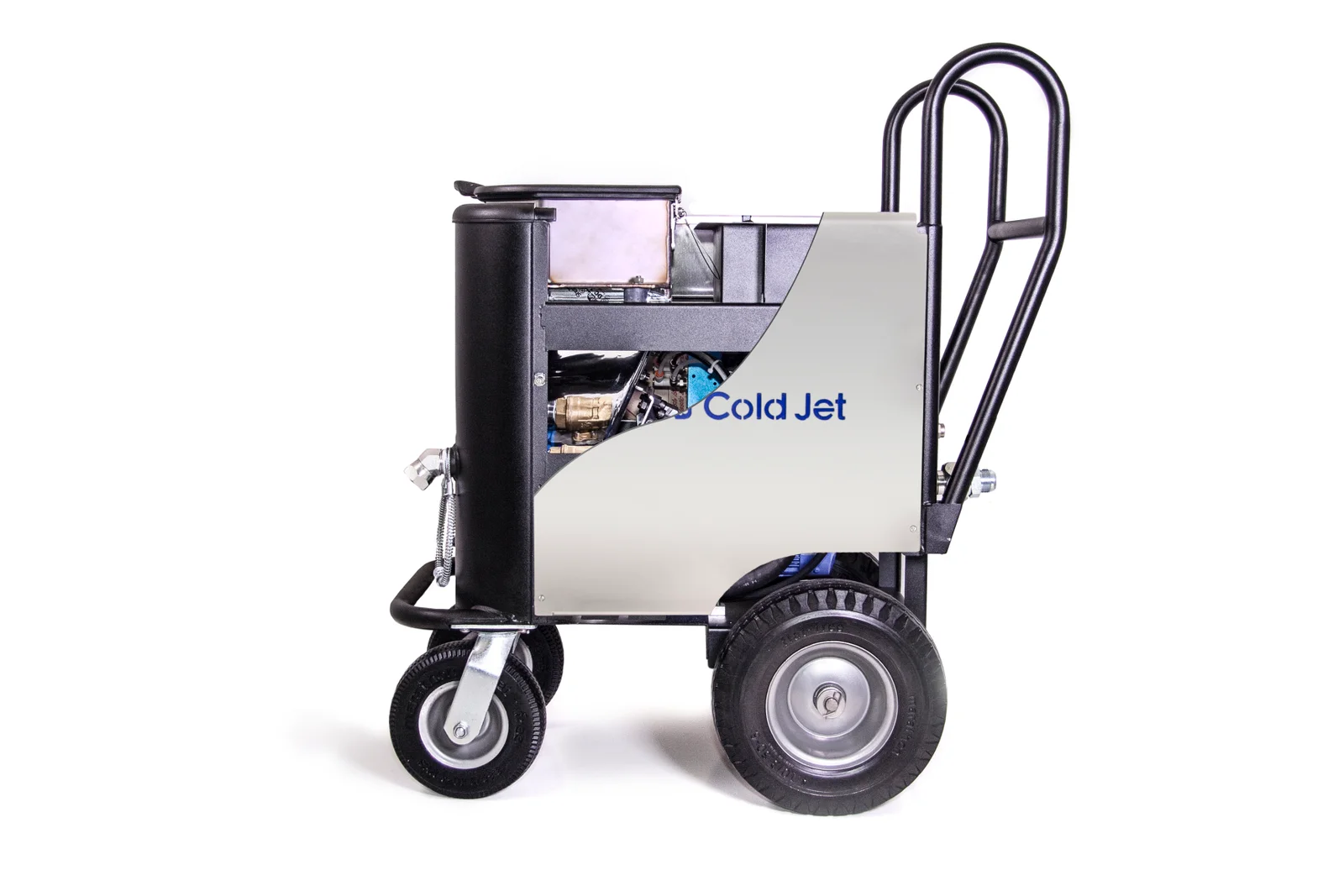
Ensure long-term durability and maneuverability in harsh industrial environments by selecting blasters constructed from rugged stainless steel and rigid aluminum, utilizing a form factor (all-terrain wheeled or cart-based) that matches your operational footprint.
What a dry ice blaster is made of determines two things: how much abuse it can withstand and how easily you can move it. Industrial environments are dirty and unforgiving, and equipment takes a beating over time through bumps, scrapes, and tumbles. The materials and frame design are what separate a machine that lasts for years from one that quits early. Just as important is the machine's movement format, which dictates how it's meant to move with you from job to job.
- Stainless steel · aluminum alloy
Analog vs. Digital Controls: Simplicity or Precision
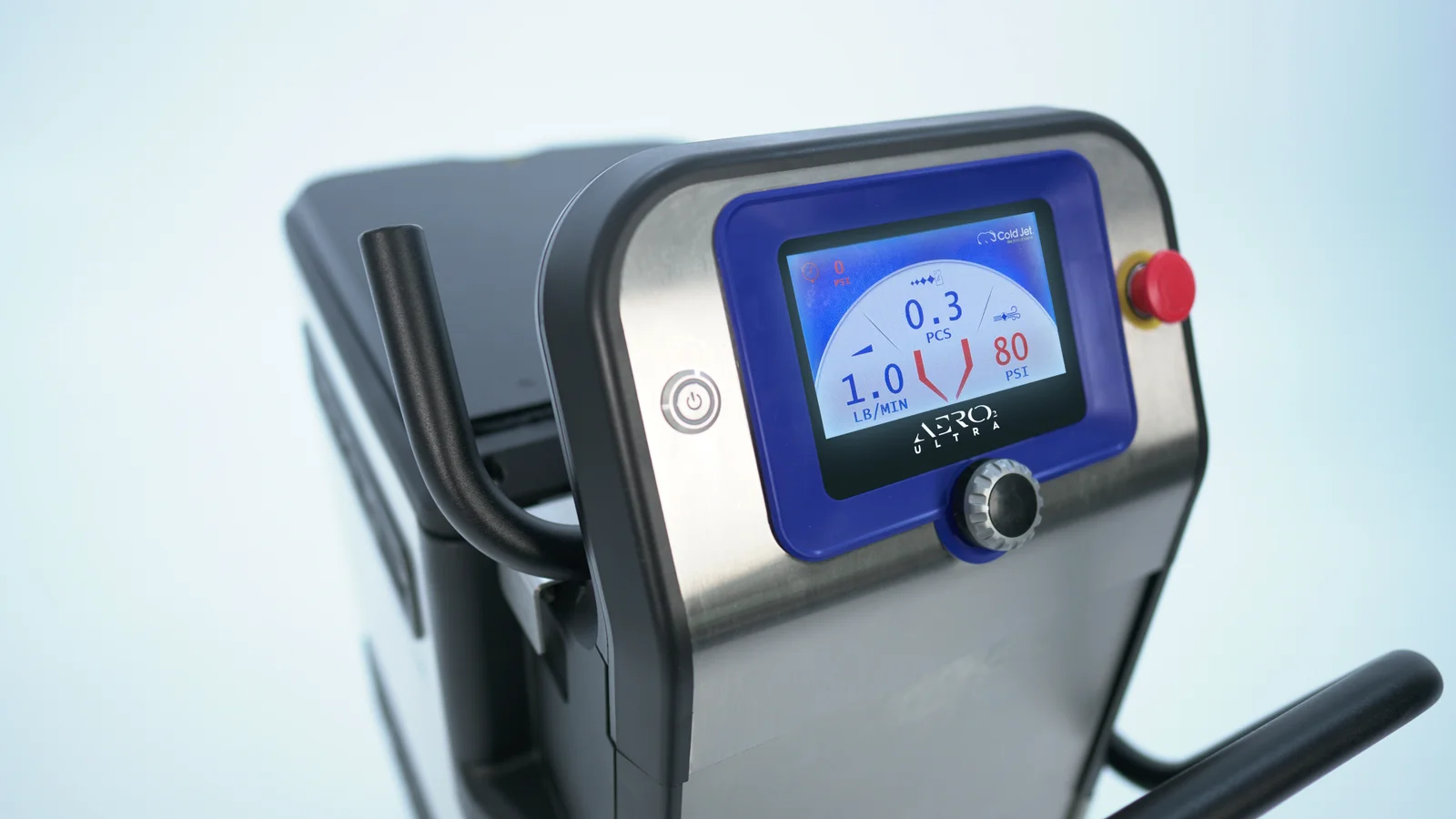
Select analog control systems for rugged, manual simplicity on consistent tasks, or upgrade to digital LCD controls to save exact programmable “recipes” (pressure, particle size, and feed rate) that guarantee repeatability and minimize operator error.
How you operate the machine and how precisely you can repeat a result comes down to its control system. The definitive factor when choosing between analog and digital is process repeatability. Analog machines rely on manual dials, knobs, and gauges to set blast pressure and feed rate. You adjust by hand and read the settings off physical gauges. Digital machines replace physical gauges with an LCD screen and electronic controls, letting you set parameters precisely. Neither is better outright as they serve different operators and different kinds of work.
- Manual dials vs. saved recipes
Smart Features: Industry 4.0 and IoT Connectivity
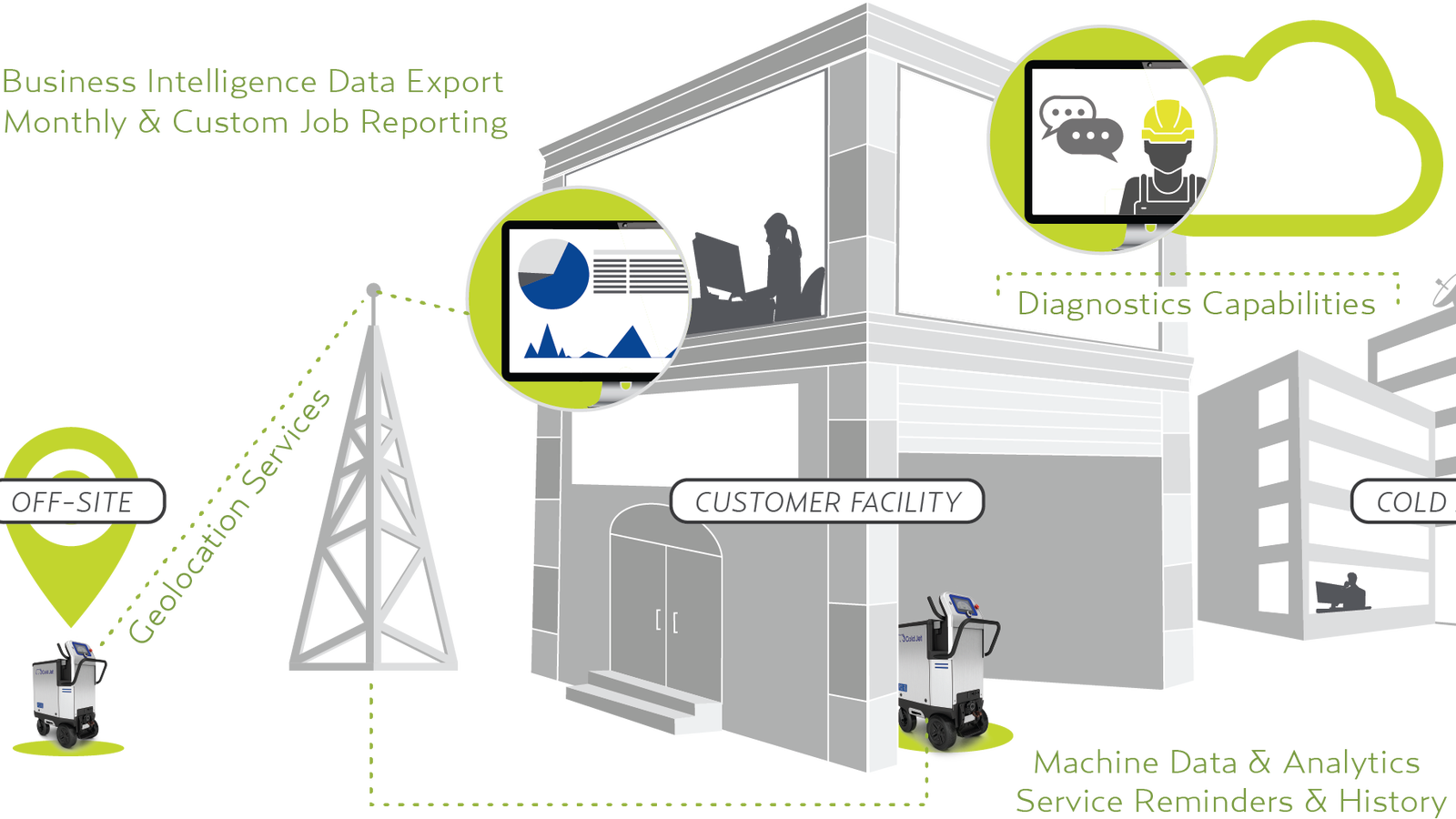
Maximize machine uptime and safeguard production consistency by investing in Industry 4.0 IoT-connected blasters (such as those featuring Cold Jet CONNECT) that enable remote machine diagnostics, fleet monitoring, and real-time technician support.
Beyond on-machine controls, the most advanced blasters are connected. Industry 4.0 / IoT capability links the machine to a cloud platform, turning it from a standalone tool into a monitored, supportable asset. Certain Cold Jet machines have access through Cold Jet CONNECT, a proprietary cloud-based telemetry and support platform that is built into smart models like the i3 MicroClean 2 and the Aero2 ULTRA series. Rather than just running the machine, connectivity lets you see how it is performing, get help faster when something goes wrong, and protect consistency across jobs and operators.
- Industry 4.0 · Cold Jet CONNECT
Automation-Ready: Integrating into Robotic Production Lines
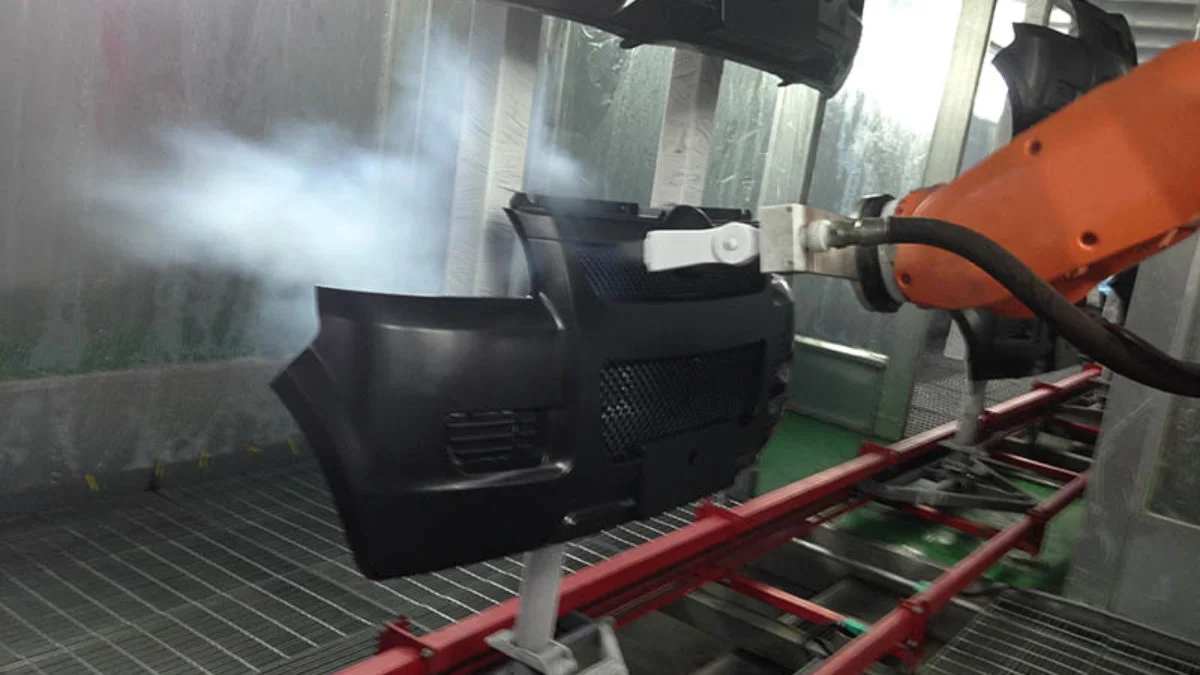
For high-volume inline manufacturing, you must specifically verify that your dry ice blaster is an “automation-ready” model equipped with the necessary integration modules and communication protocols (EtherCAT, PROFINET) to interface directly with facility robotic arms and PLCs.
If you plan to build dry ice blasting into an automated or robotic production line, the single most important thing to understand is that not all blasters are capable of automation. Many machines, especially analog and budget models, are designed strictly for manual, handheld operation and cannot be integrated into an automated process. If inline cleaning, surface prep, or part finishing is your goal, automation readiness becomes a critical requirement to confirm before you buy.
True automation readiness means the machine can interface with a manufacturing-tier robotic arm and your facility's PLCs to run exact, repeatable cleaning patterns without interrupting production. In practice, that depends on the blaster having an integration module that speaks standard industrial protocols (such as EtherCAT, EtherNet/IP, and PROFINET) and supports safety handshakes like an E-stop tie-in with the cleaning booth.
- EtherCAT · EtherNet/IP · PROFINET
Cost of Ownership
Budget vs. Premium Blasters: Understanding Total Cost of Ownership
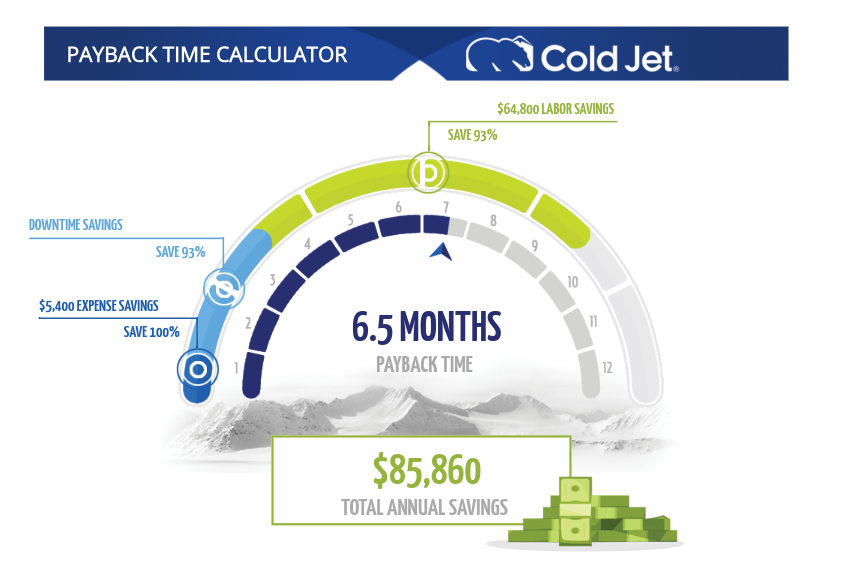
There is a wide range of dry ice blasters on the market, and while prices vary for many reasons (build quality, features, size, etc.), most machines fall into two broad categories: budget and premium. Budget blasters capable of industrial level cleaning can run as low as $10,000 for professional models, while premium models can cost upwards of $55,000. That sliding scale is directly tied to the quality and usage the machine is built for, and the sticker price rarely tells the whole story.
A lower purchase price can quietly cost you more over time. When weighing budget options against premium options, look past the sticker and compare what you're actually getting.
| Factor | Premium Blasters | Budget Blasters |
|---|---|---|
| Build Quality and Longevity | Built with robust materials to withstand harsh industrial use, giving them a longer service life and spreading the upfront cost across far more working hours. For example, a quality blaster should last 10+ years. | Often use cheaper materials and construction that wear out or break down sooner. |
| Features and Control | Wide variable pressure (PSI) settings and variable dry ice pellet sizing, paired with an extensive selection of precision nozzles. | Cheaper blasters tend to come with a simplistic nozzle and limited blast settings, which restricts the range of jobs they can handle and the efficiency with which they handle them. |
| Efficiency | Engineered to get more out of every pound of dry ice and every CFM of air. Robust feeders deliver a consistent stream with less waste and refined airflow paths to clean more effectively with fewer consumables. | Tend to waste more dry ice and air, raising your operating costs on every job. |
| Service Network and Parts | One of the largest support networks in the industry, including local service technicians, rapid spare-parts availability, and after-hours troubleshooting. | Frequently lack a support network, so when something goes wrong or a part is needed, you face longer downtime and harder-to-source replacements. |
| Long-Term Value | Cost more upfront, but deliver more in build quality, features, longevity, efficiency, and a service network unmatched in the industry. Combined, these factors typically lower total cost of ownership over the life of the equipment. | The sticker price can be misleading, as a lower purchase price can quietly cost you more over time through more frequent equipment replacements. |
The Cold Jet Lineup
Choosing the Right Dry Ice Blaster
You have the framework to evaluate any dry ice blaster on the market: air requirements, particle-size control, feeding reliability, and construction. The natural next step is to apply that framework to a specific lineup, and that is where Cold Jet comes in
Cold Jet has been pioneering modern dry ice blasting since 1988 and leads the industry in machine quality, efficiency, and longevity. Every machine in our lineup is built around the same fundamentals of quality and efficiency, and each is backed by a global support network that handles parts, troubleshooting, and repairs for the life of the equipment. That combination of proven engineering and lasting support is what turns a dry ice blaster from a one-time purchase into a long-term, high-return investment.
With that in mind, here's how the lineup breaks down so you can match a machine to your operation:
Smart Dry Ice Blasters
3Cold Jet's line of smart dry ice blasters brings cleaning and contaminant removal into the digital age with intuitive LCD screen controls, programmable settings, and Industry 4.0 IoT capabilities.
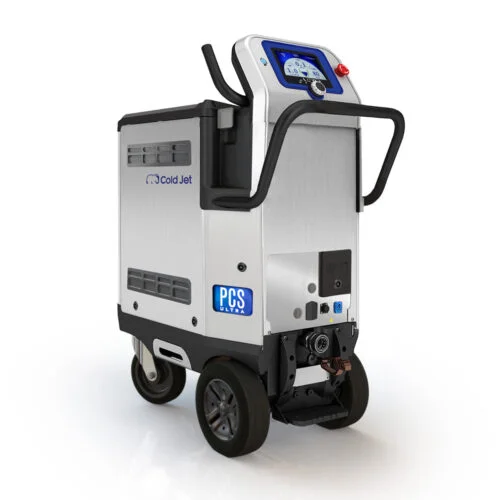 60 lb hopper · 28 particle sizes
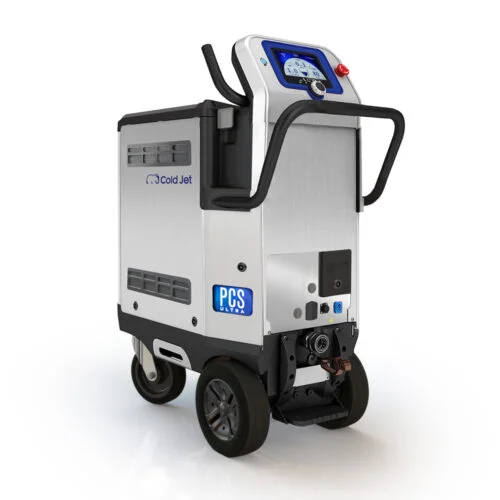
Aero2 PCS ULTRA
$54,950The Aero2 PCS ULTRA is the most versatile dry ice blaster on the market and is powered by Cold Jet's patented Particle Control System (PCS®), an on-board dry ice pellet-shaving mechanism that lets operators select from 28 particle sizes ranging from 0.3 mm to 3.0 mm in 0.1 mm increments. The Aero2 PCS ULTRA is the truest jack-of-all-trades blaster, allowing seamless movement between aggressive removal and delicate precision work with a single machine. Programmable application recipes take that flexibility a step further, letting users set and save blasting parameters like blast pressure, particle size, and feed rate so the same dialed-in clean can be recalled instantly and repeated reliably across operators and jobs.
Beyond its versatility, the Aero2 PCS ULTRA is engineered for consistency and uptime. Its patented SureFlow Feeder System combines thumpers, ramrods, vibrators, and an insulated hopper to keep dry ice flowing steadily. A new array of ultra-cold-temperature motors, paired with proprietary control firmware and drivers, keeps performing efficiently even through long, continuous blasting cycles. A core contamination control system shields critical internal components from dust and debris to minimize routine maintenance. Additionally, the machine's patent-pending defrost cycle adds moisture control, core cleaning, and clears freeze-ups to maximize machine uptime.
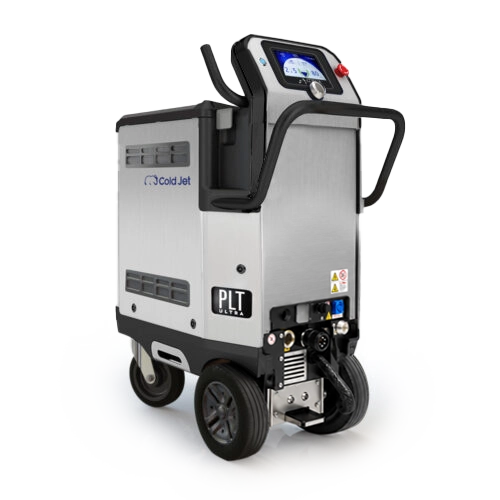 60 lb hopper · up to 250 PSI
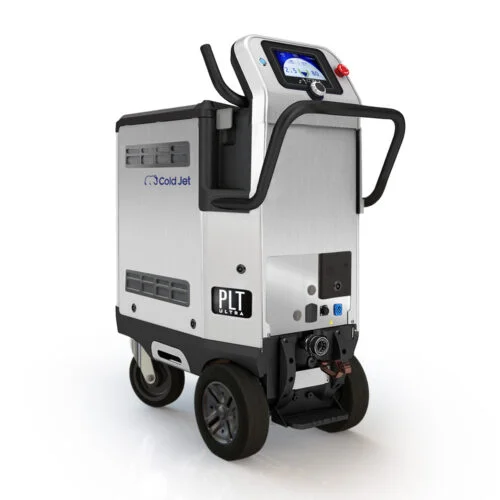
Aero2 PLT ULTRA
$41,950The Aero2 PLT ULTRA is the most powerful machine in Cold Jet's Aero2 ULTRA lineup, built to take on the toughest contamination. This full-pressure, full-pellet blaster drives standard 3 mm pellets up to 250 PSI (17.2 bar) with a feed rate up to 6 lbs./min (2.7 kg/min). The Aero2 PLT ULTRA provides more than enough power to remove the most stubborn buildup, and is configurable with Cold Jet's proprietary nozzles to optimize your blast setup for any job. Its “straight-through” air system and redesigned SureFlow Feeder System (automated hopper agitation mechanism) minimize air pressure loss and premature sublimation inside the machine to maximize air supply yield and reduce dry ice waste. Programmable application recipes let operators set and save blast pressure and feed rate, so the same high-output clean can be recalled and repeated reliably across jobs and operators.
The Aero2 PLT ULTRA is engineered for consistency and uptime. Its patented SureFlow Feeder System combines thumpers, ramrods, vibrators, and an insulated hopper to keep dry ice flowing steadily. A new array of ultra-cold-temperature motors, which are paired with proprietary control firmware and drivers, keeps performing efficiently even through long, continuous blasting cycles. An intuitive 7" LCD display plus Cold Jet CONNECT IoT connectivity put precise control, remote monitoring, and diagnostics at your fingertips.
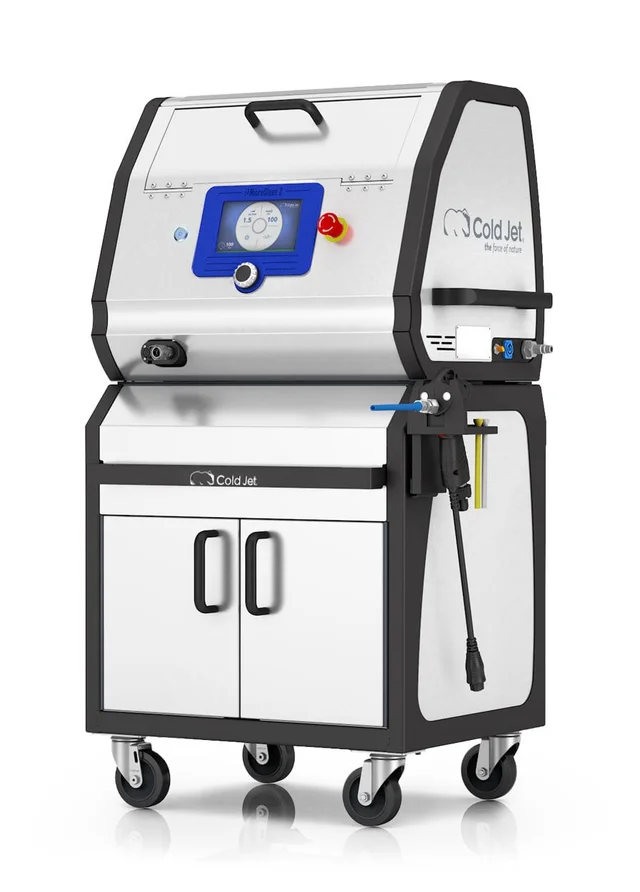 25 lb hopper · from 12 CFM
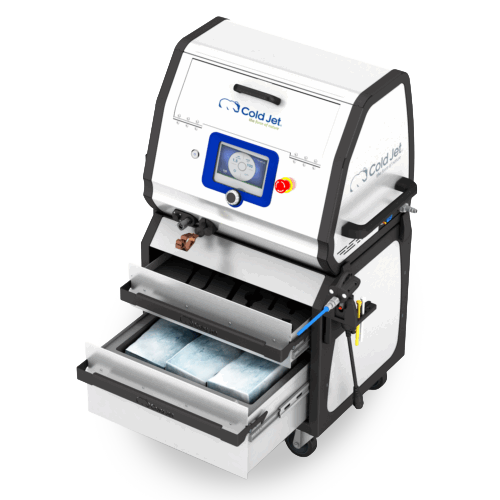
i3 MicroClean 2
$41,950The i3 MicroClean 2 is Cold Jet's most lightweight and compact smart dry ice blaster, purpose-built for precision work to safely remove contaminants from delicate surfaces and complex cavities where surface protection is critical. Using dry ice blocks or pellets shaved down to fine microparticles, the MicroClean 2 cleans gently yet effectively, and operates on as little as 12 CFM (0.34 m³/min) at pressures from 20 to 145 PSI (1.4 to 10.0 bar) to operate where larger machines cannot. The low air demand also makes it notably quieter than typical blasters, and it reduces overall consumable usage by more than 25% over its predecessor (i3 MicroClean) to clean more efficiently with less dry ice.
Despite its compact footprint, the i3 MicroClean 2 is a fully smart machine. A 7" LCD screen with digital controls lets operators precisely set blasting parameters such as blast pressure and feed rate, which can be saved as programmable, password-protected application recipes so any operator can reproduce the same clean and prevent costly user error. Additional features, such as a screen lock for full control of the operation, an LED dry ice level indicator, and an internal 20-micron blast air filter that guards against contaminated air increase the machine's usability and efficiency. Built on a lightweight stainless-steel body and rigid aluminum frame with integrated storage and a rolling cart, the i3 MicroClean 2 is IoT-enabled through Cold Jet CONNECT for remote monitoring and diagnostics.
Machine 1 of 3
Pellet Dry Ice Blasters
4Cold Jet's pellet dry ice blasters use standard high-density dry ice pellets, and for operators who prefer classic analog controls, robust performance, and workhorse reliability, they deliver quality throughout their service life. With straightforward, manual controls, these machines are simple to learn and are dependable shift after shift. Built to hold up in tough industrial environments, they are a proven choice for anyone who values rugged simplicity and consistent, no-nonsense cleaning power.
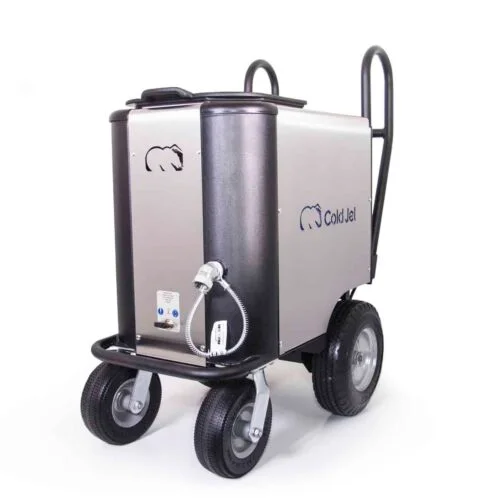 40 lb hopper · up to 250 PSI
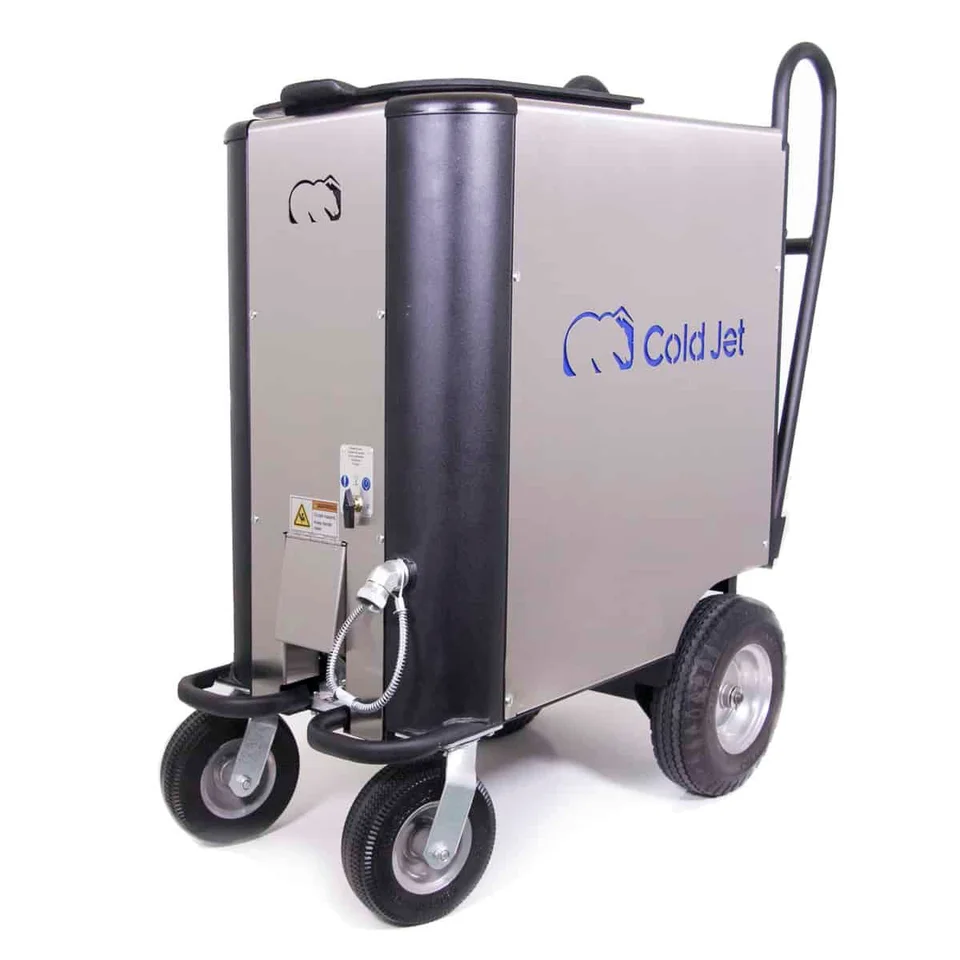
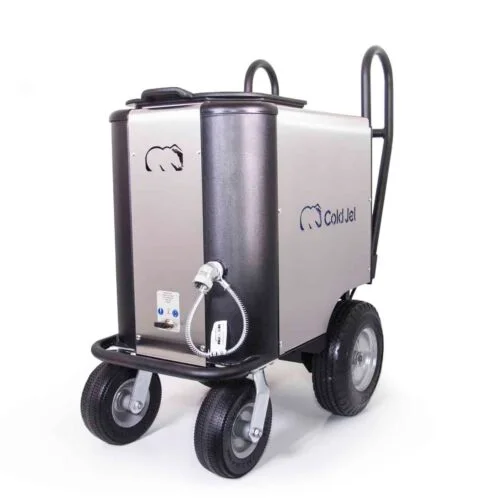
Aero 40 FP
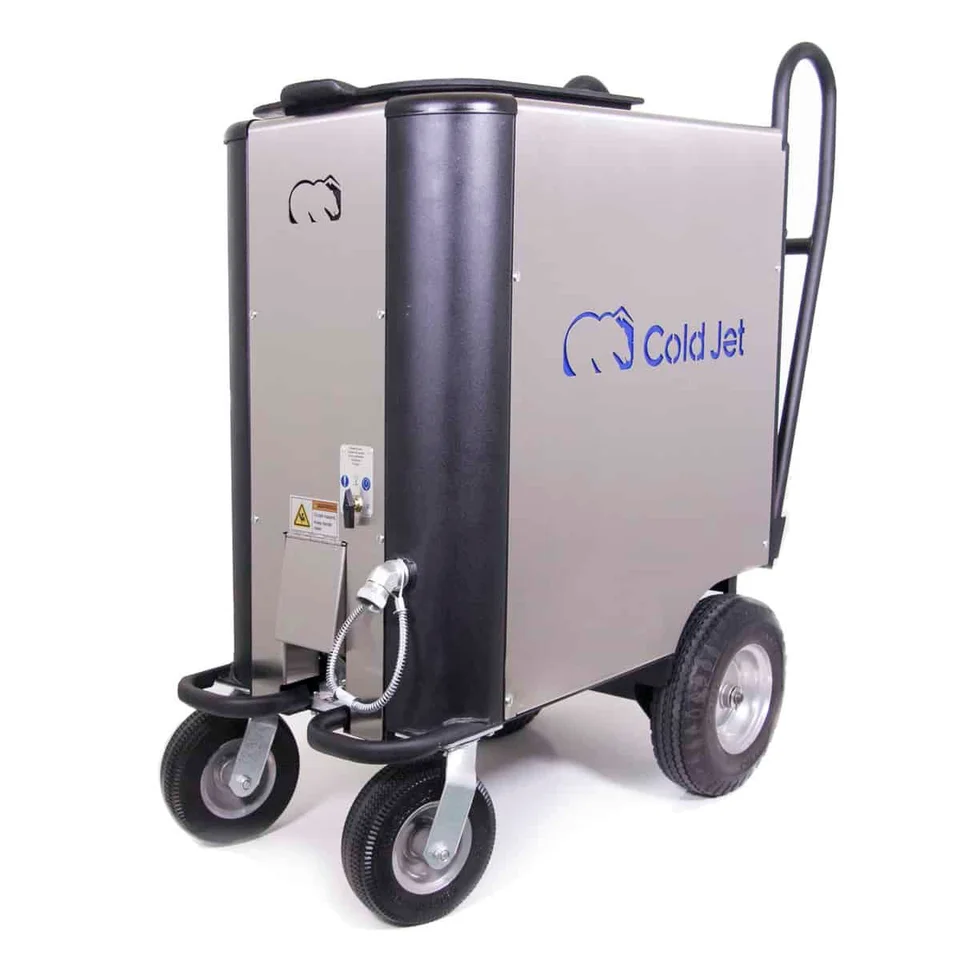
$36,950The Aero 40 FP is a robust, high-performance pellet blaster ideal for the operator on the go, ready to travel into just about any environment to get the job done. This mid-level, full-pressure machine pairs strong build quality with large all-terrain wheels to go wherever your work takes you. A compact motor keeps weight and power consumption down to make transport and setup that much easier. With a full range of blast pressure on tap, the Aero 40 FP delivers the muscle to handle demanding cleaning jobs without sacrificing portability.
Under the hood, the Aero 40 FP is built to keep blasting without interruption. Its Performance SureFlow system, Cold Jet's advanced hopper agitation and delivery mechanism, lets you run a full hopper through 100 feet of hose without poking, clogging, or losing cleaning aggression. Patented radial feeding technology, an aerodynamic rotor loading system designed to reduce pad wear, uses aerodynamic loading to reduce wear on the pads and rotor to extend machine life. An enhanced rotor delivers a pulse-free blast stream with precise feed-rate control, and an onboard pressure regulator makes it easy to dial in the right setting for each job, all through simple, dependable analog controls.
 80 lb hopper · up to 300 PSI
Aero 80 FP
$46,950The Aero 80 FP takes the proven design of the Aero 40 FP and scales it up, doubling the hopper capacity to a full 80 lbs. (36 kg) and boosting output with a feed rate up to 7 lbs./min (3.2 kg/min). For big jobs that demand sustained cleaning power, the larger hopper means far fewer stops to refill dry ice and longer stretches of uninterrupted work. The full range of blast pressure, ranging from gentle cleaning at 20 PSI (1.4 bar) up to aggressive blasting at 300 PSI (20.7 bar), gives you the muscle to take on the heaviest contamination. A tilt-out hopper and rugged, mobile build make this high-capacity machine practical to load, move, and maintain on demanding job sites.
Like the rest of the Aero line, the 80 FP is engineered to keep blasting without interruption. Its Performance SureFlow system (Cold Jet's heavy-duty, continuous-feed agitation and delivery architecture) lets you run a full hopper through 100 feet of hose without poking, clogging, or losing cleaning aggression. The patented radial feeding technology, a friction-reducing air-lock delivery method engineered to maximize consumable lifespan, uses aerodynamic loading to reduce wear on the pads and rotor to extend machine life. An enhanced rotor delivers a pulse-free blast stream with precise feed-rate control, an onboard pressure regulator makes dialing in each job simple, and built-in ESD (static) control adds a layer of operating safety. All these features are managed through straightforward, dependable analog controls that minimize air and ice usage along the way.
 13 lb hopper · 106 lbs total
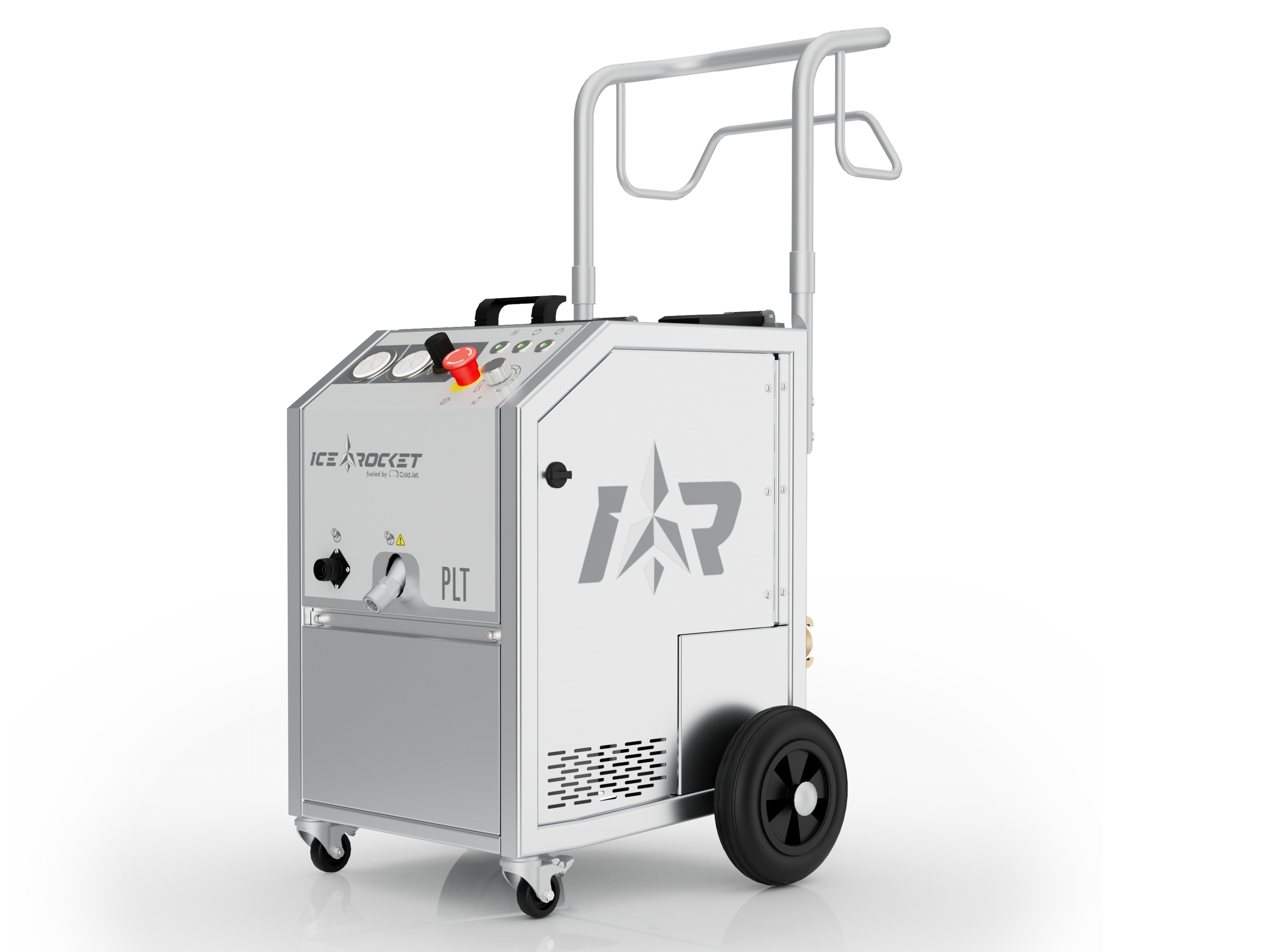
IceRocket PLT
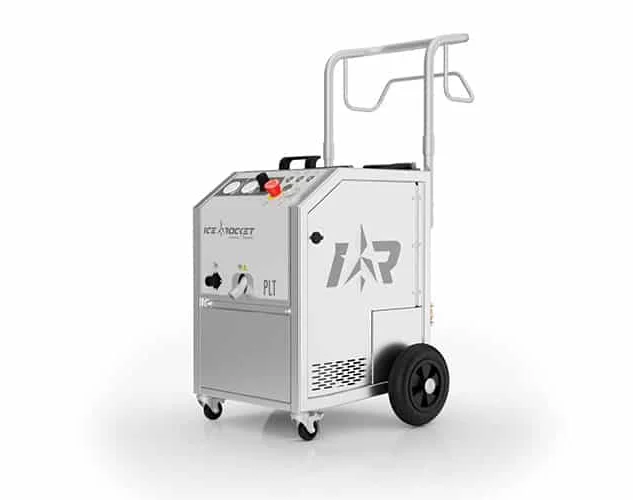
$17,950The IceRocket PLT packs powerful dry ice blasting performance into a compact, highly mobile frame. At just 106 lbs. (48 kg) with a 13 lbs. (5.9 kg) hopper, it's the most portable machine in the lineup. This entry-level machine is easy to move around a facility or take from job to job, and is engineered to be more aggressive and efficient than other blasters in its class. Running standard 3 mm pellets on as little as 50 CFM (1.4 m³/min), it delivers professional-grade cleaning that helps operators cut downtime and increase throughput, making it an ideal entry point into dry ice blasting without stepping down to a hobbyist-grade tool.
However, do not let the entry-level positioning fool you on durability. The IceRocket PLT is built with heavy-duty, high-quality components designed to hold up to demanding, real-world facility use. Its simple analog controls keep the learning curve short by allowing operators to dial in blast pressure and feed rate by hand and start cleaning right away. Best of all, it's backed by the same world-class, local-to-you Cold Jet service and support network behind every premium machine, so you get professional-grade reliability and uptime at an entry-level price point.
 20 lb hopper · adjustable dosing
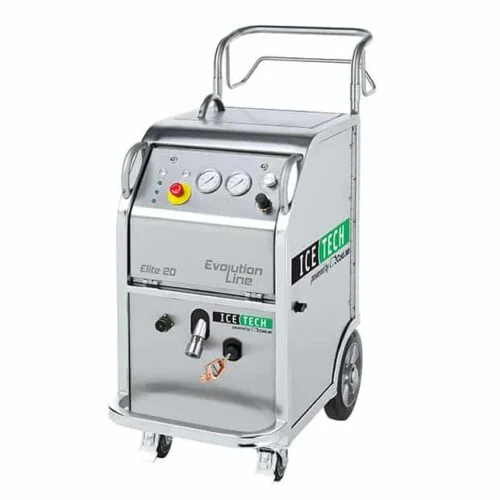
Elite 20
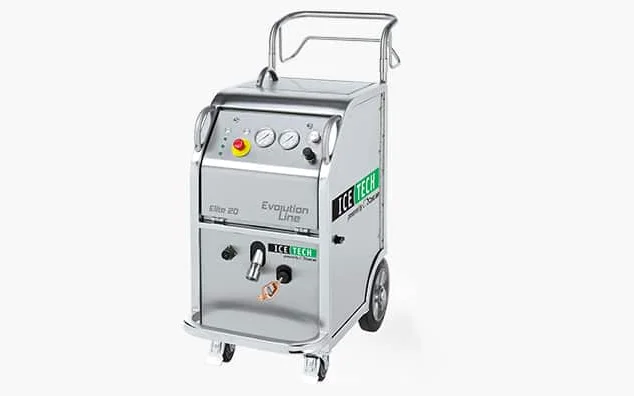
$23,950The Elite 20 is a mid-level, compact dry ice blaster that steps up the versatility and power. Engineered to handle light, medium, and tough applications alike, it delivers industrial-strength performance in a heavy-duty yet mobile package with low dry ice consumption. Its ¾ in blasting hose makes it especially well-suited to more demanding surfaces, giving operators the muscle to tackle a wider range of cleaning jobs from a single, manageable machine.
That versatility is backed by a built-to-last construction that runs consistently. A durable stainless-steel frame stands up to rigorous industrial use while an insulated lid and hopper minimize dry ice sublimation for steady, uninterrupted cleaning. An easy-adjusting dosing system lets operators fine-tune dry ice dosage on the fly to match the task at hand by dialing back for delicate work or ramping up for stubborn contamination. A user-friendly control panel keeps those blasting parameters simple to manage shift after shift.
Machine 1 of 4
MicroParticle Dry Ice Blasters
1Cold Jet's MicroParticle dry ice blasters shave dry ice into fine microparticles (as small as 0.3 mm), and for operators who need to clean delicate surfaces and intricate, hard-to-reach areas, they deliver gentle precision without sacrificing cleaning results. Using low blast pressures and a controlled, fine-particle stream, these tabletop machines safely lift contaminants from sensitive substrates and complex cavities where standard pellets would be too aggressive. Lightweight, compact, quiet, and easy to position, they're the right choice for precision work in fields like aerospace, medical device, electronics, and historic restoration.
Looking for a Smart MicroParticle Blaster? While the i3 MicroClean 2 is fundamentally engineered as a premium microparticle machine, it is featured above in our Smart Dry Ice Blasters category due to its advanced digital telemetry. If your precision cleaning operations require Industry 4.0 IoT connectivity, programmable recipes, and a 7" LCD interface paired with 0.3 mm shaved dry ice capabilities, please refer to the i3 MicroClean 2 specifications in the preceding section.
20 lb hopper · from 12 CFM
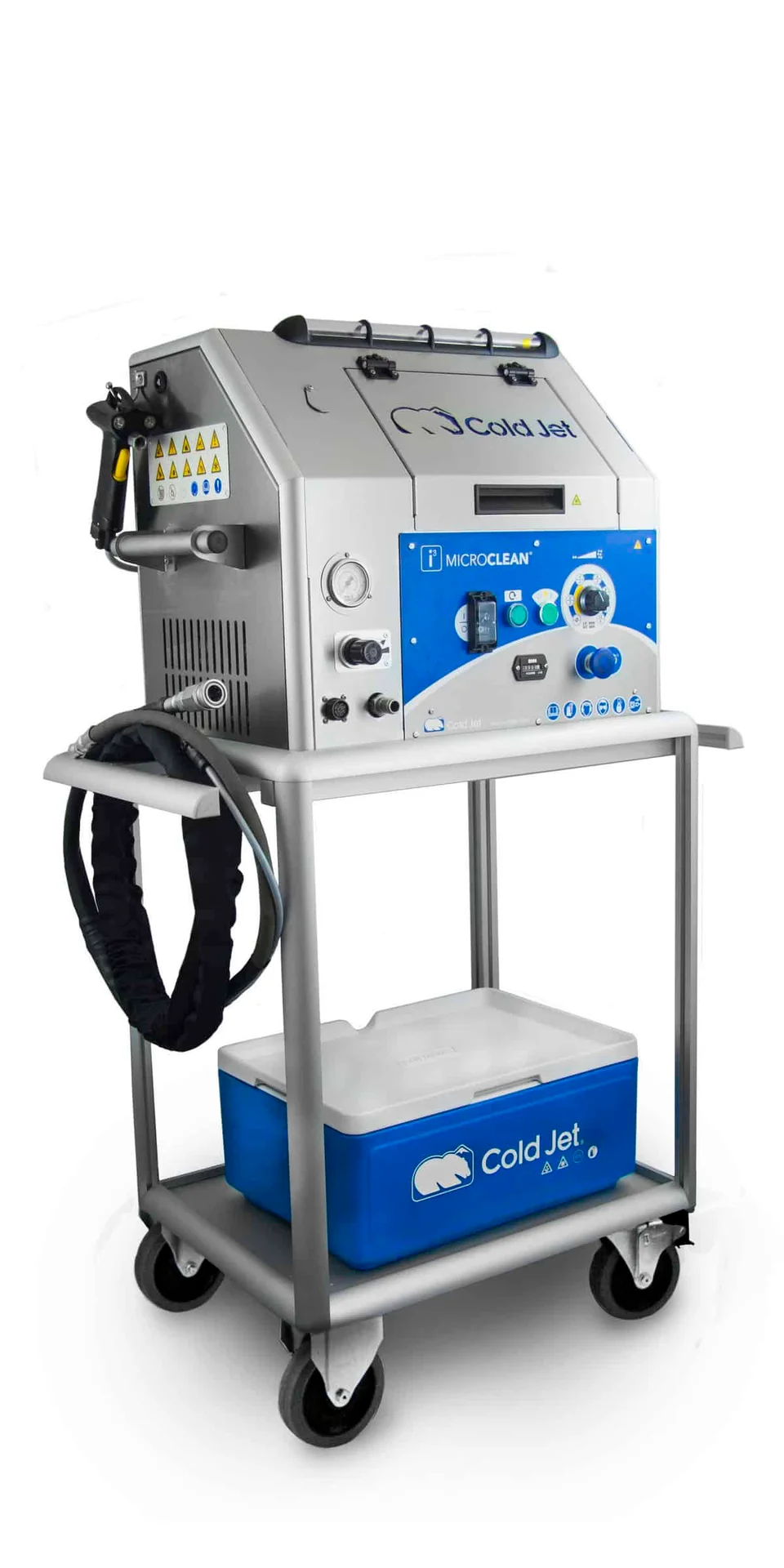
i3 MicroClean
$31,950
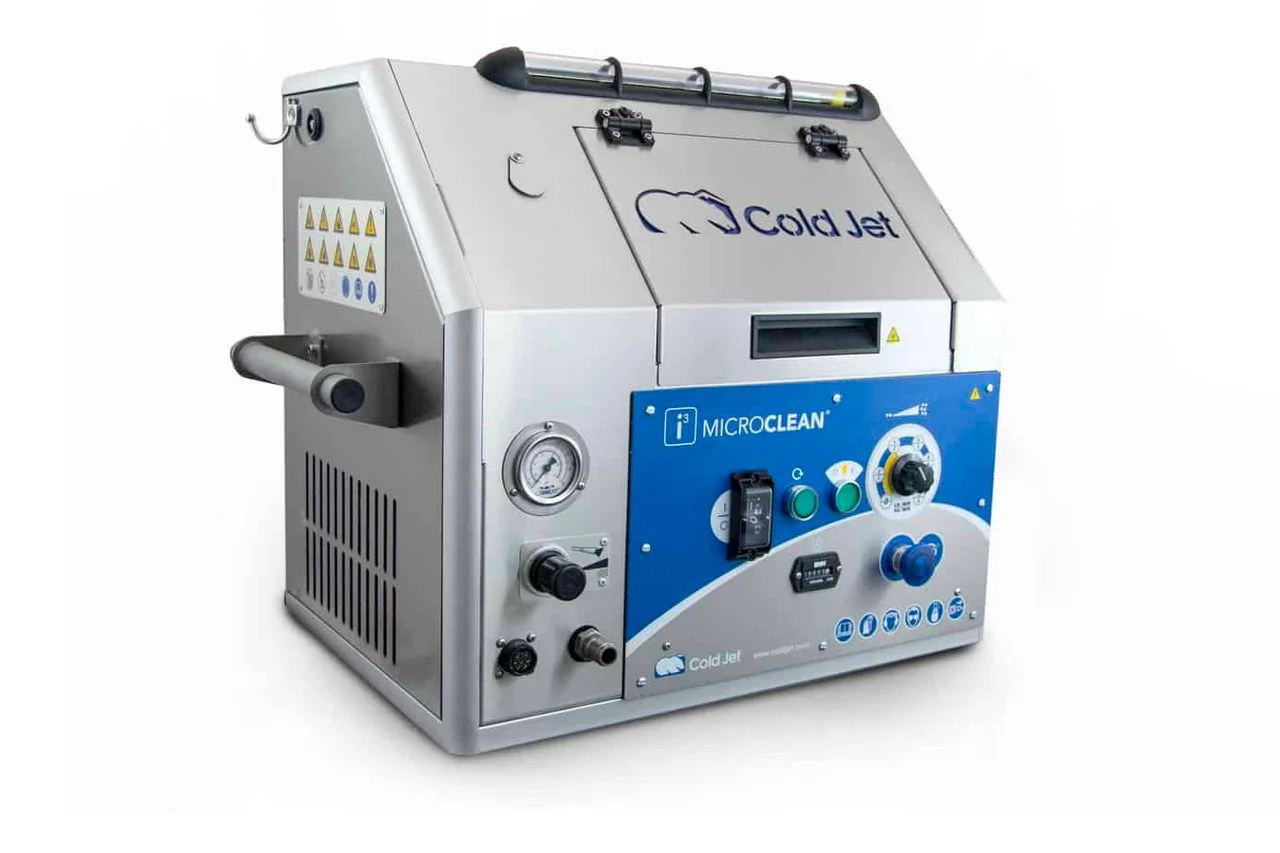
For those looking for simplicity without sacrificing precision cleaning performance, the i3 MicroClean delivers gentle, precise cleaning for delicate surfaces and complex cavities in a compact tabletop package. This lightweight, single-hose, low-pressure blaster shaves dry ice into fine microparticles and blasts at adjustable pressures, running on as little as 12 CFM (0.34 m³/min), making it notably quieter than larger machines. With classic, easy-to-use controls, it's an approachable, no-frills way to bring professional precision cleaning to detailed work.
Despite its small footprint, the i3 MicroClean is built to clean efficiently and reliably. It uses dry ice economically by delivering as much as 45 minutes of cleaning before reloading. The adjustable blast pressure gives operators the flexibility to fine-tune performance for each task, from the most delicate surfaces to tougher detail work. An internal 20-micron blast air filter guards against the effects of contaminated air; an ergonomic lighted applicator and integrated static bonding cable make it comfortable and safe to operate; and a durable transport cart keeps the machine easy to move from workstation to workstation.
Specifications
Every Model, Side by Side
The same specifications the guide publishes for each machine, in one table so you can read across the lineup instead of scrolling between eight of them.
Aero2 PCS ULTRA
Smart
Aero2 PLT ULTRA
Smart
i3 MicroClean 2
Smart
Aero 40 FP
Pellet
Aero 80 FP
Pellet
IceRocket PLT
Pellet
Elite 20
Pellet
i3 MicroClean
MicroParticle
Dimensions/Specifications
| |||||||||||||||||||
Blasting Requirements
| |||||||||||||||||||
Machine Controls
| |||||||||||||||||||
Key Terms
Key Terms
The specification vocabulary used throughout this guide, collected for reference.
Process
800×
Expansion on sublimation
Dry Ice BlastingWikipedia
An industrial cleaning method that accelerates solid CO₂ pellets in a compressed-air stream. Cleaning happens through three effects at once: the kinetic impact of the pellet breaking the contaminant's surface bond, thermal shock at −109.3°F (−78.5°C) that embrittles and shrinks the material, and the pellet sublimating into gas and expanding 800× in volume to lift the residue away from the substrate.
20–300
PSI range across the lineup
PSI (Pounds Per Square Inch)
The blast pressure — the physical force of the air pushing pellets out of the nozzle. Higher pressure means greater impact. The industry baseline for most industrial dry ice blasters is an operating range of 80 to 150 PSI (5.5 to 10.3 bar); high-pressure models reach 300 PSI (20.7 bar).
12–250
CFM range across the lineup
CFM (Cubic Feet Per Minute)
The volume of air flowing through the system, which is what your compressor has to sustain continuously. Most dry ice blasters need between 70 and 140 CFM (2.0 to 4.0 m³/min) to run efficiently, though some operate effectively on as little as 12 CFM (0.34 m³/min).
Material
0.3 mm
Smallest particle size
MicroParticle Dry Ice
Dry ice shaved down from pellets or blocks to particles as fine as 0.3 mm, against the 3 mm of a standard pellet. Standard pellets carry more kinetic energy and suit aggressive removal of dense contaminants; microparticles carry less, which is what makes them usable on delicate surfaces that a 3 mm pellet would damage.
Equipment
Particle Control System (PCS®)
Cold Jet's patented on-board pellet-shaving mechanism, which lets one machine use up to 28 particle sizes, ranging from 3 mm down to 0.3 mm. It is what separates a variable-size blaster from a pellet-only or microparticle-only machine: the same unit moves from heavy-duty removal to precision work without changing equipment.
Equipment
SureFlow Feeder System
Cold Jet's patented cold-resistant agitation and feed mechanism, paired with active defrost cycles. The feeding mechanism is one of the clearest dividing lines between budget and premium blasters because it prevents the mid-job clumping, inconsistent flow, and freeze-ups that stop a clean halfway through.
Concept
Automation-Ready
A blaster that can interface with a manufacturing-tier robotic arm and a facility's PLCs to run exact, repeatable cleaning patterns without interrupting production. It requires an integration module speaking standard industrial protocols such as EtherCAT or PROFINET. Most analog and budget machines are built strictly for manual handheld use and cannot be automated at all.
$10k–$55k
Published purchase-price band
Total Cost of Ownership (TCO)
The full lifetime cost of a machine rather than its purchase price. Professional-grade budget blasters start around $10,000 and premium models reach upwards of $55,000, but that spread tracks build quality and the duty the machine is designed for — so the sticker price alone does not tell you which machine costs less to run.
FAQ
Frequently Asked Questions
Download the eBook
Download the Dry Ice Blaster Buyers Guide
Take the whole guide with you — every buying criterion, the full specification tables and the model-by-model comparison, in one PDF.