Summary
Onsite dry ice production gives life sciences companies just-in-time access to fresh, high density dry ice at -109°F (-78.5°C), the standard working temperature for shipping and holding vaccines, biologics, clinical samples, and cell and gene therapies. Producing the exact amount, format, and freshness each shipment requires removes supplier delivery windows from the critical path and supports validated, GDP aligned pack-out procedures.
What is dry ice biopreservation?
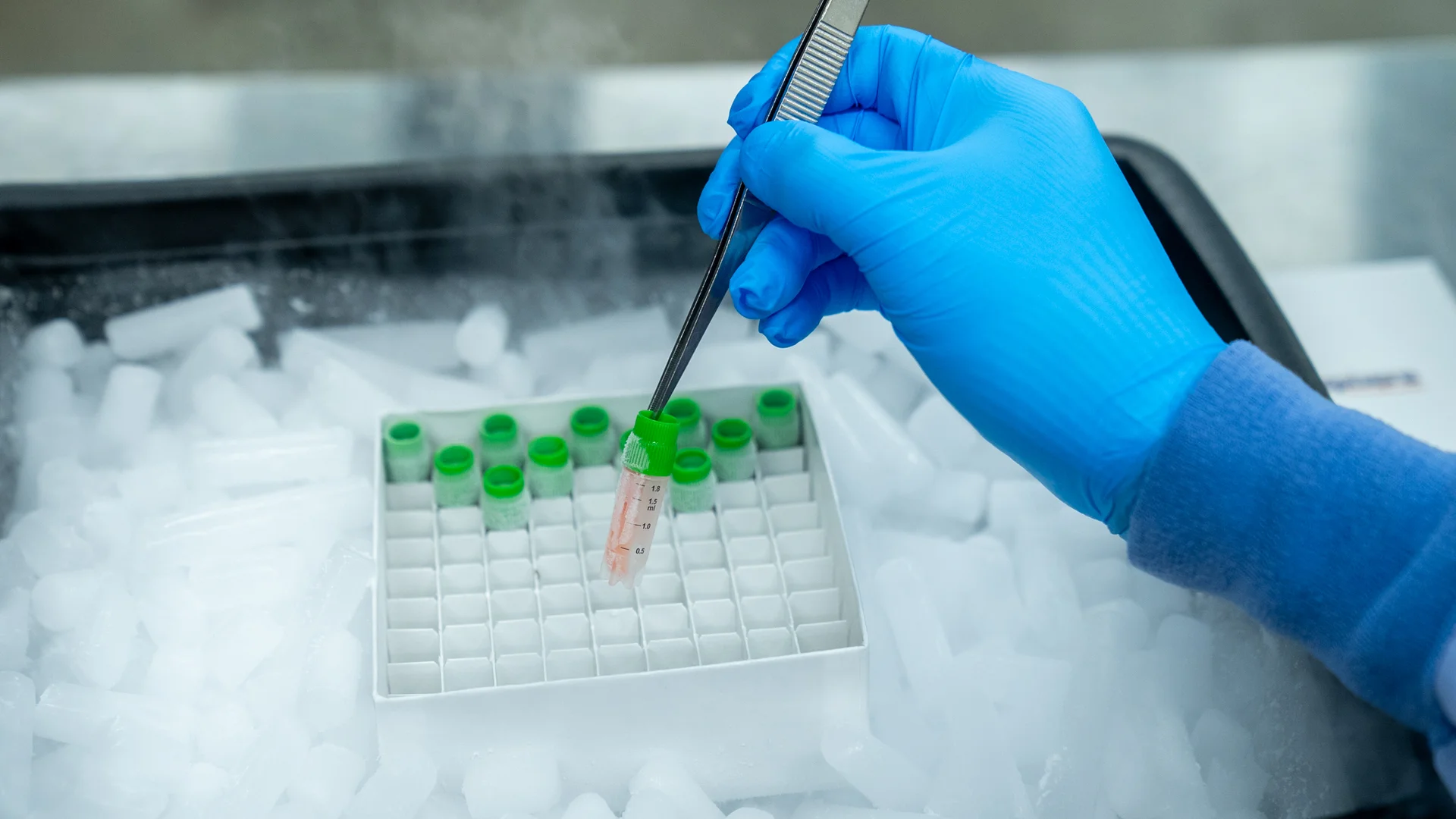
Biopreservation with dry ice is the use of solid CO2 at -109°F (-78.5°C) to maintain the viability of temperature sensitive biological material during shipping, short-duration holds, and transfers. Dry ice is the standard passive cooling medium for the -70°C to -80°C band required by mRNA products, frozen biologics, clinical trial samples, and tissue banks. It provides three times the refrigeration power of water ice, sublimates directly from solid to gas without leaving liquid residue, and holds temperature for three to five days in insulated parcels. In cell and gene therapy logistics, dry ice serves as the working medium between cryogenic storage, site freezers, and the point of care. Producing dry ice onsite with a Cold Jet system means fresh, high density dry ice is available on demand, in 3 mm pellets, 10 mm nuggets, or slices, dosed precisely into every parcel, shipper, or container.

Why life sciences cold chains need supply they control
Every life sciences shipment is a batch, a sample set, or a dose whose loss cannot be absorbed as shrinkage. In cell and gene therapy, a shipment can be literally irreplaceable. Purchased dry ice introduces delivery windows, allocation risk, and sublimation loss into a zero-margin-for-error process. Onsite, just-in-time production makes ultra-low temperature cooling a facility utility, with fresh, high density dry ice that performs longer in shippers and parcels.
−109°F
Dry Ice Temperature (−78.5°C)
3-5 Days
Parcel Cooling Duration
24/7
Production uptime
Continuous Production Capability
Recycled CO2
Feedstock
What Are the Benefits of Onsite Dry Ice Production for the Life Sciences?
Onsite production makes ultra-low temperature cooling a utility you control
Vaccines, biologics, clinical trial samples, and cell and gene therapies must be preserved at very low temperatures to remain viable. Purchased dry ice introduces delivery windows, allocation risk, and sublimation loss into a process with zero margin for error. During tight supply periods, priority access goes to the largest contract holders, which exposes mid-size biotechs, CROs, CDMOs, and clinical sites.
Producing dry ice onsite removes the supplier from the critical path. Fresh, high density dry ice is available at the pack station on demand, in the exact amount and format each shipment requires. Cooling capacity becomes a facility utility with the same reliability posture as power and water, supporting validated pack-out procedures and consistent thermal performance on every lane.
 Viability
Protect Product Viability at Ultra-Low Temperatures
Dry ice maintains -109°F (-78.5°C), the standard working temperature for the -70°C to -80°C band that mRNA products, frozen biologics, and clinical samples require. With three times the refrigeration power of water ice and a three to five day hold in insulated parcels, dry ice keeps temperature sensitive products stable from packout through final delivery. Freshly produced, high density dry ice sublimates more slowly, which extends hold times compared to purchased dry ice that has already lost density in a supplier's storage and truck.
 Sample Integrity
Never Risk a Batch on a Missed Delivery
For a life sciences operation, a missed dry ice delivery is not a late order. It is a compromised batch, an invalidated sample, or a nonviable dose. Onsite production removes delivery windows and allocation risk from the critical path, with systems engineered to run 24/7 and produce exactly what each day's shipping schedule requires.
 Precision
Dose the Exact Amount, Format, and Freshness
Each shipment's cooling requirement varies by product, packaging, lane, and duration. Onsite production paired with integrated dosing delivers the exact amount and format per shipper, whether 3 mm pellets, 10 mm nuggets, or slices, supporting validated pack-out procedures and consistent thermal performance. Precise dosing also eliminates the coolant overuse and unnecessary shipping weight that come with imprecise manual filling.
 Safety
Automate Dosing and Minimize CO2 Exposure
Dry ice is a solid, which makes it far easier to contain and automate than liquid nitrogen. Integrated dosing systems dose dry ice directly into parcels and containers without manual handling, which minimizes operator CO2 exposure, improves ergonomics, and increases line throughput.
 Environmental
An Environmentally Sustainable Cooling Medium
Dry ice is made of recycled CO2 captured from industrial and biogas sources, and using it emits no additional CO2 into the atmosphere. It replaces waste generating gel packs and reduces reliance on fuel intensive refrigerated transport, with no secondary waste stream. The California Air Resources Board has confirmed that recycled CO2 used for dry ice does not contribute to the end user's greenhouse gas score.
How Is Dry Ice Used for Biopreservation in the Life Sciences?
Dry ice is the standard passive cooling medium for preserving temperature sensitive biological material in the -70°C to -80°C band. Onsite production puts biopreservation quality cooling at the pack station, on demand, for every shipment and transfer.
- -70°C ±10°C Vaccine Shipping Band
- Supports GDP Compliant Cold Chains
- IATA / UN 1845 Air Freight Support
- 8B+ Vaccine Doses Kept Safe with Dry Ice
- Made of Recycled CO2
Preserve Product Viability from Packout to Point of Care with Dry Ice
Biopreservation depends on holding biological material at the right temperature for the full duration of a shipment, hold, or transfer. Dry ice at -109°F (-78.5°C) is the standard passive cooling medium for the ultra-low temperature band, and onsite production ensures supply is never the constraint on a time-critical movement.
Maintain viability in the ultra-low band
Dry ice holds -109°F (-78.5°C), the working temperature for the -70°C to -80°C requirements of mRNA products, frozen biologics, and clinical trial samples. It is colder than any gel pack or phase change material can reach, and it lasts three to five days in insulated parcels, without the dangerous goods burden, carrier approvals, and asphyxiation risk profile of liquid nitrogen.
Dose fresh dry ice into every parcel
Integrated dosing systems dose pre-programmed amounts of dry ice directly into parcels, shippers, and containers, without manual handling. Each shipment receives the exact amount, format, and freshness its validated pack-out procedure specifies, whether 3 mm pellets, 10 mm nuggets, or slices, which protects product viability while eliminating coolant overuse and unnecessary freight weight.
The working medium for cell and gene therapy logistics
Cryogenic storage lives in liquid nitrogen vapor, but dry ice is the standard medium for the short-duration holds and transfers that connect it to the patient: from the dry shipper to the site's -80°C freezer, and from the freezer to the point of care. When an autologous therapy is a batch of one, the shipment is irreplaceable, and onsite production keeps biopreservation quality dry ice available the moment it is needed.


More than 4 billion vaccine doses have been kept at appropriate, safe temperatures with dry ice since the onset of COVID-19. The ultra-low temperature cold chain built for that effort is now standing infrastructure for mRNA and cell and gene therapy pipelines, and dry ice remains its working medium. Onsite production supports biopreservation across the full range of temperature sensitive material, including:
- Vaccines
- Biologics
- Cell & Gene Therapies
- Clinical Trial Samples
- Tissue & Stem Cell Banks
- Diagnostic Specimens
- Blood & Plasma Derivatives
- Active Pharmaceutical Ingredients (APIs)
- Laboratory Reagents
- mRNA Products
What Do Life Sciences Companies Need to Produce Dry Ice Onsite?
A complete onsite dry ice production setup extends beyond the production system itself. When implementing dry ice production in your facility, the following components are essential:
Step 01
12–14%BETTER LCO₂ CONVERSION
Liquid CO2 Supply
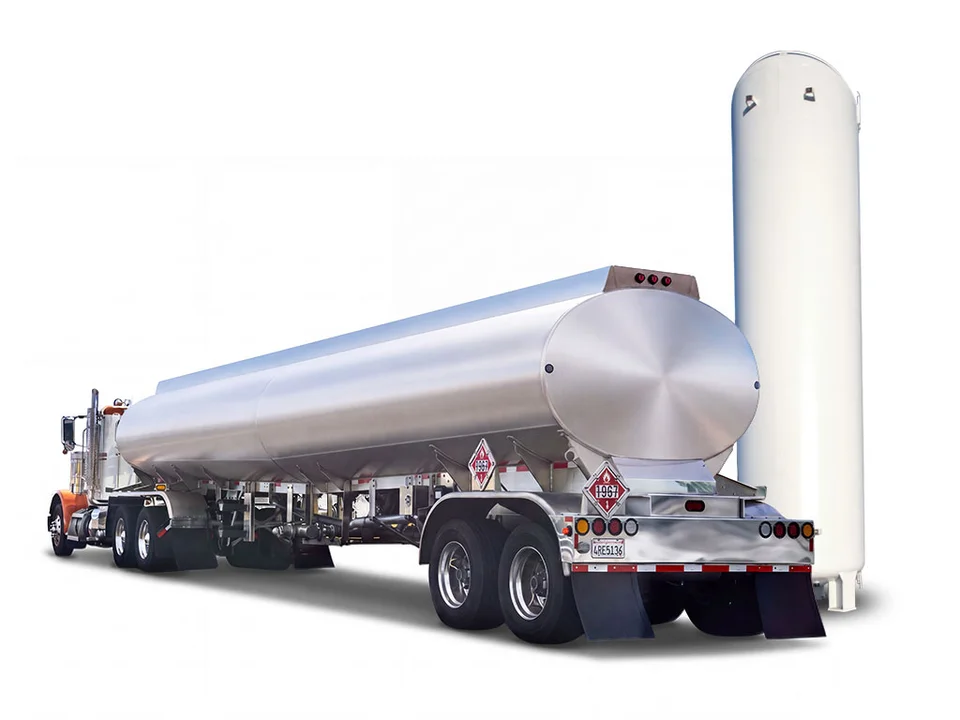
Dry ice production starts with liquid CO₂ (LCO₂), stored in an onsite reservoir and connected to the production system through insulated piping. Most LCO₂ is recovered CO₂, captured at industrial and biogas facilities and given a second life as a cooling medium. Cold Jet systems deliver 12–14% better LCO₂-to-dry ice conversion efficiency than the market standard, so more of your supply becomes sellable dry ice. If you don’t have an LCO₂ supply in place, Cold Jet can perform a site visit to determine what you need, what your investment would be, and what your payback looks like.
- 01. Liquid CO2 Supply — Dry ice production starts with liquid CO₂ (LCO₂), stored in an onsite reservoir and connected to the production system through insulated piping. Most LCO₂ is recovered CO₂, captured at industrial and biogas facilities and given a second life as a cooling medium. Cold Jet systems deliver 12–14% better LCO₂-to-dry ice conversion efficiency than the market standard, so more of your supply becomes sellable dry ice. If you don’t have an LCO₂ supply in place, Cold Jet can perform a site visit to determine what you need, what your investment would be, and what your payback looks like.
- 02. Dry Ice Production System — The heart of the operation is a Cold Jet pelletizer matched to your volumes, from the PE 80 producing up to 176 lbs (80 kg) per hour for biotechs, CROs, and clinical sites, to the PR750H producing up to 1,653 lbs (750 kg) per hour for pharmaceutical packaging lines and logistics hubs. Every system produces high density dry ice, is engineered for 24/7 operation, and can produce the 3 mm pellets, 10 mm nuggets, or slices your shippers require.
- 03. Integrated Dosing Systems — Integrated dosing systems produce and dose pre-programmed amounts of dry ice directly into parcels, thermal shippers, and bulk containers at rates up to 60 boxes per hour per line. Automated dosing eliminates manual dry ice handling, minimizes operator CO2 exposure, and ensures each parcel is packed with the proper amount of dry ice to maintain required temperatures. Rolling conveyors and scales are available options for full line integration.
- 04. Insulated Storage Containers — Insulated containers store produced dry ice and minimize sublimation between production and packout. Because Cold Jet systems extrude the highest density dry ice on the market, the product sublimates more slowly, extending both storage life and the number of days a shipment holds temperature in its parcel.
- 05. Ventilation and CO2 Safety — Production and packout areas require artificial ventilation to maintain airflow and a CO2 PPM monitor to verify safe concentration levels. Operators handling dry ice should wear thermal protection gloves and appropriate PPE. Cold Jet provides CO2 safety guidance to support the EHS review every life sciences facility will run before installation.
- 06. Training and Cold Jet CONNECT — Cold Jet trains your operators on safe, effective production and dosing, and our IoT platform, Cold Jet CONNECT, lets you remotely monitor production, diagnose issues, and implement corrective action from any location. Machine telemetry extends the temperature-monitoring and audit-trail mindset your quality system already applies to the cold chain itself.
How Onsite Dry Ice Production
Compares to Alternatives
See how onsite dry ice production stacks up against purchased dry ice and other cooling options across the criteria that matter most in life sciences logistics.
| Criteria | Dry Ice (Produced Onsite) Best | Purchased Dry Ice | Gel Packs & PCMs | Liquid Nitrogen (LN2) | Powered Containers |
|---|---|---|---|---|---|
| Temperature Capability | -109°F (-78.5°C), holds the -70°C to -80°C band | -109°F (-78.5°C), same medium | Refrigerated and frozen bands only, cannot reach ultra-low | -150°C and below in dry shippers | Set point dependent, requires power throughout |
| Hold Duration | 3 to 5 days in insulated parcels, fresh high density ice | Reduced, sublimation begins before packout | Hours to roughly 2 days | Up to 2 weeks in dry shippers | Limited by battery life and power access |
| Supply Reliability | Produced on demand, 24/7, no delivery windows | Delivery windows and allocation risk in tight markets | Widely available, pre-freezing capacity required | Specialty supply and equipment | High capital cost, limited fleet availability |
| Handling & Regulatory | UN 1845 air freight rules, automated dosing minimizes handling | UN 1845 rules plus receiving and storage handling | Unregulated, but heavy and bulky | UN 1977 dangerous goods, carrier approvals, asphyxiation controls | Battery transport rules and return logistics |
| Weight & Freight Cost | Exact dose per parcel, sublimates and loses weight in transit | Overdosing common to offset lost density | Heaviest option per unit of cooling | Heavy shippers, high per-shipment cost | Heavy units, rental and repositioning fees |
| Environmental Impact | Made of recycled CO2, no secondary waste | Recycled CO2, plus delivery truck emissions | Single-use packs sent to landfill | Energy intensive liquefaction | Reusable, but energy and repositioning intensive |
What Is the Best Dry Ice Production System
for the Life Sciences?
Cold Jet offers dry ice production and dosing systems for every scale of life sciences operation, from a clinical site producing modest daily volumes to a pharmaceutical packaging line dosing thousands of parcels per shift.

Integrated Dry Ice Dosing Systems
Integrated dosing systems produce and dose pre-programmed amounts of dry ice directly into parcels, thermal shippers, and bulk containers at up to 60 boxes per hour per line. Automated dosing eliminates manual handling, minimizes CO2 exposure, and ensures every parcel is packed to its validated specification.
- Doses up to 60 boxes per hour per line
- Pre-programmed, repeatable dosing
- Eliminates manual dry ice handling
- Conveyor and scale options

PR750H Pelletizer
The PR750H produces up to 1,653 lbs (750 kg) of high-density dry ice per hour for non-stop production. It’s the workhorse behind high-volume pharmaceutical packaging lines and logistics hubs, feeding integrated dosing systems with fresh 3 mm pellets. Automatic die change switches to 10 or 16 mm nuggets for vaccine and biologic transport.
- Up to 1,653 lbs (750 kg) per hour
- 12–14% better LCO₂ conversion than other systems
- Automatic die change, 3–16 mm
- Feeds integrated dosing systems
PR350H Pelletizer
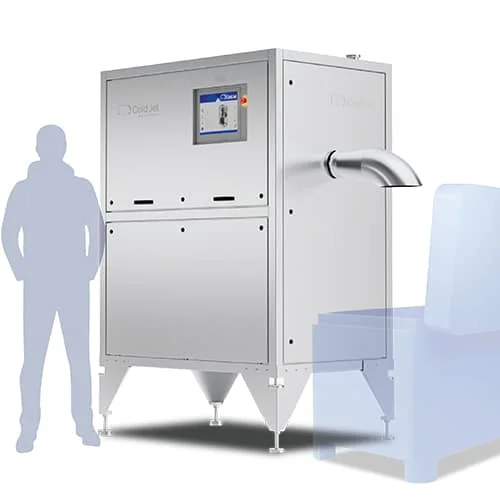
The PR350H produces up to 772 lbs (350 kg) of high-quality dry ice pellets per hour from the first stroke, a mid-volume fit for biotechs, CDMOs, and clinical supply operations that need a dependable in-house supply. Automatic die change switches pellet sizes in seconds, and start-up takes under 3 minutes, so you can produce on demand without the footprint of a high-volume line.
- Up to 772 lbs (350 kg) per hour
- 3, 6, 10, or 16 mm pellets
- Start-up in under 3 minutes
- Cold Jet CONNECT® remote monitoring
How Do These Three Systems Compare?
Side-by-side specs for the Cold Jet systems best suited to life sciences operations, so you can match production capacity and dosing automation to your shipping volumes.
Automated parcel and tote dosing
High-volume production
Mid-volume production
| Specification | Integrated Dosing Systems | PR750H Pelletizer | PR350H Pelletizer |
|---|---|---|---|
| Production & Dosing | |||
| System Type | Dosing unit integrated with a PR350H or PR750H | Standalone pelletizer | Standalone pelletizer |
| Max Production Output | Up to 772 or 1,653 lbs/hr, depending on paired pelletizer | Up to 1,653 lbs/hr(750 kg/hr) | Up to 772 lbs/hr(350 kg/hr) |
| Dry Ice Formats | Pellets: 3, 6, 10, or 16 mm | Pellets: 3, 6, 10, or 16 mm | Pellets: 3, 6, 10, or 16 mm |
| Max Dosing Speed | 37 lbs/min (PR350H) or 81 lbs/min(PR750H) | Not published | Not published |
| Dose Range & Accuracy | 1–88 lbs at ±5% (PR350H); 2–200 lbs at ±7%(PR750H) | Not published | Not published |
| LCO₂ Conversion (Sub-Cooling) | 12–14% better than market standard | 12–14% better than market standard | 12–14% better than market standard |
| Operation | |||
| Start-Up | Closed chamber for short start-up | Closed chamber; less than 3 minutes | Closed chamber; less than 3 minutes |
| Format Change | Automatic extruder plate changer | Automatic quick die change, performed in seconds | Automatic quick die change, performed in seconds |
| Dosing Modes | Precise parcel dosing or mass production for totes | Not published | Not published |
| Fit | |||
| Ideal For | Automated, accurate dosing at packout | High-volume pharma packaging lines and logistics hubs | Biotechs, CDMOs, and clinical supply operations |
| MACHINE CONTROLS | |||
| Controls | 15" Beckhoff HMI with permission-based access | Industrial PC with 15" touchscreen | Industrial PC with 15" touchscreen |
| Line Integration | Side-hinged frame engages or disengages dosing unit | Integrates with plant controls via BUS/Ethernet | Integrates with plant controls via BUS/Ethernet |
| Cold Jet CONNECT® | Available | Available | Available |
“—” indicates the spec does not apply to this system. Contact a Cold Jet specialist to size the right production and dosing configuration for your operation.
Why Invest in Cold Jet Systems
for Life Sciences Cold Chains
If you are securing your dry ice supply for biopreservation, ultra-low temperature shipping, or clinical logistics, investing in Cold Jet production equipment puts the quality and availability of your dry ice under your control.
When evaluating this capital investment, consider both the return on investment (ROI) and the operational risk you eliminate. Cold Jet systems deliver faster ROI and greater value through:
Proven When Lives Are on the Line
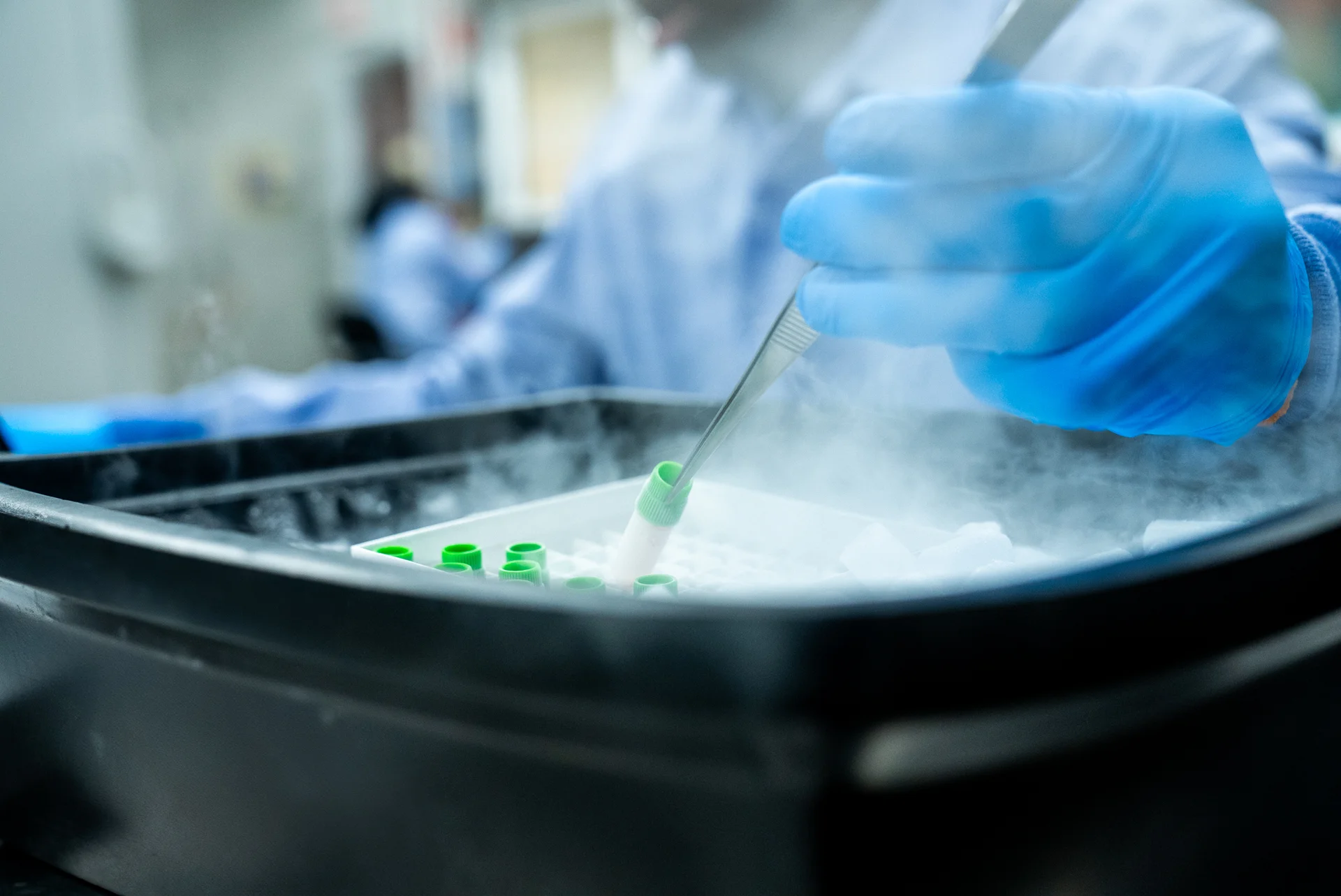
More than 8 billion vaccine doses have been kept at appropriate, safe temperatures with dry ice since the onset of COVID-19, and Cold Jet machines produced dry ice at all points of that distribution cold chain, from pharmaceutical packaging lines to global logistics hubs to hundreds of local communities.
The Highest Density Dry Ice
Cold Jet production equipment extrudes the highest density dry ice on the market. Higher density means slower sublimation, longer hold times in shippers and parcels, and lower poundage of dry ice needed per shipment.
More Efficient LCO₂ Conversion
Cold Jet systems deliver 12–14% better LCO₂-to-dry ice conversion efficiency than the market standard. That efficiency lowers your operating costs and makes the most of every pound of LCO₂, and our RE-CO₂ recovery systems can stretch it further by recapturing revert gas from production.
IoT Intelligence with Cold Jet CONNECT
Cold Jet CONNECT lets you remotely monitor production, diagnose systems without waiting for a technician visit, and capture the machine telemetry that fits naturally into pharma's data integrity and audit trail culture.
We Are Local. Everywhere.
Cold Jet field technicians and 24/7 customer service support installations in more than 70 countries. For a life sciences operation running around the clock, uptime support is part of the product.
A Consultative, Scientific Approach
We follow a consultative process tuned to scientific audiences: exploratory calls, site visits, testing, and stakeholder analysis before a solution proposal, including coordination of third party infrastructure like LCO2 supply and leasing. The result is a system tailored to your operation, not a machine in a crate.
Life sciences companies around the world rely on Cold Jet
With a global install base of 24,000+ machines that spans global pharma, freight forwarders, and emerging market vaccine manufacturers, Cold Jet delivers real value when lives are on the line.






Regulatory Standards
We Help You Support
Onsite dry ice production supports the distribution, quality, and safety frameworks that govern pharmaceutical and biological cold chains.
Good Distribution Practice: Temperature Excursion Prevention
EU GDP guidelines and FDA distribution expectations require that medicinal products be stored and transported under controlled conditions, with temperature maintained within specified limits and deviations documented and investigated.
Onsite production delivers fresh, full density dry ice dosed in exact, repeatable amounts, supporting validated pack-out procedures and consistent thermal performance on every lane. Temperature excursions trigger recalls, penalties, and brand damage, and precise dosing is the front line defense.
Current Good Manufacturing Practice (21 CFR 210/211)
FDA cGMP regulations require documented, controlled processes throughout drug manufacturing and holding, including the handling and materials that contact or protect the product.
Cold Jet systems produce dry ice with quantifiable, repeatable parameters and dose pre-programmed amounts automatically, replacing operator-dependent manual filling with a controlled, documentable process step.
Good Storage and Distribution Practices for Drug Products
USP <1079> provides guidance on maintaining proper storage and transportation conditions for drug products throughout the supply chain, including the use of appropriate cooling media and monitoring.
Dry ice at -109°F (-78.5°C) maintains the ultra-low band for three to five days in insulated parcels, and integrated dosing pairs naturally with temperature monitoring devices placed in each parcel at packout.
Dry Ice in Air Freight
Dry ice is regulated in air transport as UN 1845, with per-package quantity limits, marking and documentation requirements, and ventilation rules. It is far simpler and lower hazard to ship than liquid nitrogen, but it is regulated, not exempt.
Precise, pre-programmed dosing supports accurate per-package declarations and keeps quantities within limits, while producing exactly what each shipment needs avoids the overdosing that complicates air freight compliance and adds tender weight.
Workplace CO2 Exposure Limits
OSHA sets permissible exposure limits for CO2 in the workplace. Facilities producing, storing, and handling dry ice must ventilate work areas and monitor CO2 concentration.
Cold Jet specifies artificial ventilation and CO2 PPM monitoring as standard site requirements, and automated dosing minimizes manual dry ice handling and operator exposure. Cold Jet provides CO2 safety guidance to support your EHS review.