RNG Biogas i Stock 2261090763
Industries

Dry Ice Production Equipment for Biogas and RNG Sites

Turn your biogas or RNG site's CO2 stream into a recurring revenue source. Capture and liquefy biogenic CO2, produce dry ice on site, and serve growing local markets for sustainable cleaning and cooling.

3-4x

Revenue multiple

1,000+

Systems installed

4,500

kg per hour

Contact Us
Overview

Summary

Biogas and RNG sites can turn their CO2 stream into a recurring revenue source. By capturing and liquefying biogenic CO2 and producing dry ice on site, operators gain new income streams in addition to their methane and digestate, recover nearly all remaining methane, and improve their carbon intensity (CI) score. Dry ice revenue is typically 3 to 4 times greater than liquid CO2 revenue.

Quick Answer

What is dry ice production for biogas and RNG sites?

Dry ice production for biogas and RNG sites is the process of converting captured biogenic CO2 into a high-value, sellable product. When raw biogas is upgraded to biomethane, the upgrading system separates the gas into two streams: biomethane, which is injected into the grid as renewable natural gas (RNG), and CO2, which makes up 25 to 40 percent of the raw biogas. Instead of venting that CO2, a carbon capture system recovers any remaining methane, then liquefies the CO2 through repeated compression and cooling. A dry ice production system converts the liquid CO2 (LCO2) into uniform pellets or nuggets on demand. The resulting biogenic dry ice serves growing local markets for dry ice blasting, food processing cooling, cold chain shipping, and life sciences, and typically generates 3 to 4 times more revenue than selling the LCO2 alone. Because the CO2 is captured from the Earth's natural carbon cycle rather than fossil sources, biogenic dry ice prevents virgin emissions and supports a local circular economy.
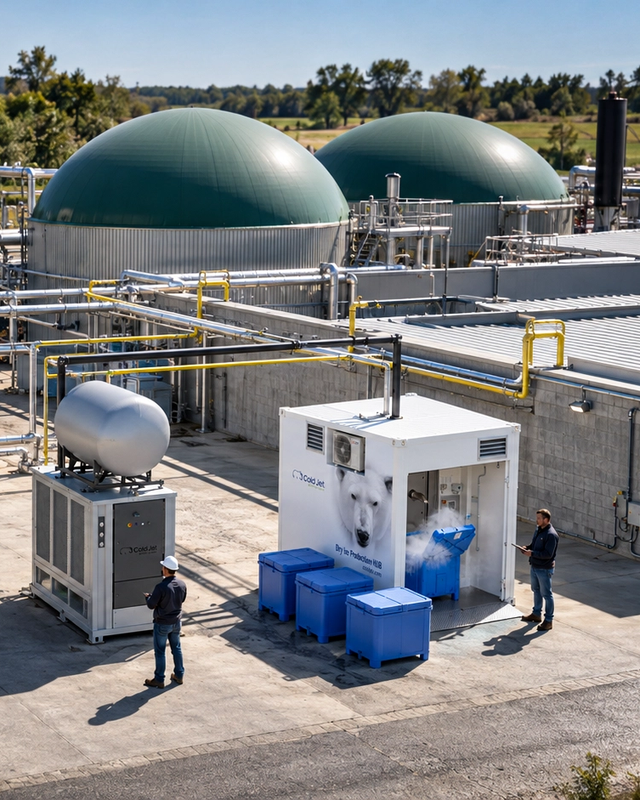
Operators at a biogas facility performing carbon capture and dry ice production
Exploring dry ice blasting for your facility?Get expert guidance
Challenge

Why biogas and RNG sites should monetize their CO2

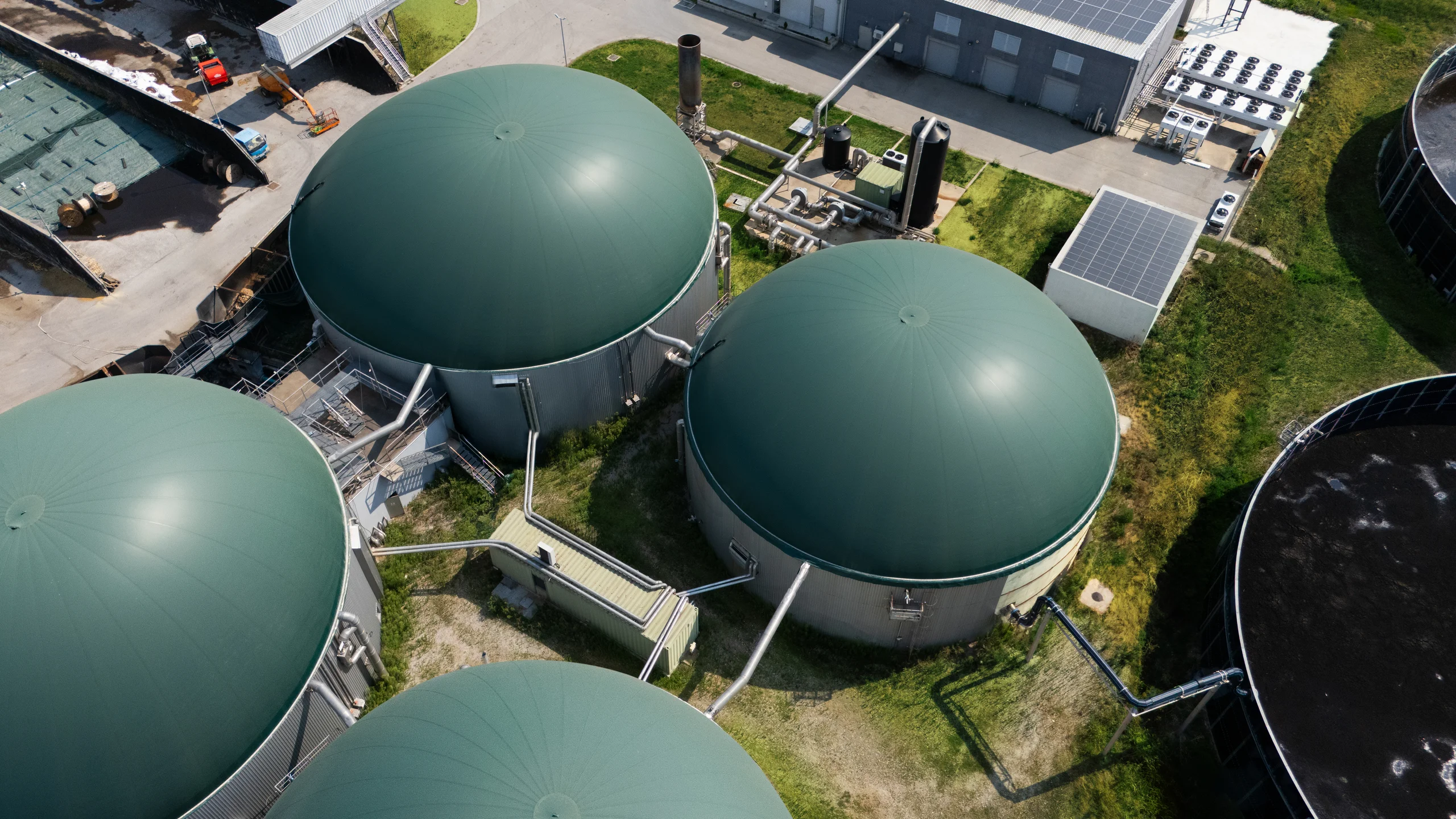
Biogas plant processing methane

Most biogas and RNG sites vent their CO2 to the atmosphere, losing valuable revenue and releasing residual methane along with it. Capturing and liquefying that CO2 recovers nearly all remaining methane, improves your CI score, and creates a product you can sell. Converting the LCO2 into dry ice multiplies that revenue and connects your site to a local circular economy of processors, cleaners, and shippers who need sustainable cooling and cleaning.

3-4x

Revenue multiple

Dry Ice Revenue vs. LCO2 Revenue

1,000+

Systems installed

Dry Ice Production Systems Installed

4,500

kg per hour

Max CO2 Capture

Biogenic

CO2 Source

Benefits

What Are the Benefits of Producing Dry Ice at Your Biogas or RNG Site?

Dry ice production turns your CO2 stream into recurring revenue

When raw biogas is upgraded to biomethane, 25 to 40 percent of the gas stream is CO2. Most sites vent this CO2 to the atmosphere, losing valuable product and releasing residual methane along with it.

By capturing, liquefying, and converting that CO2 into dry ice, your site gains new revenue streams in addition to your methane and digestate. Dry ice revenue is typically 3 to 4 times greater than liquid CO2 revenue. Capturing the CO2 also recovers nearly all remaining methane, which improves your carbon intensity (CI) score and the efficiency of your operation.

New Revenue StreamsRevenue

New Recurring Revenue Streams

Capturing and monetizing your biogenic CO2 adds new revenue streams in addition to your methane and digestate. Liquid CO2 commands a growing market on its own, and converting it to dry ice multiplies the return. Dry ice revenue is typically 3 to 4 times greater than LCO2 revenue.

Reduce CarbonSustainability

Improve Your CI Score

CO2 capture recovers nearly all remaining methane from the CO2 stream, so no methane is released to the atmosphere. Eliminating methane slip improves your carbon intensity (CI) score, and recycling CO2 into your local circular economy prevents virgin emissions instead of adding to them.

Increase Productivity & EfficiencyEfficiency

Maximize Methane Production

Your number one goal is to maximize methane production. CO2 capture reduces your methane slip by recovering nearly all remaining methane from the CO2 stream, improving the efficiency and output of your RNG operation.

Increase Dry Ice YieldMarket

Meet Growing CO2 and Dry Ice Demand

Demand for CO2 is projected to grow exponentially, with many areas underserved by existing dry ice providers, especially rural areas where biogas sites operate. Locally produced biogenic dry ice reaches customers faster, with less sublimation loss and higher quality than dry ice trucked in from remote plants.

Easy IntegrationSimplicity

Plug-and-Play Modular Setup

Cold Jet's containerized CO2 capture and dry ice production systems install as modular add-ons to any existing biogas upgrading or CO2 plant. Swift on-site installation and start-up get your dry ice production up and running quickly, with scalable designs that grow with your operation.

Applications

How Can Biogas and RNG Sites Use Their Captured CO2?

Captured biogenic CO2 opens two applications for biogas and RNG sites: selling dry ice into growing local markets and adding carbon capture to the biogas upgrading process. Together they add revenue, improve efficiency, and improve your CI score.

Validated For
  • Agricultural Digesters
  • Wastewater Treatment Facilities
  • Landfill Gas Sites
  • Food Waste Digesters
  • RNG / Biomethane Plants

Sell Dry Ice and Multiply the Revenue from Your Captured CO2

By incorporating a dry ice production module into your operation, you can capitalize on the growing demand for this valuable product. On-site dry ice production provides a sustainable and efficient way to utilize captured CO2 while generating an additional source of revenue.

Dry ice revenue is 3 to 4 times greater than LCO2 revenue

In most cases, dry ice revenue will exceed revenue from selling LCO2 alone. A dry ice production system compresses and shapes CO2 snow into uniform pellets or nuggets that serve two growing markets: dry ice blasting professionals who need 3 mm pellets for sustainable industrial cleaning, and cooling customers who need dry ice in various sizes to keep perishable goods at a steady temperature through processing, shipping, and storage.

Plug-and-play modular production

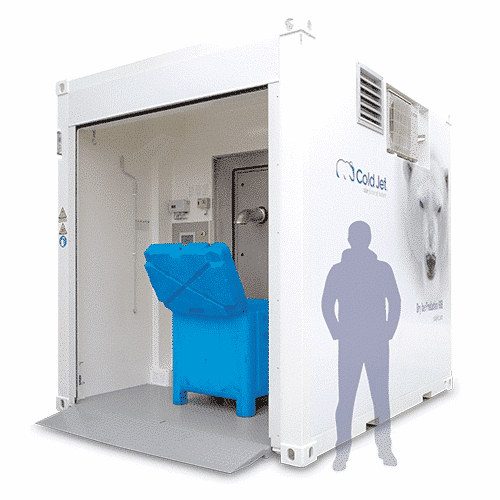
Cold Jet's Dry Ice Production Hub is a compact, modular unit housed in a 10 x 10 ft (3 x 3 m) ISO container. Position it alongside your biogenic LCO2 source and produce dry ice on demand. For higher volumes, Cold Jet pelletizers produce up to 3,306 lbs (1,500 kg) per hour, and reformers convert pellets into high-density slices for cooling applications.

A ready customer base in your local area

Cold Jet has more than 24,000 dry ice blasting systems installed worldwide, each with an average dry ice demand of 2.5 lbs per minute. Many areas are underserved by existing dry ice providers, especially rural regions where biogas sites operate. We can help you identify potential demand for CO2 and dry ice in your area and connect you with potential partners and customers.

Industry dry ice manufacturer holding dry ice nuggets
Dry Ice Production Hub producing pellets on-site
Cold Jet Customer Support provides assistance in all areas
Dry Ice Markets You Can Serve
  • Dry Ice Blasting Companies
  • Food Processing Cooling
  • Frozen & Refrigerated Food Transportation
  • Consumer Home Delivery
  • Life Sciences & Biopharma Cold Chain
  • Airline Catering
  • Dry Ice Distributors & Resellers
  • Contract Cleaning Companies
  • Vaccine & Specimen Transportation
  • Grocery & Meal Kit Fulfillment

Capture Your CO2 Stream, Recover Methane Slip, and Improve Your CI Score

Biogas carbon capture turns the CO2 stream from your upgrading process into high-purity, food-grade liquid CO2 while recovering nearly all remaining methane.

Recover nearly all methane slip

During CO2 capture, any remaining methane is recovered from the CO2 stream before the CO2 is liquefied through repeated compression and cooling. By eliminating nearly all methane slip, no methane is released to the atmosphere. This improves the efficiency of your RNG operation and your CI score at the same time.

Produce high-purity, food-grade CO2

Cold Jet's CB Carbon Capture Systems are fully autonomous, containerized units that transform waste CO2 from biogas and biomethane operations into high-purity, food-grade CO2. Using sustainable R744 refrigerant, these low-energy systems produce LCO2 that can be stored on site, sold to local end users, or converted into dry ice.

Scalable capacity for any biomethane site

The CB technology platform is scalable from 1,000 kg per hour up to 4,500 kg per hour. The CB 12 captures and liquefies up to 2,619 lbs (1,188 kg) of CO2 gas per hour, and the CB 17 up to 3,694 lbs (1,675 kg) per hour. With a modular design built for scalability, CB units can be customized to meet the higher production capacities of larger biogas upgrading plants.

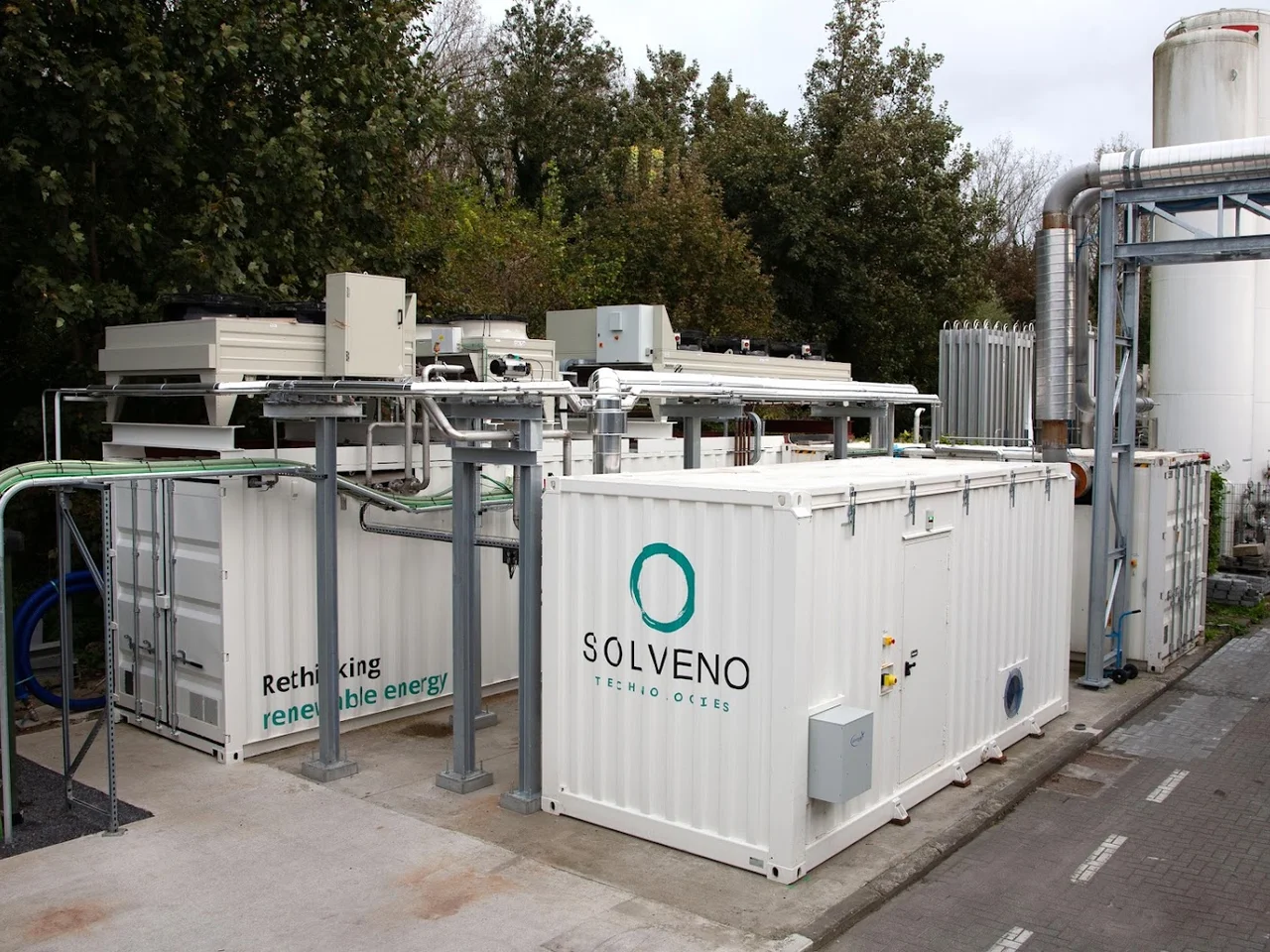
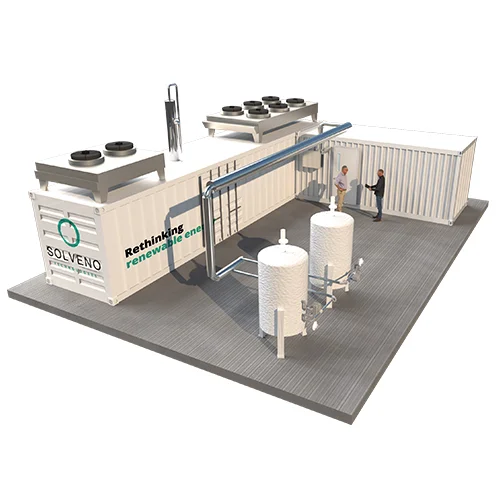
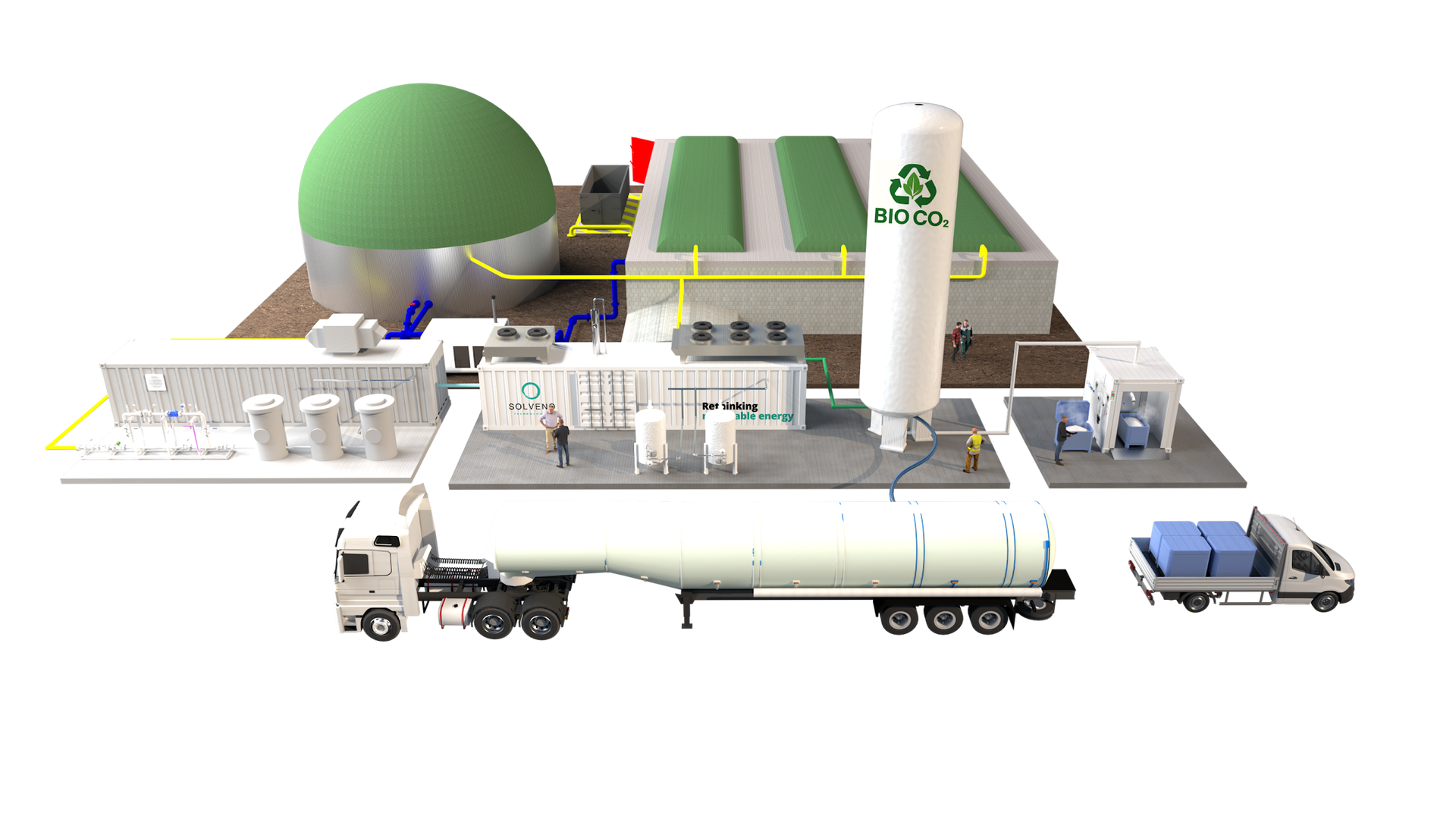
Solveno carbon capture units for biogas
Food Manufacturing Processing with dry ice
Biogas Carbon Capture Upscaling Units

Beyond dry ice, captured biogenic LCO2 serves a wide range of end markets in your local circular economy. Demand for CO2 is projected to grow exponentially, driven by both established applications and new world uses like eFuels and sustainable materials. Common destinations for biogenic LCO2 include:

Where Biogenic LCO2 Goes
  • Dry Ice Manufacturing
  • Beverage & Bottling
  • Food Processing
  • Agriculture (Greenhouses, Horticulture, Vegetable Crops)
  • Fire Suppression
  • eMethanol & eMethane
  • Sustainable Aviation Fuels (SAFs)
  • Sustainable Urea (Green Ammonia + BioCO2)
  • Welding & Industrial Gas Suppliers
  • Water Treatment
  • Enhanced Oil Recovery & Industrial Uses
What You Need

What Do Biogas and RNG Sites Need to Produce Dry Ice?

A complete biogenic dry ice operation builds on the upgrading equipment your site already runs. When adding CO2 capture and dry ice production to your facility, the following components make up the value chain:

Carbon Capture What Is Needed Unit Connection

Step 01

25-40%

CO2 in Raw Biogas

Biogas Upgrading System

The value chain starts with the upgrading equipment your site already runs. Raw biogas is 60 to 75 percent methane, with most of the remainder being CO2. The biogas upgrading system converts the raw biogas into a much more valuable biomethane/RNG stream that is injected into the grid, plus a significant CO2 stream. Most sites vent this CO2 today. Capturing it is where the new revenue begins.

  • 01. Biogas Upgrading System — The value chain starts with the upgrading equipment your site already runs. Raw biogas is 60 to 75 percent methane, with most of the remainder being CO2. The biogas upgrading system converts the raw biogas into a much more valuable biomethane/RNG stream that is injected into the grid, plus a significant CO2 stream. Most sites vent this CO2 today. Capturing it is where the new revenue begins.
  • 02. CB Carbon Capture System — Cold Jet's CB Carbon Capture Systems are fully autonomous, containerized units that recover any remaining methane from the CO2 stream, then liquefy the CO2 through repeated compression and cooling. Using sustainable R744 refrigerant, the low-energy CB platform scales from 1,000 kg per hour up to 4,500 kg per hour and produces high-purity, food-grade CO2.
  • 03. LCO2 Storage — Liquefied CO2 is stored in a tank on site, ready for use. From storage, your LCO2 can be sold and transported by truck to local end users such as food and beverage facilities, welding gas suppliers, and greenhouses, or fed directly into your dry ice production system for the highest return.
  • 04. Dry Ice Production System — A dry ice production system compresses and shapes CO2 snow into uniform pellets or nuggets. Cold Jet pelletizers produce from 265 lbs (120 kg) up to 3,307 lbs (1,500 kg) per hour, and the modular Dry Ice Production Hub packages production into a 10 x 10 ft (3 x 3 m) ISO container that installs alongside your LCO2 source. In most cases, dry ice revenue will exceed revenue from the LCO2 itself.
  • 05. RE-CO2 Recovery System (Optional) — During dry ice production, a portion of the LCO2 reverts to gas. Cold Jet's RE-CO2 Recovery Systems collect that revert gas and recycle it into more dry ice, allowing producers to nearly double their dry ice output with less LCO2. The small footprint, modular design drastically improves your LCO2-to-dry ice conversion rate.
  • 06. Sales, Training, and Support — Cold Jet helps you build the commercial side of your dry ice operation. We can help you identify potential demand for CO2 and dry ice in your area and connect you with potential partners and customers. Cold Jet CONNECT provides remote monitoring and diagnostics, and our global service network delivers installation, training, and 24/7 support.
Comparison

How Dry Ice Production
Compares to Other CO2 Paths

See how on-site dry ice production stacks up against the other options for the CO2 stream at your biogas or RNG site.

Criteria
Dry Ice Production
LCO2 Sales Only
Venting CO2
Sequestration
eFuels Feedstock
Revenue Potential
Highest, 3 to 4x LCO2 revenue
Moderate, commodity pricing
None, CO2 is lost
Tax credits only, no product revenue
Emerging, long-term offtake contracts
CI Score Impact
Improved, methane slip recovered
None, methane and CO2 released
Improved
Improved
Market Demand
Growing, many areas underserved
Growing, dependent on offtakers
Not applicable
Dependent on policy incentives
Early stage, growing toward 2050
Infrastructure Required
Modular, containerized add-on units
Capture and liquefaction, plus trucking
None
Pipeline or injection site access
Complex plant integration
Time to Revenue
Fast, plug-and-play installation
Moderate, offtake agreements needed
Never
Long development timelines
Local Economic Impact
High, serves your local circular economy
Moderate, depends on transport distance
None
Minimal
Low today
Comparing dry ice to your current method?Talk to an application expert
Compare Systems

How Do These Three Systems Work Together?

The CB 17 captures and liquefies the CO₂ from your biogas upgrading process, and the Dry Ice Production Hub and PR750H turn that liquid CO₂ into dry ice. Compare them side by side to match your CO₂ supply to local dry ice demand.

Cold Jet Dry Ice Production Hub
Dry Ice Production Hub

Mid-volume production

PR750H dry ice pelletizer
PR750H

High-volume workhorse

Carbon Capture System
CB 17

Maximum production capacity

Specification
Dry Ice Production Hub
PR750H
CB 17
Role
What It Does
Converts liquid CO₂ into dry ice pellets inside a ready-to-run container
Converts liquid CO₂ into dry ice pellets at high volume
Captures, purifies, and liquefies CO₂ off-gas from biogas upgrading
CO₂ Input
Liquid CO₂ from a storage tank
CO₂ off-gas, up to 850 Nm³/h
Output
Dry ice pellets
Dry ice pellets in 3, 6, 10, or 16 mm; two sizes at once
Food-grade quality liquid CO₂
Production
Max Capacity
Up to 772 lbs (350 kg) per hour with PR350H; 265 lbs (120 kg) per hour with PR120H
Up to 1,653 lbs (750 kg) per hour
Up to 3,694 lbs (1,675 kg) per hour of liquid CO₂; configurable from 2,204 to 9,920 lbs (1,000 to 4,500 kg) per hour
Footprint
10 ft high-cube ISO container
59 × 59 × 71 in standalone unit
Modular containerized system, 41 × 27 × 14 ft
Machine Controls
Automation
Fully automated, one-button start
Fully autonomous; adjusts to changes in feed flow
Remote Monitoring
Cold Jet CONNECT
Cold Jet CONNECT; integrates with plant controls via BUS/Ethernet
Capable
Fit
Biogas Advantage
Mobile setup that needs only power, liquid CO₂, and instrument air
Sub-cooling technology minimizes CO₂ waste during conversion
Eliminates methane slip, lowers your CI score, and creates a sellable liquid CO₂ stream
Best For
Smaller or remote RNG sites, pilots, and sites testing local dry ice demand
Sites with steady regional dry ice demand that need continuous output
Larger upgrading plants capturing CO₂ to sell or to feed on-site pelletizers

“Capable” indicates optional functionality. Contact a Cold Jet specialist to confirm the right configuration and capacity for your site.

Not sure which model fits?Get a recommendation
Why Cold Jet

Why Invest in Cold Jet Systems
for Your Biogas or RNG Site

If you are adding CO2 capture or dry ice production to your biogas or RNG operation, investing in Cold Jet systems maximizes the value of every kilogram of biogenic CO2 you capture.

When evaluating this capital investment, consider both the return on investment (ROI) and the operational advantages specific to your site. Cold Jet systems deliver faster ROI and greater value through:

Carbon Capture Biogas Facility Render

The Largest Installed Base in Dry Ice

With more than 24,000 dry ice blasting systems and 1,000+ dry ice production systems installed globally, Cold Jet's installed base is your future customer base. Many of the dry ice buyers in your area already run Cold Jet equipment.

Lowest Cost Per Pound of Dry Ice

Our proprietary Sub Cooling Technology delivers the lowest LCO2-to-dry ice conversion factor on the market, so every kilogram of captured CO2 produces more sellable dry ice at a lower operating cost.

Plug-and-Play Modular Systems

Our containerized capture and production units install as add-ons to any existing biogas upgrading or CO2 plant, with swift on-site installation, one-button operation, and scalable designs built for future growth.

Cold Jet CONNECT IoT Monitoring

Remotely monitor, diagnose, and implement corrective action on your production equipment from any location, keeping your dry ice operation running with minimal downtime.

Local Demand Identification

We can help you identify potential demand for CO2 and dry ice in your area and connect you with potential partners and customers, so your production capacity is matched to a real local market from day one.

Global Service and Support

Our global network of service centers and regional technicians delivers installation, training, preventative maintenance, and expert consultancy for your dry ice production operation.

Ready to make the switch?Talk to us
Our Customers & What They Say About Us

Biogas sites and dry ice producers around the world rely on Cold Jet

With more than 1,000 dry ice production systems installed globally, Cold Jet delivers real value to biogas sites, RNG operators, and independent dry ice producers.

  • Carbon Removers
  • Apsley
  • NLCEnergy
  • Blended

See What Dry Ice Producers Are Saying About Cold Jet

Our customers produce the highest quality dry ice on the market

Logo KSD Kohlensaure Dienst Gmb H

We are very satisfied from the first contact up to date. The employees at Cold Jet were very professional and helpful. We are finally able to respond to requests for flexibility from our customers and produce according to their dry ice needs. In addition, we are also excited about the quality of the dry ice.

Alf Collins

Managing Director · KSD GmbH

Sutton garten 1

The Cold Jet dry ice production equipment produces the purest dry ice available.

Pat Garten

President and CEO · Sutton-Garten

Incentives & Standards

Incentives and Standards
That Reward Carbon Capture

Carbon capture and CO2 utilization are supported by tax credits, fuel programs, and quality standards that reward biogas and RNG sites for capturing their CO2 instead of venting it.

ISBT

International Society of Beverage Technologists CO2 Guidelines

Biogas sites that sell CO2 into food and beverage markets obtain certification that their liquid CO2 meets ISBT quality guidelines for food and beverage grade CO2.

How We Comply

Cold Jet's CB Carbon Capture Systems transform waste CO2 from biogas operations into high-purity, food-grade CO2, positioning your site to pursue ISBT certification and serve premium food and beverage markets.

45Q

Federal Carbon Capture Tax Credit (US)

The US Section 45Q tax credit rewards qualified carbon capture, with credit values for CO2 that is captured and utilized in products and processes. Consult your tax advisor on eligibility and current credit values for your project.

How We Comply

Capturing your biogenic CO2 and utilizing it in products like dry ice creates the documented capture and utilization pathway that CO2 utilization credits are designed to reward, adding a potential incentive on top of your product revenue.

RFS

Renewable Fuel Standard (US EPA)

The EPA's Renewable Fuel Standard allows RNG used as transportation fuel to generate Renewable Identification Numbers (RINs), a major revenue driver for US RNG projects.

How We Comply

CO2 capture recovers nearly all remaining methane from the CO2 stream, maximizing the salable biomethane from your site and eliminating methane slip that would otherwise be released to the atmosphere.

LCFS

Low Carbon Fuel Standard

Low carbon fuel programs, including California's LCFS, value RNG based on its carbon intensity (CI) score. A lower CI score means higher credit value for every unit of fuel your site produces.

How We Comply

By eliminating nearly all methane slip and recycling CO2 into your local circular economy instead of venting it, CO2 capture improves your CI score and the value of the fuel you sell.

FDA / EPA / USDA

Food Safety Recognition

Dry ice is recognized by the FDA, EPA, and USDA as safe for use around food, which is essential for serving food processing, beverage, and cold chain customers.

How We Comply

Dry ice produced from food-grade biogenic LCO2 sublimates without leaving water or residue, making it a safe cooling and cleaning medium for the food processing and food transportation customers in your local market.

Need to meet a specific standard?Talk to an application specialist
FAQ

Frequently Asked Questions

Get Started

Ready to Monetize Your Biogenic CO2?

Contact us today to learn how our CO2 capture and dry ice production systems can add new revenue streams to your biogas or RNG operation. We can help you identify potential demand for CO2 and dry ice in your area.