A Decade of Contamination on 149 wagons, With No Room for Fire Risk
TüPRAS, which was founded in 1972, is the only manufacturer in the refining sector in Turkey and has the capacity to process 28.1 million tons of crude oil annually with its four refineries in Kocaeli, Izmir, Kırıkkale, and Batman. It is the largest industrial company in Turkey and the 7th largest refining company in Europe.
The company transports its heavy petroleum products in railway wagons. The wagons are used on a regular and demanding schedule to maintain the company’s efficient and steady output.
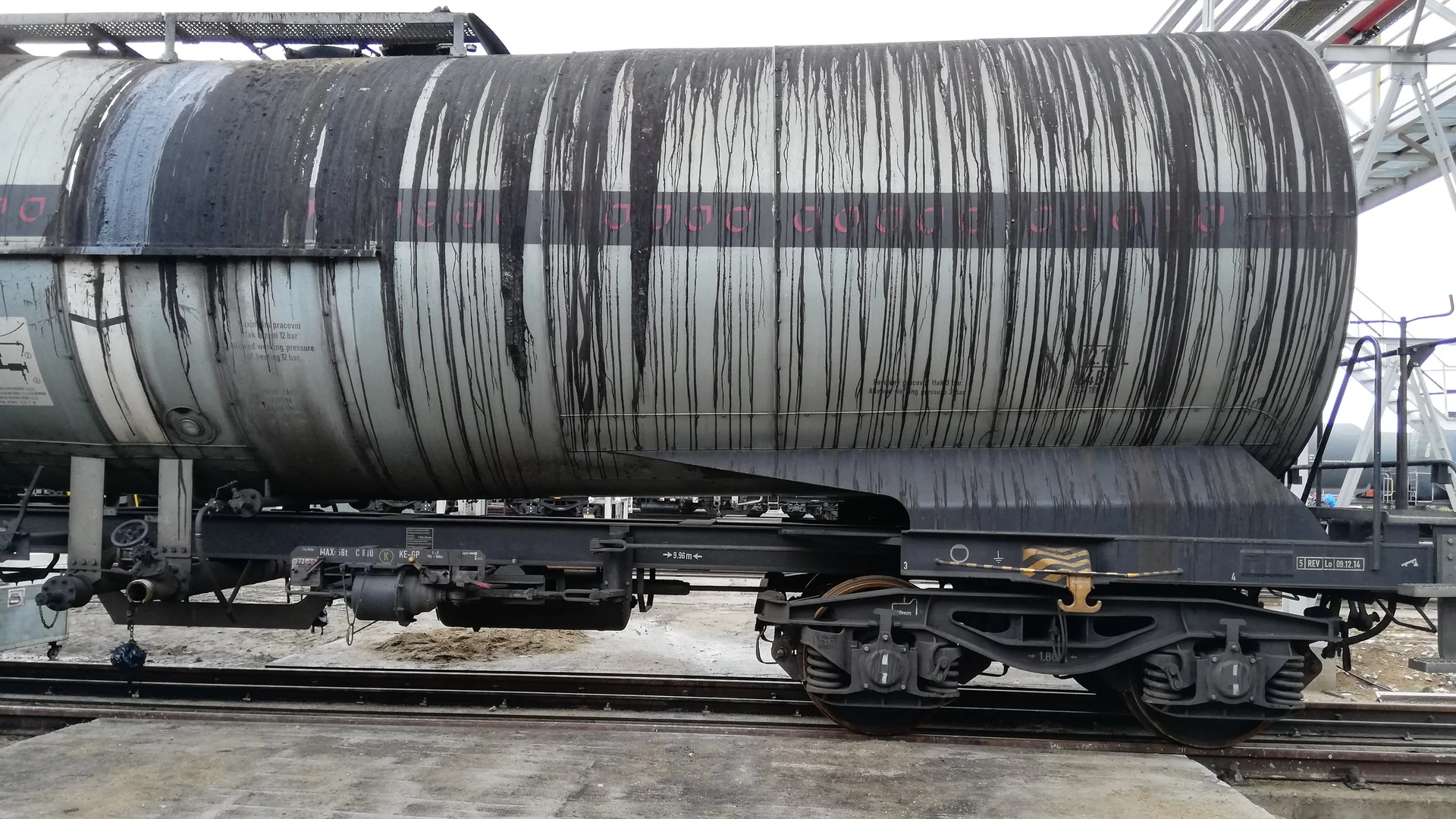
In order to continue the transportation of petroleum products in accordance with the safety instructions, the wagons, carrying the heavy petroleum products, had to be cleaned for the first time.
The company had to come up with a solution that would clean the contamination which had built up over 10 years on the 149 wagons. An important condition was that the cleaning had to be done without harming the environment.
They also needed to avoid any risks associated with the fire in the refinery, thus eliminating many cleaning options associated with chemical cleaners.
Aero 40FP Dry Ice Blasters Clean Without Chemicals or Fire Risk
TüPRAS needed a cleaning method that would reduce maintenance time and avoid hazardous chemicals in order to get the wagons back on their normal delivery schedule.
Dry ice blasting is an air-powered media blasting system which uses solid carbon dioxide (CO2) in place of other chemicals. Unlike the other blasting techniques, dry ice sublimates (converts from solid to gas) upon impact with the surface being cleaned, leaving no residue behind other than what was removed during the cleaning process. This results in a cleaning technique that is safe and non-toxic, does not create further contamination and reduces or eliminates exposure to dangerous chemical cleaning agents.
It is a non-abrasive medium that uses the combination of dry ice cleaning’s kinetic energy and thermal effects to break the connection between the dirt and surface, lifting away contaminants.
In 2018, the company bought a Cold Jet blasting machine, the Aero 40FP, after a successful test in the Izmit plant. It has been used since to clean wagons that are used for the transportation of petroleum products in the Kırıkkale Refinery.
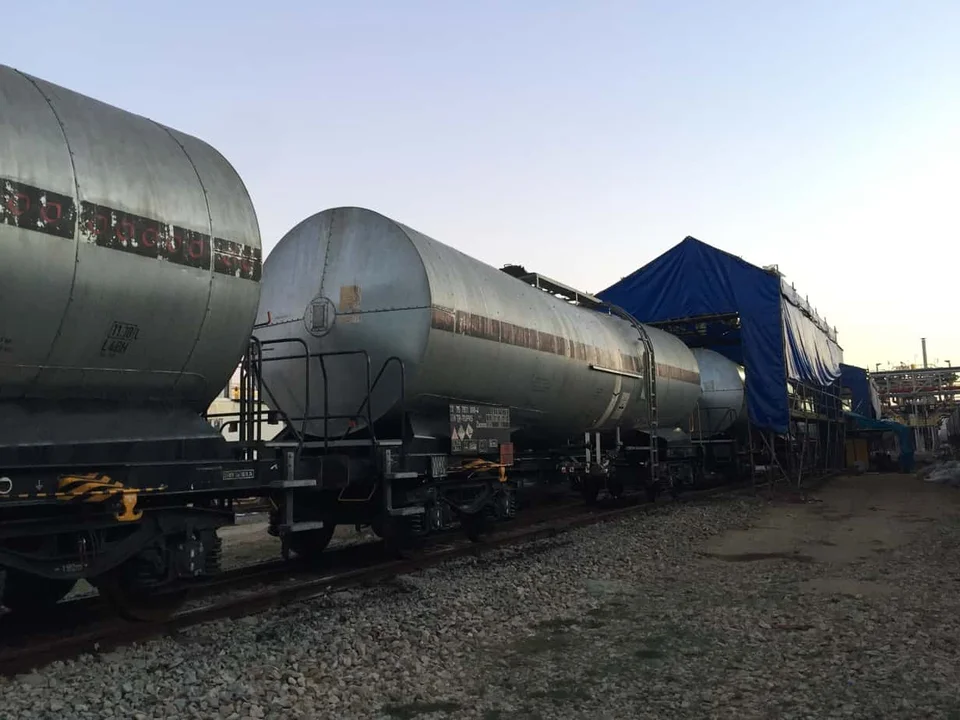
The cleaning process took place at the TüPRAS facilities. Using dry ice blasting, Akat Cevre cleaned their railway wagons for the first time. For this massive project, they used four Aero 40FP dry ice blasters in two scaffolds.
The job was successfully done by 13 employees, who worked in two shifts, six days a week. It took them six months to clean the 149 wagons, with a total of 230,000 kg of dry ice used during the cleaning process.
Because it is a dry clean, dry ice cleaning reduces conditions where cleaning with water or other solvents could be problematic. The deep clean has made maintenance on the wagons significantly easier for the maintenance team. They can focus on other tasks, while the major cleaning is done in a more efficient way.
Wagons Back in Service with Reduced Maintenance Time and No Chemical Waste
149
Wagons Cleaned
First-ever cleaning of a decade of built-up contamination
6
months
Worked by 13 employees across two shifts, six days a week
230,000
kg
Total dry ice consumed across the project using 4 Aero 40FP blasters
The dry ice blasting solution has reduced maintenance time, costs, and the use of chemicals during the cleaning of its wagons – while avoiding danger of open fire in the refinery. The cleaned wagons became operable again quickly and transportation of petroleum products could start up again on a normal schedule.
Dry ice cleaning is best utilized as a routine preventative maintenance. If there is heavy buildup of debris and oil, then the speed of cleaning will be significantly reduced. The result of cleaning with dry ice varies depending on the contaminant and type of radiator.
Dry ice cleaning is also environmentally responsible. The process eliminates chemicals from the cleaning process and does not generate any secondary waste. The Environmental Protection Agency (EPA) monitors fracing well sites closely and eliminating the chemicals is a major benefit.
The dry ice blasting solution reduced maintenance time, cost, and chemical use while eliminating fire risk in the refinery. Cleaned wagons returned to service quickly, restoring normal petroleum transport schedules, and the dry, chemical-free process avoids the secondary waste and EPA scrutiny associated with traditional solvent cleaning.
More about dry ice blasting equipment for rail transportation