

Keeping Your Food Fresh, Mile After Mile
In today's fast-paced world, food transportation is a complex and delicate operation. Ensuring that food reaches its destination fresh and safe is paramount. Enter dry ice, a powerful tool that's transforming the food industry.
Leading the Way in Food Transportation

World-Class companies trust in dry ice to ensure the quality and safety of their products.
By leveraging the power of dry ice, the food industry can revolutionize transportation, reduce waste, and deliver fresh, high-quality products to consumers worldwide.
Why Dry Ice?
Dry ice, with its incredibly low temperature of -109°F (-78.5°C), is a potent cooling agent. It's three times more efficient than traditional water ice, making it ideal for preserving perishable goods. By inhibiting microbial growth, dry ice helps maintain the quality and safety of food products throughout their journey.
Revolutionizing the Food Supply Chain
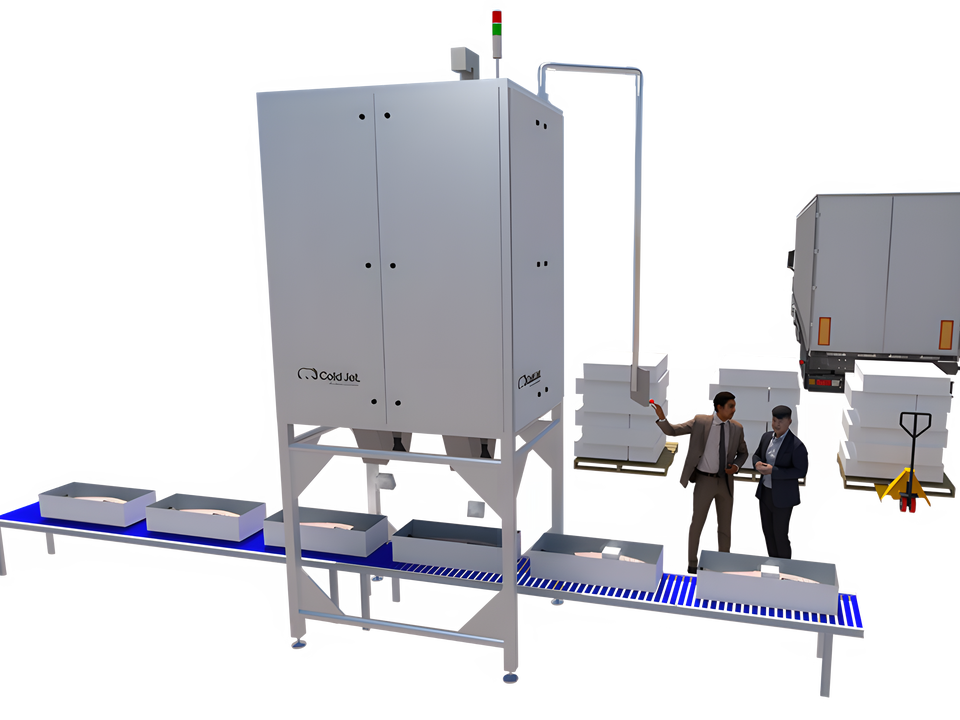
Inter-facility Transportation
- Increased Efficiency: Dry ice allows for denser packing, maximizing the volume of food per shipment.
- Reduced Costs: Lower transportation costs due to increased efficiency and reduced spoilage.
- Environmental Impact: Lower carbon footprint compared to traditional cooling methods.
- Enhanced Food Safety: Prevents biopollution and maintains product integrity.
Ideal for:
- Fish (whole, gutted, filleted)
- Seafood
- Meat (beef, poultry, pork)
- Desserts and smoothies
- Pet food
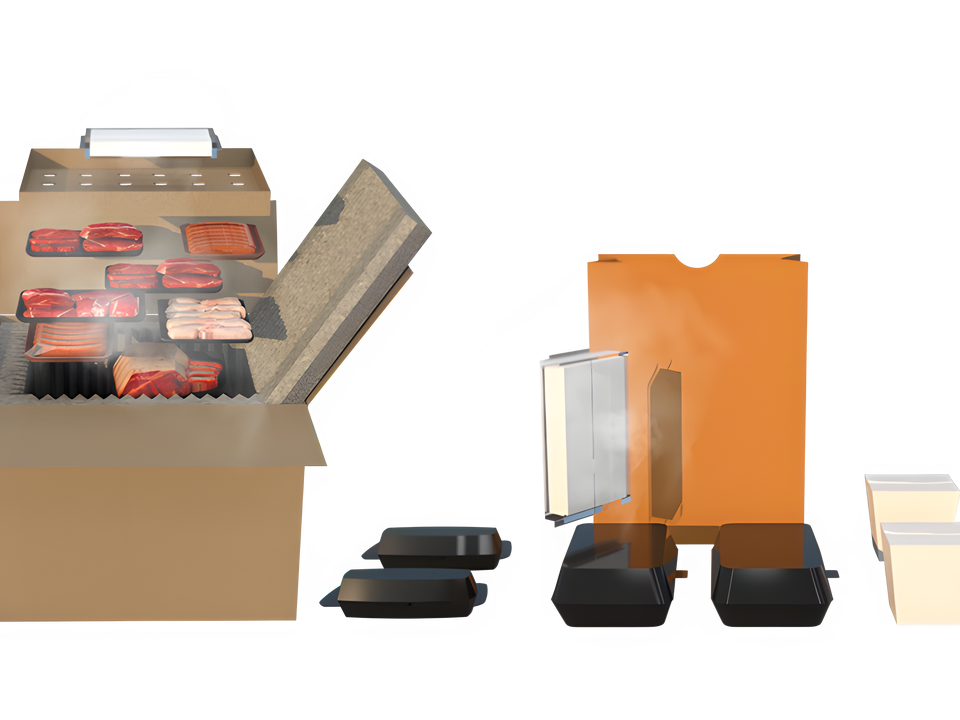
Food Home Delivery
- Guaranteed Freshness: Ensures that food arrives at the customer's doorstep in pristine condition.
- Reduced Waste: Minimizes food spoilage, benefiting both businesses and consumers.
- Flexible Solutions: On-demand dry ice production enables efficient and timely delivery.
- Sustainable Practices: Environmentally friendly alternative to traditional cooling methods.
Ideal for:
- Meat
- Seafood
- Smoothies and desserts
- Pet food
- Meal kits
- Groceries
The Dry Ice Advantage Over Traditional Methods
A recent study by Cold Jet and SmartCAE compared dry ice to gel packs and phase-changing materials (PCMs). The results were clear:
Dry Ice vs. PCM for 17.5 kg of Frozen Payload at -20℃(-4℉)
Study performed by SmartCAE. Minimum required cooling solution weight per box type to achieve a 100% pass rate year-round.
- EPS Box (72 hours)
- 7.5 kg
- Sustainable Box (72 hours)
- 9 kg
- EPS Box (48 hours)
- 5 kg
- Sustainable Box (48 hours)
- 6.5 kg
- EPS Box (72 hours)
- 15 kg(100%+ than dry ice)
- Sustainable Box (72 hours)
- 17 kg(89%+ than dry ice)
- EPS Box (48 hours)
- 10 kg(100%+ than dry ice)
- Sustainable Box (48 hours)
- 12 kg(85%+ than dry ice)
Dry Ice vs. Gel Pack vs. PCM for 11.5 kg of Refrigerated Payload at 4℃ (39.2℉)
Study performed by SmartCAE. Minimum required cooling solution weight per box type to achieve a 100% pass rate year-round.
- EPS Box (24 hours)
- 7.5 kg
- Sustainable Box (24 hours)
- 9 kg
- EPS Box (24 hours)
- 5 kg
- Sustainable Box (24 hours)
- 6.5 kg
- EPS Box (24 hours)
- 3 kg(100+% than dry ice)
- Sustainable Box (24 hours)
- 3 kg(100+% than dry ice)
- EPS Box (24 hours)
- 2 kg(33+% than dry ice)
- Sustainable Box (24 hours)
- 3 kg(100+% than dry ice)
- EPS Box (24 hours)
- 5 kg(233+% than dry ice)
- Sustainable Box (24 hours)
- 5 kg(233+% than dry ice)
- EPS Box (24 hours)
- 3 kg(100+% than dry ice)
- Sustainable Box (24 hours)
- 4 kg(167+% than dry ice)
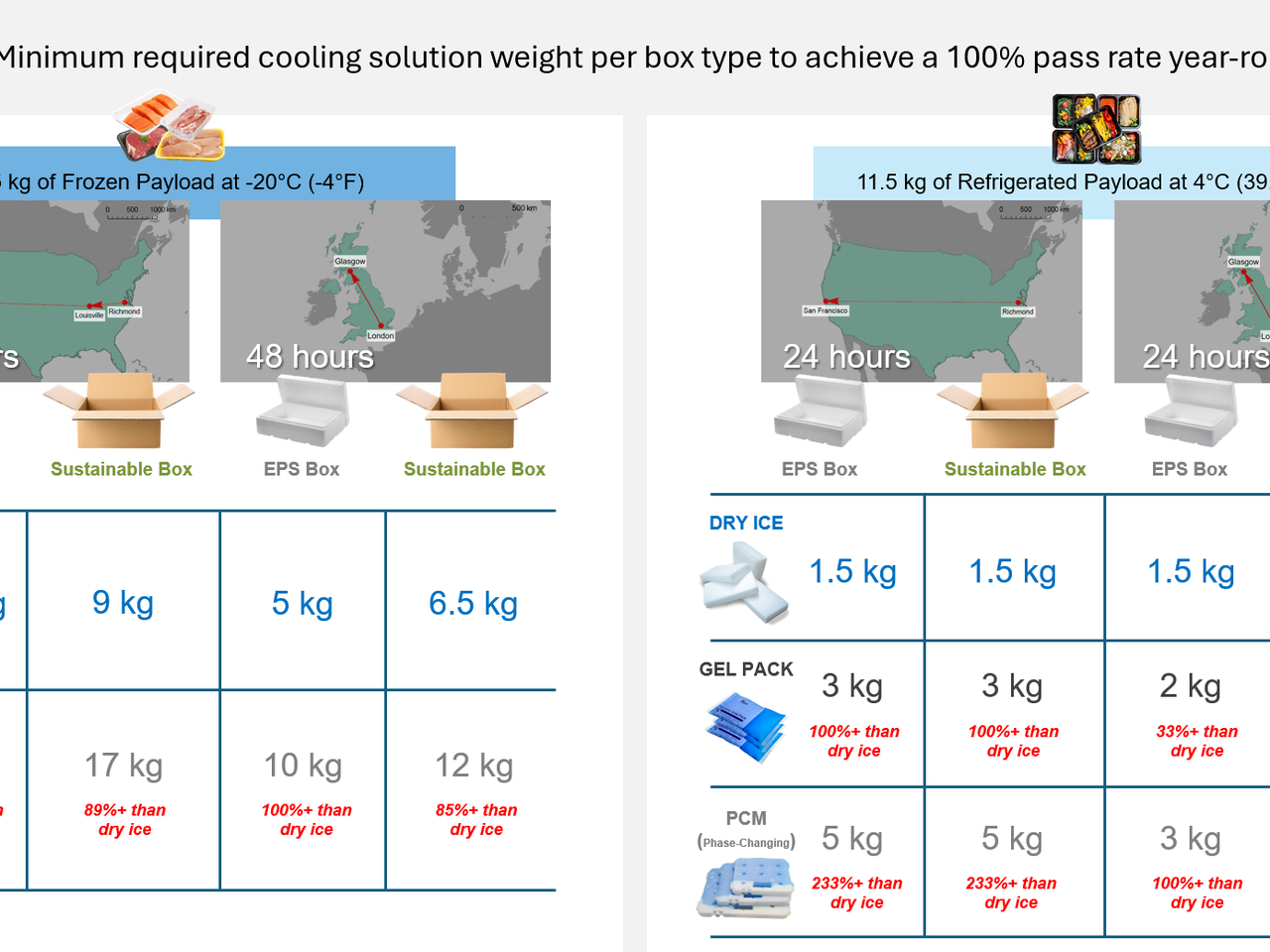
- Frozen Food: Dry ice outperformed PCMs in maintaining consistent temperatures, especially when using sustainable packaging.
- Refrigerated Food: Dry ice required significantly less weight than gel packs and PCMs to keep food fresh.
Leading the Way in Food Transportation

World-Class companies trust in dry ice to ensure the quality and safety of their products.
By leveraging the power of dry ice, the food industry can revolutionize transportation, reduce waste, and deliver fresh, high-quality products to consumers worldwide.