
Meet Andresen & Far AS
When it comes to cleaning and construction projects, in most cases the highest bid rarely wins. However, for Andresen & Far AS, a professional painting company in Norway, the final price quote for removing paint from brick and concrete walls at Benterud School in Lørenskog represented more than simply adding a new coat.
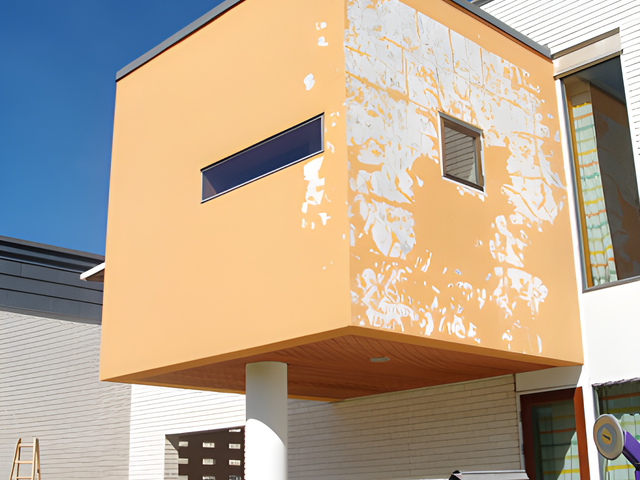
Built in 1999, the primary school had been painted twice in previous years, and was in desperate need of new paint as the last coat was beginning to crack and chip away from the external walls. A decent paint job should last about 10 years, but a surface polish layer on top of the bricks was not allowing the paint to adhere to the surface.
“The bricklayer should not have included the surface polish on top of the brick during the school’s construction, and subsequent painters should have removed that layer prior to adding another coat. Unfortunately, what needed to happen and what actually occurred in previous painting projects are two different things, and as a result, the school needed yet another paint job.
”
The Problem
After reviewing the work required, the school considered multiple solutions to remove the paint, polish and loose materials from the walls, including water and chemicals and sandblasting. Given the environmental concerns of the water and the possibility of chemicals being deposited down the city sewer system, the use of high pressure water and chemicals was ruled out. Sand blasting also presented its own challenges. The process is messy, removes too much of the surface, requires containment, and secondary sand deposits must be treated as toxic waste.
“In addition to the broad secondary waste concerns, during the time that the work needed to be done, the kindergarten school would still be in session, so the school was worried about the sand affecting the students.
”
Andresen also suggested dry ice cleaning, but school officials felt that the process was too expensive.
Other Cleaning Methods Considered
- High pressure water and chemicals: 6,532 Euros ($9,186 USD) plus 6,375 Euros ($8,965 USD) to remove loose surface by hand.
- Sandblasting: 6,562 Euros ($9,228 USD) plus clean up, and removal of contaminated sand at 5,100 Euros ($7,172 USD)
- Dry ice blasting: 17,500 Euros ($24,612 USD) which included two workers, a compressor, working lift, two dry ice cleaning systems and 5,200 kilograms (11,464 pounds) of dry ice.
- The total cleaning area was 170 square meters (1,830 square feet).
“We explained to the school that with dry ice cleaning, we can remove the paint, the surface polish, and any loose surface area underneath. We would not have to do every wall by hand, and the process would not damage the walls. Dry ice cleaning is also the safest solution for workers and the kindergarten kids and the most environmentally responsible solution because there is no secondary waste. In addition to these benefits, we also explained that the school would not have to paint for at least another 10-15 years.
”
Considering the environmental and safety benefits, as well as the effectiveness of dry ice cleaning, the school contracted with Andresen & Far to complete the project.
The Solution
Dry ice cleaning uses reclaimed CO2 in the form of dry ice pellets to remove dirt and contamination from surfaces being cleaned. The dry ice is accelerated using pressurized air streams, and upon impact with the surface being cleaned sublimates, lifting the dirt and eliminating any secondary waste. It is a non-abrasive, non-flammable and water-free cleaning method for a variety of cleaning applications.
Learn more about dry ice blasting
Andresen and Far chose to work with Cold Jet’s systems after evaluating a number of dry ice cleaning systems because it wanted a cleaning solution that was both effective and durable.
“We have used spray painters that constantly clog, and when they are down, we are losing money. Cold Jet’s performance during our evaluation left us with the impression that it had the best dry ice blasters. If we didn’t know it then, we quickly found out during the school project that we had made the right decision.
”
During the paint removal process, the weather was not cooperating. With a tight timeline, Andresen & Far had no choice but to continue to work through a constant rain.
“We were sure that the worst thing you could do with a dry ice cleaning systems was work with it in the rain. Every time we opened the dry ice container or the cleaning system’s hopper, it was raining on the dry ice. We were worried about the water on the ice and the Cold Jet systems, but they simply worked. It was a worst case scenario, but we had no problems with Cold Jet’s systems.
”
The Results
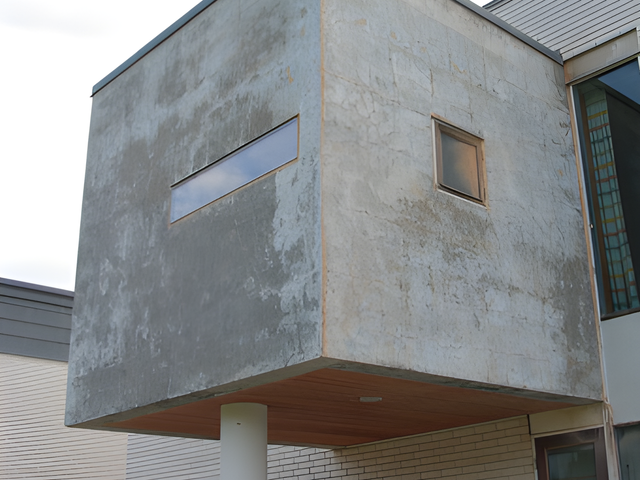
After the paint, polish and loose materials were removed from the three worst areas, a bricklayer was brought in to resurface the walls. Once the walls had dried, Andresen and his team applied a new coating of paint. Since the completion of that part of the school, Andresen has been contracted to complete another 400 square meters (4,300 square feet) of the school using the same dry ice cleaning process.
“The school is very happy with the results, and the external consultant the city hired to monitor the project is also extremely satisfied. While our offer was the most expensive, our solution was the best and will last 10-15 years. And in the long run because the school won’t have to repaint every three years, it will save money.
”