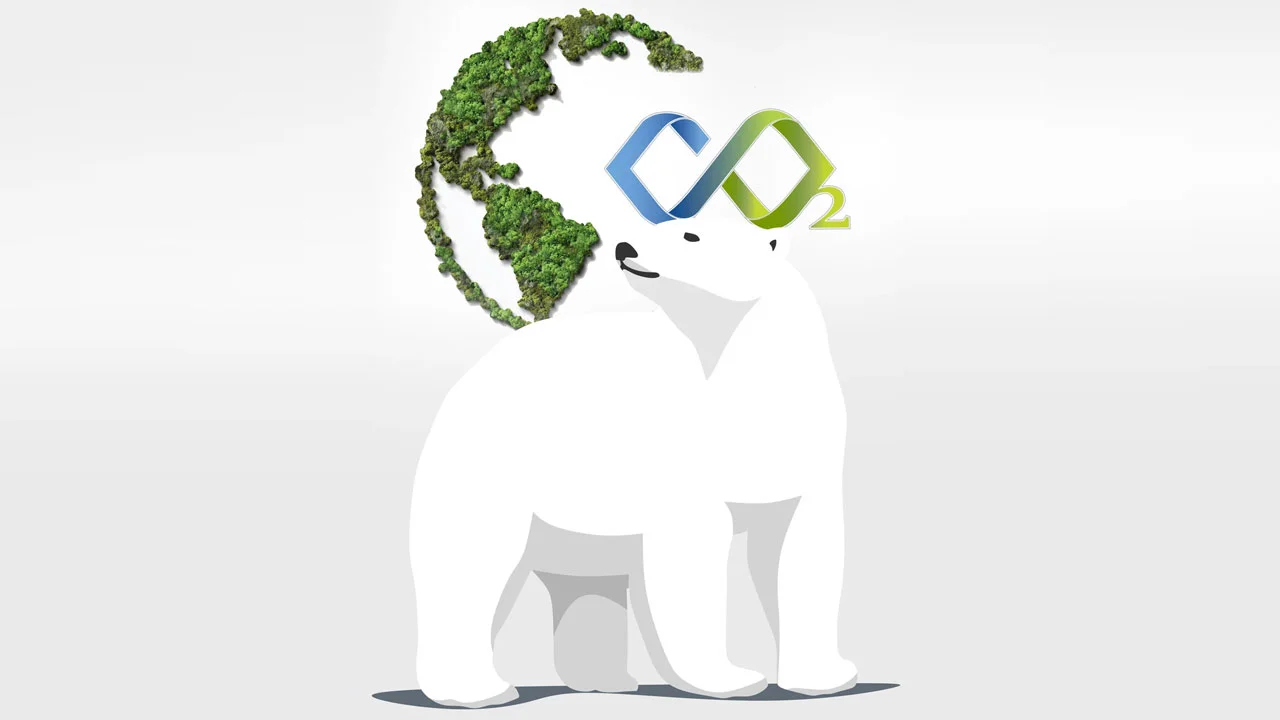

Celebrating Earth Day with Sustainable Dry Ice
Happy Earth Day! It's a perfect time to celebrate companies taking a stand for our planet. Our sustainable solutions are not only revolutionizing cleaning processes but also helping businesses minimize their environmental impact.
Since 1988, Cold Jet has been improving the environment by utilizing recycled CO2 as dry ice for a cooling and cleaning medium. Let's explore the significance of Earth Day, look into the importance of sustainability in today's world, and highlight steps we take to contribute to a healthier, more sustainable planet not just on Earth Day but every day of the year.
Giving CO2 A Second Life
Dry ice is the product of a carbon capture and utilization (CCU) process in which CO2 is captured at industrial and biogas facilities, recycled, and converted to dry ice. The CO2 that would have otherwise been discarded as waste is given a second life as a cooling and cleaning medium through the use of our premium CO2 blasting equipment.
No Additional Emission Scoring
The use of dry ice for general cleaning or for product temperature regulation does not add to your greenhouse gas (GhG) emissions/CO2e or carbon footprint calculation. The CO2 that forms dry ice was already accounted for when it was produced at the industrial or biogas facility. The CO2 that forms dry ice is considered a recycled product.
The Sustainable Benefits of Dry Ice
Dry ice is a water-free, waste-free, and chemical-free solution that is helping organizations improve their Environmental, Social, and Governance (ESG) scores. It replaces common cleaning and transport cooling methods that are damaging to the environment.
Cold Jet Sustainable Solutions
Sustainability in Dry Ice Blasting
Diving deeper into the sustainability of dry ice blasting we see that blasting with dry ice reduces a number of practices that aren’t environmentally friendly. Traditional cleaning methods often rely heavily on water, chemicals, and disposable materials. This can lead to water waste, occupational hazards, and environmental pollution. Dry ice blasting offers a powerful alternative that reduces or eliminates these concerns. Since dry ice sublimates (turns into gas) on impact, it uses no water and leaves no secondary waste. This non-toxic cleaning method also protects workers from harmful chemicals and minimizes environmental impact. By enabling more frequent cleanings, dry ice blasting even helps keep machinery running at optimal efficiency, further reducing energy consumption. For a greener, cleaner cleaning solution, consider dry ice blasting.
Sustainability in Dry Ice Production
Dry ice offers a compelling alternative to traditional methods for keeping perishable goods cold during transport. Unlike refrigerated vehicles, which contribute to emissions and require significant fuel to maintain cool temperatures, dry ice produces no additional emissions. Furthermore, as dry ice sublimates (transforms from solid to gas) throughout the journey, it continuously loses weight, reducing the overall weight of the shipment and boosting fuel efficiency for logistics companies. By replacing resource-intensive gel packs with dry ice, businesses can achieve a more sustainable and cost-effective approach to cold chain shipping.
On the dry ice manufacturing side of our operations, we have introduced our RE-CO2 Recovery Systems. Our RE-CO2 units capture revert CO2 from the vent of a dry ice pelletizer and circulate it back into themselves. Within the recovery unit, the gaseous CO2 is cooled and compressed to create liquid CO2 that is then piped right back to the dry ice pelletizer. Companies utilizing this sustainable innovation have reported a conversion rate of 1.35:1 LCO2 to dry ice, while the conversion rate before was 2.4:1 LCO2 to dry Ice, this allows for companies to produce up to 70% more dry ice while using the same amount of LCO2.